
Is It Safe to Cook Chicken Thighs From Frozen? Expert Tips & Methods
You can safely cook chicken thighs from frozen if you follow a few clear rules. Make sure each piece reaches an internal temperature of 165°F (74°C), avoid partial thawing, and allow about 50% more cooking time than for thawed meat.
When you monitor temperature and use appropriate methods like the oven, Instant Pot, or stovetop, frozen chicken thighs become a convenient, safe option.
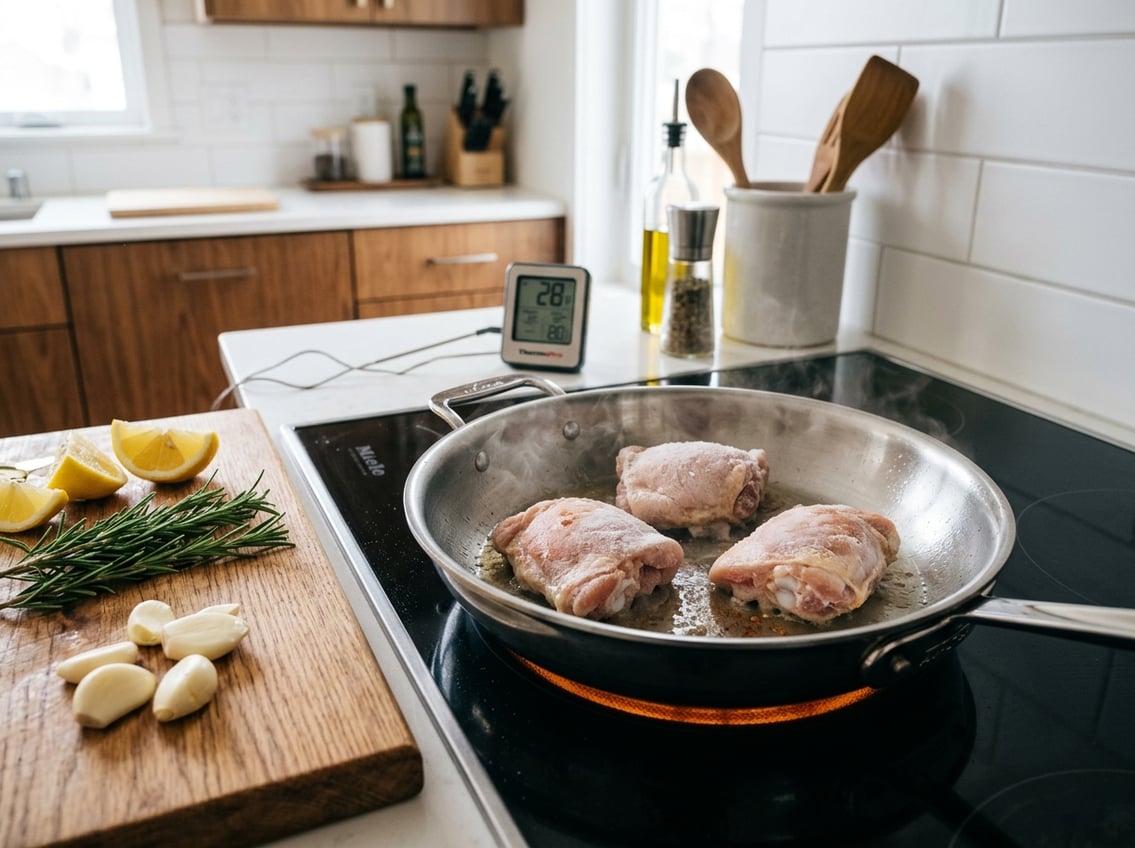
This post explains why temperature matters and which methods work best for frozen chicken thighs. You’ll find step-by-step instructions so your meal cooks evenly every time.
Look for practical tips on avoiding uneven cooking and safe handling. Learn sensible thawing alternatives and how to store or refreeze leftovers safely.
Understanding Food Safety and Risks
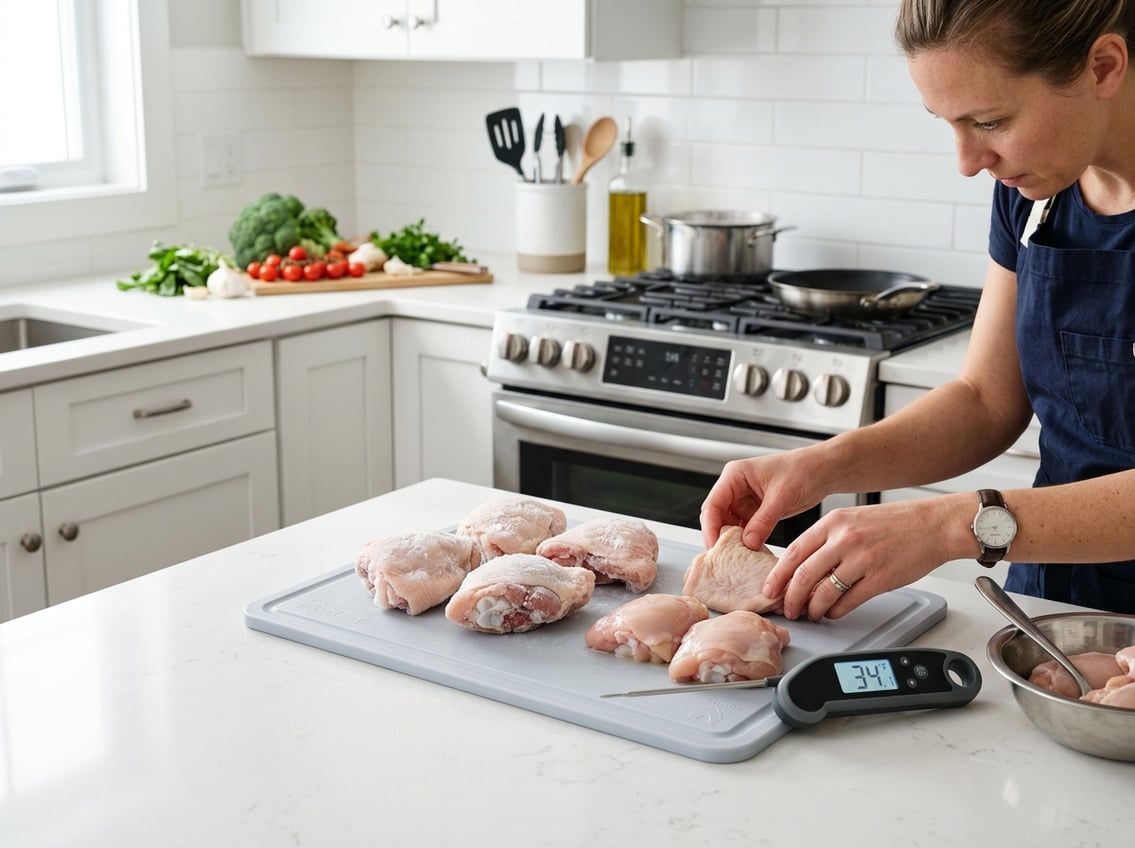
You need to know the specific bacterial risks, official guidance for frozen poultry, and the temperature target that ensures safety. Use a reliable digital meat thermometer to confirm doneness.
USDA Guidelines for Frozen Poultry
The USDA permits cooking poultry from frozen without thawing first, but you must adjust cooking time and handle the chicken safely. Cooking takes about 50% longer than for thawed pieces; for example, a boneless thigh that needs 20 minutes may take 30 minutes or more when frozen.
Store frozen chicken at 0°F (-18°C) or below until you cook it. Do not refreeze raw chicken after partial thawing unless you cook it first.
Keep raw frozen packages separate from ready-to-eat foods to avoid cross-contamination during defrosting or handling. Use oven or stovetop methods recommended by the USDA and follow package cooking instructions when provided.
Bacteria Concerns: Campylobacter and Other Pathogens
Raw chicken commonly carries Campylobacter and Salmonella. These bacteria can survive if the interior stays below safe temperatures.
Cooking from frozen increases the chance of uneven heating, so the core of the thigh can remain undercooked while the surface appears done. That allows bacteria to survive and cause foodborne illness.
Keep raw juices away from other foods and surfaces. Wash hands for 20 seconds after handling raw or thawing chicken.
Sanitize utensils and cutting boards with hot, soapy water. Use separate cutting boards for raw poultry when possible.
If you notice off smells or slimy texture after thawing, discard the chicken. Rely on temperature verification rather than color or juices to judge safety.
Importance of Minimum Internal Cooking Temperature
Bring the thickest part of the chicken thigh to at least 165°F (74°C) to kill Campylobacter, Salmonella, and other pathogens. Insert a digital meat thermometer into the thickest point without touching bone and read the temperature.
Check multiple spots on larger pieces or batches because frozen pieces can cook unevenly. If the thermometer reads below 165°F, continue cooking and recheck after a few minutes.
Allow a brief rest after removing from heat; residual heat helps equalize internal temperature. Using a calibrated digital meat thermometer is the most specific step you can take to ensure safety.
Best Cooking Methods for Frozen Chicken Thighs
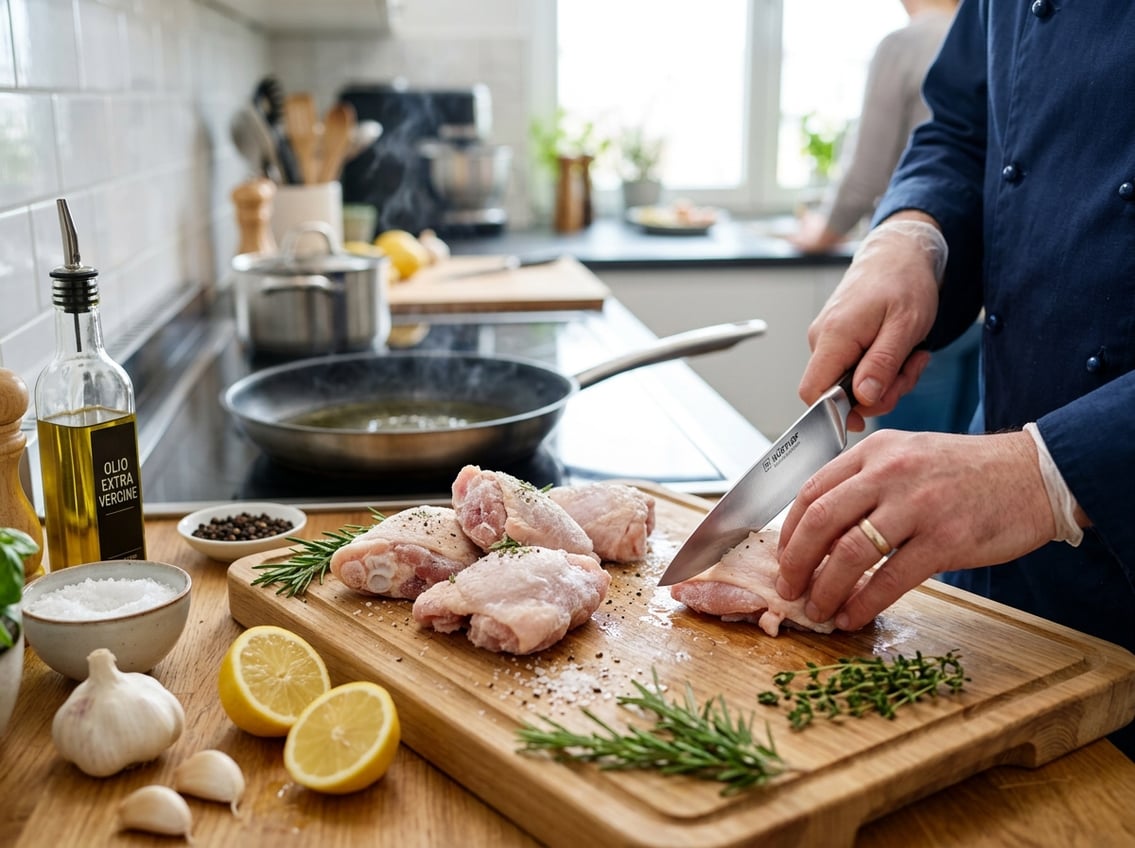
You can safely cook frozen chicken thighs using an oven, pressure cooker, stovetop, or grill if you adjust time and use a thermometer. Each method needs extra cook time, a focus on even heat, and a final internal temperature of 165°F (74°C).
Baking Frozen Chicken Thighs in the Oven
Preheat to 350–375°F (175–190°C). Arrange thighs skin-side up on a rimmed baking sheet or in a shallow roasting pan so air circulates and juices collect.
Brush oil on skin to help browning and sprinkle salt, pepper, and your preferred spices. Expect cooking time of roughly 50–75 minutes depending on size and bone-in vs. boneless.
Use an instant-read thermometer inserted into the thickest part without touching bone. Target 165°F (74°C).
If skin hasn’t crisped, switch to broil for 2–4 minutes while watching closely. Avoid stacking pieces and leave space between thighs for even cooking.
Let the meat rest 5–10 minutes before serving to redistribute juices.
Pressure Cooking and Instant Pot Techniques
Place frozen thighs in a single layer with 1 cup of liquid (broth or water) in the pot to generate steam. Season lightly and add more after cooking if desired.
Set high pressure: 13–15 minutes for bone-in thighs, 10–12 minutes for boneless, then allow 5–10 minutes natural pressure release. After pressure release, check internal temperature and aim for 165°F (74°C).
If not reached, use the sauté function for 2–3 minutes per side or pressure cook an extra 1–2 minutes. Rest 5 minutes before serving.
Pressure cooking yields tender, shreddable meat quickly and is ideal when you need fast, consistent results.
Stovetop Simmering and Pan Searing
For stovetop, start by simmering: place thighs in a deep skillet or saucepan, cover with broth, sauce, or tomato mixture to come halfway up the pieces, bring to a gentle simmer, then reduce heat and cook covered.
Cook times run about 45–70 minutes depending on size. Once internal temperature reaches 165°F (74°C), remove lid and increase heat to reduce sauce or sear briefly to brown skin.
If you want a crispy exterior, transfer cooked thighs to a hot skillet or broiler for 2–4 minutes. This method keeps meat moist and works well for braises or sauced dishes.
Grilling Frozen Chicken Thighs
Do not place frozen thighs directly over high flames. Preheat grill and use a two-zone setup: one side medium-high (direct) and one side low (indirect).
Start thighs on indirect heat with the lid closed so they cook through steadily. Cook time is typically 30–45 minutes; flip periodically for even cooking.
When internal temperature nears 155–160°F (68–71°C), move thighs to direct heat for 3–6 minutes per side to develop char and crisp skin, finishing at 165°F (74°C). Baste in the last 5–10 minutes if using glaze or barbecue sauce.
Keep a probe thermometer handy and avoid crowding the grill.
Step-by-Step Instructions for Each Method
This section gives exact steps for preparing frozen chicken thighs and cooking them in the oven or pressure cooker. Follow the temperature targets and timing adjustments for safe, juicy thighs every time.
Preparation, Seasoning, and Setup
Start with frozen chicken thighs straight from the package. Do not try to pry them apart if they’re stuck.
Pat dry any surface ice with paper towels, then place thighs on a tray so you can season them. Brush or drizzle 1–2 teaspoons of oil per thigh to help spices stick and promote browning.
Sprinkle salt (about 1/4 to 1/2 teaspoon per thigh), black pepper, and a favorite dry rub or garlic powder. If you’ll braise or pressure-cook, stronger herbs and acidic marinades are optional but add flavor.
Arrange thighs skin-side up on a rimmed baking sheet or in a single layer in the Instant Pot inner pot. Use a wire rack on the baking sheet if you want crisper skin.
Have an instant-read thermometer ready; target 165°F (74°C) in the thickest part.
Oven and Baking Time Adjustments
Preheat the oven to 350°F (177°C) for even cooking from frozen. For boneless thighs (4–8 oz each), plan 35–45 minutes; for bone-in thighs, plan 50–70 minutes.
These times assume a single layer on a baking sheet and a 165°F internal temperature. If you prefer higher heat to brown skin, start at 400°F (204°C) for the last 10–15 minutes after the meat reaches about 155°F.
Use a meat thermometer to avoid overcooking; juices should run clear and the internal temp must read 165°F. Rest the thighs 5–10 minutes before serving.
Covering with foil will shorten surface browning but reduce the risk of dryness. For larger or thicker thighs, add 10–15 minutes and verify temperature in multiple spots.
Pressure Cooking Timing and Liquid Amounts
Set your pressure cooker or Instant Pot to high pressure. Add 1 cup (240 ml) of broth, water, or a mix of broth and a splash of vinegar for flavor.
Place frozen thighs in a single layer or slightly overlapping; avoid stacking too tightly. Cook boneless frozen thighs 10–13 minutes; bone-in thighs need 12–15 minutes.
After the cook cycle, let the pressure naturally release for at least 5 minutes. Quick-release the remainder, then check internal temperature—aim for 165°F.
If you want crisp skin after pressure cooking, transfer thighs to a hot oven or air fryer at 425°F (218°C) for 5–10 minutes. Reduce liquid in the pot if you plan to broil or roast immediately so skin can brown.
Ensuring Even Cooking Results
Use an instant-read thermometer placed in the thickest part of the thigh without touching bone to confirm 165°F. Check multiple pieces if sizes vary.
Avoid high, direct heat on frozen thighs at the start; the exterior can char while the interior stays cold. Use moderate oven temps or moist-heat methods, then finish with high heat for color.
For stovetop cooking, simmer in sauce or broth and test for doneness before reducing sauce. If pieces are uneven in size, separate cooking times: remove smaller thighs earlier, or cut larger pieces in half after partial cooking so all reach 165°F at the same time.
Essential Safe Cooking Practices
You must verify internal temperature, avoid partially thawed pieces, and prevent raw juices from contacting cooked food and surfaces. Follow specific steps for temperature measurement, timing, and sanitizing to make cooking frozen chicken thighs safe.
Using a Meat Thermometer Correctly
Use a calibrated digital meat thermometer to check doneness. Insert the probe into the thickest part of the thigh without touching bone; bone gives a falsely high reading.
Aim for 165°F (74°C) in the deepest part of the meat. Take readings in two or three places on larger thighs or bone-in pieces to confirm uniform temperature.
If the reading is below 165°F, return the thigh to the oven or pan and recheck after a few minutes. For oven or air-fryer cooking from frozen, expect cooking time to be about 50% longer than for thawed chicken.
Clean and sanitize the probe between uses to avoid cross-contamination.
Avoiding the Danger Zone and Partial Cooking
The “danger zone” is 40–140°F (4–60°C). Bacteria multiply rapidly inside this range, so minimize the time chicken spends there.
Never partially cook frozen thighs intending to finish them later. That lets the interior sit in the danger zone while the exterior cools.
Cook frozen chicken thighs straight from the freezer or fully thaw them in the refrigerator first. If you must defrost faster, use a sealed bag submerged in cold water and change the water every 30 minutes until thawed.
Do not thaw at room temperature or in warm water. When using stovetop searing, avoid starting with high heat on frozen pieces.
Instead, use steady, moderate heat and verify temperature with a thermometer.
Preventing Cross-Contamination
Treat juices from raw or frozen chicken as potentially hazardous. Use separate cutting boards and utensils for raw poultry and ready-to-eat foods.
Label or color-code boards when possible. Wash hands with soap for at least 20 seconds after handling frozen chicken and after contact with packaging.
Clean counters and any surfaces that contacted raw juices with a household sanitizer or a bleach solution (1 tablespoon bleach per quart of water). Store raw frozen thighs sealed on the bottom shelf of the fridge if thawing there, so drips cannot reach other foods.
Immediately wash and sanitize equipment, including your digital meat thermometer’s probe, after each use.
Advice on Thawing and Alternative Defrosting Methods
Plan ahead when possible. Refrigerator thawing keeps chicken thighs safely cold for hours or days.
Cold water speeds thawing safely if you monitor it closely. The microwave works in a pinch but requires immediate cooking.
If you’re short on time, you can also cook thighs from frozen. Expect longer cook times and check internal temperature.
Refrigerator Thawing
Place frozen thighs on a tray or in a sealed container to catch drips. Put them on the lowest fridge shelf.
Thaw chicken in your refrigerator at 40°F (4°C) or below to preserve texture and limit bacterial growth.
Allow about 24 hours for a pound of boneless, skinless thighs. Bone-in or larger packages may need 24–48 hours.
After thawing in the refrigerator, cook the chicken within 1–2 days for best quality and safety.
You can safely refreeze raw thighs thawed in the fridge, but the quality may decline slightly.
Cold Water Thawing
Seal thighs in a leak-proof plastic bag. Submerge the bag fully in cold tap water.
Change the water every 30 minutes to keep it cold. Small packages can thaw in about an hour, while larger or bone-in pieces take longer.
Cook chicken immediately after cold-water thawing. Do not refreeze without cooking first.
Avoid warm or hot water and never leave thighs at room temperature. The outer layers can reach the bacterial danger zone while the center stays frozen.
Microwave Thawing
Use your microwave’s defrost setting and rotate or flip the thighs often for even thawing. Remove packaging that isn’t microwave-safe and transfer thighs to a microwave-safe dish to catch juices.
Microwave thawing can partially cook the edges while the center stays frozen. Cook the chicken immediately after thawing to destroy bacteria.
If parts start to cook during defrosting, finish cooking by baking, grilling, or sautéing until the internal temperature reaches 165°F (74°C).
Thawing or Cooking From Frozen
Thaw chicken if you want even cooking, better browning, or a shorter final cook time. Thawed thighs cook more evenly and develop a crisper exterior.
Cook from frozen if you are short on time or using methods that allow longer cook times, such as braising, stewing, pressure cooking, or oven roasting with added time. Add about 50% more cooking time and check doneness with a probe thermometer reading 165°F (74°C) in the thickest part.
If you change your mind after starting a cold-water or microwave thaw, either cook the chicken immediately or refreeze only if it has not reached temperatures above 40°F (4°C).
Storing Leftovers and Freezing Cooked Chicken Thighs
Keep cooked chicken thighs cool, portioned, and protected from air. Label containers with the date and use within recommended timeframes.
Safe Storage
Refrigerate cooked chicken thighs within two hours of cooking. If the ambient temperature exceeds 90°F (32°C), refrigerate within one hour.
Store chicken in shallow, airtight containers or wrap tightly in foil or plastic wrap to speed cooling and prevent bacterial growth.
Keep cooked thighs in the fridge at 40°F (4°C) or below and use within 3–4 days. If you plan to reheat only portions, slice or shred and store in individual servings to avoid repeated reheating.
Always reheat to an internal temperature of 165°F (74°C) and check with a food thermometer.
Discard any cooked chicken that smells off, feels slimy, or shows visible mold. When in doubt, throw it out.
How to Properly Freeze Cooked Chicken Thighs
Let chicken thighs cool to room temperature within two hours. Place them on a baking sheet and freeze for about an hour to keep the pieces separate.
After the chicken firms up, move it to freezer bags or airtight containers. Press out excess air to help prevent freezer burn.
Label each bag with the date and portion size. For best quality, use frozen cooked chicken thighs within 3–4 months.
Store at 0°F (-18°C) or lower. Thaw in the refrigerator overnight or reheat directly from frozen.
If reheating from frozen, add extra time and make sure the center reaches 165°F (74°C). Do not refreeze cooked chicken that has been thawed and left at room temperature beyond two hours.


