
Best Way to Grill Chicken Thighs: Expert Tips and Techniques
You want reliably juicy, flavorful grilled chicken thighs without guesswork. Use controlled heat, a simple seasoning or short marinade, and an internal temperature target to get crispy skin and tender meat every time.
Sear chicken thighs over direct high heat for color, then finish over medium indirect heat until the internal temperature reaches 165°F (or slightly higher for more gelatinized tenderness). Rest briefly before serving.
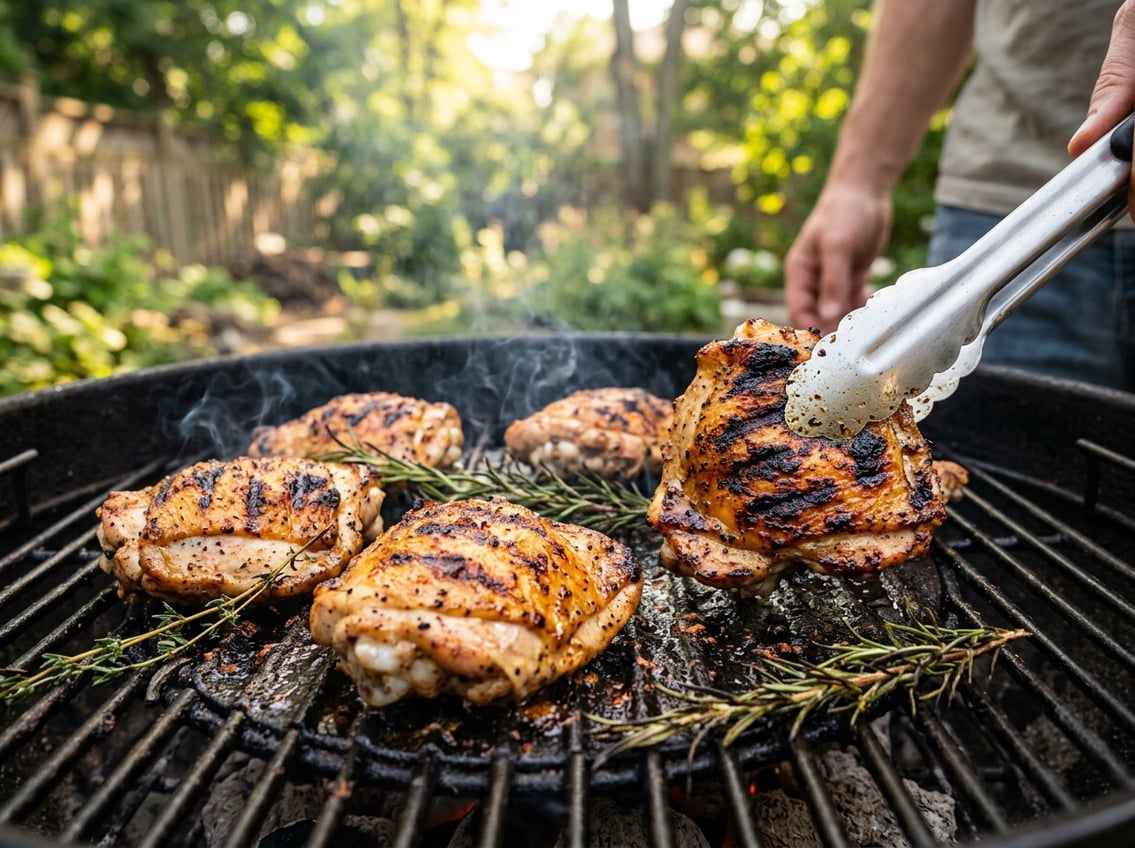
This post walks you through prepping and trimming, seasoning and marinades, two-zone grill setup and heat management, clear timing and temperature cues, plus serving and storage tips. Follow these steps and you’ll turn ordinary thighs into a dependable weeknight or backyard-star dish.
Essential Preparation Steps for Chicken Thighs
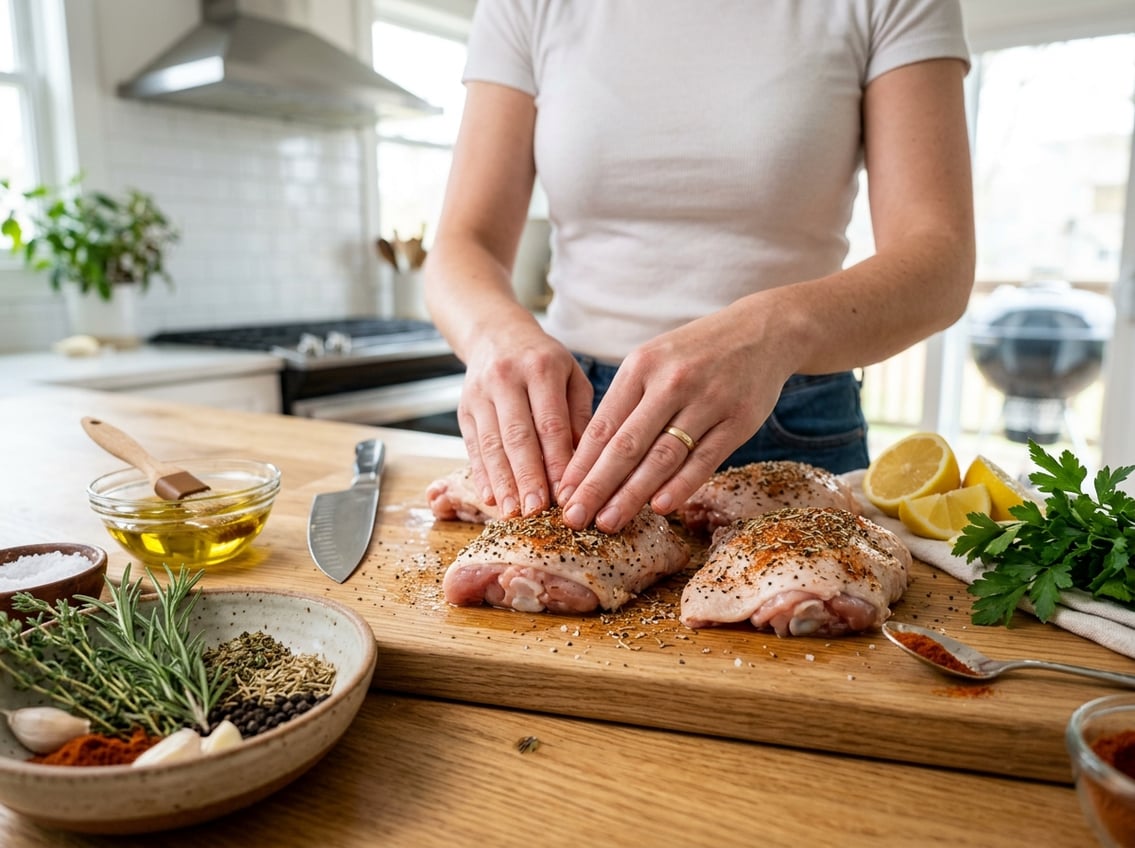
Proper prep sets you up for juicy, evenly cooked thighs with crisp skin. Focus on cut selection, trimming, seasoning, and letting meat relax before it hits the grill.
Choosing Between Bone-In, Skin-On, and Boneless Thighs
Bone-in chicken thighs hold heat and cook more slowly, which helps retain moisture and adds deeper flavor near the bone. Choose bone-in if you want richer taste and don’t mind longer cook times and indirect grilling.
Skin-on thighs crisp nicely when you sear them over direct heat first. The fat renders and protects the meat.
Use skin-on for grilled chicken with a crunchy exterior and brush sparingly with sauce late in cooking to avoid burning. Boneless thighs cook fastest and suit direct-heat grilling or quick weeknight meals.
They take marinades and dry rubs well but lack the insulating effect of bone and skin, so watch internal temperature closely and aim for 165°F. If you plan to bake instead of grill, bone-in skin-on also performs well in the oven at moderate temperatures for longer periods.
Trimming and Prepping Thighs for the Grill
Start by patting thighs dry with paper towels. Dry skin crisps better and marinades adhere more evenly.
Remove excess fat or hanging bits of skin if they would char excessively, but leave most skin intact for flavor and moisture. Trim silver skin from bone-in pieces and snip any cartilage that might curl.
If you use a marinade with acid, limit marinating time to 30 minutes–4 hours for boneless thighs to avoid a mealy texture. For bone-in or skin-on, you can marinate longer (up to overnight) for deeper flavor without as much risk.
Season generously with salt at least 30 minutes before cooking, or salt just before grilling. If applying a sugar-heavy sauce, reserve it for the last 5–10 minutes to prevent burning.
Bringing Chicken to Room Temperature Before Cooking
Remove thighs from the fridge 20–30 minutes before grilling to temper them. Warming the meat slightly promotes even cooking and reduces the chance of overcooking the exterior while the interior reaches 165°F.
For boneless thighs, 15–20 minutes at room temperature is usually enough. Bone-in pieces benefit from 30 minutes because the bone slows heat transfer.
Keep thighs covered loosely and on a plate to avoid cross-contamination. Do not leave chicken out longer than two hours total (one hour if ambient temperature is above 90°F).
Use a meat thermometer during cooking rather than relying on time alone to confirm doneness.
Effective Seasoning and Marinade Strategies
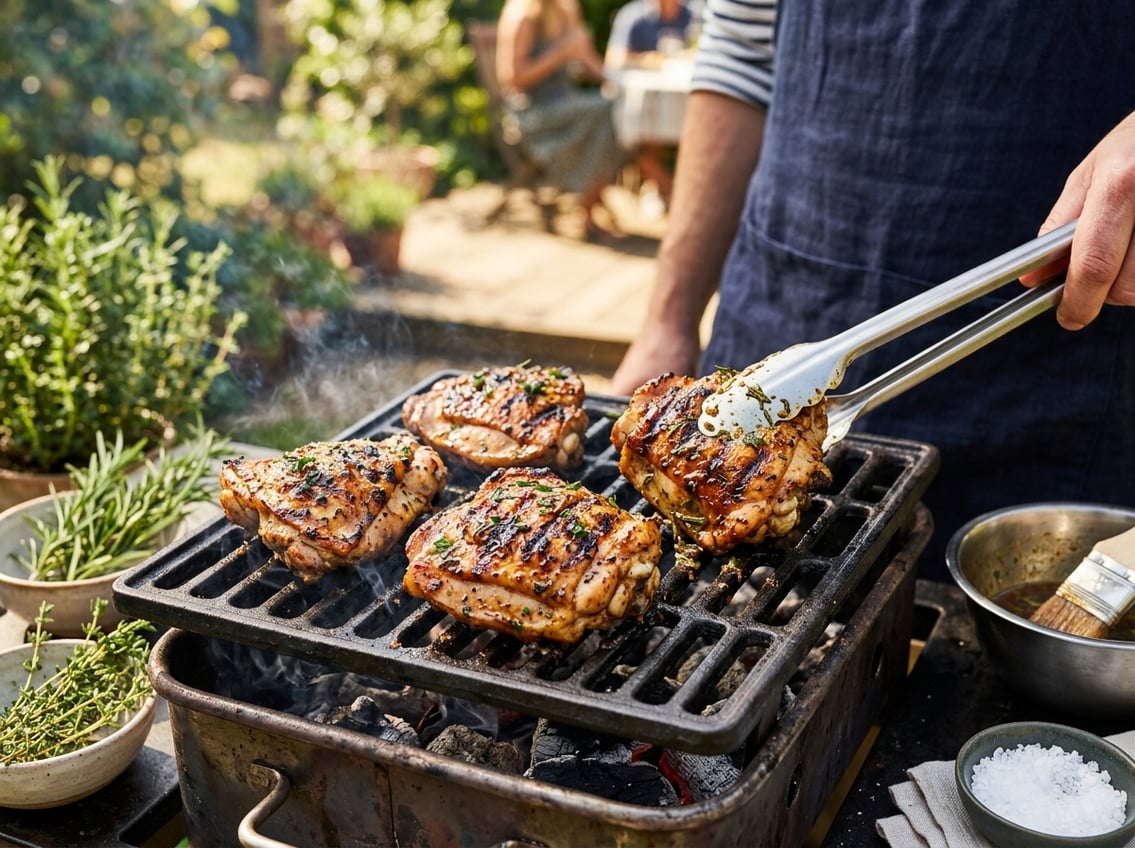
Use bold salt, acid, fat, and aromatics as the backbone of flavor. Match technique to cut: use a dry rub for skin-on or bone-in thighs, and a short, controlled marinade for boneless or skinless pieces.
Best Dry Rubs and Chicken Seasoning Blends
Dry rubs build a crust and concentrate flavor without extra moisture, which helps skin crisp on the grill. Start with kosher salt (about 1 tsp per pound) and add black pepper, garlic powder, and smoked paprika for a reliable base.
For heat, include ¼–½ tsp cayenne per pound. For savory depth, add 1 tsp brown sugar to promote caramelization; reduce sugar if you plan long, indirect cooking.
Apply the rub at least 30 minutes before grilling. For best penetration, rub under the skin on bone-in thighs.
Pat skin dry first to help the rub adhere and to ensure crisping. If you prefer premade blends, choose ones with minimal anti-caking agents and that list salt and sugar quantities so you can adjust seasoning.
How to Use Chicken Marinade for Maximum Flavor
A functional marinade balances acid, oil, and seasoning. Use 1 part acid (lemon, vinegar, or yogurt) to 3 parts oil, plus salt, garlic, and herbs.
Marinate boneless, skinless thighs for 30 minutes to 4 hours. Avoid exceeding 4–6 hours with strong acids to prevent a mushy texture.
Place chicken and marinade in a sealed bag, remove excess air, and refrigerate. Reserve any marinade used with raw chicken, or boil it for several minutes before using as a sauce.
Brush leftover marinade on during the last few minutes of cooking if it’s been cooked or use fresh sauce to avoid contamination.
Optimal Grilling Techniques and Heat Management
Use controlled heat, a hot sear, and a cooler zone for finishing to get juicy, well-caramelized chicken thighs. Set up your grill so you can sear over direct heat and then move pieces to indirect heat to complete cooking without burning the exterior.
Direct Versus Indirect Heat Methods
Use direct heat for a short, high-temperature sear: preheat the grill to 400–475°F (medium-high to high). Sear skin-side down for 2–4 minutes until a golden crust forms, then flip and sear the second side for 1–2 minutes.
After searing, transfer thighs to indirect heat (grill zone at 325–375°F). Cook until the internal temperature reaches 165°F; for extra tenderness aim for 170–175°F for thighs to break down connective tissue.
Bone-in thighs usually need 20–35 minutes total. Boneless often finish in 10–15 minutes after sear.
Use a probe thermometer and check near the bone for accuracy.
Preventing Flare-Ups and Ensuring Even Cooking
Trim excessive fat and pat thighs dry to reduce drips that cause flare-ups. Keep a spray bottle of water and move pieces off direct flames immediately if fat ignites.
If flare-ups persist, lower the sear time and rely more on high initial heat followed by indirect cooking. Manage heat with a two-zone setup: coals or burners on one side for direct searing, empty zone for indirect finishing.
Maintain lid closed during indirect cooking to stabilize temperature and promote even heat circulation. Rotate pieces between hotter and cooler spots if your grill has uneven hot spots.
Use tongs rather than a fork to avoid puncturing meat and losing juices.
Timing and Temperature Guidelines for Succulent Thighs
Balance grill heat, cut (bone-in vs boneless), and target internal temperature to get juicy, tender thighs. Use controlled heat and an instant-read thermometer to avoid guesswork and overcooking.
How Long to Grill Chicken Thighs Based on Cut
Bone-in thighs generally take 25–35 minutes on a medium grill (350–400°F). Start skin-side down over direct heat for 4–6 minutes to crisp, then move to indirect heat and cook until near-final temp.
Turn occasionally to avoid flare-ups. Boneless thighs cook faster: plan 12–18 minutes over medium-high (375–425°F).
Sear 2–3 minutes per side over direct heat, then finish over slightly cooler zones until nearly done. Thigh size matters: thicker pieces add 3–7 minutes.
If you use a two-zone fire, maintain a direct sear zone at 450–500°F and an indirect zone at about 350°F. For charcoal, push coals to one side. For gas, light one burner low and one high.
These setups let you control browning without drying the meat.
Checking Doneness With a Meat Thermometer
Insert an instant-read thermometer into the thickest part of the thigh, avoiding bone. For safety and best texture, aim for 175°F for a tender, fully cooked thigh.
190–195°F produces more breakdown of connective tissue and a melting, very tender result. Read the thermometer after a few seconds; don’t rely solely on time.
If you prefer juicier slices with minimal pull from the bone, stop at 170–175°F and rest 5–10 minutes. The carryover will raise temp slightly.
For bone-in pieces, take readings in at least two spots to confirm even cooking. Always sanitize the probe between checks and calibrate your instant-read thermometer periodically.
A reliable thermometer removes guesswork and helps you hit precise textures every cook.
Serving Suggestions and Sides That Complement Grilled Chicken Thighs
Keep flavors balanced: pair the thighs with vegetables that can withstand direct heat and fresh, bright salads that cut through the chicken’s richness. Aim for contrast in texture and acidity to make each bite pop.
Pairing Grilled Thighs With Grilled Vegetables
Grilled vegetables work well because they can cook alongside thighs and pick up the same smoky notes. Choose sturdy produce: corn on the cob, asparagus, zucchini, bell peppers, and halved baby potatoes.
Toss with oil, salt, and a touch of smoked paprika or garlic powder so seasoning matches the chicken. Use two heat zones on the grill.
Place rootier items like potatoes over indirect heat first, then move to direct heat at the end to get char. Lay thin items, such as asparagus and sliced zucchini, perpendicular to grates or use a grill basket to prevent falling through.
Finish veg with a squeeze of lemon or a drizzle of herb oil to brighten flavors and echo any citrus or herb used on the thighs.
Fresh Sides to Complete the Meal
Serve fresh sides that add acidity and crunch to balance the thigh’s fattiness. Options: tomato-and-cucumber salad with red onion and a red-wine vinaigrette, watermelon-feta salad with mint, or a chilled orzo salad with cucumbers and lemon zest.
Each brings cooling contrast. For starch, pick one simple item: garlic mashed potatoes, grilled polenta slices, or a light pasta salad with herbs.
Keep dressings vinaigrette-based rather than creamy when you want a lighter plate. Add a small spoon of pickled vegetables or a quick slaw for sharpness that refreshes the palate between rich bites.
Storing and Reheating Grilled Chicken Thighs
Place cooled grilled chicken thighs in an airtight container within two hours of cooking. Refrigerate them at 40°F (4°C) or below and use within 3 days for best quality and safety.
For longer storage, wrap the thighs tightly or use a freezer-safe bag and freeze them. Label with the date and use within 2–3 months to keep their flavor and texture.
To reheat, focus on restoring moisture and preventing overcooking. The oven method works well: set the temperature to 325–350°F (160–175°C), place thighs in a baking dish, add a splash of broth or marinade, cover with foil, and heat until the internal temperature reaches 165°F (74°C).
If you need a quicker method, use the stovetop. Heat a skillet over medium with a bit of oil or butter, add the thighs, cover, and turn occasionally until hot.
A microwave can work as well. Cover the chicken, add a little broth, and heat in short intervals to keep the texture tender.
Let the chicken rest for a few minutes after reheating so juices can redistribute. Check the temperature with a meat thermometer to ensure safety.


