
How Long Will Chicken Thighs Last in the Fridge: Safe Storage and Freshness Tips
Cooked chicken thighs last about 3–4 days in the fridge. Raw chicken thighs stay safe for about 1–2 days when stored at 40°F (4°C) or below.
Store thighs in airtight containers on the coldest shelf to minimize spoilage and reduce the risk of foodborne illness.
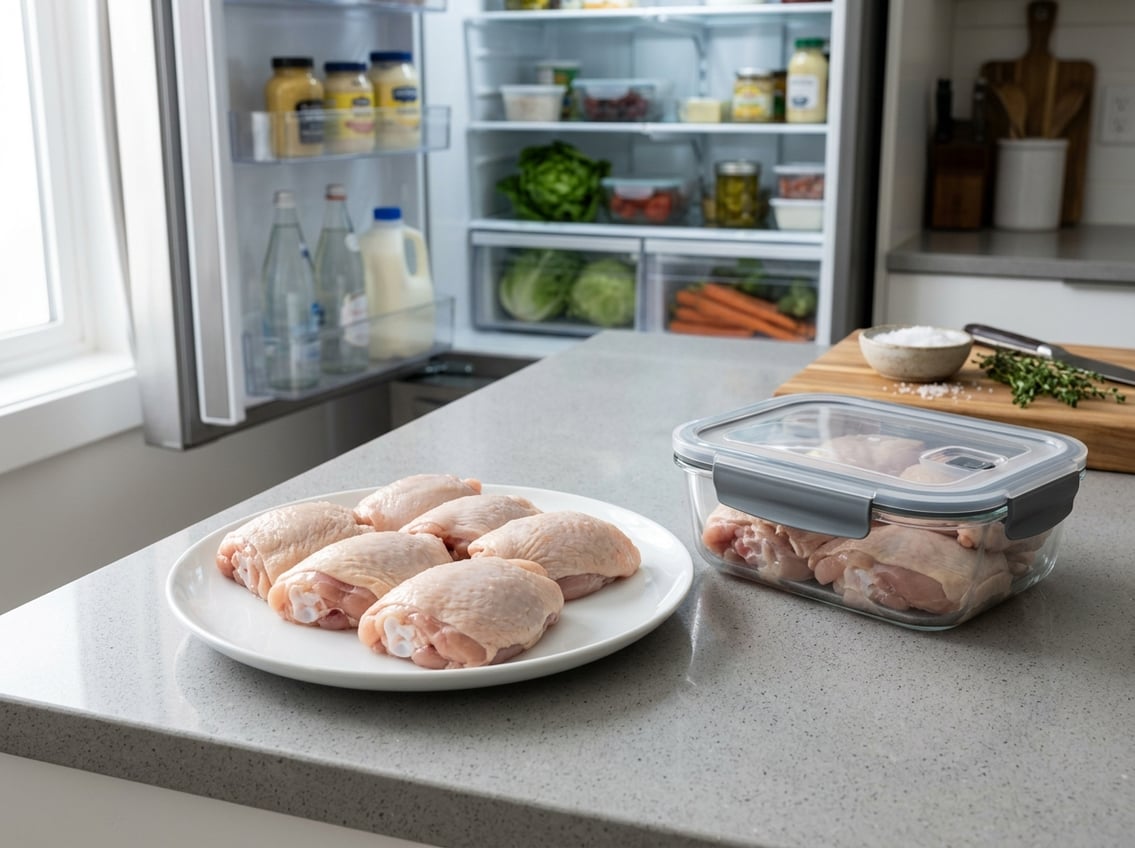
This guide explains how to store thighs for maximum freshness, spot signs of spoilage, and freeze or thaw chicken safely.
Refrigerator Shelf Life of Chicken Thighs
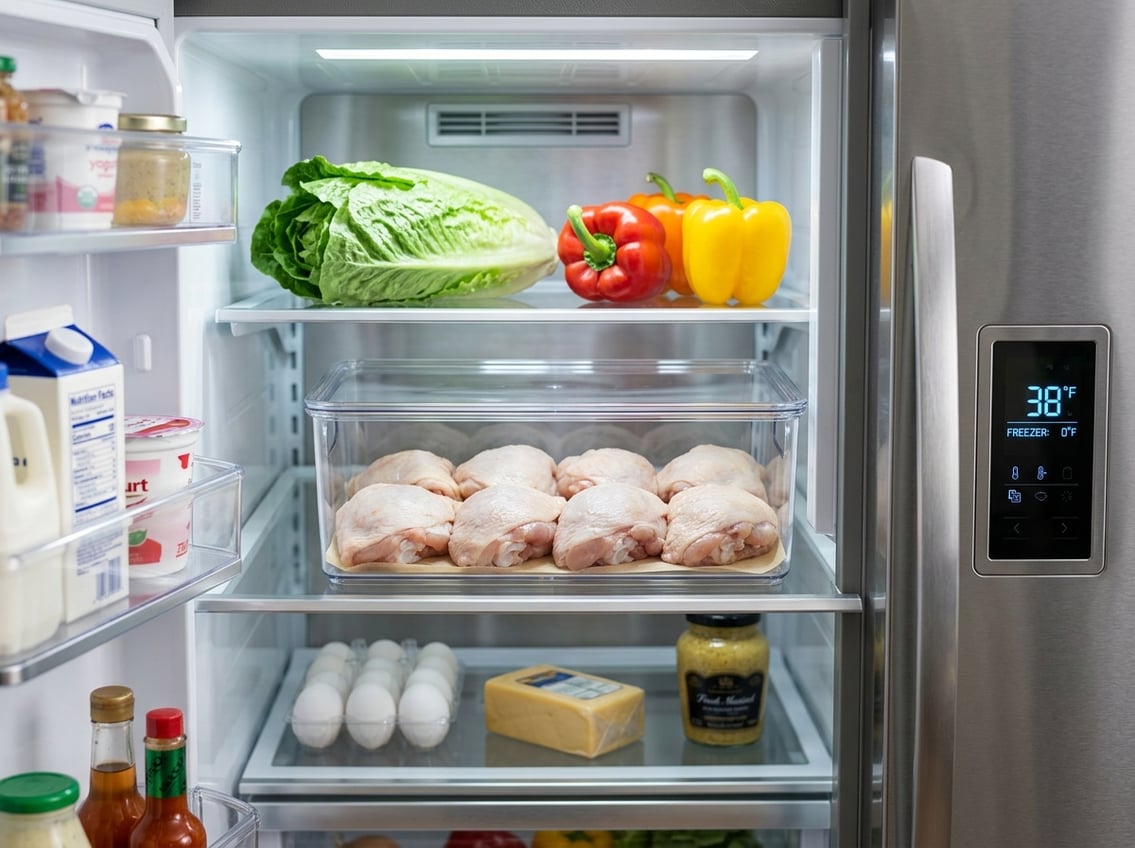
Chicken thighs only stay safe in the fridge for a short period when you store them at or below 40°F (4°C). Raw pieces last 1–2 days; cooked and vacuum-packed items last longer.
Check for changes in smell, texture, and dates to ensure safety.
Difference Between Raw and Cooked Chicken Thighs
Raw chicken thighs last 1–2 days in the refrigerator at 40°F (4°C) or colder. Keep them in their original packaging on the lowest shelf or in a leak-proof container to prevent cross-contamination.
Vacuum-sealing raw thighs can extend fridge storage by about 1–2 days compared to loose packaging, but it will not make unsafe chicken safe. Cooked chicken thighs last 3–4 days in airtight containers.
Cool cooked thighs to fridge temperature within two hours after cooking to reduce bacterial growth. Discard cooked chicken if it develops a sour smell, slimy texture, or odd color.
How Long Is Marinated Chicken Safe to Store
Marinated raw chicken thighs follow the same 1–2 day rule in the fridge. Use a sealed container or zipper bag for marinating and place it on the bottom shelf.
Label the container with the date you started marinating. If you need to marinate longer than 24 hours, freeze the thighs in the marinade.
Cook marinated thighs within 3–4 days after cooking. Do not reuse marinade that held raw chicken unless you boil it first.
Impact of Sell-By and Use-By Dates
“Sell-by” and “use-by” dates offer guidance but are not absolute safety cutoffs. If raw chicken thighs are within the use-by date and refrigerated at or below 40°F (4°C), use them within 1–2 days after opening or purchase.
If the sell-by date is older than two days, cook or freeze the thighs immediately.
Use these checks for safety:
- Smell: sour or ammonia-like odor means discard.
- Texture: sticky or slimy means discard.
- Color: greenish or gray with brown spots means discard.
Freeze chicken immediately if unsure. Frozen thighs stay safe much longer than refrigerated ones.
Best Practices for Storing Chicken Thighs
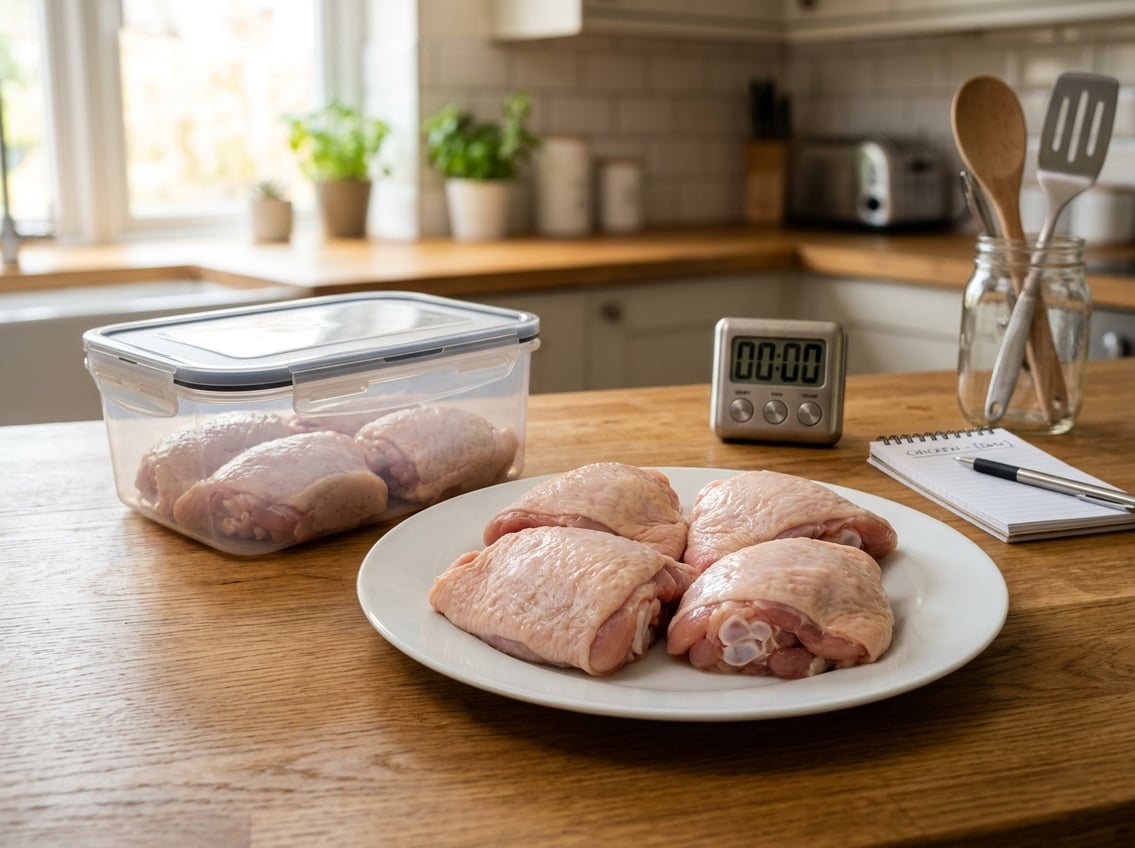
Keep raw chicken thighs cold, sealed, and separate from ready-to-eat foods. Use airtight packaging, a fridge at or below 40°F (4°C), and store separately to prevent cross-contamination.
Packaging and Airtight Containers
Wrap or reseal packages tightly to limit air exposure and moisture loss. Leave thighs in the original store packaging inside a shallow airtight container or zip-top bag to catch leaks if using within 1–2 days.
For longer refrigeration, transfer to a sealed food-grade container or vacuum-seal. Label containers with the date you stored them.
Use leak-proof containers on the bottom shelf to prevent juices from dripping onto other foods. Store thawed frozen thighs separately and use within 24 hours after full thaw.
Refrigerator Settings and Placement
Set your refrigerator to 40°F (4°C) or lower and check with an appliance thermometer. Keep chilled items toward the back where temperature is most stable.
Avoid overcrowding, which blocks cold airflow and raises temperatures. Place raw chicken thighs on the lowest shelf in a tray or sealed container to contain drips.
Do not store them in the fridge door, as that area warms each time the door opens. Freeze thighs at 0°F (-18°C) and label with the freeze date if you need longer storage.
Avoiding Cross-Contamination
Keep raw chicken thighs physically separated from ready-to-eat foods and produce. Store raw thighs in sealed containers on the bottom shelf and never above items you’ll eat without cooking.
Use dedicated cutting boards and utensils for raw poultry, or wash thoroughly with hot, soapy water between uses. Sanitize countertops and fridge surfaces after spills with a dilute bleach solution or a kitchen disinfectant.
Wash hands for at least 20 seconds after handling raw chicken and before touching other foods.
Recognizing Spoiled Chicken Thighs
Look for clear signs to decide if chicken thighs in your fridge are safe to use. Check for changes in color and texture, and trust your nose.
Visual Clues and Texture Changes
Check color first. Fresh raw chicken thighs are pink with white fat.
If you see gray, green, or iridescent patches, the meat has likely spoiled. Small dark spots from blood are not spoilage, but widespread discoloration is a red flag.
Feel the surface. Fresh raw thighs should be moist but not slimy.
A sticky or tacky film that doesn’t rinse away indicates bacterial growth. Cooked thighs that develop a slimy coating or an unusual dryness and crumbly texture are also unsafe.
Inspect the packaging. Damaged or swollen packaging, leaks, or unexpected thaw marks suggest the chicken may have been exposed to temperature abuse and can spoil faster.
If your raw thighs have been in the fridge longer than 1–2 days, examine them closely before use.
Odor and Other Sensory Indicators
Smell the chicken with caution. Fresh raw chicken has a faint, almost neutral scent.
A sour, ammonia-like, or rotten odor signals spoilage and means you should discard the thighs immediately. Pay attention while cooking.
If the chicken gives off a strong, unpleasant odor as it warms or the aroma is very different from normal cooked poultry, discard it. Odd or strong smells aren’t fixed by cooking.
If you notice off-color, slimy texture, bad smell, or damaged packaging, do not taste to test. When in doubt, throw it out.
Freezing Chicken Thighs for Extended Freshness
Freezing preserves quality and prevents bacterial growth when you use proper packaging, labeling, and thawing steps. Pack individual pieces, remove air, and date each package.
Guidelines for Freezing Raw and Cooked Chicken
Pat raw thighs dry and season only if you plan to cook directly from frozen. Otherwise, leave them unseasoned.
Wrap each thigh tightly in plastic wrap or butcher paper, then place 2–4 pieces per freezer bag or vacuum-seal to reduce freezer burn. Cool cooked thighs to room temperature (no more than two hours after cooking), then refrigerate briefly before freezing.
Freeze cooked pieces flat in a single layer on a tray, then transfer to airtight bags. Label every package with contents and date.
Squeeze out excess air from bags or use a vacuum sealer. Keep frozen chicken on the coldest shelf.
Avoid refreezing thawed chicken that has been left at room temperature.
Freezer Storage Times
Raw chicken thighs maintain best quality for up to 9 months when properly packaged and kept at 0°F (-18°C). After that, they remain safe if continuously frozen but may lose texture and flavor.
Cooked chicken thighs keep good quality for about 2–6 months in the freezer, depending on preparation and fat content. Heavily sauced or breaded pieces often decline faster; plain roasted or grilled thighs last longer.
If you thaw in the refrigerator, cook raw thighs within 1–2 days. If you use the cold-water or microwave thaw methods, cook immediately after thawing.
Always discard chicken that shows off odors, sliminess, or unusual colors after thawing.
Thawing Chicken Thighs Safely
Thaw chicken thighs in ways that keep the internal temperature at or below 40°F (4°C). Use fridge thawing for best quality or cold water thawing for faster results.
Refrigerator Thawing Method
Place frozen chicken thighs on a plate or in a shallow pan to catch any drips. Set them on the lowest shelf of your refrigerator.
Keep them in their original packaging or in a sealed container to prevent cross-contamination. Allow about 24 hours per 1–2 pounds of chicken thighs.
A typical 1–3 lb package will usually thaw in 12–24 hours. After thawing, use the thighs within 1–2 days or refreeze only if they stayed below 40°F.
Check your fridge with a thermometer and keep it at 40°F (4°C) or colder.
Cold Water Thawing Instructions
Seal the thighs in a leak-proof plastic bag to keep water out and prevent bacteria from the surrounding environment. Submerge the bag in cold tap water, replacing the water every 30 minutes to keep it cold.
Estimate about 30 minutes per pound. Small packages may thaw in an hour, larger batches in 2–3 hours.
Cook the thighs immediately after cold-water thawing. Do not return them to the fridge to refreeze without cooking first.
If water becomes warm, discard and start with fresh cold water.
Safe Thawing Methods Overview
Refrigerator thawing gives the safest, most even result and preserves texture best, though it takes the longest. Cold water thawing is safe if you change the water and keep the meat sealed.
Avoid thawing on the countertop or in warm water, as those methods let the surface reach unsafe temperatures. If you use a microwave to defrost, cook the thighs immediately.
Handling Refreezing and Leftovers
You can refreeze raw chicken thighs if you thawed them in the refrigerator and they show no signs of spoilage. Cooked thighs need different handling before freezing.
Can You Refreeze Chicken Thighs
If you thawed raw chicken thighs in the fridge (kept at 40°F/4°C or below), you may refreeze them without cooking. Make sure they stayed refrigerated continuously and have been thawed for no more than 1–2 days.
Do not refreeze chicken thawed in cold water or the microwave unless you cook it first. Those methods can expose the meat to temperatures that allow bacterial growth.
Use airtight packaging or vacuum seal to limit freezer burn when refreezing. Label packages with the date.
Raw chicken refrozen this way is best used within 4–6 months for quality, though it remains safe longer if constantly frozen.
Quality and Safety of Refrozen Chicken
Refreezing is safe when handled correctly, but expect some quality loss. Repeated freezing and thawing damages muscle fibers and increases drip loss, resulting in a drier texture after cooking.
Flavor can degrade and off-odors may develop if the meat wasn’t refrigerated properly between thawing and refreezing. Always inspect the chicken before refreezing.
Discard if it smells sour, feels slimy, or has an unusual color. If you cooked the chicken after thawing, cool it quickly and freeze within 2 hours (1 hour at room temperatures above 90°F/32°C) to prevent bacterial growth.
Proper Storage of Leftover Cooked Chicken Thighs
Place cooked chicken thighs in shallow, airtight containers or heavy-duty freezer bags. Cool and refrigerate them quickly.
Use cooked leftovers within 3–4 days in the refrigerator. If you want to freeze cooked thighs, put them in freezer-safe packaging.
Remove excess air and label the packaging with the date.
When reheating, heat the chicken to an internal temperature of 165°F (74°C) before serving.
Thaw frozen cooked chicken in the refrigerator or microwave. Eat it within 24 hours of thawing if you do not reheat it immediately.


