
What Is the Best Way to Bake Chicken Thighs: Proven Tips and Expert-Backed Methods
You want juicy meat and crispy skin without guessing at time or temperature. The best way to bake chicken thighs is to choose the right cut, pat the skin dry, season well, and roast at a high enough temperature while monitoring internal temperature for 165–180°F to get both crisp skin and tender meat.
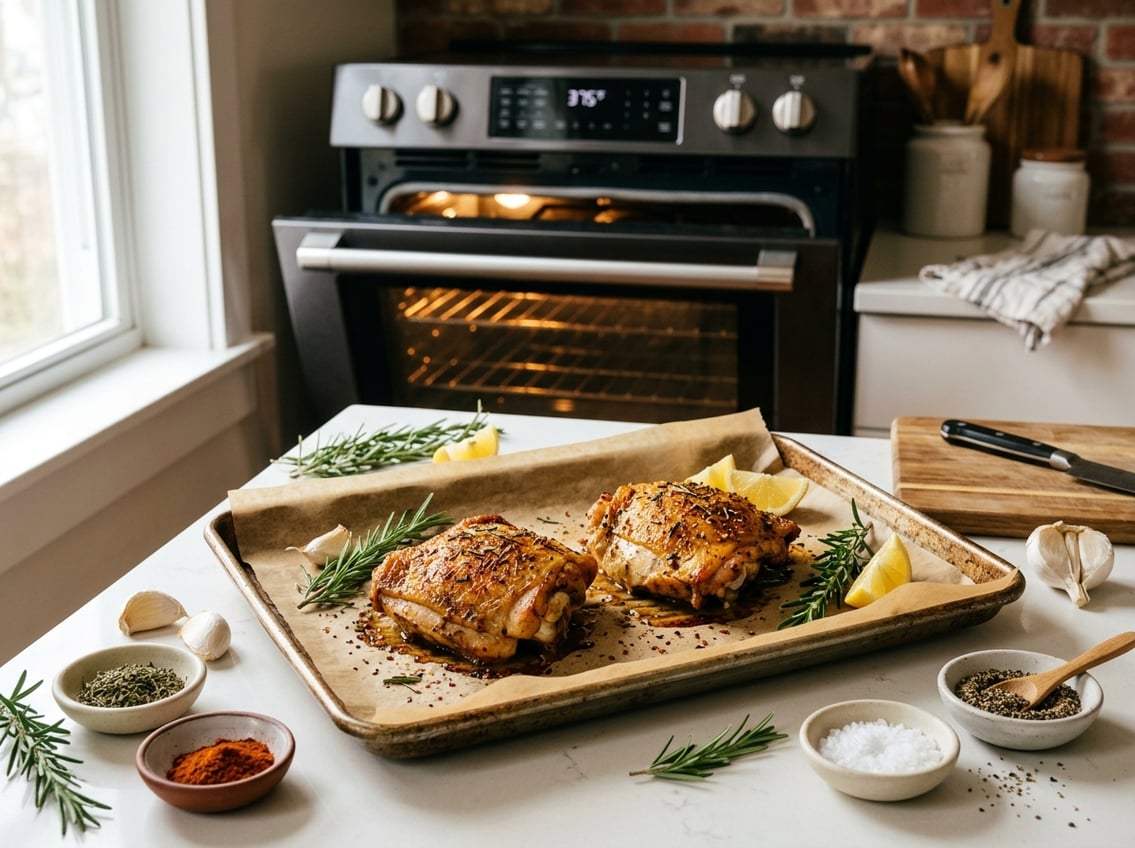
This guide helps you pick bone-in or boneless thighs, select marinades and rubs that boost flavor, and follow a clear step-by-step baking method. You’ll also find practical tips for achieving crispy baked chicken thighs and a few serving ideas.
Choosing the Right Cut of Chicken Thighs
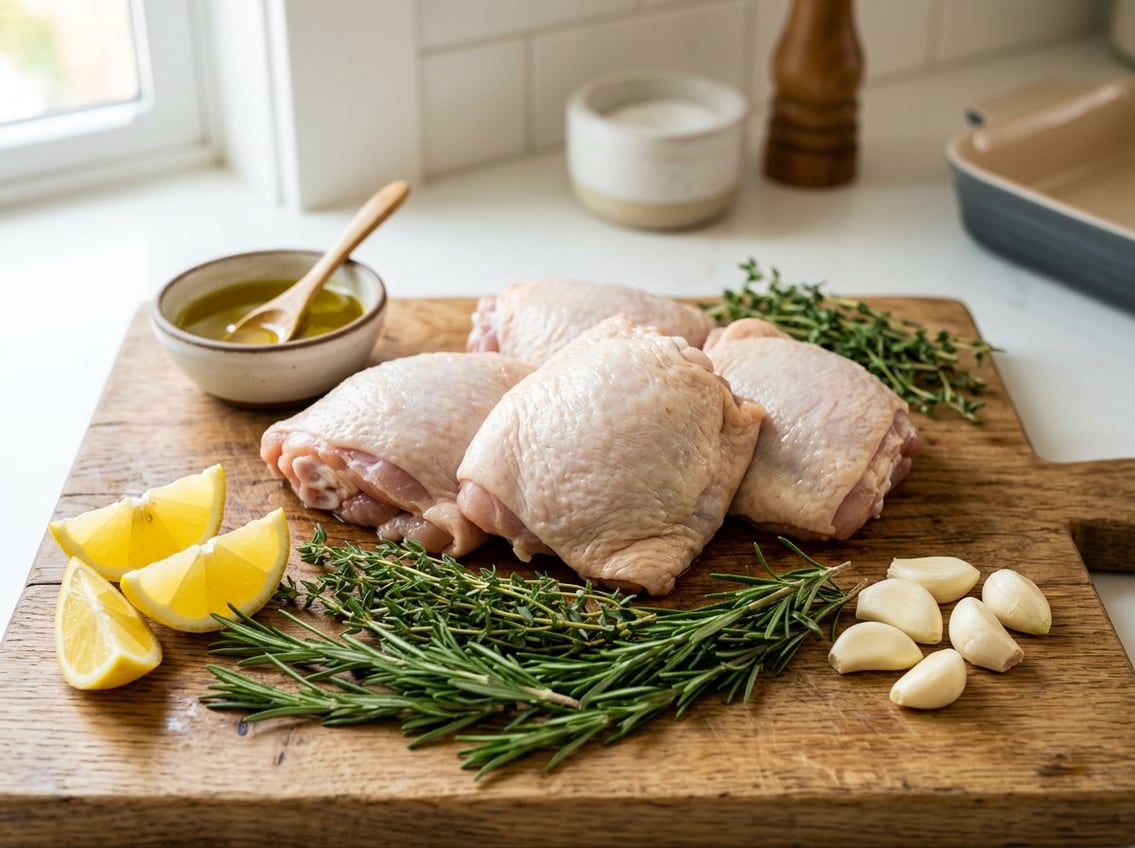
Choose bone-in for richer flavor and slower cooking, boneless for speed and even slices. Pick skin-on for crispy finished skin or skinless when you want leaner, quicker-to-absorb marinades.
Bone-In vs. Boneless Chicken Thighs
Bone-in chicken thighs keep more fat and connective tissue close to the meat, which gives juicier results and deeper flavor when baked. The bone slows heat transfer, so add 5–10 extra minutes of oven time and check doneness with an instant-read thermometer at the thickest part (165°F).
Boneless chicken thighs cook faster and more evenly. They work well if you want uniform pieces for a sheet-pan dinner or to slice for sandwiches.
If you want maximum tenderness with minimal fuss, use boneless skin-on thighs for speed and crisp skin. If you prioritize richness and don’t mind extra cook time, pick bone-in skin-on thighs.
Skin-On vs. Skinless Chicken Thighs
Skin-on chicken thighs give you the best chance at crisp, golden skin when baked. Pat the skin very dry, season generously, and start at a higher oven temperature (425°F) or use the broiler for the last few minutes to render fat and crisp the skin.
Skinless chicken thighs are leaner and reduce baking time slightly. They absorb marinades faster and work well in saucy bakes where you want the sauce to coat the meat instead of crisping the exterior.
For a compromise, remove skin partway through baking to let fat render but still finish with some crispness. Or bake skin-on, then remove skin before serving if you want less fat on the plate.
Selecting Quality Meat
Look for thighs with uniform color and minimal odor. Fresh bone-in chicken thighs should have pale pink meat with white fat.
For prepacked thighs, check the sell-by date and choose packages without excess liquid. If possible, buy from a butcher or butcher counter where you can inspect each piece.
Choose thighs that are similar in size to ensure even cooking. If pieces vary, sort them by size or adjust oven time accordingly.
Consider pasture-raised or label-verified options if flavor and animal welfare matter to you. Frozen thighs work well—thaw fully in the refrigerator and pat dry before seasoning to get good browning.
Essential Seasoning and Marinade Options
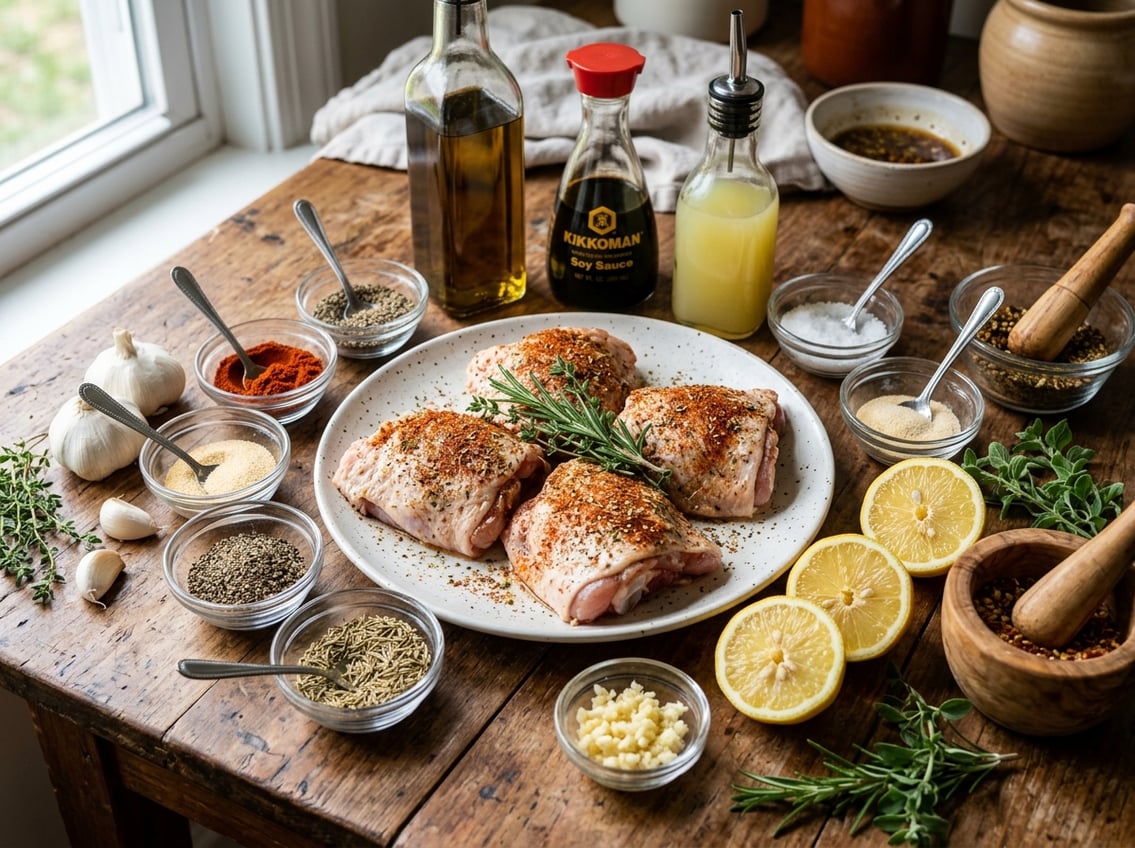
Choose seasonings that build savory depth. Balance salt with acidity or fat, and add fresh herbs at the end for brightness.
Focus on salt, black pepper, and one bold flavor (paprika or garlic) as your base. Then layer herbs like oregano and thyme or a simple oil-based marinade to keep thighs juicy.
Classic Seasoning Blends
Use kosher salt, freshly cracked black pepper, and smoked or sweet paprika. Measure 1 tsp salt and ½ tsp black pepper per pound of chicken, and add 1–2 tsp paprika for color and mild smokiness.
Garlic powder and onion powder complement that trio. Use about ½–1 tsp of each per pound.
For a Mediterranean profile, swap paprika for 1 tsp dried oregano and 1 tsp dried thyme. Rub the blend into the skin and under it when possible.
Let seasoned thighs rest 20–30 minutes at room temperature or refrigerate up to 6 hours for deeper flavor.
Herbs and Spices for Extra Flavor
Add fresh herbs after cooking for a brighter finish. Chop fresh thyme and oregano and sprinkle over hot chicken to release their oils.
Dried oregano and thyme work well in marinades and rubs. Use 1 tsp dried herb per pound of meat, or 1 tbsp fresh.
Black pepper adds bite; grind it fresh. Paprika provides color and mild sweetness.
Balance these with a small amount of acid, like lemon juice or a splash of vinegar, to lift the overall taste.
Homemade Rubs and Marinades
For rubs, combine 2 tbsp brown sugar (optional), 1 tbsp kosher salt, 1 tsp black pepper, 1–2 tsp paprika, 1 tsp garlic powder, and 1 tsp dried oregano or thyme. Pat the rub on dry chicken and let rest at least 30 minutes; refrigerate up to overnight for stronger flavor.
For marinades, use a 3:1 oil-to-acid ratio—3 tbsp olive oil to 1 tbsp lemon juice or vinegar per pound. Add 1 tsp salt, ½–1 tsp black pepper, 1 tsp paprika, and 1 tsp chopped fresh thyme or ½ tsp dried oregano.
Discard marinade that contacted raw chicken or boil it if you plan to use it as a sauce. For both rubs and marinades, allow at least 30 minutes and up to 8–12 hours in the fridge depending on intensity desired.
Step-by-Step Guide to Baking Chicken Thighs
This section gives precise steps for prepping, arranging, and choosing oven temperatures so your baked chicken thighs cook evenly, stay juicy, and develop crisp skin.
Preparation and Prepping the Thighs
Pat each thigh dry with paper towels to remove surface moisture. Dryness is essential for crisp skin.
Trim excess fat and loosen the skin over the meat if you want to tuck aromatics or butter underneath. Season generously with kosher salt and freshly ground black pepper at least 15–30 minutes before baking, or up to overnight in the fridge for deeper flavor.
Use a simple rub of paprika, garlic powder, and a little brown sugar for color and balance, or marinate up to 4 hours for more pronounced flavor.
If you want extra-crispy skin, lightly coat with a teaspoon of baking powder per pound of chicken (do not use baking soda). Bring thighs to near room temperature 20–30 minutes before baking for even cooking.
Arranging on a Rimmed Baking Sheet
Line a rimmed baking sheet with foil or parchment for easy cleanup and to catch juices. Place thighs skin-side up on a wire rack set inside the sheet to allow hot air circulation and reduce steaming.
Space thighs at least 1 inch apart. Overcrowding traps steam and prevents crisping.
For one-pan meals, place quick-cooking vegetables (sliced potatoes, carrots, Brussels sprouts) around bone-in thighs and start roasting at higher heat so vegetables and chicken finish together.
Brush or spray a light coat of oil on skin for color and browning. Reserve any pan juices to baste in the last 5–10 minutes for extra gloss.
Recommended Oven Temperatures
Choose temperature based on texture goals and thigh type. For bone-in, skin-on thighs, set oven to 400°F (200°C) for 35–45 minutes.
Check with an instant-read thermometer in the thickest part without touching bone. For boneless, skinless thighs, set oven to 400°F (200°C) and bake 20–30 minutes, watching closely to avoid dry edges.
If you want very crispy skin on bone-in thighs, increase to 425°F (218°C) and reduce time to 30–40 minutes. Use these target internal temperatures: safe minimum 165°F (74°C), though many prefer 175–180°F (80–82°C) for extra tenderness in thighs.
Let the cooked thighs rest 5–10 minutes on the rimmed sheet before serving to allow juices to redistribute.
Achieving Crispy and Juicy Chicken Thighs
Control oven temperature, remove surface moisture, and season or oil the skin so it crisps without drying the meat. Use bone-in, skin-on thighs and monitor internal temperature to keep the flesh tender.
Techniques for Crisping the Skin
Pat each thigh dry with paper towels; surface moisture prevents browning and produces soggy skin. Apply 1–2 teaspoons oil per thigh and rub it under and over the skin to help the fat render and the skin crisp evenly.
Preheat the oven to 400–425°F (204–218°C). Roast on a rimmed baking sheet or in a shallow pan set on the middle rack.
Space thighs skin-side up with at least 1 inch between pieces for proper air circulation. Sear skin-side down in a hot skillet (1–2 minutes) before baking to jump-start browning if desired.
Use bone-in, skin-on thighs for best results. They retain more moisture and yield crispier baked chicken thighs than skinless cuts.
Finishing with a Broiler
If the skin hasn’t reached the color you want when the thighs are nearly done, move the pan to the top rack and broil on high for 1–3 minutes. Watch closely; broilers can go from golden to burnt in seconds.
Before broiling, check internal temperature. Remove thighs that already read 165°F (74°C) from the oven to prevent overcooking, then broil the remaining pieces briefly.
Keep the oven door slightly ajar if your broiler recommends it, and rotate the pan for even crust color.
Tips for Tender Meat
Cook thighs until the internal temperature at the thickest part reaches 165°F. Allow a 5–10 minute rest so juices redistribute.
Resting helps turn the hot, taut proteins into moist, tender chicken thighs. Avoid overcooking; extended time at high heat dries meat.
Timing and Doneness for Perfect Results
Aim for an internal temperature of 165°F (74°C) as the benchmark. Adjust oven temperature and time by whether the thighs are boneless or bone-in, and whether they have skin.
Use an instant-read thermometer and check the thickest part without touching bone.
How Long to Bake Chicken Thighs
Boneless, skinless thighs typically bake at 425°F (218°C) for about 20–25 minutes. That high heat gives quick, even cooking and keeps meat tender.
For 1-pound batches expect roughly 20 minutes; larger pieces may need 25 minutes. Bone-in, skin-on thighs need more time: roast at 400–425°F for about 30–40 minutes.
The bone slows heat transfer, so plan on the upper end for 6–8 ounce thighs. For very crispy skin, start at 450°F for 10 minutes, then drop to 400°F for the remainder.
Lower temperatures (350°F) lengthen cook time to about 40–50 minutes for bone-in thighs. Use lower heat when baking with vegetables or in a covered dish to avoid over-browning.
Internal Temperature Guidelines
Insert an instant-read thermometer into the thickest part of the thigh, avoiding bone, and target 165°F (74°C). That temperature guarantees safety and good juiciness.
For carryover, remove thighs at 160–162°F if rested for 5–10 minutes; the temperature will rise 3–5°F during rest. Resting for at least 5 minutes lets juices redistribute and improves tenderness.
If you prefer a slightly more tender texture for dark meat, you can safely hold thighs to 170–175°F. Always confirm the final reading in the thickest, meatiest spot.
Adapting Bake Time for Different Cuts
Adjust for thickness and bone presence. Thin or flattened thighs (about 1/2 inch) may take 12–18 minutes at 425°F.
Thicker thighs (1–1.5 inches) need 25–35 minutes. Bone-in pieces add roughly 5–15 minutes compared with boneless equivalents.
Place bone-in pieces on the outer edges of a sheet pan to promote even browning and start them 5–10 minutes earlier when baking a mixed tray.
Covered casseroles or braises at 350°F need the longer times above because steam slows crust formation.
Use a thermometer as your primary guide. Treat listed times as starting points and adjust based on oven accuracy, pan type, and whether you use convection, which shortens time by about 10–15%.
Serving and Pairing Suggestions
Balance texture and flavor by choosing one creamy starch, one bright vegetable, and a simple sauce or pan jus to tie flavors together.
Aim for contrasts such as crispy skin against smooth, buttery sides and a touch of acidity to cut the fat.
Classic Sides to Serve With Baked Chicken Thighs
Mashed potatoes pair well. Make them buttery and slightly tangy by folding in warm cream or sour cream, and finish with chopped chives.
Roast or mashed sweet potatoes work if you want a sweeter note.
Choose quick-roast vegetables like Brussels sprouts or carrots tossed with olive oil and salt, roasted at the same temperature as the thighs.
Steamed green beans or sautéed zucchini add freshness. Finish them with lemon zest or a splash of vinegar.
Serve fluffy couscous, quinoa, or simple herbed rice pilaf to soak up pan juices.
Offer crusty bread or warm buttermilk biscuits when you want something to mop the sauce. A light salad with a vinegar-forward dressing brightens the plate.
Using Leftovers Creatively
Shred leftover chicken thighs and fold them into tacos or enchiladas with a squeeze of lime and cilantro for fast weeknight meals.
Chop the chicken and add it to grain bowls with roasted vegetables. Drizzle with tahini or yogurt sauce and top with pickled onions for contrast.
Sauté garlic, then add chopped thighs and a splash of pan juices or chicken stock. Toss with short pasta and grated Parmesan.
Cube the meat and add it to a simple vegetable or bean soup near the end of cooking to keep it tender.
Store leftovers in airtight containers for up to 4 days. Freeze portions for up to 3 months.


