
What Are Chicken Thighs Supposed to Be Cooked To? Safe Temps & Juicy Results
You want to know exactly when chicken thighs are safe and at their best—not guesswork. Cook chicken thighs to an internal temperature of at least 165°F (75°C) for safety, and many cooks aim for 175–195°F for more tender, gelatin-rich dark meat depending on whether you prefer slightly firm or meltingly tender texture.
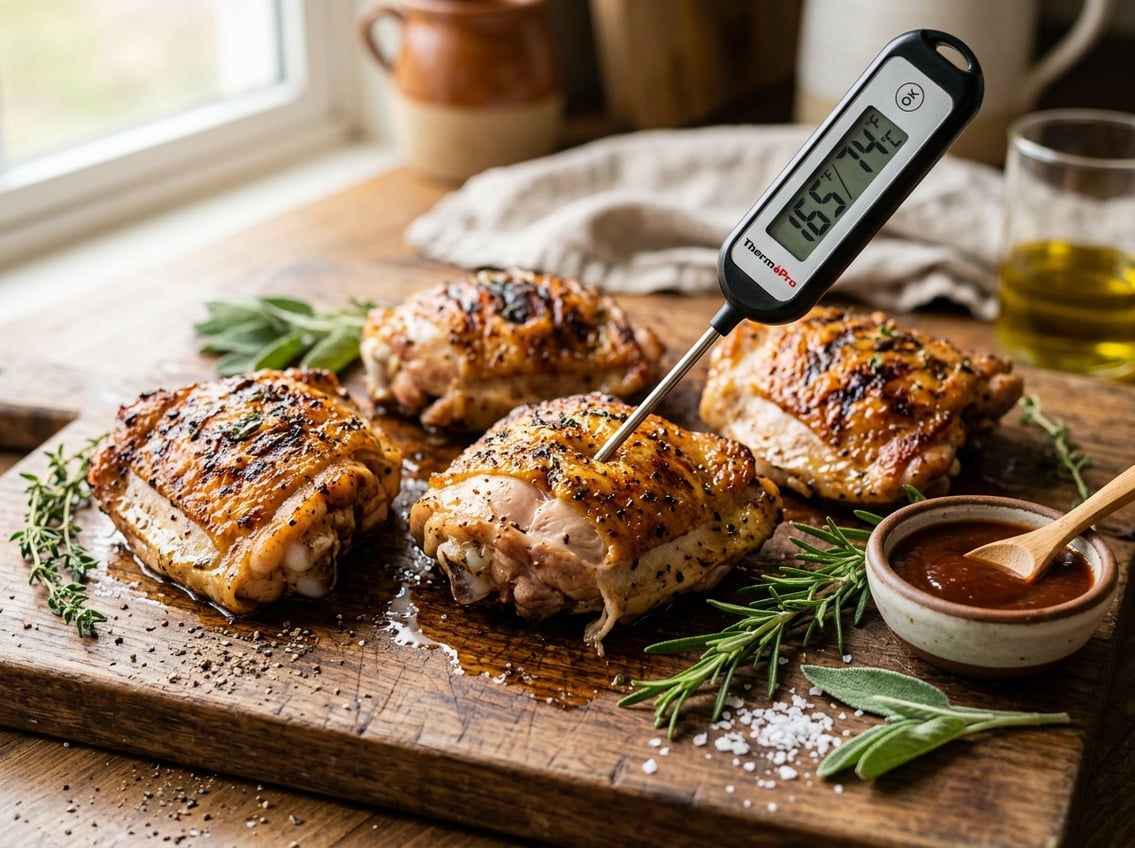
This post explains how to check temperature accurately. You’ll also learn the differences between bone-in and boneless thighs, plus methods like oven roasting and grilling to help you hit your target every time.
You’ll get tips on marinades and prep that affect texture and cooking time so your thighs come out juicy and consistent.
Essential Temperatures for Chicken Thighs
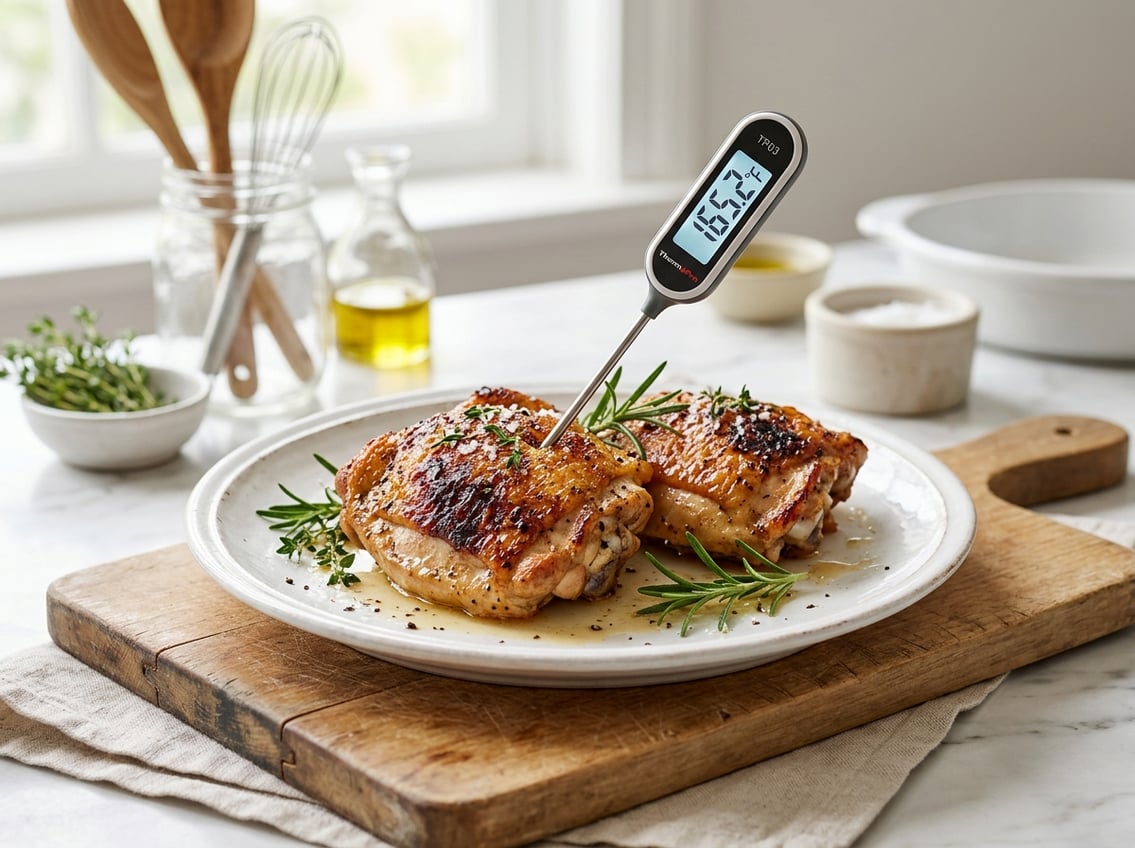
You need clear target temperatures to keep chicken thighs safe and to get the texture you want. Rely on measured internal temperatures rather than cooking times alone.
Minimum Safe Internal Temperature
The USDA sets the minimum safe internal temperature for poultry at 165°F (74°C) measured in the thickest part of the thigh, away from bone.
Use an instant-read thermometer and insert it at least ¼ inch from the bone to avoid false high readings. Hold the probe until the reading stabilizes.
Reaching 165°F rapidly reduces pathogens like Salmonella.
Optimal Range for Juicy and Tender Texture
For juicier, more tender thigh meat, aim for 175°F–195°F (79°C–90°C) depending on technique and desired texture.
At 175°F you get fully cooked meat that still clings to the bone and remains moist.
At 190–195°F connective tissue converts to gelatin, making thighs meltingly tender, especially when braising, slow roasting, or using indirect grilling.
If you roast or grill quickly, pull at the lower end of the range and rest the meat 5–10 minutes to redistribute juices. For slow or wet cooking, allow the internal temperature to reach the higher range to maximize tenderness without drying.
Why Dark Meat Differs from White Meat
Dark meat (thighs and drumsticks) contains more connective tissue and fat than white meat. Collagen breaks down into gelatin during prolonged cooking, increasing tenderness and juiciness as internal temperature rises.
White meat (breasts) lacks that collagen, so it becomes dry when cooked past the safe minimum. Thighs benefit from higher internal temperatures because the extra collagen compensates for moisture loss, making 190–195°F a good target for tender chicken thighs.
How to Check If Chicken Thighs Are Properly Cooked
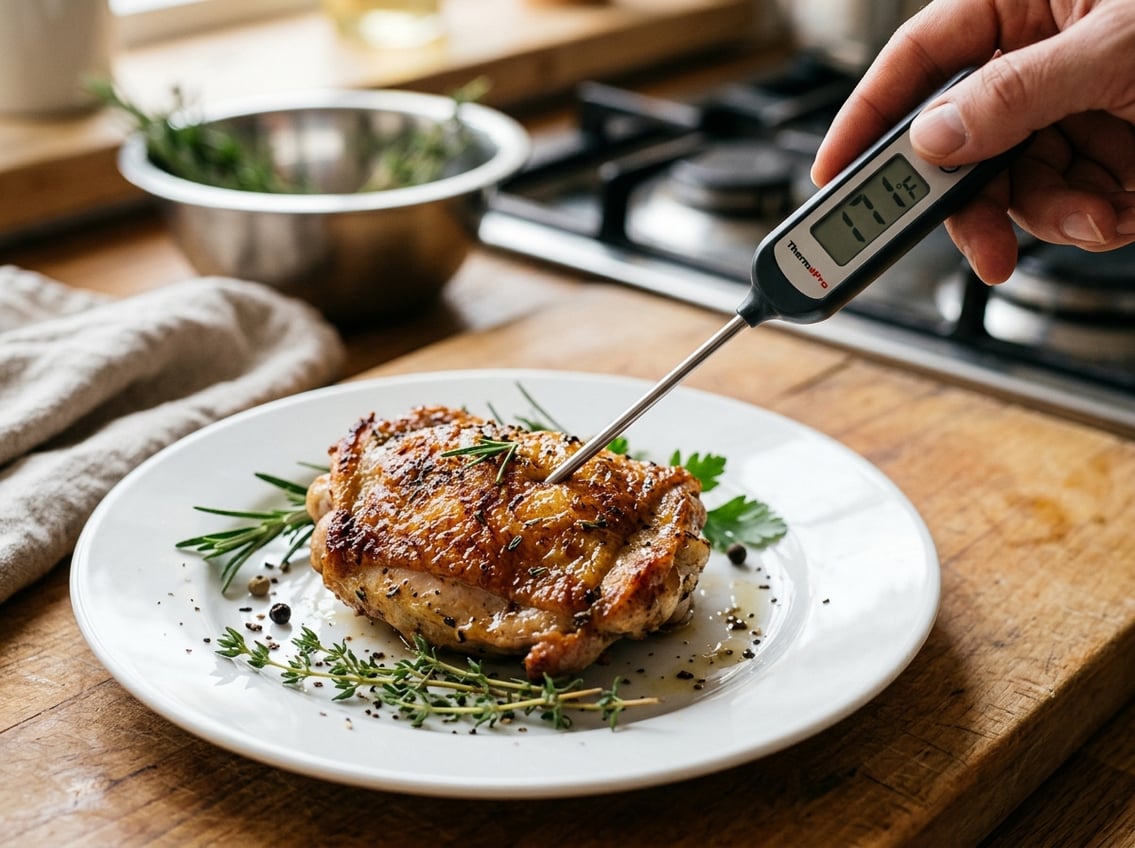
Aim for a reliable temperature, correct probe location, and a few visual or texture checks to confirm doneness. Use an instant-read or leave-in meat thermometer as your primary tool.
Using a Meat Thermometer
Use an instant-read meat thermometer for quick, accurate checks. Turn the thermometer on, let it stabilize, then insert and read the temperature without removing the thigh from heat unless necessary.
Target internal temperature: 165°F (74°C) is the USDA minimum, but for thighs you’ll often prefer 170–185°F for rendered collagen and tender texture. Hold the probe in place until the reading steadies.
Avoid touching bone or gristle, which gives falsely high readings. If you’re testing multiple pieces, check the thickest thigh on the pan or grill; it will finish last and represent the batch.
Where to Insert the Thermometer
Insert the probe into the thickest part of the thigh, perpendicular to the surface. For boneless thighs, aim for the center; for bone-in thighs, angle the probe so the tip sits beside the bone but not touching it.
If the probe hits bone, reposition slightly and retest. For bone-in pieces, probe from the side toward the bone shaft about halfway through the meat.
For consistent results, mark and test the same point on each thigh. When cooking multiple thighs, test the largest and thickest piece first.
Visual and Texture Cues
Pierce the thickest part and watch the liquid. Clear or slightly golden juices indicate doneness; pink or red juices suggest more cooking is needed.
The center should look opaque and not glossy. Bone-in thighs may still show slight pink near the bone from myoglobin; trust the thermometer more than color alone.
Press the thigh—cooked meat feels firm with some spring. Use the fork-twist or knife-slice tests: the meat should separate easily and not resist the utensil.
Differences Between Bone-In and Boneless Cuts
Bone-in thighs generally take longer to reach safe temperature but stay juicier. Skin-on pieces give you crisp skin and more insulation.
Boneless cuts cook faster and suit quick methods or uniform slices.
Bone-In Chicken Thighs Cooking Tips
When you cook bone-in chicken thighs, aim for an internal temperature of 165°F (74°C) at the thickest part, measured without touching bone. Expect longer cook times—plan 35–45 minutes at 400°F (204°C) for roasting, or adjust upward for larger pieces.
Use the bone to your advantage: it slows heat transfer so the meat stays moist during higher-heat searing or longer braises. If roasting, start skin-side up and finish skin-side down or under a broiler for 2–3 minutes to crisp.
Rest for 5–10 minutes after cooking so juices redistribute. If you grill, use indirect heat to avoid overbrowning while letting the interior reach temperature.
Always check multiple thighs since bone placement and thickness vary.
Boneless and Skin-On Varieties
Boneless thighs reach 165°F (74°C) faster because heat penetrates evenly without bone insulation. For pan-searing, cook over medium-high heat for about 6–8 minutes per side depending on thickness; use a thermometer to confirm doneness.
Skin-on boneless thighs offer the best of both worlds: quick cooking with a crispy exterior. Pat skin dry, season, and start skin-side down in a hot pan to render fat and build a brown crust.
Finish in the oven at 400°F (204°C) for 6–10 minutes if needed. If you plan to slice or stir-fry, trim excess fat and cut into uniform pieces so they cook evenly.
Always let boneless pieces rest briefly to hold juices before slicing.
Oven and Roasting Methods for Chicken Thighs
Roast chicken thighs to a safe internal temperature while balancing time and surface texture. Use higher heat for crisp skin and lower heat for more even, fall-off-the-bone tenderness.
Recommended Oven Temperatures
Set the oven between 375°F and 425°F depending on your goal.
375°F (190°C) works best for bone-in, skin-on thighs when you want tender meat with moderate crisping.
400°F (204°C) is a reliable middle ground for juicy meat and crisp skin in about 30–40 minutes.
425°F (218°C) gives you quicker roasting and maximum skin crispness; watch closely to avoid over-browning.
Always use an instant-read thermometer. Pull bone-in thighs when internal temperature reads 175°F–185°F for breaking down connective tissue, or 165°F–170°F if you prefer firmer texture.
Rest uncovered 5–10 minutes so carryover heat evens out.
How Long to Bake Chicken Thighs
Bake time depends on temperature, size, and whether thighs are bone-in or boneless.
Bone-in, skin-on at 400°F: plan 30–45 minutes.
Boneless, skinless at 400°F: plan 20–30 minutes.
At 375°F expect roughly 5–10 additional minutes compared with 400°F.
Check doneness by inserting an instant-read thermometer into the thickest part without touching bone. Look for 175°F–185°F for tender, shreddable thighs; 165°F–170°F if you prefer less breakdown of connective tissue.
Juices should run clear and the meat should give slightly when pressed.
Tips for Crispy Chicken Thighs
Dry the skin thoroughly with paper towels before seasoning.
Pat skin dry, then salt and let sit uncovered in the fridge for 30 minutes to overnight to draw out extra moisture.
Sear skin-side down in a hot oven-safe skillet for 3–5 minutes before transferring to the oven to render fat and start browning.
Roast on a wire rack set over a baking sheet to allow hot air circulation and avoid steaming.
Brush or toss with a little oil; avoid sugary glazes until the last 5–10 minutes to prevent burning. Finish at the higher end of the temperature range for the last 5–10 minutes to sharpen the crust.
Use a thermometer to avoid overcooking while chasing crispness.
Other Cooking Methods Compared
Different methods give you control over texture, skin crispness, and cooking time. Pay attention to target temperature, resting time, and whether the thighs are bone-in or boneless.
Grilling Chicken Thighs
Grilling gives you char and a smoky crust while keeping the interior juicy. Sear thighs over direct high heat (about 450–500°F) for 3–5 minutes per side to develop color, then move to indirect heat and finish until the thickest part reaches 165°F.
If you use boneless, skinless thighs, grill over medium-high and flip more often. Skin-on, bone-in thighs tolerate higher temps and benefit from a two-zone setup: direct for sear, indirect for gentle finish.
Brush with oil to prevent sticking and use sugar-based glazes only in the final minutes to avoid burning. Let the meat rest 5–10 minutes before slicing.
Slow Cooking and Braising
Slow cooking and braising prioritize tenderness over crispness. Cook thighs low and slow: a braise on the stovetop or oven at 300–325°F for 60–90 minutes, or a slow cooker on low for 4–6 hours, until the meat easily pulls from the bone.
Aim for an internal temperature higher than 165°F—around 185–195°F—when you want fall-off-the-bone texture. Connective tissue breaks down and collagen converts to gelatin in that range.
Use flavorful liquids (stock, wine, or tomatoes) to keep meat moist and to build sauce. If you want crisp skin afterward, briefly broil or pan-sear the thighs just before serving.
Pan-Frying and Sautéing
Pan-frying and sautéing deliver fast, browned crusts and are ideal for weeknight meals. For skin-on thighs, start skin-side down in a cold or medium-hot pan and render fat slowly to crisp the skin, then finish in a 400°F oven until the center hits 165°F.
For boneless, skinless pieces, cook over medium-high heat, 4–6 minutes per side depending on thickness, and check with an instant-read thermometer. Avoid overcrowding the pan to maintain temperature and achieve a golden crust.
Use a neutral oil with a high smoke point and rest the chicken briefly after cooking. Pan juices make quick pan sauces—deglaze with wine or stock and reduce for immediate serving.
Marinades and Preparation Tips for Better Texture
Proper acid balance, drying the skin, and correct marinating time affect tenderness and how the skin crisps. Use a thermometer, avoid over-acidifying for long periods, and let cooked thighs rest briefly before slicing.
How to Marinate Chicken Thighs
Choose a marinade that balances acid, oil, salt, and aromatics. Use 1–2 tablespoons acid (lemon juice, vinegar, or yogurt) per cup of marinade to tenderize without turning the meat mushy.
Add 2–3 tablespoons oil to carry fat-soluble flavors and help with browning. Marinate boneless thighs 30 minutes to 4 hours; bone-in thighs tolerate 2–8 hours.
Don’t exceed 24 hours for acidic mixes. For even flavor, place thighs in a zip-top bag, press out excess air, and turn occasionally.
If you want crispy skin for baked chicken thighs, pat skin completely dry before seasoning, and salt the skin at least 1 hour ahead or overnight in the fridge to draw out surface moisture.
Resting and Serving Tips
Pull boneless thighs at 165°F and bone-in at 175°F for best texture. Check at the thickest point with an instant-read thermometer.
After cooking, rest thighs 5–10 minutes on a cutting board to let juices redistribute. This prevents pooling when you slice.
To preserve crisp skin, tent loosely with foil (not tightly). You can also re-crisp under a hot broiler for 1–3 minutes after resting.
For reheating baked chicken thighs, use a 375°F oven on a wire rack for 8–12 minutes. This restores texture without drying the meat.
Slice across the grain for shorter fibers and a tender bite. Serve immediately with acidic or fresh components like lemon wedges or herb salsa to brighten richer marinades.
Flavorful Chicken Thigh Recipes
Try a simple soy-ginger marinade: ½ cup soy sauce, 2 tbsp honey, 1 tbsp rice vinegar, 1 tbsp grated ginger, 3 cloves garlic, and 2 tbsp sesame oil. Marinate chicken for 1–4 hours, then grill or pan-sear it and finish in a 400°F oven for 12–20 minutes, depending on the cut.
For baked chicken thighs, use a yogurt-based mix: ¾ cup plain Greek yogurt, 2 tbsp lemon zest, 2 tsp smoked paprika, 2 cloves minced garlic, and 1 tsp salt. Marinate bone-in thighs for 2–8 hours and bake them skin-side up at 425°F on a wire rack for 35–45 minutes.
If you want a quick sheet-pan option, toss thighs with a marinade of olive oil, Dijon, honey, and thyme. Spread them on a rimmed sheet pan and roast at 425°F for browning and a concentrated pan sauce.


