
What Is the Best Way to Marinate Chicken Thighs: Proven Techniques and Recipes
You want juicy chicken thighs that actually taste like something, not dry, bland meat. Use a balanced marinade that combines salt, acid, fat, sweet, and umami to transform ordinary thighs into tender, flavorful mains ready for grilling, baking, or shredding for recipes.

Marinate your thighs for at least 30 minutes and up to 12–24 hours depending on the acid level. Shorter times work for citrus-heavy mixes, while longer times suit soy- or oil-based blends. Always refrigerate while marinating.
This guide highlights which ingredients to prioritize, how to prep thighs for best absorption, ideal timing and techniques, safe handling, and versatile marinade ideas.
Key Elements of an Effective Chicken Thigh Marinade
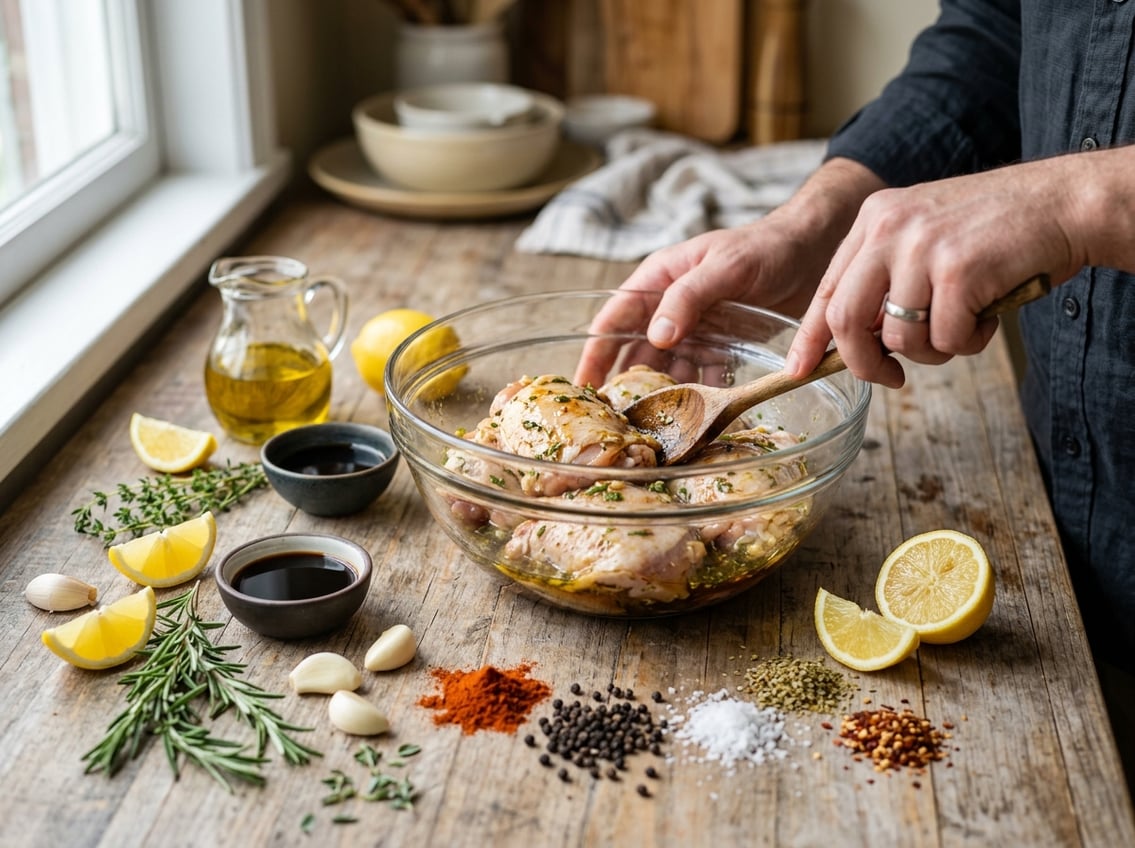
A strong marinade balances tenderizing agents, fat for moisture, and concentrated seasonings that survive cooking. Pay attention to proportions and ingredient roles so each bite of thigh stays juicy and flavorful.
Flavor Foundations: Acid, Oil, and Sweeteners
Acid loosens muscle fibers and brightens taste. Use 2–4 tablespoons per pound of chicken: lemon juice, apple cider vinegar, red wine vinegar, or a restrained splash of balsamic vinegar.
If you use yogurt or buttermilk, reduce strong citrus to avoid mushy texture.
Oil carries fat-soluble flavors and prevents drying. Aim for about equal parts oil and acid by volume for most recipes. Olive or neutral vegetable oil work well.
Oil also helps herbs and spices cling to skin.
Sweeteners balance sharp acids and support caramelization. Add 1–2 teaspoons per pound: maple syrup, honey, or brown sugar.
For high-heat grilling, keep sugar lower to prevent burning. A teaspoon of Dijon mustard adds tang and helps emulsify oil and acid.
Season salt and pepper deliberately. Use kosher salt and fresh black pepper. Start modestly because soy-based ingredients can add more salt later.
Enhancing Umami and Depth With Soy Sauce and Tamari
Umami adds savory length and depth. Add 1–2 tablespoons of soy sauce or tamari per pound for a pronounced savory backbone.
Tamari provides similar umami with lower wheat content and a slightly less sharp saltiness.
Combine soy or tamari with lower-sodium liquid choices when you want control over salt. Dilute with oil, a splash of vinegar, or water.
If you use both soy and a sweetener like maple syrup, the sugars meld with umami and create a glossy crust when roasted or grilled.
Remember to boil any marinade that touched raw chicken before serving as a sauce. Alternatively, reserve a separate portion of the marinade for finishing.
The Role of Garlic, Herbs, and Spices
Aromatics define the character of your marinade. Fresh garlic (2–4 cloves per pound) gives bright, pungent heat.
If you use garlic powder, use about 1/3 the amount by weight for even distribution. Minced garlic soaks into meat more readily than powder.
Herbs add top-note freshness. Use rosemary, thyme, or oregano for Mediterranean profiles; cilantro or parsley for brighter finishes.
Chop fresh herbs fine to release oils, or use 1/3–1/2 the amount if dried.
Spices round out flavor. Add smoked paprika, cumin, or black pepper to taste.
If you include Dijon mustard, it anchors spices and helps the mixture emulsify. Adjust salt after adding soy or tamari to prevent oversalting.
Selecting and Preparing Chicken Thighs

Choose thighs with consistent size and minimal excess liquid. This gives even cooking and better marinade absorption.
Trim excess fat and pat the skin or surface dry so seasonings stick and marinades penetrate the meat.
Boneless vs. Bone-In: Making the Right Choice
Bone-in chicken thighs hold more flavor because the bone conducts heat and helps retain moisture during cooking.
If you want richer taste and forgiving texture, pick bone-in thighs for grilling, oven roasting, or braises. Expect longer cook times and use an instant-read thermometer to hit 175°F–185°F for tender results.
Boneless thighs cook faster and are easier to portion for sandwiches, stir-fries, or quick pan-sears. They absorb marinades faster because the surface area is increased.
Watch boneless pieces closely and pull them around 165°F to avoid drying out.
Boneless Skinless Options for Leaner Results
Boneless skinless chicken thighs reduce fat and crisping potential compared with skin-on cuts. Choose them when you need leaner protein for salads, tacos, or recipes where crispy skin is unnecessary.
They still offer more connective tissue and flavor than chicken breasts, so they remain forgiving under high heat.
When marinating boneless skinless thighs, cut shallow slits or score the surface to help marinades reach the interior. Limit acidic marinades to under 8–12 hours to prevent mushy texture.
Pat dry before searing to promote browning since the skin is absent.
Cost, Flavor, and Texture Comparisons to Chicken Breasts
Thighs generally cost less per pound than chicken breasts while delivering stronger, more savory flavor due to higher fat and connective tissue.
That fat converts to gelatin as you cook, producing tender chicken even when cooked longer.
Chicken breasts provide milder flavor and leaner protein but dry out faster. They require careful timing or brining.
If you want budget-friendly, forgiving meat that stands up to bold marinades, choose bone-in or boneless thighs over breasts.
Use breasts when you need ultra-lean, neutral-flavored protein for quick, delicate dishes.
Optimal Marinating Time and Techniques
You will learn safe handling, recommended time ranges for different marinades, and practical ways to get even flavor into each thigh.
Best Practices for Marinating Chicken Thighs Safely
Always marinate in the refrigerator at 40°F (4°C) or below to prevent bacterial growth. Place the container on the bottom shelf and use a nonreactive vessel: glass, food-grade plastic, or stainless steel with a tight lid.
Discard any marinade that held raw chicken unless you boil it to 165°F (74°C) for at least a minute before using it as a sauce or baste.
Use separate utensils and plates for raw and cooked chicken to avoid cross-contamination.
If you use a resealable plastic bag, press out excess air so the marinade maintains contact with the thighs. Label the bag or container with the start time and date.
The USDA limit for refrigerated marinating is 48 hours.
Marinating Time Guidelines for Maximum Flavor
Use time and ingredients together. Enzymatic or acidic marinades need less time than oil-based ones.
For simple oil-herb marinades, 2–6 hours will infuse surface flavor and keep texture intact.
For acidic marinades (lemon, vinegar, yogurt), limit marinating to 1–6 hours for boneless thighs and up to 8 hours for bone-in thighs. Acid can soften proteins.
Beyond 12–24 hours, texture can turn mealy.
Enzymatic marinades with pineapple, papaya, or kiwi act fast. Marinate for 30–90 minutes.
If you want deeper flavor without acid or enzymes, marinate up to 24–48 hours in the refrigerator using oil, soy, or buttermilk-based mixes.
Tips for Even Flavor Penetration
Pat thighs dry and score the skin or pierce flesh lightly to help the marinade reach inner layers. Avoid over-piercing.
Massage the marinade into the meat and arrange thighs in a single layer in the bag or container to keep contact even.
Turn the bag or flip the container every 1–2 hours for short marinades. For longer marinating, do one flip mid-way.
Balance the marinade components. A 2:1 or 3:1 oil-to-acid ratio prevents over-acidifying while allowing fat-soluble flavors to coat the meat.
For consistent results, measure ingredients and use a kitchen timer to avoid exceeding recommended times.
How to Cook Marinated Chicken Thighs for Juicy Results
Keep the marinade flavor, prevent drying, and aim for a browned exterior while reaching 165°F (74°C) internal temperature.
Control heat, avoid overcrowding, and rest the thighs briefly before serving.
Grilled Marinated Chicken Thighs: Char and Caramelization
Preheat your grill to medium-high (about 400°F/204°C). Oil grates with a paper towel dipped in oil to prevent sticking.
Place thighs skin-side down if skin-on; cook 4–6 minutes per side depending on thickness, rotating once for even char.
Move pieces to indirect heat if flare-ups occur to avoid burning the marinade sugars.
Use an instant-read thermometer and remove thighs at 160–162°F (71–72°C); carryover will reach 165°F (74°C).
For best caramelization, pat excess marinade off before grilling so juices don’t steam.
Let the chicken rest 5 minutes before serving to redistribute juices.
Oven Baked and Broiled Methods
Preheat oven to 425°F (220°C). Arrange marinated chicken thighs in a single layer on a rimmed baking sheet or in a shallow baking dish with space between pieces.
Bake bone-in, skin-on thighs about 20–30 minutes. Boneless will take 18–22 minutes.
Check doneness with a thermometer at the thickest part.
For crisp, caramelized skin, finish under the broiler 2–4 minutes on high, watching closely to prevent burning.
If your marinade contains sugar or honey, reduce broil time to avoid excessive darkening.
Rest the thighs 5 minutes after baking to lock in juices and yield juicier baked marinated chicken thighs.
Pan-Seared and Stovetop Approaches
Heat a heavy skillet (cast-iron preferred) over medium-high and add a thin layer of oil.
Pat thighs dry to encourage browning, then sear skin-side down 5–7 minutes until deep golden and crisp.
Flip and reduce heat to medium; cook another 6–10 minutes until internal temp reaches 165°F (74°C).
If thighs are thick, sear first and finish covered over lower heat for even cooking or transfer to a 375°F (190°C) oven for 8–12 minutes.
Spoon pan juices or a reduced portion of boiled marinade over the thighs during the last minutes for added moisture and flavor.
Let rest briefly before serving.
Ensuring Perfect Doneness and Food Safety
Use a reliable method to confirm chicken thighs are both safe and cooked to the texture you want.
Focus on internal temperature and a few visual cues to prevent undercooking and overcooking.
Checking Internal Temperature With a Meat Thermometer
Use an instant-read digital meat thermometer for the most accurate result. Insert the probe into the thickest part of the thigh without touching bone.
Cook until the thermometer reads 165°F (74°C) anywhere in the thickest section.
For dark meat like thighs, you can remove from heat at 160–162°F and rest 3–5 minutes. Carryover heat will bring it to 165°F while preserving juiciness.
Sanitize the probe after each use and avoid letting the thermometer touch the cooking surface.
If you brined or marinated in the refrigerator, keep the thighs chilled until you start cooking to prevent bacterial growth.
Signs of Properly Cooked Chicken Thighs
Rely on temperature first, then check texture and juices as secondary confirmation.
Properly cooked thighs will feel springy but not rubbery when pressed. A gentle squeeze with tongs should show some resistance and then bounce back.
Cut into the thickest part to inspect juices. They should run clear with no pink streaks.
A slight pink hue near the bone can persist in well-cooked dark meat. Don’t assume pink equals unsafe. Verify with a thermometer.
Avoid judging doneness by color alone. Use both the probe reading and these tactile or visual checks to ensure safety and good texture.
Versatile Marinade Recipe Ideas
These recipes focus on balance: acid to tenderize, fat to transfer flavor, and salt to season. Each mix is built for chicken thighs and includes swap suggestions, timing, and quick cooking notes.
Classic Soy-Garlic Marinade
This marinade delivers bold, savory flavor that caramelizes well on chicken thighs.
Combine 1/3 cup soy sauce, 2 tablespoons neutral oil (canola or vegetable), 2–3 minced garlic cloves, 1 tablespoon brown sugar or honey, 1 tablespoon rice vinegar or lime juice, and 1 teaspoon grated fresh ginger.
Add 1/4 teaspoon black pepper and 1/2 teaspoon crushed red pepper if you want heat.
Marinate bone-in or boneless thighs for 30 minutes to 6 hours. Longer marinating improves depth, but very thin pieces may become slightly firmer.
Grill or pan-sear over medium-high heat until the internal temperature reaches 165°F (74°C).
If you want a finishing glaze, reserve a tablespoon of marinade before adding the raw chicken.
Try using tamari for a gluten-free version. Add 1 teaspoon sesame oil for a nutty note.
Stir in chopped scallions and lime zest after cooking for freshness.
Honey Mustard and Maple Variations
This sweet and tangy marinade works well for oven-roasted or sheet-pan chicken thighs.
Whisk 3 tablespoons Dijon mustard, 2 tablespoons honey or maple syrup, 2 tablespoons olive oil, 1 tablespoon apple cider vinegar, and 1/2 teaspoon kosher salt.
Add 1/4 teaspoon smoked paprika for warmth.
Marinate thighs for 30 minutes to 4 hours.
Roast at 425°F (220°C) for 25–30 minutes for bone-in thighs. Baste once with reserved sauce to build a glossy crust.
Sugar in the marinade helps with browning, so watch closely near the end of cooking.
Swap honey for pure maple syrup for deeper caramel notes. Add 1 teaspoon whole-grain mustard for texture.
For a lower-sugar option, reduce the sweetener and increase vinegar or lemon juice.
Balsamic and Apple Cider Blends
These acid-forward blends give a bright, slightly sweet glaze that pairs well with herbs and root vegetables.
Mix 1/4 cup balsamic vinegar (or 2 tablespoons balsamic and 2 tablespoons apple cider vinegar) with 3 tablespoons olive oil.
Add 2 minced garlic cloves, 1 tablespoon brown sugar or maple syrup, and 1 teaspoon dried oregano or rosemary.
Season with salt and pepper to taste.
Marinate chicken for 1 to 4 hours so the acid can gently penetrate without over-toughening.
Roast or grill the chicken; balsamic reduces into a sticky glaze that clings to thighs.
If you want to use the marinade as a sauce, simmer it for a few minutes to kill bacteria and thicken.
For extra flavor, add Dijon mustard for tang or a splash of soy sauce for umami.
Finish with fresh parsley and lemon zest to brighten the dish.


