
What Is the Best Sauce for Chicken Thighs? Flavorful Picks and Tips
You want juicy chicken thighs that taste like a purpose-built meal, not a last-minute throw-together.
Sauces transform texture and flavor, turning crisp skin and rich dark meat into something balanced, bold, or comfortingly creamy depending on your mood.
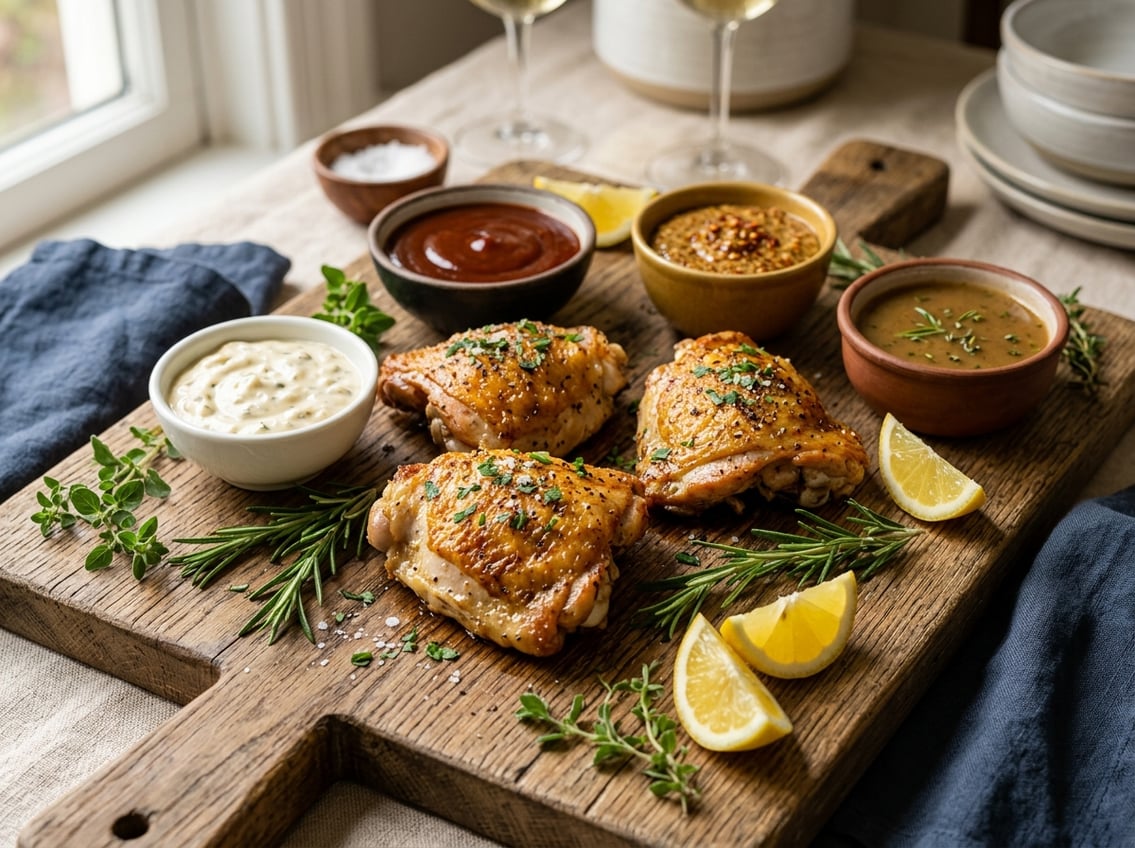
The best sauce for chicken thighs depends on the result you want. For comforting richness, choose a creamy garlic-Parmesan or mustard pan sauce.
For bright freshness, go with herbaceous pesto or yogurt-tahini. For bold flavor, pick BBQ, teriyaki, or a spicy buffalo or kung pao glaze.
This guide explains why sauces matter and shows classic creamy choices, sweet-tangy options, green herb sauces, bold spicy glazes, and simple homemade ideas you can make tonight.
Why Sauce Enhances Chicken Thighs
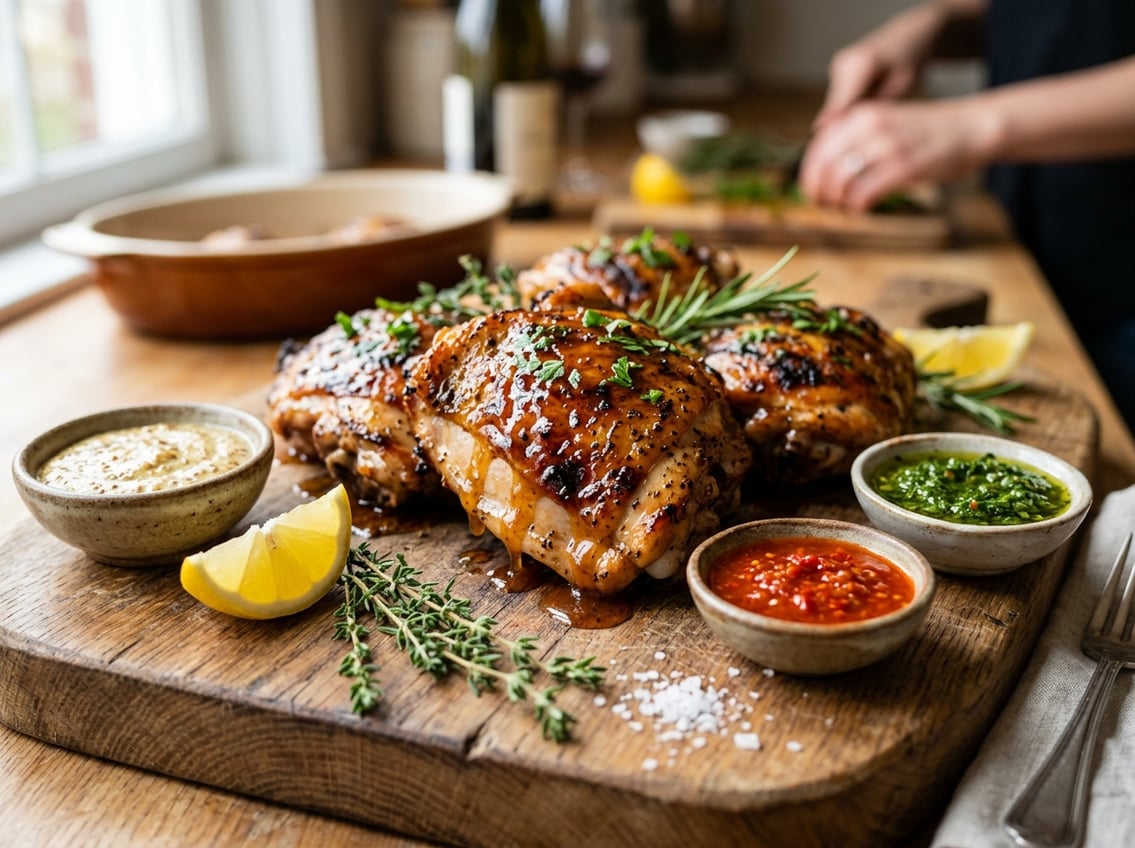
Sauce turns ordinary chicken thighs into balanced, flavorful meals by adding taste, moisture, and texture.
It also makes plating more attractive and stretches simple weeknight ingredients into satisfying dinners.
Flavor and Moisture Boost
Sauces concentrate and layer flavors that chicken thighs alone can’t provide.
Thighs have higher fat content, so they absorb and carry bold tastes like tangy barbecue, umami-rich teriyaki, or bright lemon-herb. A properly seasoned sauce reaches the meat’s interior and changes each bite.
A glaze or pan sauce helps lock surface moisture during finishing and keeps the interior from drying out, especially when you sear first and add sauce near the end.
For weeknight dinners, marinades with acid (vinegar, citrus) and oil or yogurt both tenderize and reduce cook time while preserving juiciness.
Choose thicker glazes for high-heat methods and thinner pan sauces for baking. Matching sauce thickness to cooking method ensures flavor penetration without sogginess.
Visual Appeal and Texture
Sauce upgrades the plate visually and texturally.
A glossy teriyaki or honey-garlic glaze forms a shiny crust that signals caramelization and flavor.
Creamy mustard or garlic-parmesan sauces add a velvety coating that contrasts with crisped skin.
Crisp skin with a sticky glaze gives bite and chew. A silky pan sauce softens the meat and carries aromatics like garlic, herbs, and citrus zest.
For presentation, spoon sauce around the thigh or drizzle in a pattern to keep the skin crisp while delivering sauce on every forkful.
Color contrast helps too: deep mahogany BBQ, bright chimichurri green, or pale lemon sauce make simple chicken thigh recipes look intentional and restaurant-worthy.
Versatility for Weeknight Dinners
Sauces make chicken thighs adaptable to fast, cost-effective dinners.
You can switch cuisines by swapping the sauce: BBQ for American, teriyaki for Japanese, chimichurri for Argentine-style, or yogurt-tahini for Mediterranean.
That flexibility turns the same basic protein into multiple chicken thigh recipe ideas across the week.
A quick 5-minute honey-garlic or store-bought BBQ brushed on during the last 10 minutes of cooking yields reliable results.
For healthier weeknights, choose yogurt-based sauces or lemon-olive oil dressings to keep calories and sugar down while preserving flavor.
Sauces help stretch meals. Toss shredded thighs in sauce for tacos, sandwiches, or bowls, so a single roast can feed several meals without extra effort.
Classic Creamy and Cheesy Sauces
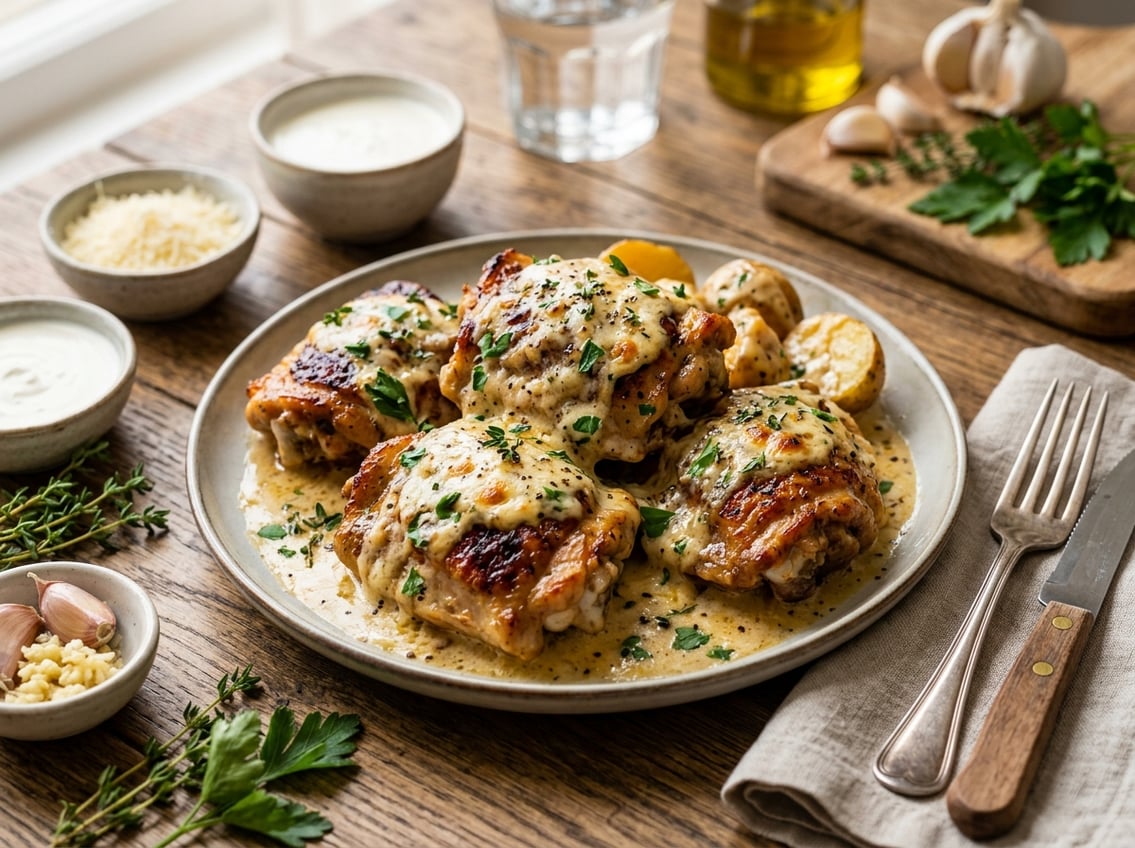
Rich dairy, savory aromatics, and bright acids make these sauces ideal for chicken thighs.
Each sauce focuses on a different balance of cream, cheese, and flavoring to pair with pan-seared, roasted, or braised thighs.
Creamy Mushroom Sauce
Sauté sliced cremini or button mushrooms in butter or oil until deeply browned to build the sauce’s backbone.
Add shallot and garlic, cook briefly, then deglaze with a splash of stock or white wine to lift browned bits and concentrate flavor.
Reduce the liquid by half, then stir in heavy cream (or a mix of cream and milk) and simmer until it coats the back of a spoon.
Finish with a knob of butter and a handful of chopped parsley or thyme for brightness.
Season with salt, black pepper, and a teaspoon of Dijon if you want a sharper edge.
Spoon over chicken thighs after they rest so the sauce clings to the skin and juices.
Alfredo and Parmesan Sauces
Start with a base of heavy cream gently warmed with butter; avoid boiling to keep it silky.
Whisk in finely grated Parmesan off heat until melted—use Parmigiano-Reggiano for nuttier depth or a milder domestic Parmesan for cost efficiency.
Control thickness by adjusting cream-to-cheese ratio: more cream for a thinner glaze, more cheese for cling.
Add nutmeg sparingly (a pinch) and finish with crushed black pepper.
For stovetop quickness, you can thicken a béchamel with cream and then fold in cheese to create a Parmesan-forward sauce that adheres to thighs without overpowering their natural flavor.
Garlic Parmesan Sauce
Begin by gently infusing olive oil or butter with minced garlic; cook only until fragrant to avoid bitterness.
Add cream and simmer briefly, then stir in a generous amount of finely grated Parmesan while off the heat to prevent graininess.
For texture, whisk in a spoonful of cream cheese or mascarpone if you want extra silkiness.
Brighten the sauce with lemon zest or a splash of lemon juice and balance with chopped parsley or chives.
This sauce pairs especially well with thighs that have a crisped skin—garlic and lemon cut through the fat while the Parmesan adds savory umami.
White Wine Sauce
Sauté aromatics such as shallots and garlic in butter, then deglaze the pan with a dry white wine like Sauvignon Blanc or Pinot Grigio.
Reduce the wine by two-thirds to concentrate flavor and remove harsh alcohol notes.
Add chicken stock and simmer, then finish by whisking in cream or a pat of cold butter for a glossy emulsion.
Tuck in fresh herbs—tarragon, thyme, or parsley—to complement the wine’s acidity.
This sauce lifts the richer profile of chicken thighs, providing a bright counterpoint that still feels luxurious when you add a splash of cream or grated Parmesan at the end.
Sweet, Tangy, and Savory Favorites
These sauces balance sweetness with acidity or umami to complement the fattier, juicier profile of chicken thighs.
Each choice below highlights how to use, when to apply, and a quick way to make or finish the sauce for best results.
Honey Mustard and 5-Minute Honey Mustard
Honey mustard pairs spicy mustard with honey for a glossy, slightly tangy glaze that clings to skin and caramelizes nicely.
For thighs, brush it on during the last 8–10 minutes of roasting or use it as a finishing drizzle after pan-searing to preserve its bright honey character.
Make a fast 5-minute honey mustard by whisking 3 tbsp Dijon, 2 tbsp honey, 1 tbsp mayonnaise (for creaminess), 1 tsp lemon juice, and salt to taste.
Warm gently if you want a looser glaze; cool it for a dipping sauce.
The Dijon provides sharpness, the honey gives sweetness that helps browning, and the mayo smooths texture—use proportions to adjust tang or sweetness.
Use it as a marinade for 30–60 minutes if you want deeper flavor penetration, but don’t marinate overnight with honey-heavy mixes or the sugars can over-brown on high heat.
Finish with chopped parsley or chives for contrast.
BBQ and Orange Sauces
BBQ sauce covers a wide range—tomato-based, vinegar-forward, or mustardy—so pick one to match your cooking method.
For high-heat grilling, choose a thinner, vinegar-forward BBQ to avoid a burnt sugar crust.
For braising or oven-baked thighs, a thicker, molasses-sweet sauce adds glossy, sticky layers.
Orange sauce brings citrus brightness and slight sweetness that cuts through chicken fat.
Combine fresh orange juice, zest, soy sauce, a touch of honey, and grated ginger for a quick pan sauce.
Reduce until slightly syrupy so it clings to thighs.
Brush BBQ during the last 5–10 minutes of cooking and baste repeatedly for buildable layers.
For orange sauce, simmer separately and spoon over rested thighs to keep the zest lively.
Both work well as dipping or as glazes for plated servings.
Teriyaki Sauce
Teriyaki provides savory-sweet umami that soaks into dark meat without overpowering it.
A basic teriyaki is soy sauce, mirin or sake, sugar (or honey), and ginger; thicken with a cornstarch slurry for a glossy finish that adheres to skin.
Marinate thighs 30 minutes to 4 hours for noticeable infusion; longer can make the surface tacky due to sugars.
Cook thighs skin-side down first to get crispness, then add teriyaki toward the end so sugars caramelize but don’t burn.
For a restaurant-style finish, reduce 1 cup of teriyaki liquid by half then whisk in 1 tsp cornstarch mixed with 1 tbsp water and simmer 30–60 seconds.
Garnish with toasted sesame seeds and sliced scallions for texture and color.
Honey Garlic Sauce
Honey garlic balances potent garlic with sticky honey for a simple, crowd-pleasing glaze.
Sauté minced garlic briefly in oil, add honey, a splash of soy sauce, and a squeeze of lemon or rice vinegar to balance sweetness.
Cook until glossy and slightly thickened.
Apply honey garlic as a glaze in the final 5 minutes of cooking or toss cooked thighs in warm sauce off-heat to preserve garlic brightness.
The garlic should taste mellow, not burnt; if garlic browns too fast, add the honey and liquid sooner.
For variability, add chili flakes for heat or ginger for warmth.
Store leftovers chilled; gently reheat to keep the sauce fluid without breaking its sheen.
Herbaceous and Green Sauces
Bright, herb-forward sauces add freshness and acidity that cut the richness of chicken thighs.
They build flavor through raw herbs, citrus, and olive oil, and work as marinades, finishes, or dipping sauces depending on texture.
Pesto Sauce
Pesto concentrates basil, garlic, pine nuts, Parmesan, and olive oil into a thick, emulsified paste that clings to chicken thighs.
Use it as a marinade before grilling to get herb oil into the skin, or spoon it on after roasting to preserve its raw, grassy aroma.
For stovetop or oven chicken, thin pesto with a tablespoon of warm pan juices or reserved pasta water to make a silky glaze.
If you prefer a nuttier bite, toast the pine nuts lightly first.
Variations include swapping basil for arugula or spinach, replacing pine nuts with walnuts or almonds, and using Pecorino instead of Parmesan for a sharper finish.
Store leftover pesto under a thin film of olive oil in the fridge for 4–5 days, or freeze in portions for up to 3 months.
Chimichurri Sauce
Chop parsley, oregano, garlic, red pepper flakes, red wine vinegar, and olive oil to make chimichurri.
Its high acidity and herbal lift pair well with the fatty texture of chicken thighs.
Make it finely chopped for a spoonable topping, or blitz briefly in a food processor for a smoother drizzle.
Apply 30–60 minutes before cooking as a marinade, or serve 5–10 minutes after cooking so the bright herbs don’t wilt from heat.
Adjust heat and tang by varying the chili and vinegar.
For a slightly different profile, swap some parsley for cilantro.
Keep chimichurri refrigerated up to 3–4 days; bring to room temperature and stir before serving.
Lemon Pepper Sauce
Lemon pepper sauce combines citrus brightness with coarse cracked black pepper for a lively, slightly spicy coating that complements chicken thighs.
Use fresh lemon juice, lemon zest, butter or olive oil, and a generous grind of black pepper to build the base.
For a pan sauce, deglaze the skillet with lemon juice and a splash of chicken stock, then swirl in butter to emulsify and finish with more cracked pepper.
For a lighter option, mix lemon zest, olive oil, and pepper into a loose vinaigrette and brush onto grilled thighs.
Lemon pepper also works as a dry rub when mixed with salt and garlic powder; it crisps the skin and adds a pronounced citrus note without making the meat wet.
Bold and Spicy Sauces
These sauces deliver heat, bright acidity, and layered spices that cut through the richness of chicken thighs.
You’ll find options that work as marinades, glazes, or finishing sauces depending on how much char, tang, or sticky heat you want.
Buffalo Sauce
Buffalo sauce combines vinegary heat with butter to create a thin, clingy coating that soaks into the skin and flavors the meat. Use a base of frank’s-style hot sauce, melted butter (or ghee for deeper flavor), and a touch of Worcestershire or garlic powder.
Brush the sauce on during the last 5–10 minutes of roasting. You can also toss hot, just-cooked thighs in the sauce so it adheres without burning.
A looser sauce penetrates more, while a thicker emulsion stays on top. For milder heat, add extra butter or honey. For brighter tang, add more white vinegar or a squeeze of lemon.
Jamaican Jerk Sauce
Jamaican jerk sauce brings warm, complex spice and fresh aromatics to chicken thighs. Build it from allspice, scotch bonnet or habanero peppers, thyme, scallion, garlic, and a bit of brown sugar or molasses for balance.
Use jerk sauce as a wet rub or marinade and let thighs rest 4–12 hours for deep flavor infusion. Cook over direct heat or in a high-heat oven to develop a smoky crust that complements the sweet-spicy glaze.
For less heat, halve the scotch bonnet and add more scallion and lime. To increase smokiness, include smoked paprika or finish briefly on a grill.
Peri Peri Sauce
Peri peri uses African bird’s eye chiles, citrus, garlic, and olive oil for a sharp, pepper-forward bite. Combine chopped bird’s eye or Thai chiles, lemon or lime juice, garlic, smoked or sweet paprika, and a neutral oil.
Marinate thighs briefly (1–3 hours) for a bright, zesty result, or longer for deeper heat penetration. Peri peri works well both as a marinade and a table sauce.
Adjust chili quantity for your desired heat. Add vinegar for extra tang or roasted red pepper to soften intensity while keeping the characteristic pepper flavor.
Sriracha and Other Spicy Sauces
Sriracha delivers garlicky heat with a smooth, slightly sweet chili flavor that you can use straight or as a base. Mix sriracha with honey and lime for a sticky glaze, or with mayo and lemon for a creamy dipping sauce.
Gochujang, harissa, and store-brand hot sauces each bring different heat profiles and savory notes. Use thicker pastes for rubs and glazes, and thinner hot sauces for basting or finishing.
Match acidity (vinegar or citrus) and sweetness (honey, brown sugar) to the heat level so the thigh’s richness stands out.
Creative Homemade and Restaurant-Inspired Sauces
Sauces can pair with the fattiness and crisp skin of thighs, from smoky-sweet dips to bright, herb-forward blends. Balance acid to cut fat, fat to carry flavor, and a texture that clings to the meat.
Chick-fil-A Sauce
Chick-fil-A Sauce blends smoky barbecue, honey mustard, and a touch of mayo for a creamy, slightly sweet dip that adheres well to crispy or grilled thighs. To make it at home, mix 3 parts mayonnaise, 1 part honey mustard, 1 part smoky barbecue sauce, and a splash of apple cider vinegar; adjust sweetness to taste.
Brush it on as a finishing glaze for oven-roasted thighs in the last 5 minutes of cooking to avoid burning. It also works cold as a dipping sauce for fried thighs or as a sandwich spread. Store refrigerated for up to a week in a sealed jar.
Homemade Chicken Sauces
Choose sauces that fit the cooking method. For a pan sauce, deglaze with white wine or stock, add a tablespoon of butter and chopped herbs, and finish with lemon to lift the flavor.
For grilling, use a sticky glaze of equal parts honey and soy sauce, garlic, and grated ginger reduced to a syrupy consistency. For a lighter option, blend Greek yogurt, grated cucumber, lemon juice, garlic, and dill for a tzatziki-style sauce.
Label and refrigerate homemade sauces. Most cream- or dairy-based sauces last 3–4 days.
Combining Multiple Sauces
Layer sauces to create complexity. Start with a marinade, finish with a glaze, and serve a contrasting dip.
Marinate thighs in a citrus-herb mix overnight. Brush on a hoisin-based glaze while grilling.
Offer a cool yogurt dip on the side. Keep one dominant flavor, such as sweet, acidic, or spicy.
Let textures differ, like a glossy glaze paired with a creamy dip. Balance salt and acid across components.
Combine sauces in small batches to test proportions. Scale up for a full batch once satisfied.


