
Why Do Chicken Thighs Look Pink When Cooked? Expert Guide to Color, Safety, and Cooking Methods
You might see pink in cooked chicken thighs and worry they’re undercooked. Color alone doesn’t tell the whole story.
Pink hues often come from natural pigments in dark meat, bone marrow seepage, or certain cooking methods like smoking or brining. The only reliable test is an internal temperature of 165°F (74°C).
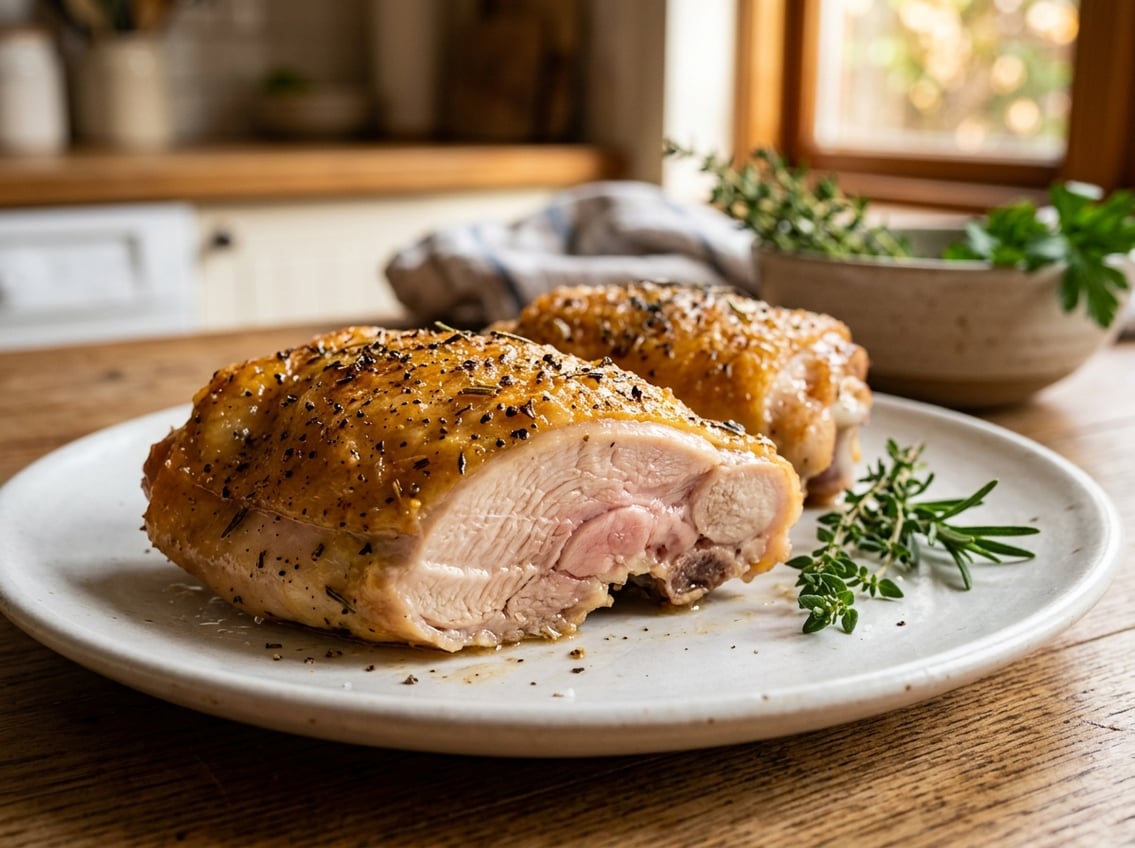
Thigh meat behaves differently than breast meat. Anatomy and chemistry create lingering pink tones, and cooking methods change appearance without compromising safety.
Keep an instant-read thermometer handy. Follow simple checks so your thighs stay juicy, safe, and correctly cooked.
Anatomy and Science of Chicken Thigh Color
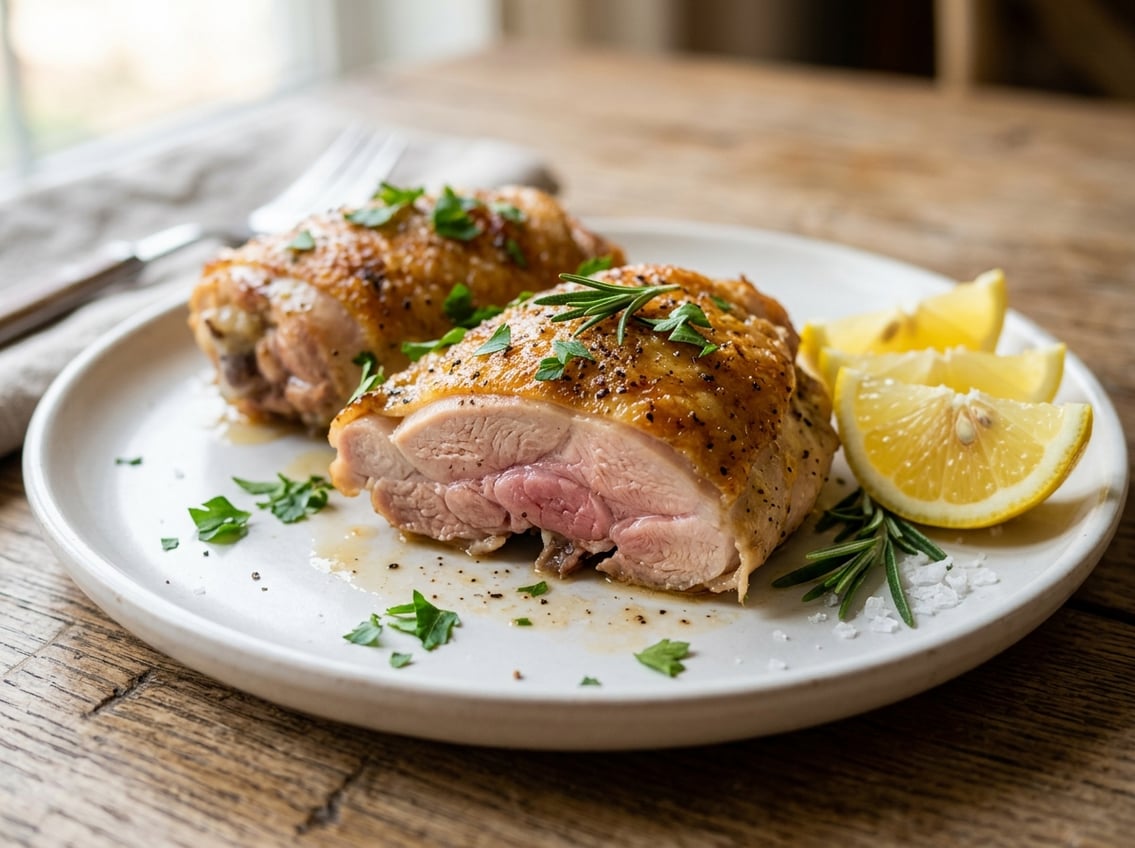
Thigh meat often keeps a pink hue because of pigment concentration, muscle function, and proximity to bone and fat. These factors determine that color.
Role of Myoglobin and Iron in Dark Meat
Myoglobin gives thighs their darker tone. It stores oxygen in muscle and contains an iron atom that changes chemical state with heat and exposure to gases.
When you cook, myoglobin denatures and usually turns from purplish-red to brownish-gray. Higher initial myoglobin levels in thigh muscles mean some pink or reddish tones can persist after reaching safe temperatures.
Acidic marinades, curing salts, or smoke chemicals can bind to myoglobin and stabilize a pink color even when the meat is fully cooked. Iron released from bone marrow or hemoglobin can also tint nearby tissue.
That iron reacts with proteins and cooking compounds to produce red-to-pink shades, especially close to the bone. Use internal temperature measurements rather than color to confirm safety.
Differences Between Dark and White Meat
Dark meat (thighs) contains more myoglobin and connective tissue than white meat (breasts). Thighs are used for sustained activity, so they require oxygen storage and have more myoglobin-rich fibers.
This structural difference means thighs retain moisture and a slightly darker, sometimes pink appearance after cooking. White meat fibers have less pigment and denature to a pale, opaque color more predictably under heat.
Thighs tolerate longer, lower-temperature cooking without drying out. Breasts become dry if overcooked.
Effect of Bone and Fat on Meat Color
Bones and surrounding fat influence local color through heat transfer and chemical leaching. Bone marrow contains pigments and iron that can seep into adjacent tissue during cooking, producing a pink or reddish ring near the bone.
Fat affects translucency and perceived color. Higher intramuscular fat keeps meat moist and can make tissue look darker or slightly pink because light scatters differently through fat and myoglobin-rich fibers.
Cooking methods that heat unevenly, such as searing or quick grilling, can leave the area near the bone pinker than the outer flesh. When checking doneness, insert your thermometer into the thickest part away from bone to avoid misleading color caused by marrow or fat.
Interpreting Pinkness in Cooked Chicken Thighs
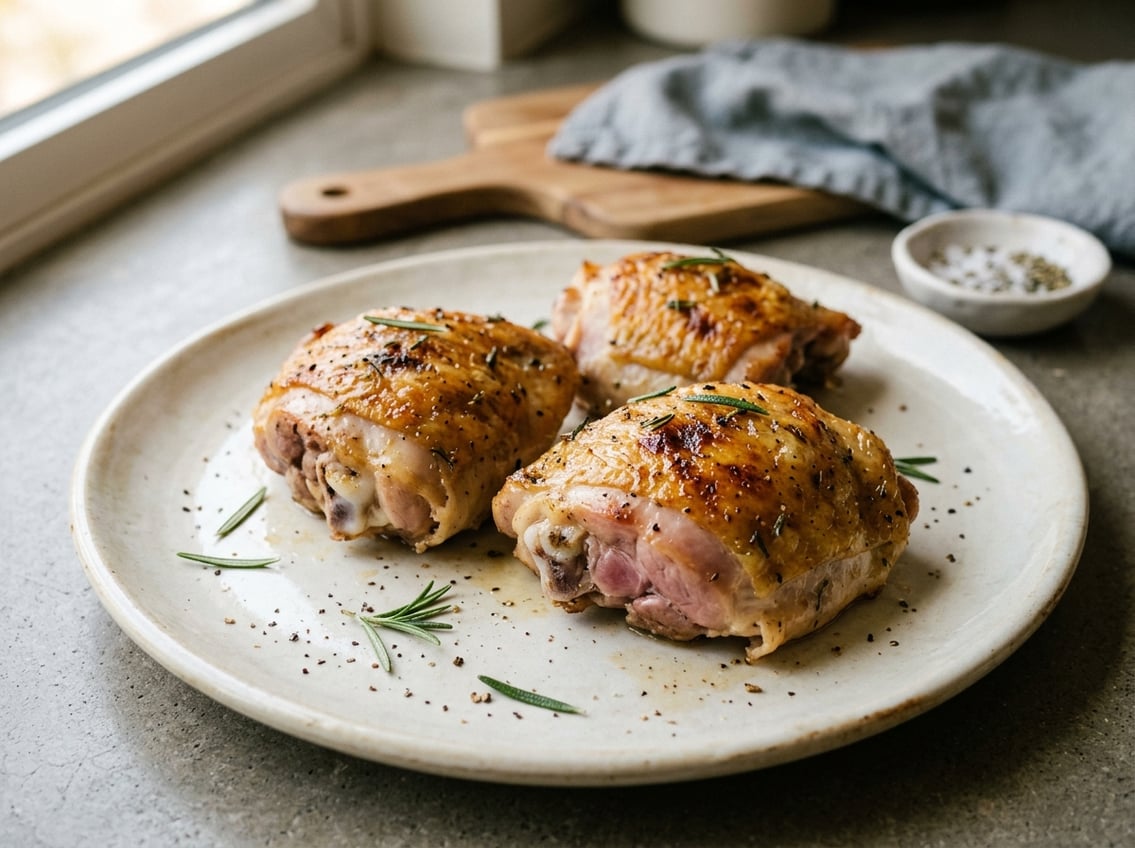
Pink color in cooked chicken thighs can come from muscle pigments, bone or marrow pigments, or chemical reactions from smoking and marinades. Use a thermometer to confirm safety.
Myoglobin Behavior During Cooking
Myoglobin is the oxygen-binding protein that gives dark meat a deeper color than breast. When you heat meat, myoglobin changes structure and usually turns brownish, but in thighs the higher myoglobin concentration and connective tissue can leave a faint pink tint even after safe cooking.
Temperature, pH, and cooking speed affect how myoglobin denatures. Rapid, high-heat searing can brown the surface while the interior proteins remain partially unaltered, so you might see pink nearer the center.
Acidic marinades or lower final temperatures also stabilize pink forms of myoglobin, so the pigment may persist despite bacteria-killing temperatures. Always check the thickest part of the thigh with an instant-read thermometer.
If it reads 165°F (74°C) or higher away from bone, the pinkness is a pigment issue, not a safety issue.
Influence of Age, Breed, and Marination
Younger birds often show more pink near bones because their bone marrow is less dense and bleeds more into surrounding tissue during cooking. Certain breeds and free-range birds can also have slightly different muscle pigment levels, altering final color.
Marination changes color chemistry. Salt and nitrite-containing brines bind with myoglobin and can lock in pink hues. Acidic marinades (citrus, vinegar) change surface proteins and sometimes intensify pink tones.
Fat and connective tissue in thighs make color appear darker or more translucent, which can read as pink even when cooked fully. When you see pink, consider the bird’s age, whether it was brined or cured, and how you marinated it. Combine that context with a temperature check to assess doneness.
Smoked Chicken and the Smoke Ring Effect
Smoking produces a visible pink ring under the surface called a smoke ring. Nitrogen dioxide and other compounds in wood smoke react with myoglobin to form nitrosylmyoglobin, a stable pink pigment that resists heat change.
The smoke ring can extend several millimeters into the meat, so you’ll see pink even when the internal temperature exceeds 165°F. This effect is cosmetic and doesn’t indicate undercooking.
Wet brines and long exposure to smoke increase the likelihood and depth of the smoke ring. If you smoke thighs, rely on internal temperature readings and safe handling rather than color to decide when to serve.
Food Safety and Pink Chicken Thighs
Pink color alone does not determine safety. Use a thermometer and understand common causes of pinkness.
When Is Pink Chicken Safe to Eat?
You can safely eat chicken thighs that still show a pink tint if the thickest part (away from the bone) reaches a safe internal temperature. Pinkness often comes from myoglobin, bone marrow leaching, or curing agents.
Always check the thermometer at the deepest part of the thigh, not next to bone or skin. If it reads at least 165°F (74°C), the meat has reached the temperature recommended to inactivate typical poultry pathogens.
Juices that look slightly pink do not automatically mean undercooked meat. A thermometer gives a definitive answer.
Importance of Reaching Safe Internal Temperature
Temperature kills pathogens; color does not. The USDA and food-safety authorities set 165°F (74°C) as the minimum internal temperature for poultry to ensure lethal exposure for Salmonella and most Campylobacter strains.
Insert the probe into the thickest muscle, avoiding bone contact. Hold the thermometer until the reading stabilizes.
If you prefer higher safety margins, 170–175°F (77–79°C) for dark meat yields a firmer texture but is not necessary to eliminate bacteria. Calibrate your thermometer periodically and account for carryover cooking; meat often rises a few degrees after removal from heat.
Risks of Undercooked Chicken: Salmonella and Campylobacter
Salmonella and Campylobacter cause the majority of poultry-related foodborne illnesses. Ingesting undercooked chicken contaminated with these bacteria can cause diarrhea, fever, abdominal cramps, and dehydration.
Symptoms may appear 1–7 days after exposure. Certain groups face higher risk: young children, older adults, pregnant people, and anyone with a weakened immune system.
Prevent risk by reaching and verifying 165°F (74°C). Also practice cross-contamination controls: keep raw chicken separate, wash hands and surfaces, and cook stuffed poultry thoroughly because stuffing can remain cooler.
Proper Methods for Checking Doneness
Use a calibrated digital probe to verify internal temperature. Rely on texture and juices as secondary checks.
Trust the thermometer reading over color. Avoid cutting into the thigh frequently so juices don’t escape.
Using a Reliable Meat Thermometer
Insert a calibrated digital meat thermometer into the thickest part of the thigh, avoiding contact with bone. Aim for a steady reading of 165°F (74°C); that temperature ensures pathogens like Salmonella have been destroyed.
Check temperature in two places for bone-in thighs: the center of the thickest section and near the joint between thigh and drumstick. For boneless thighs, one measurement in the center usually suffices.
Wait until the probe reading stabilizes for several seconds before deciding. Calibrate your thermometer regularly (ice-water and boiling-point tests) and clean the probe between uses.
Instant-read digital thermometers give the fastest, most reliable results compared with visual guesses.
Visual and Physical Indicators: Juices Run Clear
After the thermometer shows 165°F (74°C), probe the meat and observe the juices. Clear juices indicate the meat has set.
Pink-tinged juices may still appear but are less reliable than temperature. Press the thigh gently with tongs; fully cooked thighs will feel firm and spring back slightly.
Avoid relying only on surface color. Cooked chicken thighs can remain pink near bones even when fully cooked due to myoglobin and bone marrow pigments.
Let the meat rest 5–10 minutes after cooking. Resting allows internal juices to redistribute and can slightly reduce surface pinkness while giving a more accurate final texture and moisture level.
Common Misconceptions About Chicken Thigh Color
Color alone does not determine safety. Myoglobin in dark meat and bone marrow pigments can keep thighs pink despite reaching 165°F (74°C).
Smoking or brining can also deepen pink tones without indicating undercooking. Many cooks believe clear juices equal safety, but juices can clear before the center reaches the right temperature.
Pink meat near the bone isn’t automatically undercooked if a reliable meat thermometer shows 165°F (74°C). Use a combination: a calibrated meat thermometer as your primary check, then confirm with texture and juices.
How Cooking Methods Affect Appearance
Different heat sources and preparations change how pigments in thigh meat react. Heat reaches bone-adjacent tissue differently, and smoke or curing agents can fix a pink color.
These factors determine whether your thighs look pink even when they reach safe temperatures.
Impact of Grilling, Roasting, and Smoking
Grilling exposes skin and outer muscle to high, direct heat that browns via Maillard reactions. The interior can remain pink if you rely on time instead of temperature.
When you grill, check the thickest part away from the bone with a probe thermometer. A surface crust does not guarantee the center reached 165°F (74°C).
Roasting at 375–425°F produces more even internal heating than quick searing. Bone-in thighs often show a pink halo near the bone because bones conduct heat differently.
Smoking introduces nitric compounds from wood that bind myoglobin and create a stable pink smoke ring. For smoked chicken, accept the rosy color and verify doneness with temperature.
Slow Cooking and Juiciness
Low-and-slow methods like braising or slow-roasting let connective tissue break down and keep thighs moist. They can still retain a pink tint near the bone.
Slow cooking raises internal temperatures gradually, so myoglobin may not fully convert to the typical brown/tan hue even when the meat is safe. If you use sous-vide, you’ll often reach pasteurization at lower-looking colors because time-and-temperature pasteurization allows pink pigments to persist.
Rely on your thermometer and the recommended time-temperature tables for safety. Slow methods preserve juiciness and texture while sometimes preserving pink appearance.
Marinating and Color Retention
Acidic marinades (vinegar, citrus) and salt brines change protein structure before cooking and can alter browning behavior. Salt stabilizes myoglobin and increases water retention, which may intensify a pink hue after cooking.
Commercial or cured marinades that contain nitrates or nitrites will chemically fix pink pigments in the meat similar to smoking. If you marinate overnight, expect more pronounced color changes near the surface and bone.
To avoid confusion, check for 165°F (74°C) in the thickest part of the thigh. Label ingredients in store-bought brines to spot curing agents that preserve pink color.
Tips for Safely Cooking Chicken Thighs
Use a calibrated meat thermometer to check the thickest part of the thigh away from the bone. Store raw and cooked chicken separately.
Be extra cautious when serving young children, pregnant people, older adults, or immunocompromised guests.
Calibrating and Using a Meat Thermometer
Test your meat thermometer in ice water to check for a reading of 32°F (0°C). Use boiling water to confirm it reads 212°F (100°C) at sea level.
If you notice incorrect readings, recalibrate or replace the thermometer according to the manufacturer’s instructions. Insert an instant-read thermometer into the thickest part of the thigh without touching bone.
Aim for an internal temperature of 165°F (75°C) for food safety. Some people prefer 170–175°F for thighs, but 165°F is sufficient to ensure safety.
Take multiple readings for bone-in thighs because heat near the bone lags. Clean the probe with hot, soapy water between uses to prevent cross-contamination.
Handling and Storage for Food Safety
Keep raw chicken at 40°F (4°C) or below and use it within 1–2 days. Freeze it for longer storage if needed.
Thaw frozen thighs in the refrigerator, in cold water changed every 30 minutes, or in the microwave. Never thaw chicken at room temperature.
Use separate cutting boards, utensils, and plates for raw and cooked chicken to prevent cross-contamination. Wash hands for at least 20 seconds after handling raw poultry.
Sanitize surfaces with a bleach solution or dishwasher-safe tools. Refrigerate cooked thighs within two hours, or within one hour if the temperature exceeds 90°F (32°C).
Reheat leftovers to 165°F before eating to reduce the risk of foodborne illness.
Serving to Vulnerable Populations
Be strict about the 165°F (75°C) target when you serve pregnant people, infants, older adults, or immunocompromised guests.
Use a meat thermometer for every portion meant for these groups to avoid undercooked chicken and reduce the risk of foodborne illness.
Avoid dishes that mix cooked chicken with raw or lightly cooked ingredients, such as some salads or cold preparations, for vulnerable diners unless you have cooked and cooled the chicken properly.
Label leftovers with the cooking date. Discard them after 3–4 days in the refrigerator to minimize bacterial growth.


