
Do Chicken Thighs or Legs Take Longer to Cook? Guide to Timings and Tips
Bone-in chicken legs usually take longer to cook than thighs. Legs are larger and have more bone and connective tissue, which slow heat penetration.
If you want a quick rule: legs need more time than thighs, and boneless thighs finish fastest.
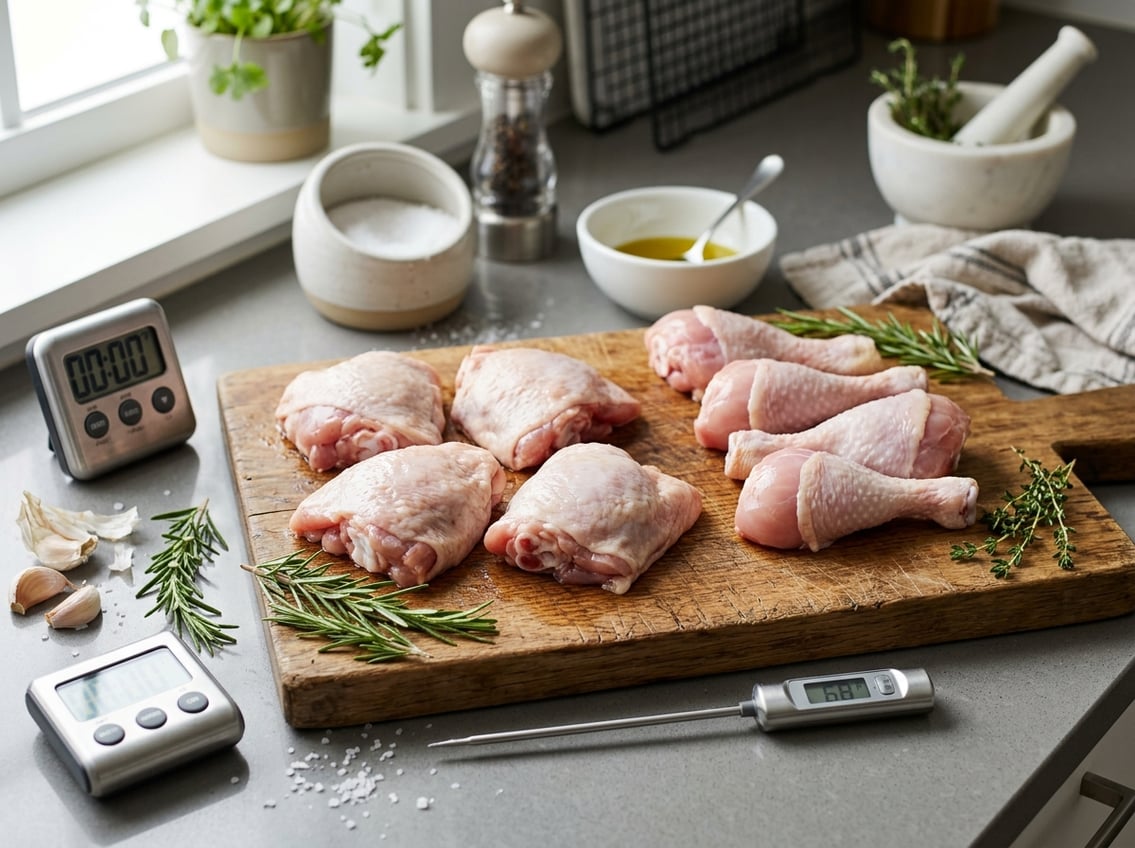
Size, bone presence, and cooking method affect timing. The right oven temperature and technique help you achieve perfect texture and crispiness.
Understanding Chicken Thighs and Legs
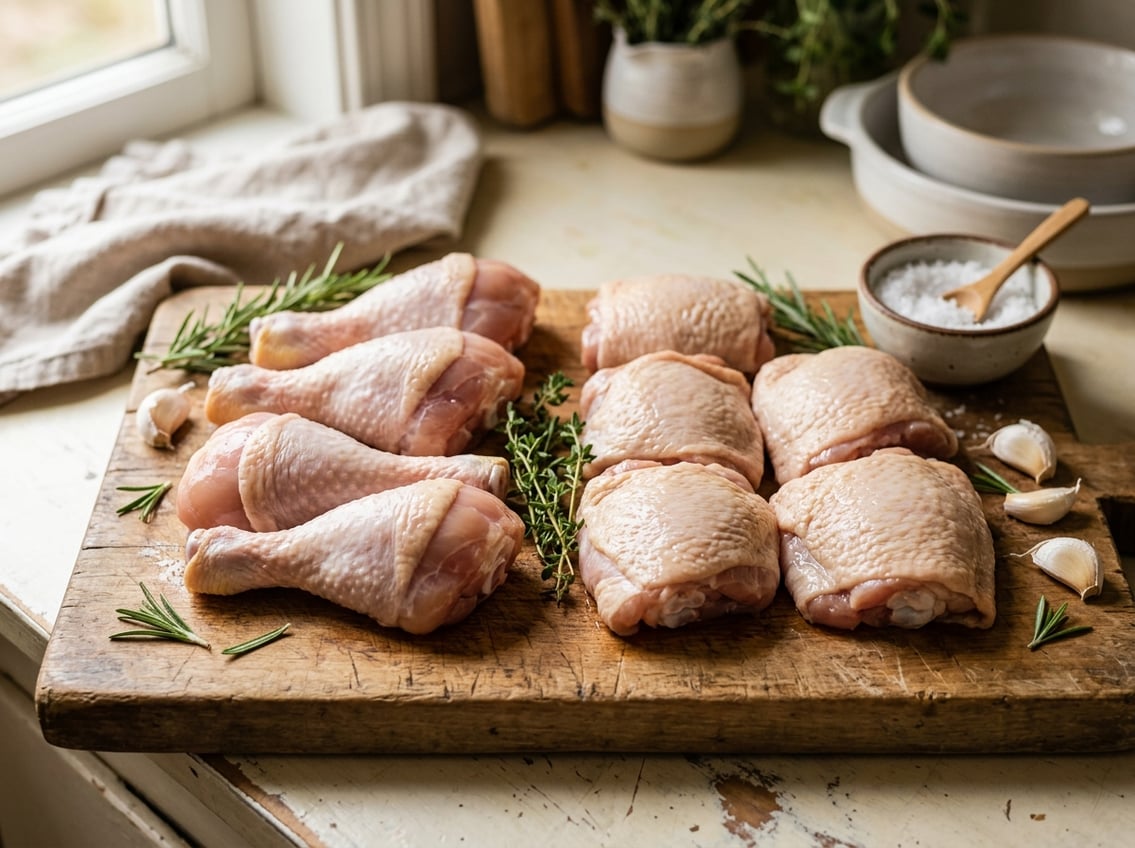
Thighs, drumsticks, and whole legs differ by location, bone structure, and meat amount. These differences affect cooking time and technique.
Dark meat’s higher fat and connective tissue influence how you should cook each piece.
Difference Between Chicken Thighs, Drumsticks, and Legs
A chicken thigh is the upper part of the bird’s leg, attached to the body. It contains the thigh bone and a broad muscle.
Thighs offer more meat per piece and a lower bone-to-meat ratio than drumsticks. They heat through faster and handle higher temperatures without drying.
A drumstick is the lower leg, with a single long bone and a tapered shape. Drumsticks have less meat and a higher bone-to-meat ratio, so they often need longer to reach a safe internal temperature near the bone.
When sellers or recipes say “chicken legs,” they may mean the whole leg (thigh plus drumstick) or just drumsticks. Always check the cut before cooking.
Dark Meat Characteristics
Both thighs and drumsticks are dark meat because the muscles work more and contain more myoglobin than breast meat. Higher myoglobin and intramuscular fat provide richer flavor and better moisture retention.
Dark meat contains more connective tissue, which benefits from lower-and-slower cooking. Roasting or grilling at high heat keeps thighs juicier, while drumsticks usually need more time or indirect heat to become tender.
Cook Time Comparisons by Cut
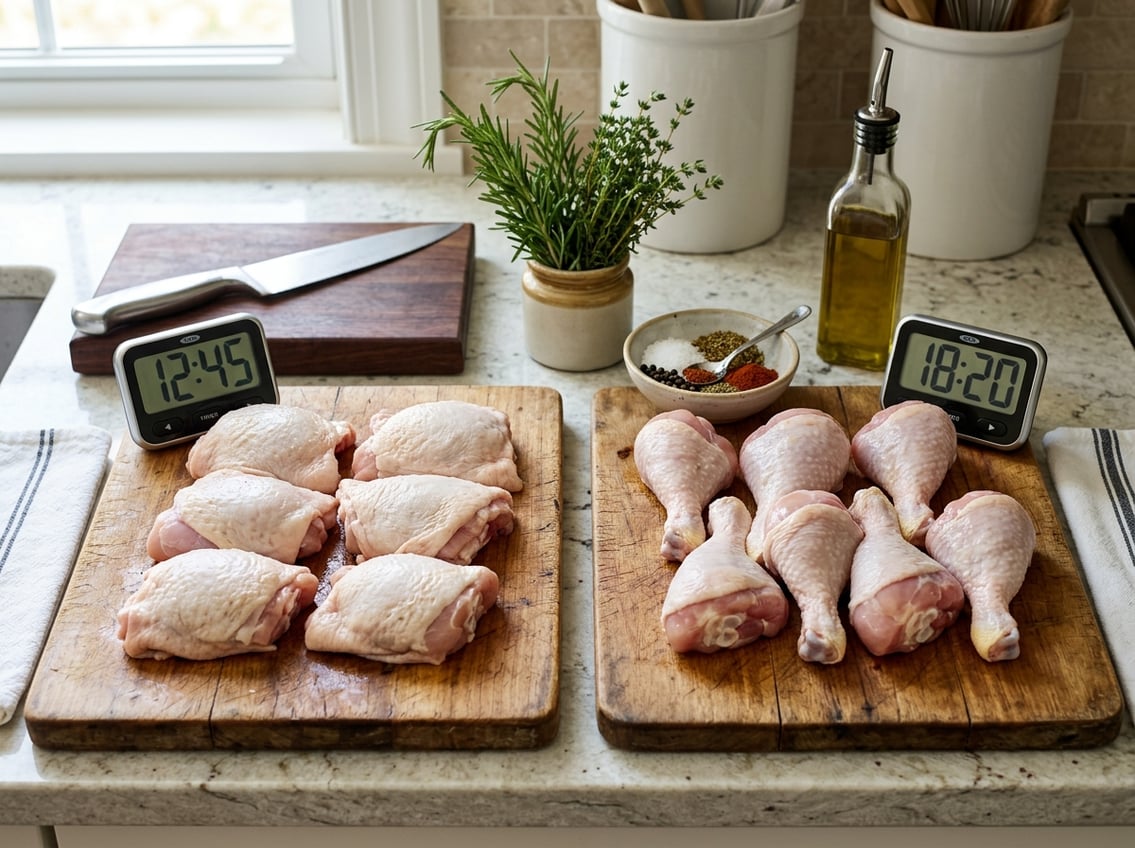
Oven temperature, bone presence, and whether you cook an entire leg or just a drumstick all change cook times. Aim for an internal temperature of 165°F (74°C).
Use a thermometer to judge doneness, not just the clock.
Typical Cooking Times at Common Oven Temperatures
At 350°F, bone-in thighs need about 40–50 minutes. Boneless thighs finish in 25–35 minutes.
At 375°F, bone-in thighs take 30–40 minutes, boneless 20–30 minutes. At 400–425°F, bone-in thighs often take 25–35 minutes, while boneless pieces finish in 18–25 minutes.
Chicken legs (whole leg with thigh and drumstick) require longer: at 375°F, plan for 45–60 minutes. The drumstick adds thickness and bone.
Confirm doneness with a thermometer in the thickest part without touching bone.
Bone-In vs. Boneless Chicken Thighs
Bone-in, skin-on thighs retain heat and cook more slowly than boneless thighs. The bone insulates and the skin adds another layer, so expect 10–20 minutes extra cook time compared to boneless at the same temperature.
Boneless thighs heat more evenly and reach 165°F sooner, making them good for quick bakes at 375°F or higher.
For faster, crispier results, remove the skin and cook at 400–425°F, or butterfly the thighs to reduce thickness. Rest the meat 5–10 minutes after cooking to let juices redistribute.
Cooking Chicken Legs Versus Drumsticks
A drumstick is the lower portion of the leg. Whole chicken legs include both thigh and drumstick.
Drumsticks are thicker at the end near the bone and usually require similar or slightly less time than a whole leg, since the whole leg contains more mass.
Baked drumsticks at 375°F finish in 35–45 minutes. Whole legs need 45–60 minutes at the same temperature.
On the grill, drumsticks take 20–30 minutes over medium heat, turning frequently. Always check for an internal temperature of 165°F at the thickest point.
Factors Affecting Cooking Duration
Size, bone presence, skin, and marinating all change how long chicken needs to reach 165°F. Use a meat thermometer to judge doneness, since thickness and preparation affect heat penetration.
Impact of Cut Size and Thickness
Thicker pieces take more time for heat to reach the center. A bone-in thigh with 1.25–1.5 inches of thickness takes longer than a 3/4-inch boneless thigh at the same temperature.
Measure thickness at the thickest point to estimate cooking time.
Smaller or butterflied pieces cook faster and more evenly. If you cut a leg into drumstick and thigh, each piece finishes sooner than a whole leg.
Group similar-sized pieces together for consistent results.
Always confirm with a thermometer placed into the deepest part without touching bone. Aim for 165°F (74°C); resting will raise the temperature a few degrees.
Bone-In and Skin-On Influences
Bones slow heat transfer, so bone-in thighs and legs take longer than boneless cuts of the same size. The drumstick’s thicker section especially delays center temperature rise.
Skin adds insulation and traps fat, slowing internal cooking but helping browning. For crispy skin, roast at higher heat (400–425°F) or finish under a broiler.
Remove skin to shorten cooking time by allowing direct heat contact.
When using a thermometer on bone-in pieces, avoid touching the bone. Insert into the thickest meat away from bone for an accurate reading.
Role of Marinating Chicken
Acidic marinades can slightly tenderize surface proteins but do not speed up internal cooking. The core cooking time stays about the same whether marinated or not.
Oil and sugar in marinades affect surface browning and crispness. Oil helps heat conduct at the surface, and sugar promotes caramelization but can burn at high temperatures.
Pat off excess marinade before high-heat cooking to prevent over-browning.
Salt-based brines increase water retention and may require a little more time for the center to reach 165°F. Always use a thermometer after marinating or brining.
Safe Minimum Internal Temperature
Cook chicken to the right internal temperature to kill pathogens and get good texture. Use a reliable meat thermometer and aim for at least 165°F at the thickest point.
Using a Meat Thermometer for Chicken
Use a calibrated instant-read thermometer to measure temperature at the thickest part, avoiding the bone. Insert the probe into the center of a thigh or leg.
Bones conduct heat and can give a falsely high reading.
For safety, check that the thermometer reads at least 165°F (74°C). For thighs and legs, you can aim for 170–175°F or higher for more tenderness, as extra heat breaks down collagen.
Wait 10–15 seconds after inserting the probe for a stable reading.
Clean the probe with hot, soapy water or a disinfectant wipe between checks. Recalibrate your thermometer if needed.
When Is Chicken Fully Cooked?
Chicken is safe at 165°F measured in the thickest part. This temperature destroys harmful bacteria like Salmonella.
Thighs and legs may be juicier and more tender when cooked to 170–195°F. Higher temperatures convert collagen to gelatin and change texture.
Always measure temperature, not just color or juices, as visual cues can mislead.
For bone-in pieces, measure near but not against the bone. For ground chicken, ensure the center reaches 165°F.
Importance of Resting Chicken
Resting lets heat equalize inside the meat and can raise the temperature a few degrees. After removing chicken from heat, tent it loosely with foil and rest for 5–10 minutes for cut pieces.
Carryover heating helps reach or maintain the safe minimum temperature without overcooking the exterior. Resting also lets juices redistribute, reducing loss when you cut the meat.
Check the temperature again after resting if you want to confirm it.
Oven Temperatures and Cooking Methods
Different heat levels and techniques affect how long thighs and legs take to cook, how crispy the skin gets, and how tender the meat becomes. Use higher heat for faster browning and crispy skin, and lower heat for gentle cooking.
Baking and Roasting at Varied Temperatures
At 425°F, expect faster cooking and crisp skin. Bone-in thighs and drumsticks finish in about 25–35 minutes depending on size.
Use a rimmed sheet pan or roasting pan with the pieces spaced at least 1 inch apart for even browning.
At 400°F, you get a balance of browning and juiciness. Thighs and legs often take 35–45 minutes to reach 165°F.
Flip once halfway for even color.
At 375°F, cook time lengthens to 40–50 minutes or more for larger legs. The lower temperature reduces risk of over-browning before the interior is safe.
Probe the thickest meat near the bone. Dark meat can be cooked to 175–185°F for more tenderness.
Grilling and Frying Techniques for Dark Meat
On the grill, use a two-zone setup. Sear 3–4 minutes per side on direct heat, then move to indirect heat until the internal temperature is safe.
Thighs and legs tolerate higher final temperatures, so you can aim for 175°F for pull-apart tenderness.
For frying, keep oil at 350–375°F. Drumsticks and thighs take about 12–18 minutes depending on size.
Rest briefly after frying to let juices redistribute.
Slow Cooking and Braising
For braising, sear the skin side first in a hot pan to develop color. Finish covered at 300–325°F in the oven or on low stovetop for 1.5–2.5 hours.
Low liquid levels and low temperature break down collagen in thighs and legs, making tender meat.
In a slow cooker set on low, plan 4–6 hours for bone-in dark meat. On high, expect 2.5–4 hours.
Use a thermometer before serving. For crisp skin after braising or slow cooking, transfer pieces to a 425°F oven or under a broiler for 5–8 minutes.
Tips for Perfect Texture and Crispiness
Dry the skin, manage oven temperature, and time your cooking so drumsticks and thighs finish at a safe internal temperature while staying juicy and crisp.
Pat the skin dry, sear as needed, check with a thermometer, and finish under high heat for best results.
Achieving Crispy Skin
Pat chicken thoroughly with paper towels before seasoning to remove surface moisture. Wet skin steams and won’t crisp.
Salt the skin and refrigerate uncovered for 1–4 hours if you have time to dry it further.
Use high initial heat for skin rendering. Roast bone-in, skin-on thighs or drumsticks at 400–425°F (205–220°C).
For extra crispness, sear skin-side down in a hot skillet for 3–5 minutes. Transfer to the oven after searing.
Space the pieces apart so hot air can circulate.
Brush sauces on in the last 5–10 minutes to avoid soggy skin.
For boneless chicken thighs, reduce cook time but start at a hot temperature to develop a crust.
Preventing Overcooking
Use an instant-read thermometer and target 165°F (74°C) in the thickest part away from bone. Remove bone-in dark meat at 170–175°F (77–80°C) if you prefer more tender texture.
Let chicken sit at room temperature before cooking to reduce uneven cooking.
Arrange thighs and drumsticks in a single layer on a rimmed baking sheet or oven-safe skillet.
Remove smaller pieces earlier if they vary in size.
Rest meat 5–10 minutes after cooking so carryover heat evens out the temperature and preserves juices.
Juiciness and Flavor Enhancement
Brine chicken for 30 minutes to 2 hours using 1–2% salt by weight in water to increase moisture retention. For faster results, sprinkle kosher salt and let sit uncovered in the fridge for a few hours as a dry brine.
Use marinades with acid or enzymes for flavor, but limit acidic marinades to 30–60 minutes for boneless thighs. Apply a thin layer of oil and spice rub just before cooking for deeper flavor.
Thighs and drumsticks tolerate longer cooking and remain juicy. Baste once or twice during roasting with rendered fat or pan juices to keep surfaces moist and flavorful.
Finishing Techniques for Drumsticks and Thighs
Finish larger drumsticks and bone-in thighs under the broiler for 1 to 3 minutes to boost skin crispness. Watch closely to prevent burning.
You can also increase oven temperature to 450°F (230°C) for the final 5 to 8 minutes.
If you seared first, keep the pieces skin-side up for the entire bake to preserve crispness.
For sauced dishes, apply glaze in the last 5 to 10 minutes and return the chicken to a hot oven. This helps the sugar in sauces caramelize without making the skin limp.
When cooking mixed pieces, move the skillet to a lower rack if the skin browns too quickly while the meat needs more time.
Use a thermometer to confirm doneness after finishing so you keep the chicken safe to eat.


