
Why Do Chicken Thighs Look Grey When Cooked? Science, Safety, and Solutions
You may see grey meat in cooked chicken thighs because dark meat contains more myoglobin and fat. When heat changes the myoglobin, it can turn brownish-grey instead of white.
Grey color alone usually does not mean the meat is unsafe. Use an instant-read thermometer (165°F for breasts, about 175°F for thighs) and check for off smells or sliminess to judge safety.
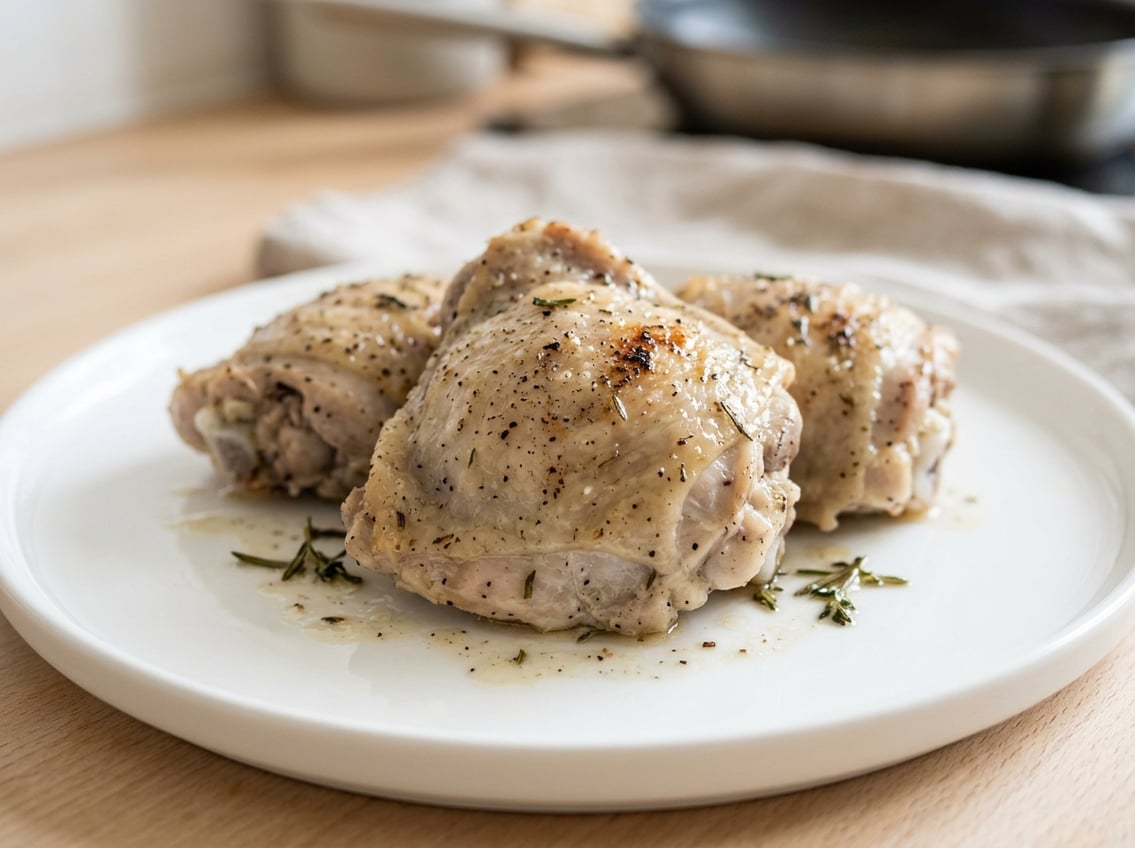
Myoglobin, cooking method, temperature, and storage all affect color. Learn practical tips to reduce that dull look and keep flavor and texture intact.
The Role of Myoglobin in Chicken Color
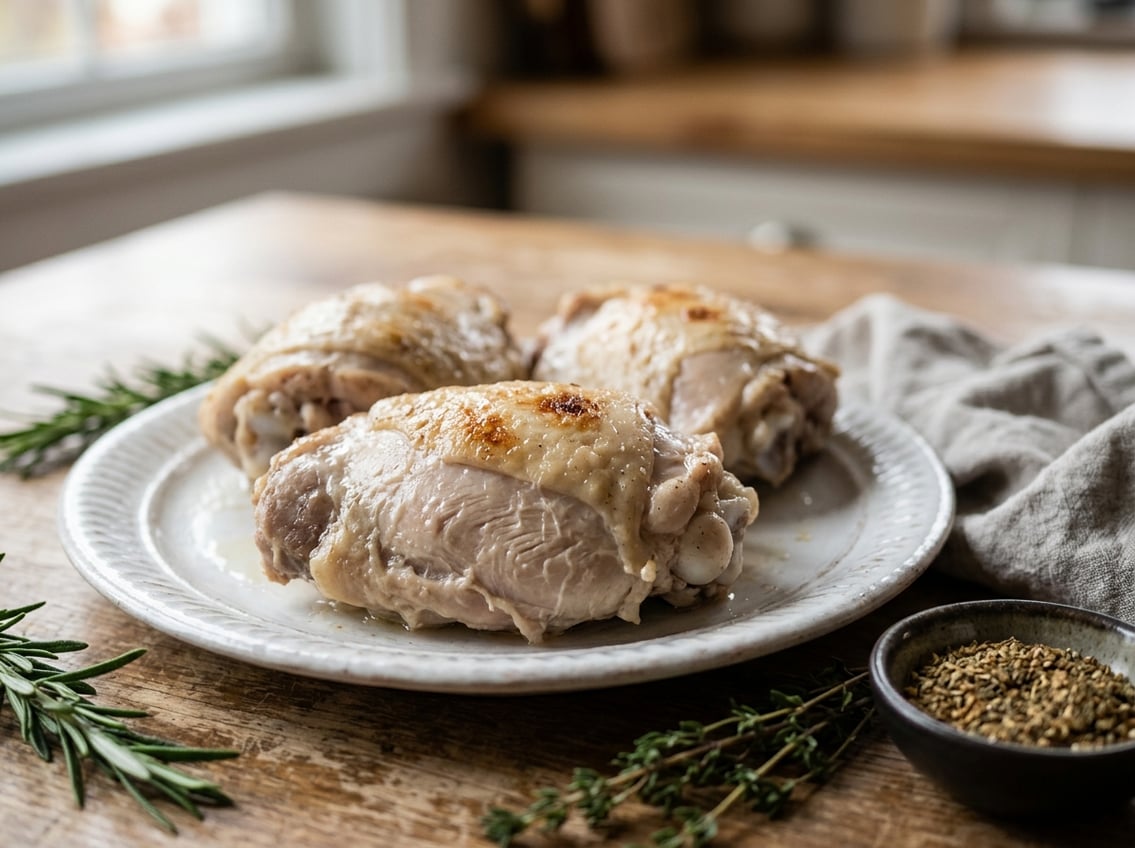
Myoglobin, a pigment protein in muscle, drives color changes during cooking. Its amount and chemical state explain why thigh meat looks darker or greyer than breast meat.
Differences Between Dark and White Meat
Dark meat (thighs and drumsticks) comes from muscles used more for standing and walking. Those muscles contain more myoglobin, the oxygen-storing protein that gives meat a red-to-brown tint when raw.
White meat (breast) comes from less-active muscles and has lower myoglobin levels. Breast cooks to a paler, whiter color more quickly because there is less pigment to alter during heating.
Muscle fiber type also matters. Slow-twitch fibers in thighs have more mitochondria and myoglobin, while fast-twitch breast fibers have less.
Higher Myoglobin Content in Thighs
Thighs contain more myoglobin than breast meat. That higher myoglobin content causes a darker raw color and makes the cooked meat retain a deeper hue.
You can expect thigh meat to remain noticeably darker even when it reaches a safe internal temperature. Higher pH in dark meat can also stabilize myoglobin and affect how light scatters in the tissue.
That combination of more pigment plus slight pH differences reduces the bright, dry-looking surface browning you see in breast meat. If you compare equal-weight breast and thigh portions after cooking, the thigh will usually appear less white and more tan-to-grey.
How Myoglobin Changes During Cooking
As temperature rises, myoglobin undergoes chemical transformations. Initially, ferrous myoglobin (red) can bind oxygen or lose it.
With heat, the pigment denatures and changes color from red/pink toward brown or grey due to protein unfolding and iron oxidation. Oxidized myoglobin (metmyoglobin) forms when iron moves to the ferric state, producing brown or grey tones.
The rate of oxidation depends on temperature, time, and exposure to air. Slow, moist cooking can limit surface browning and leave deeper tissue looking grey.
Overcooking deepens grey-brown patches. Use an instant-read thermometer to confirm safety (165°F/74°C for poultry parts), because myoglobin chemistry can leave fully cooked thighs with a grey appearance.
Cooking Methods That Influence Color
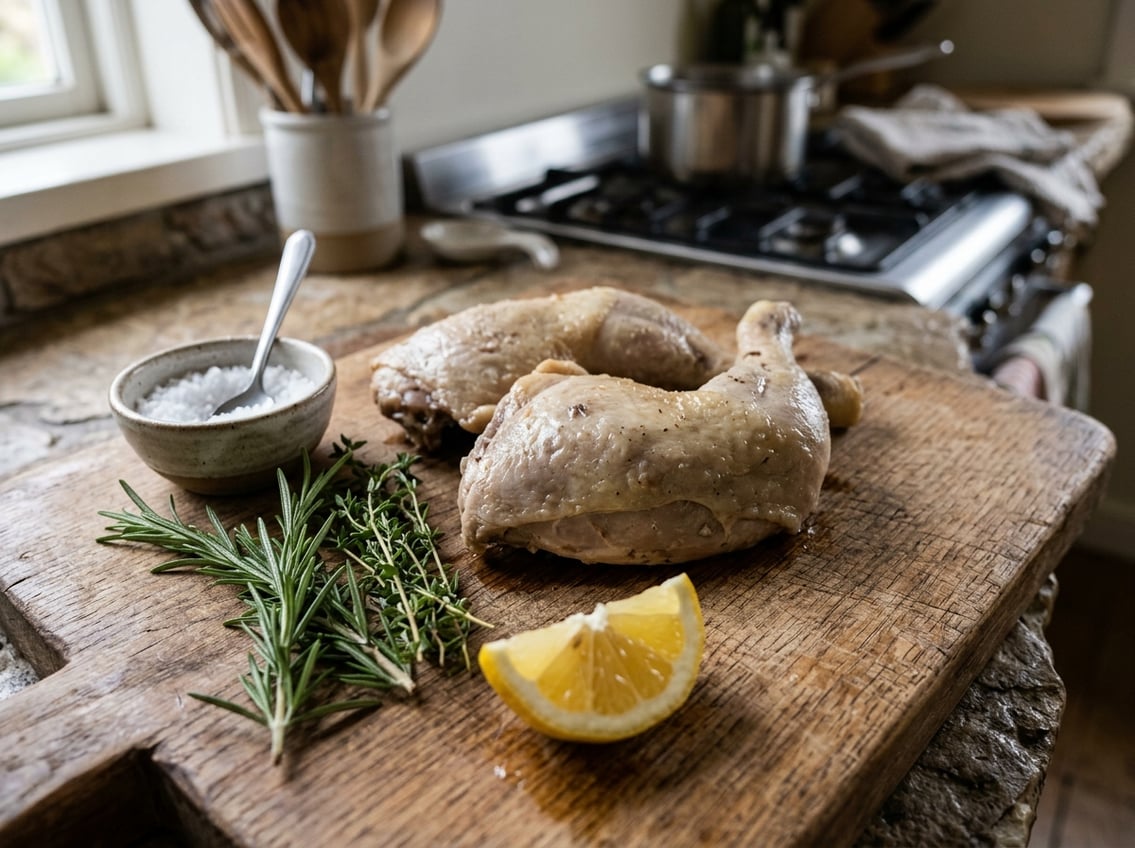
Different cooking techniques change surface moisture, temperature, and oxygen exposure. These factors determine whether myoglobin oxidizes to brown/grey and whether the Maillard reaction can create a browned crust.
Impact of Moist Heat Methods
Moist heat methods like poaching, braising, and simmering keep surface temperature below the level needed for browning. Steam and liquid on the skin block the Maillard reaction, so thighs often stay pale or grey instead of developing a crust.
Those methods also increase oxygen contact over time, which can promote oxidized myoglobin and dull the meat’s color. Texture stays tender, but visual cues look muted.
If you want deeper color while using moist heat, sear the skin quickly first or finish under a hot broiler for a few minutes.
Tips:
- Pat thighs dry before any searing step.
- Sear 2–4 minutes per side at high heat, then braise.
- Use a shallow pan to reduce steam buildup.
Effect of High Heat Cooking
High heat searing, grilling, or roasting promotes the Maillard reaction and caramelization, producing brown, flavorful skin. Temperatures above about 285°F (140°C) are needed on the surface to form that browned crust quickly.
High heat also evaporates surface moisture, reducing the chance that myoglobin simply oxidizes to a grey color. If the interior still reaches 165°F (74°C) while skin browns, the dark thigh meat can retain a slightly brown-grey hue internally due to higher myoglobin concentration.
Avoid crowding the pan. Overcrowding lowers surface temperature and can produce grey results even with high heat.
Quick guidelines:
- Preheat skillet or grill until very hot.
- Leave skin undisturbed to form crust.
- Use a wire rack in the oven for even hot-air exposure.
Marinades and Additives on Appearance
Acidic marinades (lemon, vinegar) can lighten or change surface color by altering pH and partially denaturing myoglobin. That can reduce the intensity of red or pink tones and slightly shift cooked color, sometimes making the thigh look paler.
Salt-based dry brines draw moisture out then reabsorb it, which can dry the surface enough to brown better and reduce greying. Ingredients with polyphenols (soy, balsamic) or sugar promote browning and mask grey tones.
Some preservatives or long exposure to air during storage can oxidize myoglobin before cooking, making greying more likely regardless of the marinade.
Simple rules:
- Use 1–2 tsp kosher salt per pound for a dry brine.
- Add sugar or soy to marinades for more surface browning.
- Limit long air exposure before cooking to reduce oxidized myoglobin.
Food Safety and Grey Cooked Chicken
Grey color alone does not determine safety. Focus on temperature, smell, texture, and storage history to decide whether cooked chicken thighs are safe to eat.
Distinguishing Grey from Spoiled Chicken
Myoglobin changes, oxidation, or lack of surface browning often cause grey cooked chicken, not spoilage. If the meat reached a proper internal temperature and was handled correctly before cooking, a grey tint can be normal for thighs.
Pay attention to context. Chicken that was stored too long, thawed and refrozen, or left at room temperature for hours is more likely to be unsafe.
Use a food thermometer rather than color. Color is an unreliable indicator of doneness for dark meat.
Checklist:
- Cooked to 165°F (74°C)? → Likely safe.
- Stored ≤2 days in the fridge before cooking? → Better.
- Any off smells or sliminess? → Suspect spoilage.
Odor, Texture, and Other Spoilage Signs
Smell provides one of the clearest warnings. A sour, rotten, or unusually pungent odor means spoilage regardless of color.
Freshly cooked chicken should smell neutral to mildly savory. Feel the surface and interior.
Slimy or sticky texture after cooking suggests bacterial growth or poor handling. Firm, springy meat indicates normal cooked texture.
Look for visible mold, green/black spots, or any unusual film; those are definite spoilage signs. Consider storage timeline: refrigerate cooked chicken within two hours and use within 3–4 days.
If the chain of refrigeration was broken, treat the meat as potentially unsafe even if it smells okay.
Safe Internal Temperatures
Check temperature for safety. Insert a reliable instant-read thermometer into the thickest part of the thigh without touching bone.
The USDA minimum safe temperature for poultry is 165°F (74°C). If you use sous-vide or slow-cooking methods that rely on time/temperature combinations below 165°F, follow validated pasteurization charts specific to those temperatures and times.
Rest the meat briefly after cooking; carryover heat can raise the internal temperature slightly.
Record cooking temperature and time when preparing large batches. If you can’t verify the temperature history, discard the meat rather than risk foodborne illness.
Oxidation and Storage Conditions
Oxygen interacting with meat proteins, storage time and temperature, and the bird’s background all affect the final cooked color.
How Oxygen Exposure Changes Color
When myoglobin in thigh muscle meets oxygen, it can form oxidized myoglobin, which shifts color from pinkish-red to brownish-grey. Heat speeds this change during cooking.
Surface pigments can oxidize before the interior reaches 165°F (74°C), so grey cooked chicken can appear even when safely cooked. Limit oxidation by reducing air contact.
Cook in sealed pans, use vacuum-sealed bags (sous-vide), or briefly sear to lock in surface juices.
Grey from oxidation is a visual change, not an automatic safety issue. Check for off-odors, sliminess, or a thermometer reading below 165°F to decide if meat is unsafe.
The Role of Storage and Freshness
Storage that exposes raw thighs to air accelerates oxidation and increases the chance of a grey hue after cooking. Keep raw thighs in airtight containers or vacuum bags and refrigerate at or below 40°F (4°C) to slow pigment changes.
Refrigerate raw chicken for no more than 1–2 days before cooking. Freezing helps, but poor wrapping causes freezer burn and localized oxidation, which also produces grey or dull patches when cooked.
If you notice slime, a sour smell, or visible mold, discard the chicken. Those signs indicate spoilage rather than harmless oxidation.
Genetic and Environmental Factors
Different chicken breeds and feeding regimens change baseline myoglobin levels, affecting how dark thighs look when cooked. Birds with more active leg muscles or those fed diets higher in certain pigments have higher myoglobin, so their cooked thighs trend darker or greyer.
Rearing conditions such as exercise, age at slaughter, and diet (for example, higher iron intake) also influence muscle pigment. These factors change appearance but not safety.
Tips to Minimize Grey Appearance in Chicken Thighs
Use cooking methods, moisture control, and proper handling to promote browning and avoid a dull grey color while keeping food safety in mind.
Choosing Optimal Cooking Techniques
Select high-heat, dry-heat methods when you want a browned exterior. Sear thighs in a hot skillet (350–375°F / 175–190°C surface) for 3–5 minutes per side, then finish in a 400°F oven if needed.
The Maillard reaction produces the brown color you want. Avoid long, low-temperature direct heat that lets myoglobin turn grey without browning.
If you prefer braising or slow cooking, use a sealed environment and finish with a quick high-heat sear. That gives safe internal temps (165°F/74°C) and a browned surface.
Use a meat thermometer to confirm doneness rather than color alone for food safety.
Managing Moisture for Better Browning
Pat thighs thoroughly with paper towels before seasoning. Excess surface moisture steams the meat and prevents browning.
Use a light coat of oil with a high smoke point (canola, avocado). Oil improves heat transfer and encourages even crust formation.
For wet marinades, remove excess marinade and dry the skin before cooking. If skin is present, lift and dry the skin for crisping.
If skinless, increase surface heat and avoid overcrowding the pan to keep juices from pooling.
Best Practices for Storage and Preparation
Buy fresh, properly stored chicken. Fresh raw thighs should be pinkish, not grey, which can indicate spoilage.
Keep raw chicken refrigerated at 40°F (4°C) or below. Use it within 1–2 days, or freeze at 0°F (-18°C) for longer storage.
Thaw frozen thighs in the refrigerator or under cold running water. Do not thaw at room temperature.
Trim excess connective tissue. Let thighs sit for 20–30 minutes to reach near-room temperature before cooking for even coloring and consistent internal temperature.
Always check that the internal temperature of dark meat reaches 165°F (74°C) for safety. Color alone isn’t a reliable indicator.


