
How Long Does Chicken Thighs Take to Fry: Timing, Techniques, and Tips
You want crispy fried chicken thighs that stay juicy inside and need a clear timing answer you can use tonight.
For pan-frying, cook boneless thighs for about 8–12 minutes per side and bone-in, skin-on thighs for about 20–30 minutes total. For deep-frying, fry thighs for roughly 12–18 minutes at 350°F (175°C) and aim for an internal temperature of 165°F (74°C).
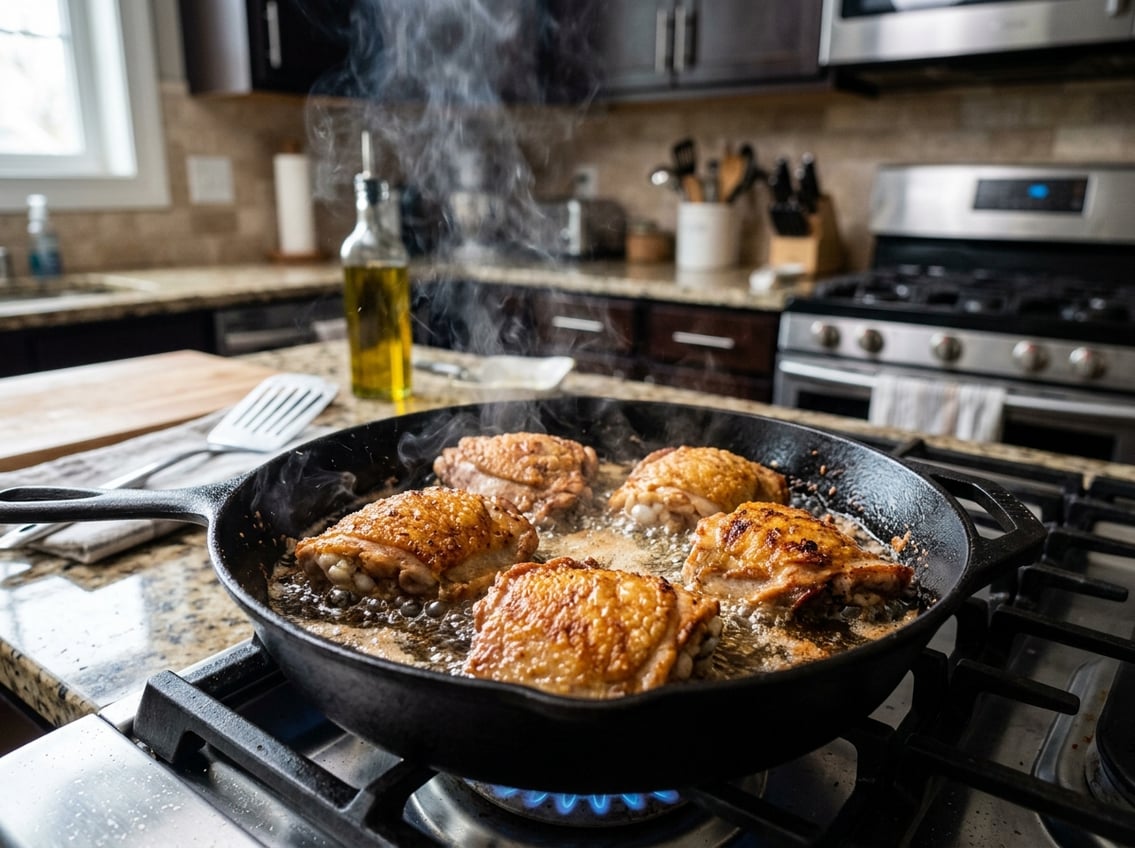
This guide explains exact times and practical techniques. You’ll learn pan-frying tips for golden skin and deep-frying steps for a crunchy crust.
Essential Timing for Fried Chicken Thighs
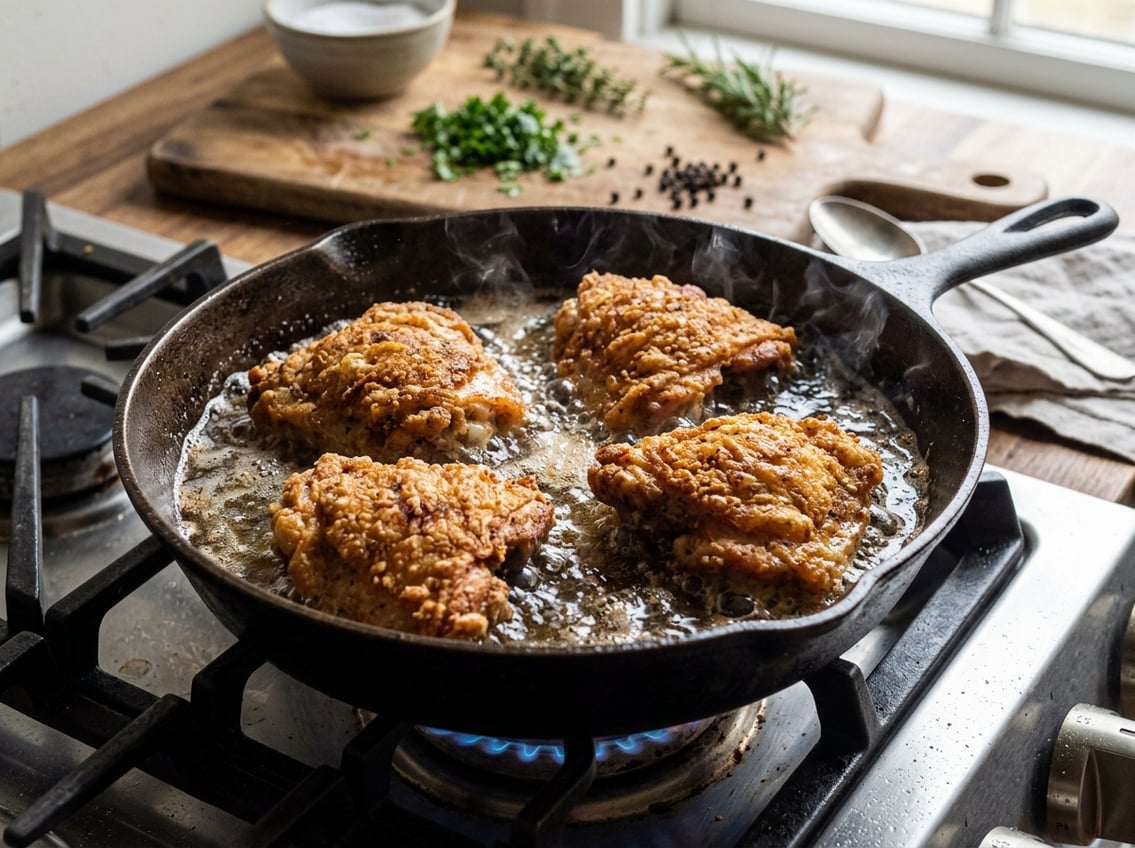
Focus on three timing factors: cook windows for different methods, the difference between bone-in and boneless thighs, and the internal temperature target for safety.
Follow time ranges, oil temperatures, and use a thermometer to get crispy fried chicken with juicy meat.
Average Cooking Times at a Glance
For pan-frying, cook bone-in, skin-on thighs for 20–30 minutes total. Start skin-side down for 15–20 minutes until golden, then flip for 5–10 minutes.
Boneless, skinless thighs pan-fry faster—about 5–8 minutes per side over medium-high heat. For deep-frying, keep oil at 350°F (175°C) and fry bone-in thighs for 12–18 minutes and boneless thighs for 6–10 minutes.
Keep oil temperature steady and avoid overcrowding. Use a splatter screen for pan frying and a thermometer for oil.
Bone-In vs. Boneless Timing Differences
Bone-in, skin-on thighs need lower heat and longer time to render fat and cook through. Cook them for 20–30 minutes in the pan or 12–18 minutes deep-frying.
The skin crisps best with extended contact in the pan. Boneless thighs finish quickly and can dry out if overcooked.
Use medium to medium-high heat and check at 5–8 minutes per side for pan frying or 6–10 minutes for deep frying. If you bread boneless thighs, lower the heat so the crust browns without burning.
Internal Temperature for Safe Frying
Use a probe thermometer to check doneness. Insert it into the thickest part, avoiding the bone.
The USDA minimum is 165°F (74°C). Remove thighs at 165–170°F for carryover and moist meat.
For bone-in thighs, check multiple spots if unsure. Rest fried thighs 5 minutes on a wire rack so juices redistribute.
Pan-Frying Chicken Thighs for Crispy Results
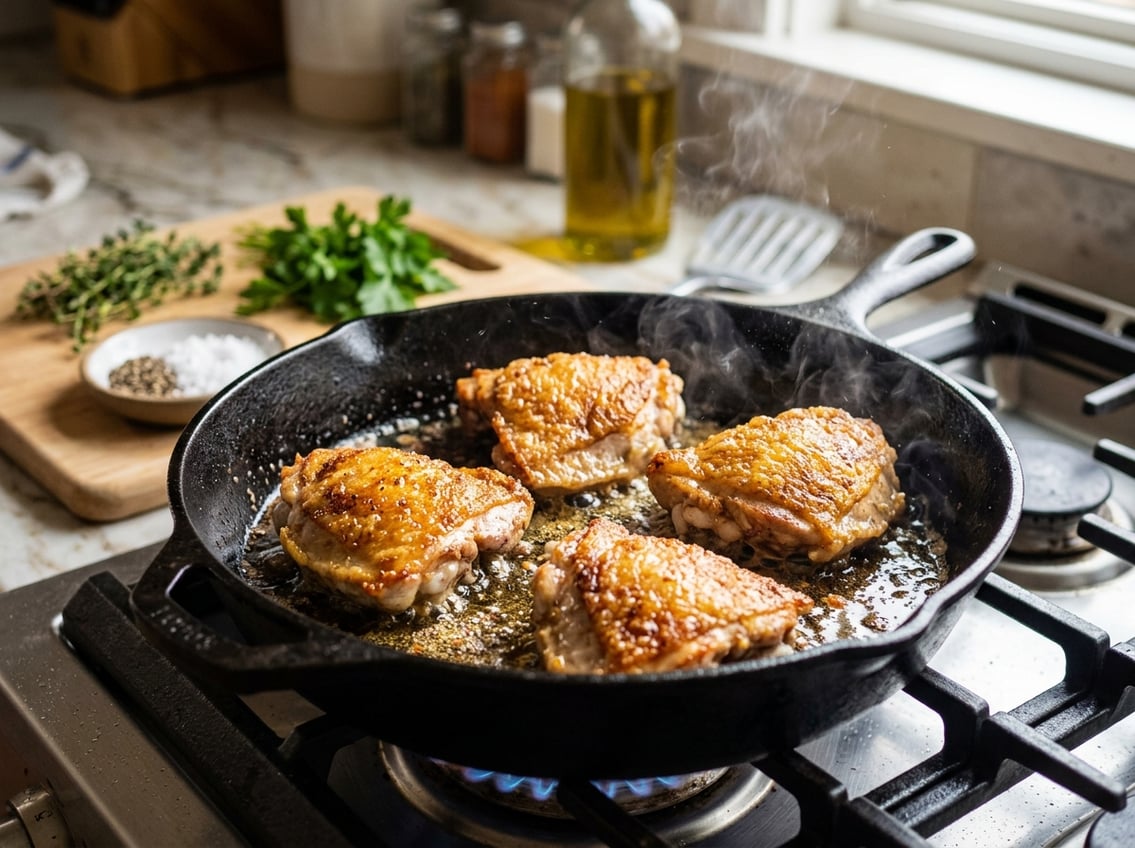
Control heat, maximize skin contact, and monitor internal temperature for crispy skin and juicy meat.
Timing, oil choice, and the right pan matter most.
Step-by-Step Pan Frying Method
Pat thighs very dry with paper towels. Trim excess fat but keep skin intact.
Season both sides with salt and pepper just before cooking. Use a heavy skillet.
Heat the pan over medium, add 1–2 tablespoons of high-smoke-point oil, and let it shimmer. Place thighs skin-side down in a single layer and press gently for full contact.
Cook skin-side down undisturbed for 12–20 minutes, depending on size and whether they are bone-in or boneless. Reduce heat if the skin darkens too fast.
Flip and cook the flesh side for 5–10 minutes until the thickest point reads 165°F (74°C). Rest 5–7 minutes before serving.
Tips for Golden-Brown Skin
Start skin-side down in a cold pan with cold oil to render fat slowly. This helps the skin brown evenly.
Flip once when the skin releases easily and is deep golden. Use medium to medium-low heat to prevent burning and allow fat to render.
If the pan smokes or skin chars, lower the heat and finish in a 375°F (190°C) oven for 8–12 minutes. Press down small areas that don’t sit flat with a spatula.
Don’t overcrowd the pan. Let chicken rest on a wire rack to keep the skin crunchy.
Best Oils and Equipment for Pan Frying
Choose oils with smoke points above 400°F, such as canola, vegetable, avocado, or refined peanut oil. Avoid extra-virgin olive oil at high heat.
Use a heavy skillet like cast iron or stainless steel. Preheat the pan properly.
Keep a splatter screen to reduce mess and a digital thermometer to check doneness. Use tongs for flipping, a spatula to press skin, and a wire rack for resting.
Deep-Frying Chicken Thighs for Crunchy Results
Master timing, oil temperature, and batch size for a crisp exterior and juicy interior. Use a thermometer, dry the meat well, and give each piece space in the oil.
Deep Frying Procedure
Pat each thigh dry and season or bread as desired. Let coated thighs rest on a rack for 10–30 minutes to help the batter adhere.
Use a heavy, deep pot or countertop fryer with at least 3–4 inches of neutral oil. Heat to the target temperature.
Lower thighs gently with tongs or a spider. For bone-in, skin-on thighs, fry about 8–10 minutes; for boneless, fry 6–8 minutes.
Flip only if needed to brown evenly. Check doneness with a thermometer: thighs must reach 165°F (74°C).
Drain on a wire rack to keep the crust crisp.
Optimal Oil Temperatures
Keep oil between 325°F and 350°F (163°C–177°C). Start at the higher end for a quicker crust set.
Use a thermometer to monitor temperature. Adding cold chicken lowers oil temperature, so let it recover between batches.
For double-frying, cook first at about 325°F until cooked through, rest 5–10 minutes, then finish at 350°F–375°F for extra crunch.
Choose oils with high smoke points and neutral flavors. Replace oil if it smells rancid or smokes.
How Not to Overcrowd the Fryer
Fry in small batches so oil temperature stays steady and thighs cook evenly. Leave at least 1–2 inches between pieces.
A 6-quart pot holds 3–4 bone-in thighs per batch, depending on size. Let oil return to target temperature between batches.
Place fried thighs in a single layer on a wire rack so the crust stays crisp.
Techniques for Extra Crispy Fried Chicken Thighs
Control fat rendering, surface moisture, and oil temperature to develop a golden crust while keeping thighs juicy.
Two-Step and Double Frying Methods
Start by frying at a lower temperature, around 300–325°F (150–160°C), for 18–25 minutes to render fat and cook through.
Let thighs rest for 5–10 minutes. Increase oil to 400–450°F (205–230°C) and finish for 2–4 minutes until the skin turns deep golden.
Use a thermometer to confirm both oil and meat temperatures. For breaded thighs, shorten or skip the final high-heat step to avoid burning the coating.
Avoid overcrowding so oil recovers quickly between batches.
Key Prep Steps for Maximum Crunch
Dry the skin thoroughly with paper towels. If you brine, pat dry before dredging or seasoning.
Season and flour in thin, even layers. Add cornstarch or rice flour (50:50 ratio) to the flour mix for extra crispness.
Press coating firmly so it sticks. Use room-temperature thighs for even cooking.
When pan-frying, render skin by cooking skin-side down over medium until deep golden before flipping. Drain finished pieces on a wire rack to keep the crust crisp.
Preparation and Seasoning Essentials
Dry the skin thoroughly and decide whether to marinate for flavor or brine for juiciness. Set up salt, oil, and your chosen spices before frying.
Drying and Marinating for Better Texture
Pat each thigh dry with paper towels until the surface is damp-free. A short brine (30–60 minutes in 1 tablespoon salt per cup water) improves moisture.
Let bone-in, skin-on thighs air-dry uncovered in the fridge for 1–4 hours after salting for crisp skin. Marinate boneless, skinless thighs in yogurt or buttermilk and spices for 1–6 hours to tenderize and help coating stick.
Avoid long acidic marinades over 12 hours, which can make the texture mushy.
Seasoning Ideas and Flavor Boosts
Start with coarse salt and freshly ground black pepper. For classic flavor, add garlic powder, onion powder, and paprika.
Use 1 teaspoon paprika and ½ teaspoon each of garlic and onion powder per pound of chicken. For a spicier profile, add cayenne and chili powder.
Mix dried thyme and oregano into the rub for an herb-forward flavor. If you flour-coat the thighs, toss the flour with the seasoning for even coverage.
Finish with a tablespoon of melted butter or a drizzle of oil in the pan after flipping to boost browning and flavor.
Troubleshooting Common Frying Issues
If thighs turn out greasy, burnt, or lose crispness, adjust oil temperature, cooking time, and resting methods.
Small changes like drying the skin, using a thermometer, or adjusting heat can solve most problems.
Preventing Greasy or Soggy Thighs
Pat thighs dry with paper towels and remove excess marinade or flour before frying. If you brine, dry the skin thoroughly and refrigerate uncovered for 30–60 minutes.
Heat oil to the correct temperature—usually 350°F (175°C) for deep frying. Use a thermometer and avoid adding too many pieces at once.
For pan-frying, start on medium and render fat slowly for 20–30 minutes for bone-in, skin-on thighs, then finish at medium-high to crisp.
Drain on a wire rack to keep air circulating and prevent steam from softening the crust. Rest 5–10 minutes before serving to let juices redistribute.
Fixing Burnt or Undercooked Chicken
When the outside is dark but the interior is undercooked, your heat is too high. Lower the oil or pan temperature and finish cooking in a 350°F (175°C) oven until the internal temperature reaches 165°F (74°C) at the thickest point.
If you notice slightly burnt crusts, scrape off blackened bits. Reduce the heat and continue cooking gently.
When thighs are raw inside, cover the pan and cook on low for a few minutes. You can also transfer the chicken to an oven at 325–350°F to finish cooking without further charring.
Use a reliable meat thermometer. Insert it into the thickest part, avoiding bone, for an accurate read.
Trim very thick pieces or pound boneless thighs to even thickness for more consistent frying times.
Keeping Your Fried Chicken Crispy
Keep oil temperature between 325 and 375°F, depending on your method. Consistent heat preserves crispness.
For two-step frying, first cook at a lower temperature, about 300 to 325°F, to render fat. Let the chicken rest, then fry quickly at 400 to 450°F for a golden, crunchy finish.
When frying breaded thighs, avoid very high finishing temperatures that can burn the crumbs. Instead, keep oil at 350°F.
If needed, finish the chicken in the oven at 375 to 400°F for 8 to 12 minutes. This helps prevent soggy interiors and keeps the coating intact.
Hold cooked thighs on a wire rack in a warm oven set to 200 to 225°F. This keeps them hot and crisp without steaming.
Do not stack the pieces. Overcrowding traps steam and softens the crust.


