
What Is the Best Way to Cook Chicken Thighs Bone In: Proven Methods and Tips
You want juicy, flavorful chicken thighs with crisp skin and minimal fuss. For the best results, choose bone-in, skin-on thighs and use a combination of high-heat pan-searing to render and crisp the skin, then finish in the oven until the internal temperature reaches around 175°F to break down connective tissue without drying the meat.
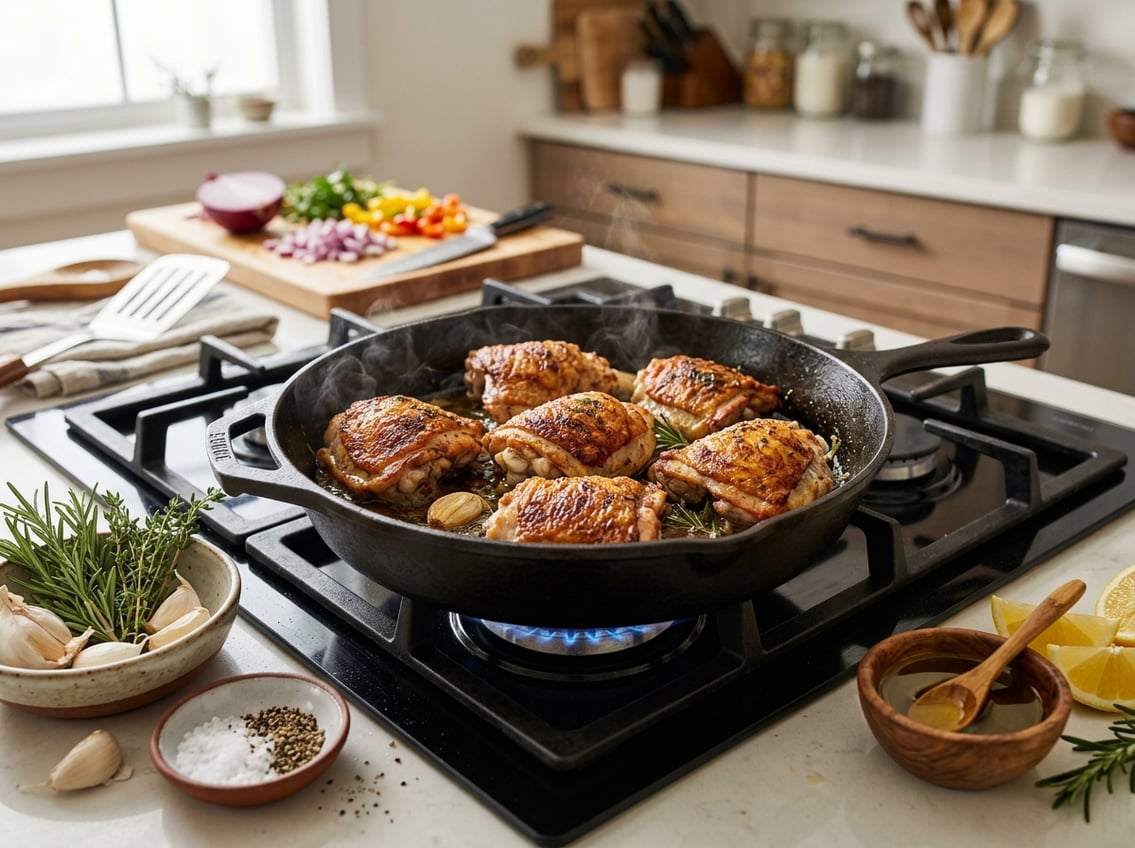
Pan-searing and then oven-roasting bone-in, skin-on chicken thighs gives you reliably crispy skin and juicy meat. Most chefs and home cooks prefer this method for both weeknight dinners and special meals.
This guide covers which thigh types suit different dishes, seasoning and prep habits, step-by-step techniques for oven baking, pan-searing plus roasting, and grilling tips for a smoky finish. Quick serving ideas help your next weeknight dinner come together with confidence.
Types of Chicken Thighs and Their Unique Qualities
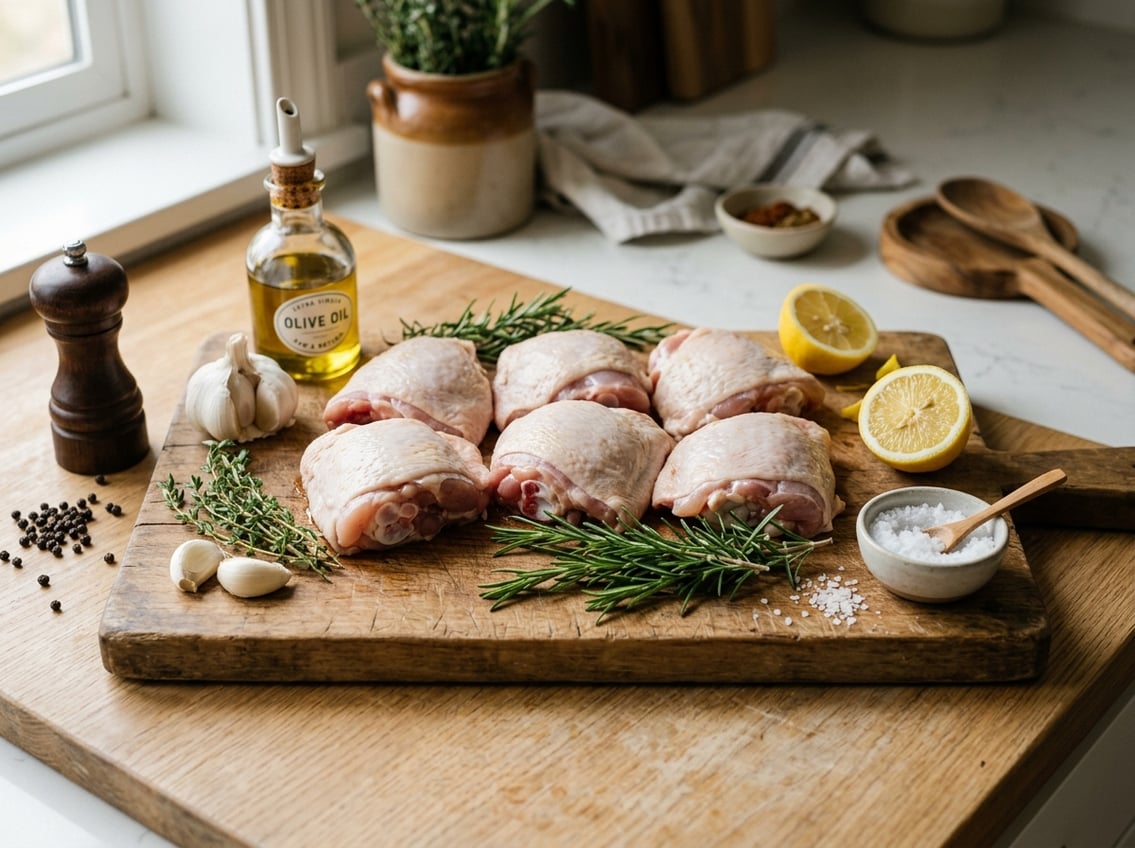
Choose thighs based on flavor, cooking method, and how much hands-on time you want. Bone presence and skin affect cooking times, moisture retention, and final texture.
Bone-In, Skin-On Thighs Explained
Bone-in, skin-on thighs include the femur and surrounding dark meat with the skin intact. The bone increases cooking time by a few minutes but acts as a heat sink, promoting even cooking and helping the meat stay moist during high-heat methods like roasting or grilling.
The skin renders fat as it heats, basting the meat and crisping up when exposed to direct heat. That rendered fat also creates flavor in the pan or sheet tray. To get crisp skin, pat thighs dry, season well, and start skin-side down in a hot skillet or oven at 400–425°F.
Varieties: Boneless, Skinless, and Bone-In Skinless
Boneless, skinless thighs are trimmed of bone and skin for quicker, uniform cooking and easier slicing. They cook faster and suit stir-fries, curries, and braises where fast heat or shredding matters.
Bone-in skinless thighs keep the bone but lack skin. They retain more juiciness than boneless versions because the bone regulates heat but won’t deliver crispy skin. Use them for richer flavor without the need to crisp skin, such as slow-roasting or low-and-slow braises.
Why Bone-In Cuts Offer Superior Flavor
The bone contributes gelatin and marrow compounds that deepen the savory profile during cooking. Collagen around the bone breaks down into gelatin with moderate heat, improving mouthfeel and juiciness.
Bones change how heat moves through the thigh, preventing the exterior from overcooking while the center comes to temperature. That thermal buffering reduces the risk of dry meat. For maximum flavor with crisp skin, pick bone-in, skin-on and combine searing with an oven finish.
Essential Seasoning and Prep Techniques
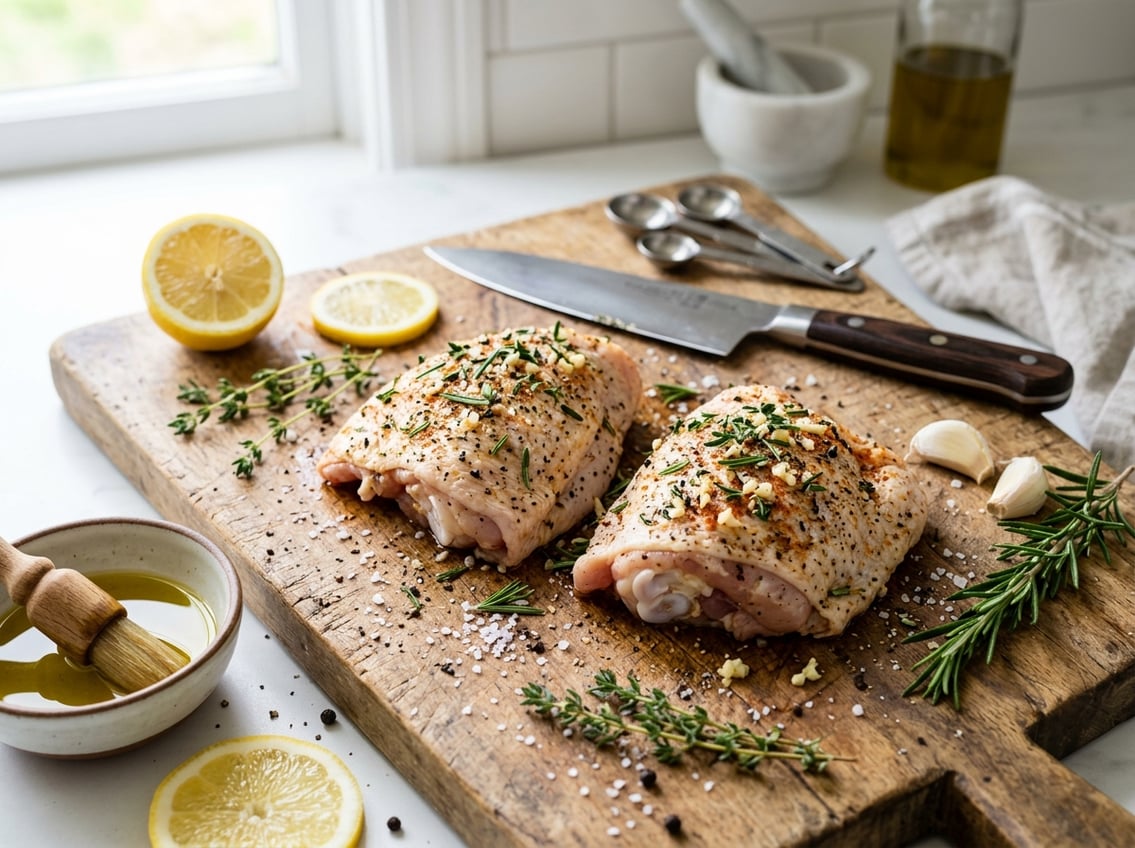
Season liberally with salt, layer complementary spices for depth, and use simple prep steps that ensure even cooking and crisp skin. Trim excess fat, dry the skin thoroughly, and let seasoned thighs rest so flavors penetrate.
Building a Flavorful Chicken Seasoning
Start with kosher salt as your base and use about 3/4 to 1 teaspoon per thigh depending on size. Salt draws moisture to the surface initially, then reabsorbs it, seasoning the meat through.
Add freshly ground black pepper for bite; grind coarser for texture and a brighter aroma. Layer in a warm note with smoked or sweet paprika, and a touch of garlic powder for savory backbone.
If you want a slight sweetness, add 1/2 teaspoon brown sugar per pound of thighs. Mix the dry spices in a small bowl before applying to ensure even distribution.
Pat thighs dry with paper towels before seasoning. Apply the rub under and over the skin to season both meat and skin. Let seasoned thighs rest uncovered in the refrigerator for at least 30 minutes or up to overnight to firm the skin and deepen flavor.
Prepping Thighs for Optimal Texture
Trim away large fat flaps and any loose hanging skin that won’t render. Leave the skin intact for cooking; it crisps and protects the meat.
If you prefer boneless, remove the bone before cooking but expect slightly faster cook times. Dry the skin thoroughly; moisture prevents crisping.
After patting dry, season and place the thighs on a rack in the fridge for 30–120 minutes to dry further. Bring thighs to room temperature for 20–30 minutes before searing to ensure even internal cooking.
Use a hot pan or preheated oven to start the crust formation. Sear skin-side down until fat renders and skin is deep golden brown, then finish in a 350–400°F oven.
Cook to an internal temperature of 175°F for tender, breaking-down connective tissue without dry meat.
Key Spices: Paprika, Oregano, Thyme, and Black Pepper
Paprika provides color and a mild, smoky-sweet backbone. Use 1–2 teaspoons per pound; smoked paprika gives more depth while sweet paprika stays milder.
Oregano brings a savory, slightly bitter herb note that pairs well with tomato-based or Mediterranean profiles. Use dried oregano sparingly—about 1 teaspoon per pound.
Thyme adds an earthy, lemony lift that stands up to long cooking. Use fresh sprigs tucked under the skin or 1 teaspoon dried per pound mixed into the seasoning.
Black pepper ties the blend together with a sharp finish. Grind fresh and apply coarsely for texture and aroma.
Oven-Baking: Achieving Crispy, Juicy Chicken Thighs
You can get crispy skin and juicy meat by drying the skin, using a hot oven, and finishing with a brief high-heat blast if needed. Focus on skin-on, bone-in thighs, a hot roasting temperature, and a short rest before serving.
How to Bake Chicken Thighs Step-by-Step
Pat each skin-on chicken thigh dry with paper towels to remove surface moisture. Season under and over the skin with salt and spices and let the thighs sit 15–30 minutes at room temperature if time allows.
Arrange thighs skin-side up on a wire rack set inside a rimmed baking sheet or in a cast-iron skillet to allow air circulation. Bake uncovered so moisture escapes.
Use an instant-read thermometer and pull bone-in chicken thighs at 175–180°F for tender, fully rendered meat.
Best Temperatures and Times
Preheat your oven to 400–425°F for a balance of crispy skin and moist meat. At 400°F, bone-in, skin-on chicken thighs typically take 35–45 minutes. At 425°F, cook for about 30–40 minutes.
If you use convection, reduce the temperature by 25°F and check earlier. Always verify doneness with a thermometer at the thickest part near the bone. Let the thighs rest 5–10 minutes before serving so juices redistribute.
Tips for Extra Crispy Skin
Dry the skin thoroughly and salt it early. Use a light coating of oil or melted butter to promote even browning and to help spices adhere.
Cook on a wire rack or elevated surface so fat renders away from the skin. Finish under the broiler for 1–2 minutes if the skin needs extra crisping. Avoid overcrowding the pan; give each thigh space so heat can circulate.
Baked Bone-In Chicken Thighs vs. Other Cuts
Bone-in chicken thighs deliver more flavor and stay moister than boneless thighs or chicken breasts because the bone slows heat transfer. Compared with boneless thighs, bone-in pieces need several more minutes in the oven and a slightly higher final internal temperature to reach tenderness.
Skin-on thighs produce a crisper exterior than skinless cuts and require the drying, oiling, and high-heat steps noted above. Boneless, skinless thighs bake faster but won’t match the same depth of flavor or crisp skin.
Pan-Searing and Roasting for Superior Results
Pan-searing builds a deeply flavored, crispy exterior. Oven-roasting finishes the thigh evenly without drying the meat.
Benefits of Pan-Searing Before Roasting
Pan-searing creates a Maillard crust on skin-on chicken thighs that improves flavor and texture. Pat thighs dry, season with salt and pepper, and heat a heavy, oven-safe skillet over medium-high until oil shimmers.
Place thighs skin-side down and press gently; let them cook undisturbed 3–6 minutes until the fat renders and the skin is golden. Searing also seals surface juices and leaves fond that you can use for a pan sauce.
Use a cast-iron or stainless pan for even heat and high searing temperatures. Cook in batches so each piece contacts the hot pan and crisps properly.
Oven Finishing for Tender Meat
After searing, transfer the skillet to a preheated oven to cook through without burning the skin. Roast on the center rack so heat circulates around the bone-in chicken thighs and the interior reaches safe temperature evenly.
Place thighs skin-side up; the exposed skin keeps crisp while the oven’s dry heat cooks around the bone. Roast time varies with size, usually 18–30 minutes for standard bone-in thighs.
Expert Temperature Recommendations
Cook chicken thighs to an internal temperature of 165°F measured at the thickest part near the bone. Insert an instant-read thermometer parallel to the bone for an accurate reading.
Use oven settings based on thickness: 400°F works well for regular bone-in thighs; raise to 425°F for very thick pieces or if you want a faster finish without losing crispness. If the skin browns too quickly, lower the oven by 25°F and extend time, checking the thermometer frequently.
Grilling Bone-In Chicken Thighs for Smoky Flavor
Grill over a two-zone fire. Start with a high-heat sear to crisp skin, then finish over indirect medium heat to cook through without burning.
How to Grill Chicken Thighs Safely
Always preheat your grill to get predictable cooking. Aim for a searing zone of about 450°F and an indirect zone around 350–400°F. Sear skin-side down for 2–4 minutes to render fat, then move thighs to indirect heat.
Cook bone-in thighs to a safe internal temperature of 165°F measured at the thickest part, away from bone. For juicier results, many cooks pull thighs at 175–185°F to break down connective tissue.
Avoid cross-contamination. Use separate plates and utensils for raw and cooked chicken. Clean your thermometer probe between uses. Let the thighs rest 5 minutes before slicing so juices redistribute.
Tips for Even Cooking on the Grill
Arrange thighs skin-side up on the cooler side after searing so the exterior crisps without charring. Flip and reposition every 4–6 minutes to control flare-ups and ensure even color.
Trim excess fat or loose skin that might cause wild flames. If flare-ups occur, move the pieces away from direct flames and close the lid until flames subside.
Use a probe thermometer or instant-read to check different pieces. If skin isn’t crisp enough, finish briefly over direct heat for 30–60 seconds per side while watching closely.
Adaptations and Serving Ideas
Use leftover cooked thighs to speed future meals and transform textures for different dishes. Swap bone-in thighs for boneless or skinless versions when the recipe or time calls for faster cooking or easier eating.
Making the Most of Leftovers
Turn cold or warm leftover bone-in chicken thighs into three quick meals. Shred meat for tacos, slice for grain bowls, or pull meat into a simple soup.
To shred, remove bones and skin. Toss meat with a splash of lime, chopped cilantro, and a pinch of salt for immediate tacos or salads.
Store leftovers in an airtight container in the fridge for up to 4 days. Freeze portions for 2 to 3 months.
Reheat gently in a low oven at 300°F (150°C), wrapped in foil for 10 to 15 minutes. You can also microwave covered in short intervals to avoid drying.
If you prefer boneless or skinless chicken thighs for convenience, remove bones before storage. This speeds reheating and makes the meat easier to use in sandwiches, pastas, and stir-fries.
Weeknight Dinner Variations
Use one main cooking method and tweak sauces or sides for multiple weeknight meals.
Roast or skillet-sear bone-in thighs once, then apply different finishes. Brush with barbecue sauce and broil for 2 minutes to create a glaze. Toss with curry paste and coconut milk and simmer for 5 minutes to make a curry. Shred and stir into marinara for a quick pasta topping.
For faster dinners, choose boneless or skinless thighs and cut them into 1–2 inch pieces. Stir-fry or grill for 6–8 minutes.
Try pairings like citrusy slaw and rice or a quick chimichurri and roasted potatoes. Make a simple pan sauce from pan drippings, white wine, and butter.
Keep a small recipe card list by your stove with cook times. Roast bone-in thighs at 400°F for about 30–35 minutes. Bake boneless or skinless thighs at 425°F for about 18–22 minutes. Sauté cut pieces for 6–8 minutes.


