
How Long Can Chicken Thighs Stay in the Fridge: Safe Storage & Best Practices
You want a clear, quick answer so you can plan meals and avoid foodborne illness.
Raw chicken thighs stay safe in the fridge for about 1–2 days, and cooked thighs for about 3–4 days. Keep them at or below 40°F (4°C) and refrigerate within two hours of cooking or purchase.
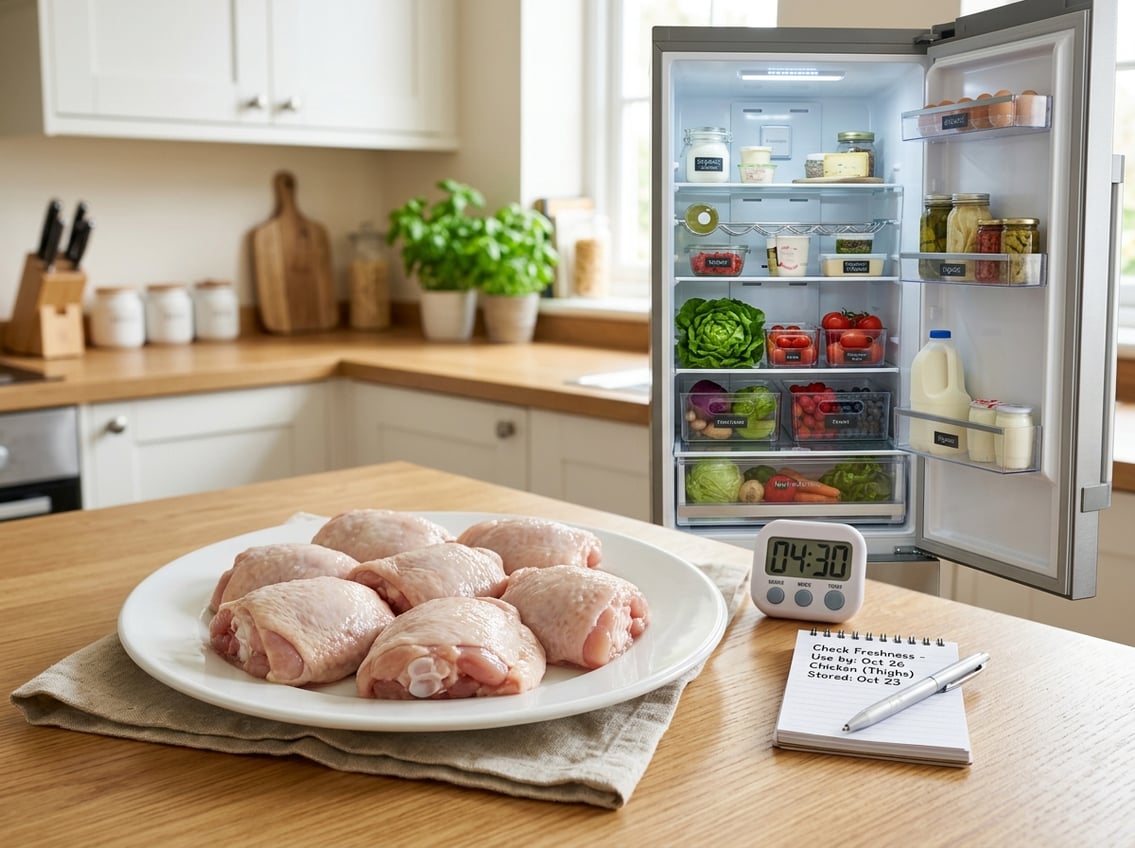
Next, you’ll find practical tips on airtight storage, freezing and thawing, spotting spoilage, and when it’s safer to toss than to risk it.
These steps help keep your meals safe and reduce waste while making leftovers easier to use.
Safe Refrigerator Storage Times for Chicken Thighs
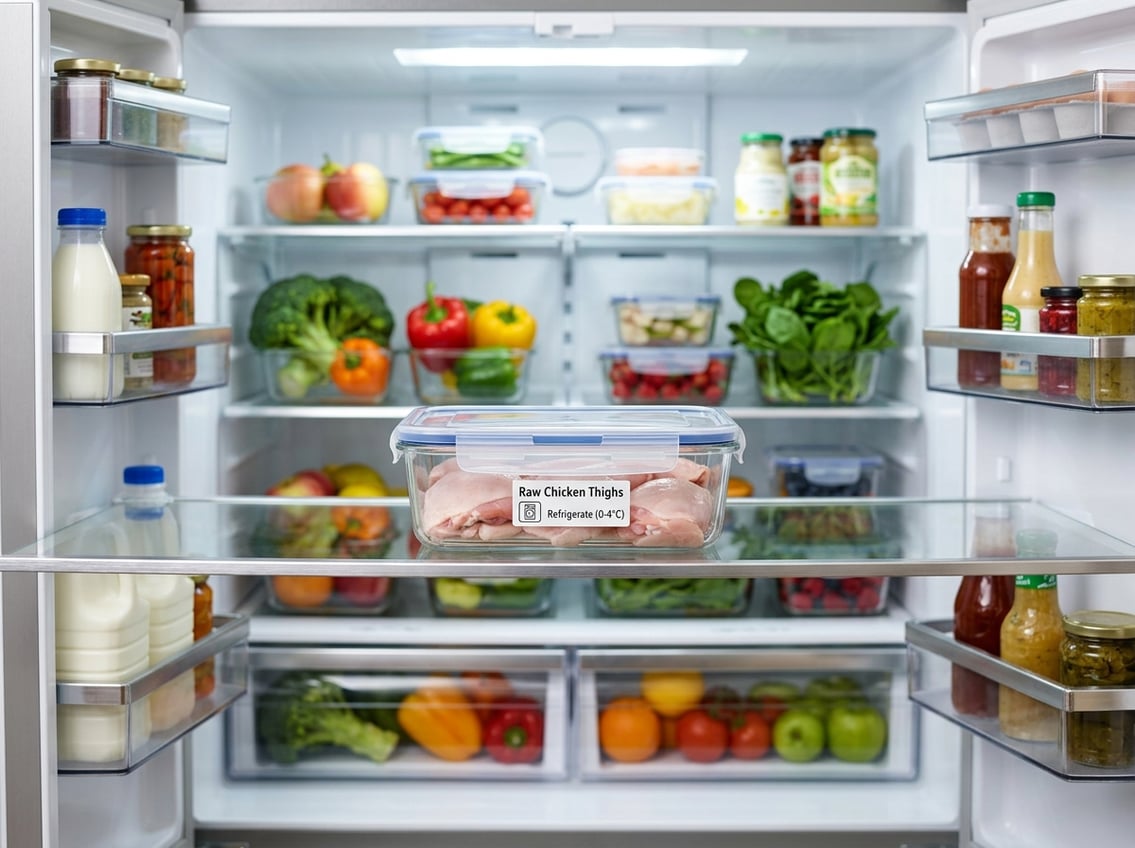
Keep raw chicken thighs refrigerated no more than 1–2 days.
Cooked thighs remain safe for about 3–4 days.
Marinated thighs follow the raw timeline unless cooked.
Acidic marinades do not make long storage safe.
Raw Chicken Thighs: Shelf Life in the Fridge
Store raw chicken thighs at 40°F (4°C) or below and use or freeze them within 1–2 days of purchase or preparation.
Keep them in their original packaging or in an airtight container on the lowest fridge shelf to prevent drips onto other foods.
If you won’t cook within 48 hours, freeze the thighs.
Label packages with the date.
Frozen raw thighs retain best quality for up to 9 months, though safety persists longer if kept constantly frozen.
Discard raw chicken that develops a sour smell, sticky or slimy texture, or green/gray discoloration.
Cooked Chicken Thighs: Fridge Storage Duration
Eat refrigerated cooked chicken thighs within 3–4 days when stored at 40°F (4°C) or below.
Place cooled cooked thighs into shallow airtight containers or wrap tightly to cool quickly and reduce bacterial growth.
If you need longer storage, freeze cooked thighs for up to 4 months for best quality.
Reheat leftovers to an internal temperature of 165°F (74°C) before serving.
Throw out cooked chicken that smells off, feels slimy, or shows mold.
Marinated Chicken Thighs: Special Considerations
Keep marinated raw thighs in the fridge for 1–2 days, even if the marinade contains acid or salt.
Acidic marinades change texture and flavor but do not stop bacterial growth long-term.
When marinating in the fridge, use a covered nonreactive container or a sealed plastic bag.
Marinate no more than 24 hours for delicate marinades.
Tougher cuts can tolerate up to 48 hours.
Cook marinated thighs promptly.
Treat cooked marinated leftovers like other cooked chicken—3–4 days in the fridge.
Essential Storage Methods for Freshness and Safety
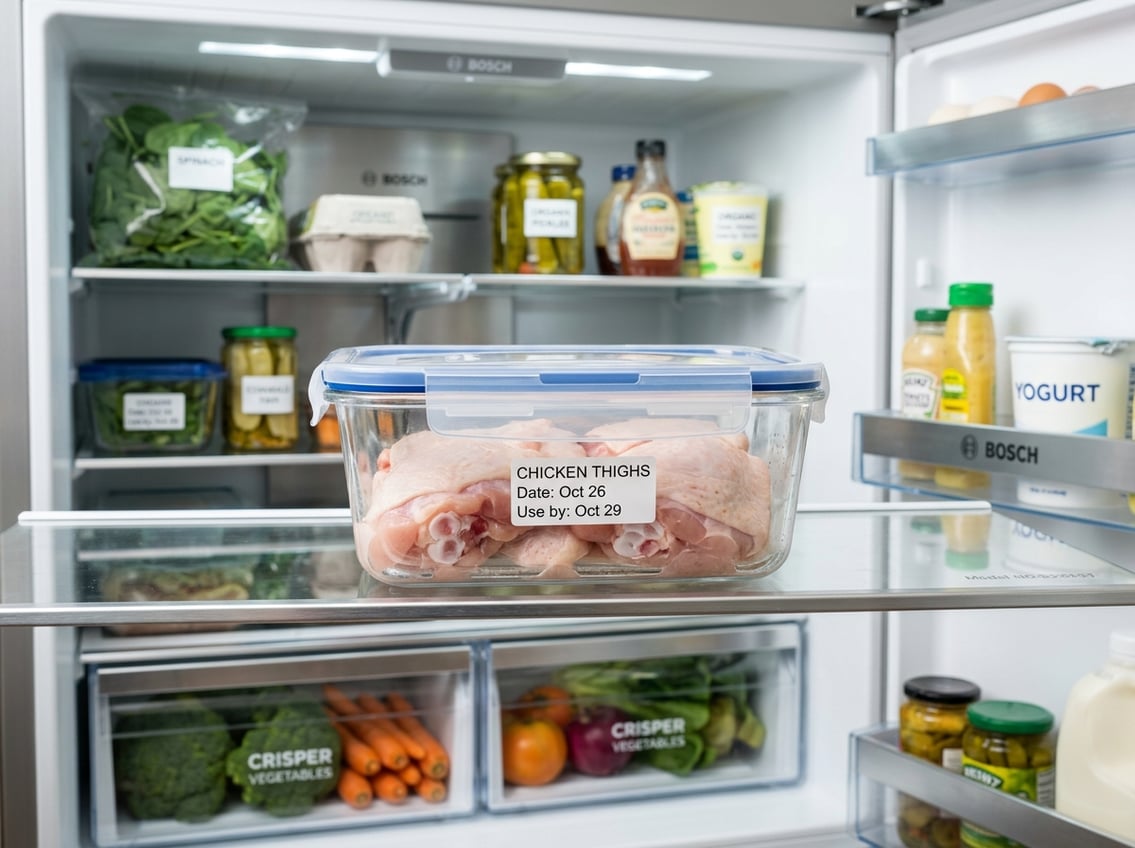
Keep chicken thighs at 40°F (4°C) or below and separate raw from ready-to-eat items.
Use airtight packaging, refrigerate within two hours of purchase or cooking, and label with dates to track freshness.
Best Way to Store Chicken Thighs in the Fridge
Place chicken thighs on the coldest shelf—usually the bottom back of the refrigerator—where temperature stays most consistent.
Keep the thighs in their original sealed packaging if you’ll cook them within 1–2 days.
If the package is torn, rewrap tightly in plastic wrap or place in an airtight container to prevent leaks and cross-contamination.
Use an appliance thermometer to confirm the fridge reads 40°F (4°C) or below.
For longer short-term storage, move thighs into a vacuum-seal bag or heavy-duty freezer bag and press out excess air.
This minimizes surface exposure and odor transfer while extending safe refrigeration time by a day or two.
Storing Raw and Uncooked Chicken Thighs
Always store raw, uncooked chicken thighs on a plate or tray to catch drips and avoid contaminating other foods.
Keep them on the lowest shelf and never above ready-to-eat items like salads or cooked foods.
If you won’t use raw thighs within 48 hours, freeze them.
Before freezing, portion into meal-size quantities, wrap each portion in plastic wrap, then place in a labeled freezer bag.
Thaw in the refrigerator (not on the counter) and cook within 24 hours of fully thawing.
Best Way to Store Cooked Chicken Thighs
Cool cooked thighs quickly by dividing large pieces into shallow containers to reduce chill time.
Refrigerate within two hours of cooking; in hot weather (above 90°F / 32°C) refrigerate within one hour.
Store cooked thighs in airtight containers or heavy-duty resealable bags and eat within 3–4 days.
Reheat to an internal temperature of 165°F (74°C) before serving.
For longer storage, freeze cooked thighs in single-meal portions for up to 3 months.
Thaw overnight in the fridge before reheating.
Recognizing Spoilage in Chicken Thighs
Check color, texture, and smell carefully before cooking or reheating.
Trust clear, specific signs—discoloration, sliminess, and sour odors—when deciding whether to use chicken thighs.
Visual and Texture Changes
Look at the color first.
Fresh raw thighs are pale pink with white fat; green, gray, or dull brown patches indicate chemical or bacterial breakdown.
If you see iridescent sheens or black spots, discard the meat.
Feel the surface next.
Fresh raw chicken is moist but not sticky.
Slimy or tacky texture that doesn’t wash away under cold running water is a strong spoilage sign.
For cooked thighs, firmness should return after cooling.
Excessive mushiness or a spongy bite means the texture has degraded.
Check the packaging and juices.
Swollen or leaking packaging, cloudy or foul-smelling juices, or excessive pooling suggest bacterial growth.
If the meat has been in your fridge longer than 1–2 days raw or 3–4 days cooked, treat visual or texture changes as probable spoilage.
Odor and Sensory Signs
Smell the chicken while it’s still in the package.
Fresh raw chicken has a faint, neutral scent.
Detectable sour, ammonia-like, or rotten-egg odors mean bacterial activity and you should not cook or eat it.
For cooked thighs, reheated aroma should match the original dish.
A sharp, off, or chemical smell after refrigeration indicates spoilage even if the surface looks acceptable.
When in doubt, don’t taste to test; a small taste can cause illness.
If you notice any off-odors within the recommended fridge times—1–2 days for raw thighs and 3–4 days for cooked thighs—discard the chicken.
Do not rely solely on strong marinades to mask spoilage; remove a piece from sauce to evaluate the meat’s true scent.
Spoilage Risks and Foodborne Illness
Bacterial pathogens like Salmonella, Campylobacter, and Staphylococcus can grow on chicken kept too long or stored improperly.
Raw thighs stored beyond 1–2 days in the fridge increase risk even if they look marginally okay.
Cooked chicken that sits more than 3–4 days in the refrigerator can harbor heat-resistant spores or regrown bacteria, raising the chance of foodborne illness when reheated.
Reheating does not always eliminate toxins produced by some bacteria.
Keep raw chicken below 40°F (4°C), store it on the lowest shelf to avoid cross-contamination, and freeze if you won’t use it within recommended fridge times.
If you spot spoilage signs or exceed those timeframes, discard the meat to avoid food poisoning.
Freezing Chicken Thighs for Long-Term Storage
Freezing preserves safety and extends usable life, but proper wrapping, labeling, and thawing keep quality intact.
Here’s how to package thighs, how long to keep them, and rules for marinated or cooked pieces.
How to Freeze Chicken Thighs
Pat thighs dry with paper towels to reduce ice crystals.
Splash briefly with a light coating of oil if you want to protect surface texture.
Portion into meal-sized packages so you only thaw what you need.
Use vacuum sealing when possible; it removes air and minimizes freezer burn.
If you don’t have a vacuum sealer, wrap each portion tightly in plastic wrap, then place in a heavy-duty freezer bag and press out as much air as possible.
Label each package with the date and contents.
Freeze on a flat surface first so packages freeze solid and stack neatly.
Keep your freezer at 0°F (-18°C) or lower for safe, long-term storage.
Recommended Freezer Durations
At 0°F (-18°C) raw chicken thighs remain safe indefinitely, but quality declines over time.
For best texture and flavor aim to use raw thighs within 6 to 9 months.
Cooked chicken thighs keep best for about 3 to 4 months.
After that they’re still safe if kept frozen, but you’ll notice dryness, flavor loss, and tougher meat.
If you vacuum-seal, you can push the upper range of quality retention by several weeks compared with standard freezer bags.
Write the freeze date on each package and use the oldest first.
Rotate stock so nothing sits past the recommended quality window.
Handling Marinated and Cooked Thighs in the Freezer
If you marinate raw thighs, freeze them in the marinade for quicker flavor penetration.
Freeze flat in a bag for faster, more even freezing.
Note: acidic marinades (lemon, vinegar) can change texture if left too long.
Use those frozen within 2–3 months for best results.
For cooked thighs, cool to refrigerator temperature (within two hours of cooking) before freezing to limit condensation and bacterial risk.
Package in airtight containers or wrap tightly, removing air.
Reheat cooked thighs only once after thawing.
Always thaw safely: refrigerator thawing yields the best texture and control.
If you need faster thawing, use cold-water submersion in a sealed bag or the microwave’s defrost setting and cook immediately.
Safe Thawing Techniques for Chicken Thighs
Use methods that keep chicken below 40°F (4°C) until cooking.
Plan ahead for fridge thawing, use cold water when short on time, and never leave thighs out at room temperature.
Refrigerator Thawing Method
Place sealed chicken thighs on a tray or shallow dish on the lowest fridge shelf to catch drips and prevent cross-contamination.
Keep your refrigerator at or below 40°F (4°C).
Allow about 24 hours for every 1–2 pounds (450g–900g) of thighs.
A single layer of individual thighs usually thaws overnight (12–24 hours).
Larger batches or tightly packed packages can take closer to 48 hours.
Keep the thighs in their original vacuum or sealed bag until thawed.
After thawing, cook within 1–2 days for best quality and safety.
If you must refreeze, cook first rather than refreezing raw-thawed poultry.
Cold Water Thawing Procedure
Use cold water when you need to speed up thawing but will cook immediately after.
Seal thighs in a leakproof plastic bag to prevent water absorption and contamination.
Submerge the bag in a large bowl or sink of cold tap water and change the water every 30 minutes to keep the temperature below 40°F (4°C).
Small portions (2–3 thighs) typically thaw in about 1 hour.
Larger amounts can take 2–3 hours.
Never use warm or hot water.
Cook the thighs right after cold-water thawing.
Do not return them to the fridge for later use.
Pat dry before cooking to promote even browning.
Why Never Thaw Chicken at Room Temperature
Room-temperature thawing allows the surface of the thighs to reach the bacterial danger zone (40°F–140°F / 4°C–60°C) long before the interior thaws.
Harmful bacteria such as Salmonella and Campylobacter can multiply quickly under those conditions.
Even if the center still contains ice, the exterior can become warm enough to support growth, increasing foodborne illness risk.
Avoid leaving packages on counters, in sinks, or on tables.
If you accidentally leave thighs out for more than 2 hours at room temperature (or 1 hour above 90°F/32°C), discard them.
Best Practices After Thawing
Handle thawed thighs with clean hands and utensils to avoid cross-contamination.
Store thawed thighs on the bottom shelf until you cook them to prevent drips onto other foods.
Cook chicken thighs to an internal temperature of 165°F (74°C) measured with a probe thermometer in the thickest part.
Use thawed thighs within 1–2 days when refrigerated.
If you thawed using cold water or microwave, cook immediately.
Label and date any cooked leftovers.
Refrigerate at 40°F (4°C) or below and consume within 3–4 days.
Refreezing and Reheating Chicken Thighs: Safety Considerations
Follow clear rules for refreezing and for reheating after refrigeration or thawing to avoid bacterial growth and maintain best quality.
Follow time-and-temperature limits, package tightly, and if you are unsure, cook before freezing.
Can You Refreeze Chicken Thighs?
Yes, you can refreeze chicken thighs only if they stayed at refrigerator temperature (≤ 40°F / 4°C) the entire time after thawing.
If you thawed the thighs in the fridge and used them within 1–2 days, you may refreeze them raw. Expect more moisture loss and a firmer texture after cooking.
Do not refreeze chicken that sat at room temperature for over 2 hours (1 hour above 90°F). Bacteria multiply quickly in these conditions, and refreezing will not make it safe.
If you cooked the thawed thighs, let the cooked meat cool to refrigerator temperature, then refreeze it. Wrap tightly in airtight freezer bags or vacuum-seal to reduce freezer burn.
Label with the refreeze date and use cooked refrozen chicken within 2–3 months for best quality.
Reheating Guidelines After Refrigeration or Thawing
Reheat chicken thighs until they reach an internal temperature of 165°F (74°C). Check the temperature with a food thermometer in the thickest part.
Cook refrigerated or thawed raw thighs from a chilled state until they reach 165°F. Reheat cooked thighs in the oven at 325–350°F in a covered pan with a splash of broth.
You can also reheat cooked thighs in the microwave, covered and rotated, while checking the temperature often. Avoid reheating chicken more than once.
Only reheat what you plan to eat. Refrigerate leftovers within 2 hours.
If you don’t finish reheated chicken, discard any uneaten portions instead of refrigerating them again.


