
How Long Are Chicken Thighs Good in the Fridge: Storage, Safety, and Spoilage
You probably keep chicken thighs in the fridge for quick meals, but you need a clear rule to avoid waste or a stomachache.
Raw chicken thighs stay safe in the refrigerator for 1–2 days. Cooked chicken thighs last 3–4 days when you store them properly at 40°F (4°C) or below.
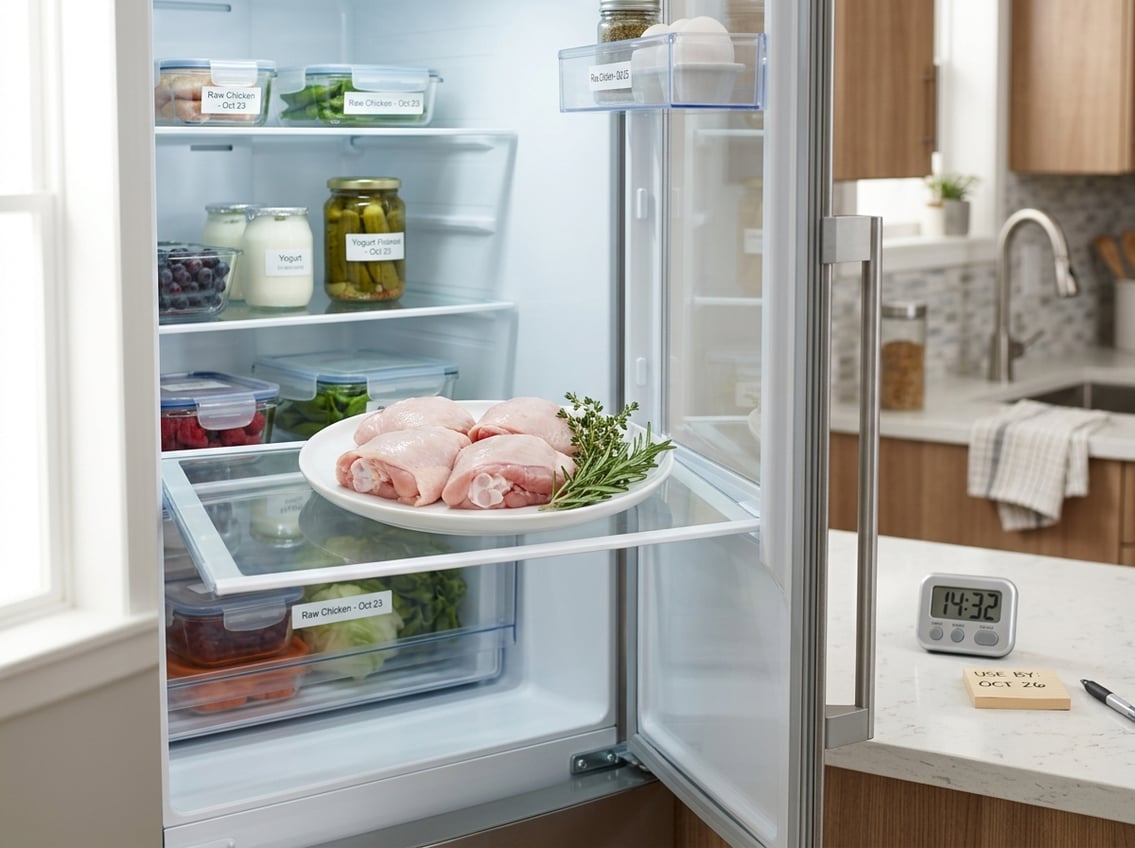
This post covers how to spot spoiled chicken thighs, storage habits that extend freshness, when to freeze, and safe thawing methods. You can plan meals with confidence.
Raw Chicken Thigh Shelf Life
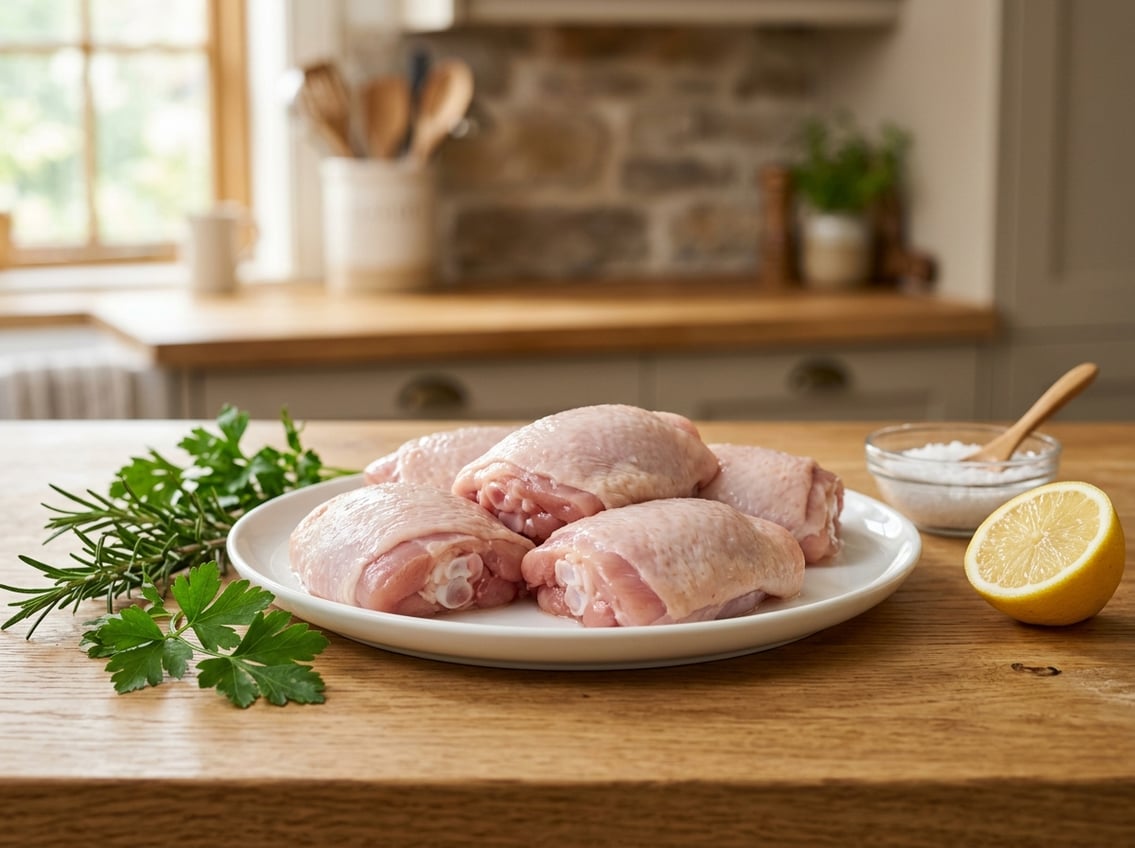
Raw chicken thighs spoil quickly without cold storage and proper packaging. Keep them at or below 40°F (4°C) and use within recommended windows.
Freeze chicken thighs if you won’t cook them soon.
How Long Do Raw Chicken Thighs Last
Store raw chicken thighs in the refrigerator at 40°F (4°C) or below and use within 1–2 days. This applies to both bone-in and boneless pieces.
Move the package to the coldest part of the fridge and keep them in their original sealed packaging or an airtight container to prevent leaks and cross-contamination.
If the thighs reach the “sell by” or “best by” date, cook within 24–48 hours. For longer storage, freeze within two days.
Frozen raw thighs keep their quality for several months and stay safe much longer if kept continuously frozen.
Is Raw Chicken OK in the Fridge for 5 Days
Storing raw chicken thighs in the refrigerator for five days increases food-safety risk. Bacteria such as salmonella or campylobacter can multiply even when meat looks and smells normal.
If you find thighs in the fridge after five days, throw them away. Don’t rely on smell alone, since pathogens don’t always produce an obvious odor.
If you won’t use the thighs within 48 hours, freeze them as soon as possible. Label packages with the freeze date.
Impact of Marinating on Shelf Life
Marinating does not extend the safe storage time for raw chicken thighs in the fridge. Count marinade time toward the 1–2 day limit.
Always marinate in a covered container or sealed bag on the bottom shelf to prevent drips. Discard used marinade that contacted raw meat or boil it thoroughly before using as a sauce.
If you marinate and then freeze, do so promptly. Frozen marinated thighs keep as well as plain frozen thighs and thaw safely in the refrigerator before cooking.
Cooked Chicken Thigh Storage Recommendations
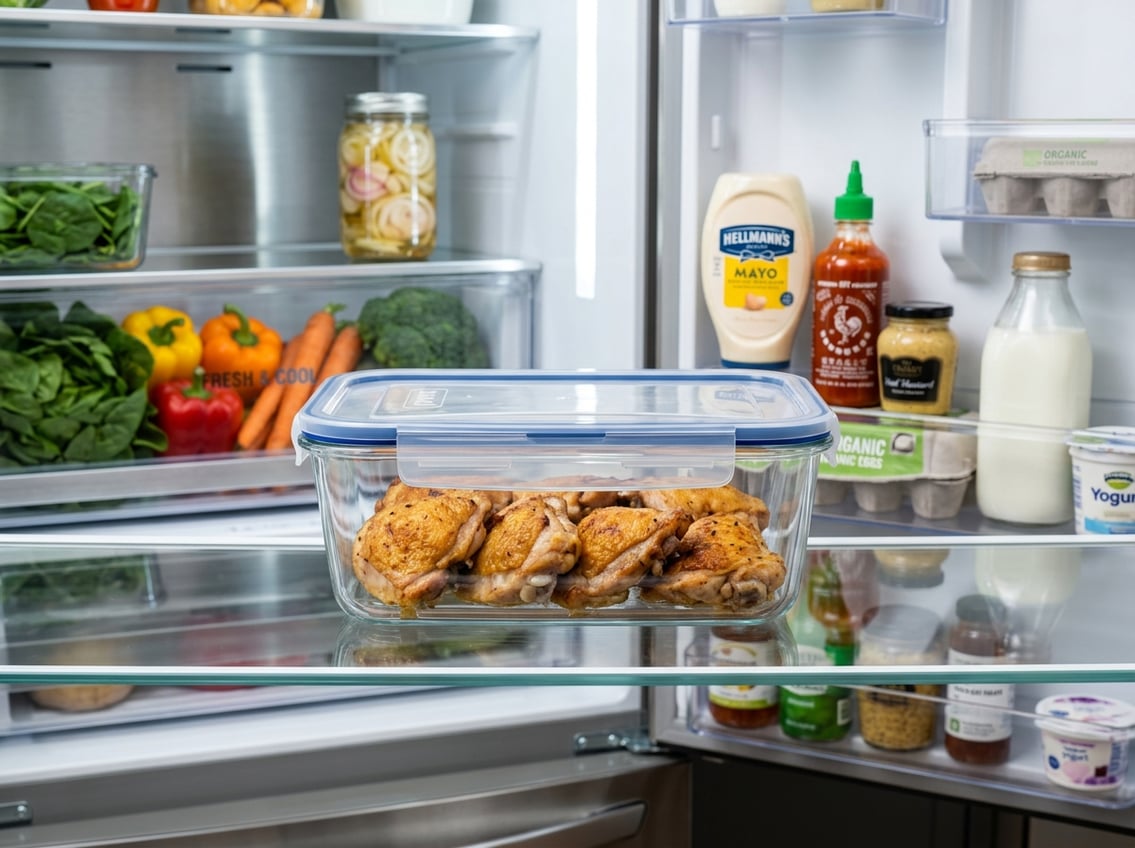
Store cooked chicken thighs in airtight containers or heavy-duty wrap and refrigerate promptly. Keep your fridge at 40°F (4°C) or below.
How Long Is Cooked Chicken Good for in the Fridge
Cooked chicken thighs stay safe in the refrigerator for 3–4 days. If your refrigerator stays at or below 40°F (4°C), quality sometimes holds up to 7 days, but 3–4 days is safest.
If the chicken sat out at room temperature more than 2 hours (1 hour above 90°F/32°C), throw it away. Watch for sour smell, slimy texture, or grayish color and discard if you notice these signs.
Best Way to Store Cooked Chicken Thighs
Use airtight containers, resealable freezer bags, or tightly wrapped foil or plastic to store cooked thighs. Remove excess air, label with date, and place on a fridge shelf above raw meats.
Store portions in single-meal containers to open only what you need. Reheat leftovers until steaming hot throughout (165°F/74°C recommended for vulnerable people) and consume within one reheating.
If you won’t eat within 3–4 days, freeze immediately. Frozen cooked thighs keep best quality for about 4 months.
Quickly Chill Cooked Chicken
Cool cooked thighs to refrigerator temperature within two hours of cooking. Split large batches into shallow containers or arrange pieces on a rimmed baking sheet to speed cooling.
Use an ice bath for large pots by placing the container in a sink or bowl of iced water and stir occasionally until cool. Once chilled, transfer to airtight storage and refrigerate promptly.
Recognizing Spoiled Chicken Thighs
Check color, smell, and texture closely to spot spoilage. If anything looks or smells off, throw the thighs away.
Visual Indicators
Look at raw chicken thighs under good light. Fresh thighs are pale pink with white fat.
Gray, green, or iridescent patches signal spoilage. Cloudy or milky liquid in the package is another warning sign.
For cooked thighs, look for mold or pronounced darkening of the meat surface. Swollen vacuum packs or cans suggest bacterial gas production.
If you notice unusual color or package changes, don’t taste to test—throw the meat away.
Smell and Texture Checks
Smell the thighs while the package is closed briefly, then open and sniff again. Fresh chicken has a mild, neutral scent.
A sour, ammonia-like, or rotten odor means spoilage. Feel the surface with clean hands.
Fresh raw thighs are slightly moist but not sticky. A slimy or tacky texture that doesn’t rinse away means bacterial growth.
After cooking, meat should feel firm and spring back when pressed. Persistent mushiness or a slim film means the meat was already compromised.
If either smell or texture is suspicious, don’t cook or eat the chicken.
Symptoms of Food Poisoning
Eating spoiled chicken thighs may cause symptoms within 2–48 hours. Common symptoms include nausea, vomiting, abdominal cramps, diarrhea, fever, and sometimes headaches.
Symptoms can range from mild to severe. Dehydration from vomiting or diarrhea is a common complication.
Seek medical attention for high fever, bloody stools, persistent vomiting, signs of dehydration, or symptoms lasting more than 48–72 hours. Keep leftover food or packaging if available for investigation.
Best Practices for Storing Chicken Thighs
Keep raw and cooked thighs cold, sealed, and separated. Use airtight packaging, date items, and refrigerate at 40°F (4°C) or below.
Best Way to Store Chicken Thighs
Store raw chicken thighs in their original packaging if you’ll cook them within 1–2 days. Otherwise, rewrap tightly.
Place the package on a rimmed tray or shallow pan on the bottom shelf so juices can’t drip onto other foods. For longer storage, freeze thighs in airtight freezer bags or vacuum-seal them.
Remove as much air as possible and label with the date. Frozen thighs keep best quality for 4–6 months.
Cool cooked thighs within two hours at room temperature, then store in shallow, airtight containers. Use cooked chicken within 3–4 days or freeze for up to 3–4 months for best texture.
Preventing Cross-Contamination
Keep raw thighs separated from ready-to-eat foods in the fridge. Store raw poultry on the lowest shelf and never above produce, deli meats, or cooked items.
Use separate cutting boards and utensils for raw chicken. Wash knives, boards, and hands with hot, soapy water for at least 20 seconds after handling raw thighs.
If storing in a shared container or drawer, place raw thighs inside a leak-proof bag. Clean fridge spills immediately with hot water and detergent, then sanitize surfaces with a food-safe disinfectant.
Tips for Storing Marinated Thighs
Marinate chicken thighs in the refrigerator only, never on the counter. Use a covered glass or food-grade plastic container, or a sealed zip-top bag, and refrigerate at 40°F (4°C) or below.
If you plan to save unused marinade for sauce, reserve a portion before adding raw thighs. Boil any marinade that contacted raw chicken for at least one minute before using it as a sauce.
Marinated thighs are safe in the fridge for up to 2 days. For longer storage, freeze thighs in the marinade inside a sealed bag and label with the date.
Freezing Chicken Thighs for Extended Freshness
Freezing preserves quality and safety when you won’t use chicken thighs within the refrigerator window. Use airtight packaging, label with dates, and keep your freezer at 0°F (-18°C) or below.
Proper Freezing Techniques
Use freezer-grade materials such as heavy-duty freezer bags, vacuum-seal bags, or rigid airtight containers. Remove as much air as possible to reduce freezer burn.
Wrap individual thighs or portioned meals so you can thaw only what you need. Label each package with the date and contents.
Rotate older packages first. Raw thighs keep best quality up to about 9 months; cooked up to about 4 months.
Keep your freezer at 0°F (-18°C) or colder.
How to Freeze Chicken Thighs
Freeze raw thighs in their original store packaging plus an added layer, or repackage by portion. For marinated thighs, freeze them in freezer-safe bags with marinade, pressing out air.
For cooked thighs, cool to room temperature no longer than 1 hour, then pack in single-layer or portioned containers to speed freezing. Arrange packages flat on a tray for quick, even freezing.
Once solid, stack or move to long-term storage. Label with “raw” or “cooked,” weight or portion count, and freeze date.
Can You Refreeze Chicken Thighs
You can refreeze chicken thighs if you thawed them in the refrigerator and they stayed below 40°F (4°C) the whole time. Raw or cooked meat can be refrozen, but texture and moisture may decline with each freeze-thaw cycle.
Do not refreeze chicken that was thawed using cold water or a microwave unless you cook it first. If you cooked previously frozen-thawed chicken, you can freeze the cooked leftovers.
When refreezing, use airtight packaging and label with the new freeze date. Try to use refrozen items sooner, as quality declines faster after multiple freeze cycles.
Safe Thawing Methods for Chicken Thighs
Use methods that keep chicken thighs at safe temperatures and avoid cross-contamination. Fridge thawing is most forgiving, while cold-water and microwave methods require more attention and immediate cooking.
Refrigerator Thawing
Place frozen chicken thighs, still sealed, on a rimmed tray or in a shallow pan to catch juices. Set your refrigerator at 40°F (4°C) or below.
Most individual thighs thaw in about 24 hours. A larger sealed package or multiple thighs may take up to 36–48 hours.
Keep the thighs on the bottom shelf to prevent drips onto other foods. Once fully thawed, cook within 1–2 days.
If you decide not to use them, you can refreeze cooked or still-cold raw thighs, though quality may decline.
Cold Water Thawing
Seal thighs tightly in a leak-proof plastic bag to prevent water from contacting the meat. Submerge the bag in cold tap water (under 70°F / 21°C) and change the water every 30 minutes.
Small packages or single thighs thaw in 1–2 hours. Larger or multiple thighs may take longer but should not exceed a couple of hours per pound.
Cook chicken immediately after cold-water thawing. Do not return thawed thighs to the fridge for later use without cooking.
Thawing Chicken Thighs Safely
Monitor temperature and time to keep meat out of the bacterial danger zone (40–140°F / 4–60°C). Use a thermometer to confirm your refrigerator stays at or below 40°F.
Keep thawing chicken on a dedicated plate or pan. Wash hands, utensils, and surfaces after handling raw thighs.
If you thaw in the microwave, remove retail packaging first, use the defrost setting, rotate or pause to turn the thighs, and cook immediately since parts may begin to warm during defrosting.
Never Thaw Chicken at Room Temperature
Do not leave chicken thighs on the counter, in a sink, or in warm water to thaw.
The outer layers can warm into the danger zone while the center stays frozen. Bacteria multiply rapidly in these conditions.
If you need to speed thawing but cannot use cold water or a microwave, move frozen thighs to the refrigerator the night before.
If the meat smells off, discard the thighs to avoid foodborne illness.


