
Is It OK to Freeze Chicken Thighs? Safe Storage & Best Tips
You can freeze chicken thighs, and freezing them properly keeps them safe and tasty for months. Freezing raw or cooked chicken thighs preserves freshness and gives you ready-to-cook protein if you package them well and keep your freezer at 0°F (-18°C) or colder.
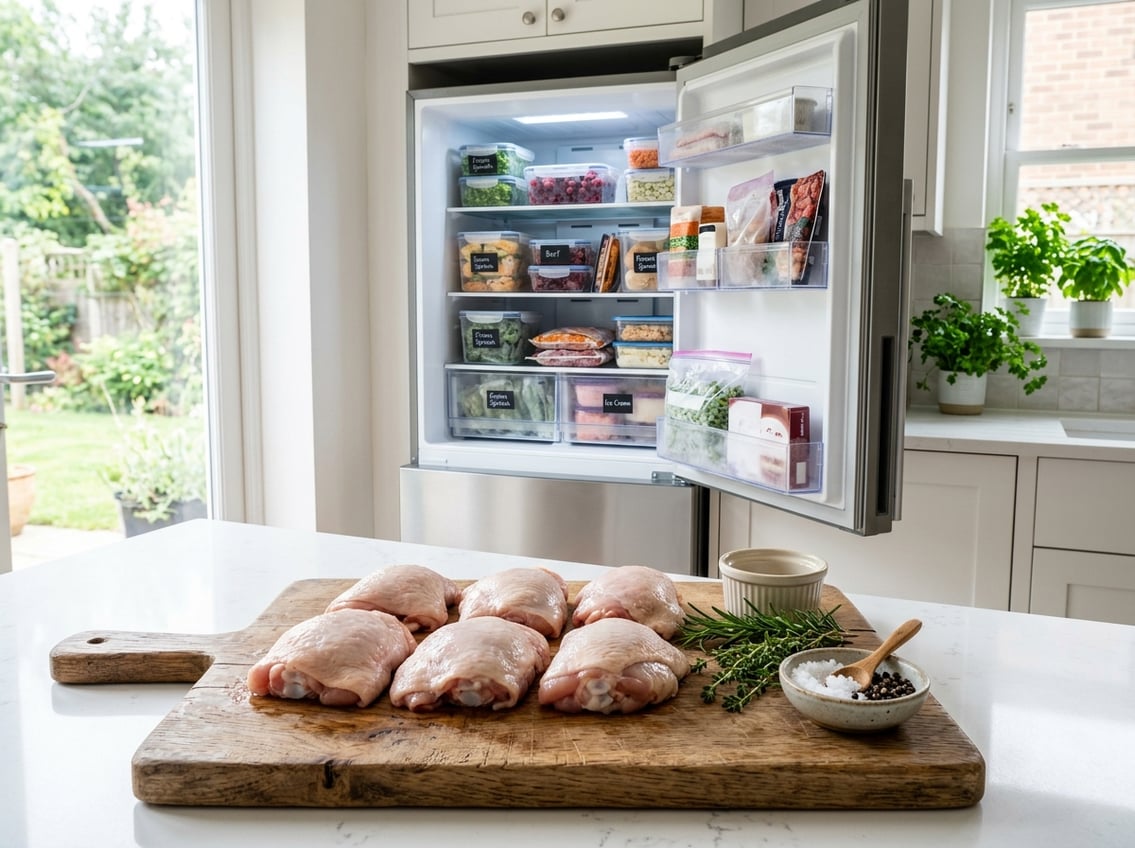
Learn how to freeze raw thighs properly and how marinades and cooked pieces behave in the freezer. Follow packing and thawing steps so your next meal cooks up with the flavor and texture you expect.
How to Freeze Raw Chicken Thighs Properly
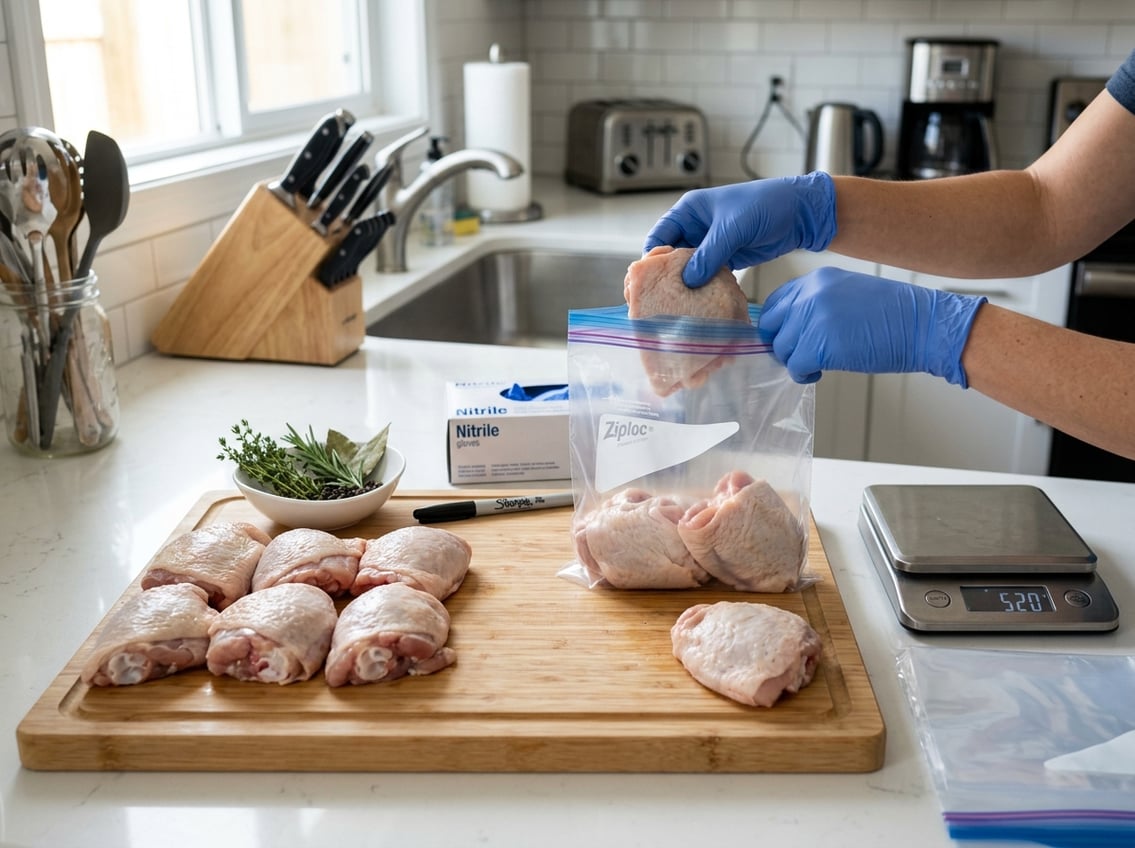
Prepare thighs that are fresh, trimmed, and portioned to match how you’ll cook them. Use airtight packaging and remove as much air as possible to prevent freezer burn and preserve flavor.
Selecting Fresh Chicken Thighs
Choose thighs with a clean, neutral smell and firm texture. Look for skin that’s intact and moist but not slimy; discoloration or a sour odor means spoilage.
Check the sell-by date and pick packages without excessive liquid. Buy thighs that match how you plan to use them—bone-in for braises, boneless for quick sautés.
Freeze thighs soon after purchase to help quality last longer. Label packages with the purchase or freeze date so you can use the oldest first.
Portioning and Trimming for Freezing
Decide portion sizes based on typical recipes or family meals. Freeze individual thighs or meal-sized packs (2–4 thighs) to avoid thawing more than you need.
Trim excess fat and loose skin to save space and reduce off-flavors over time. If you prefer skin-on for crisping, leave skin attached and press it flat against the meat before wrapping.
Place parchment between pieces if you want to remove single thighs from a multi-piece pack.
Proper Wrapping and Packaging Methods
First, wrap thighs tightly in plastic wrap or butcher paper. Then seal them in a heavy-duty freezer bag or vacuum-seal pouch.
Press out all air from bags before sealing. Vacuum sealing gives the best protection against freezer burn.
Write the freeze date and contents on freezer tape or directly on the bag with a permanent marker. Store flat in the coldest part of the freezer so packs freeze quickly and stack easily.
Aim to use frozen thighs within 6–9 months for best texture. After that, they stay safe but may develop freezer burn.
Freezing Cooked and Marinated Chicken Thighs
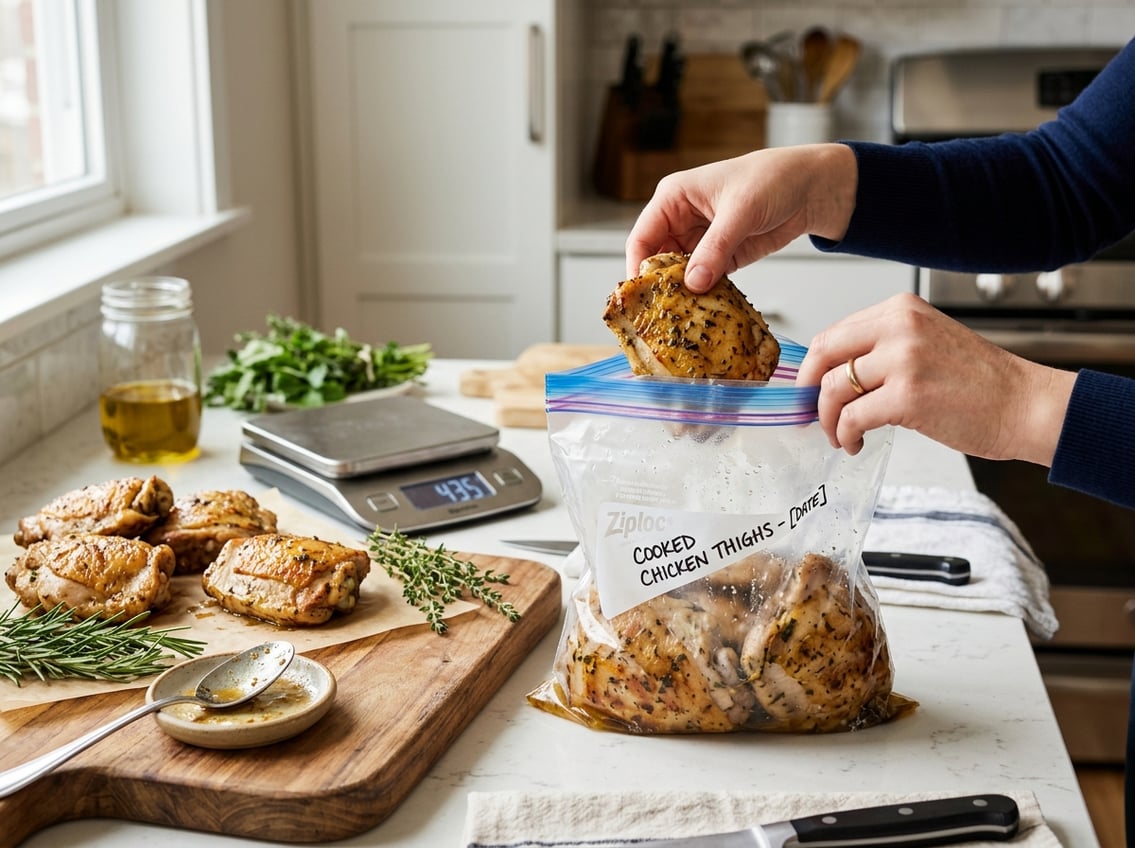
You can freeze cooked chicken thighs for up to four months. You can also freeze marinated chicken thighs for longer storage when you pack them properly.
Preparing Cooked Chicken Thighs for Freezing
Cool cooked thighs to room temperature for no longer than two hours after cooking. Refrigerate them until chilled.
Portion thighs into meal-sized packages. Use airtight containers or heavy-duty freezer bags and remove as much air as possible.
Separate layers with parchment or plastic wrap so pieces don’t freeze into a block. Label each package with date and contents.
Freeze for up to four months for best quality. Thaw overnight in the refrigerator and reheat to 165°F (74°C) before serving.
Freezing Marinated Chicken Thighs Safely
Marinate thighs in a shallow, sealable freezer bag or airtight container. Leave some headspace for the marinade to expand as it freezes.
Squeeze out extra air, seal tightly, and lay bags flat to freeze. Freezing halts the marinating process, so you can safely freeze thighs already coated for extended storage.
Keep frozen marinated chicken for up to six months for best flavor. If you plan to cook from frozen, allow extra cook time and make sure internal temperature reaches 165°F (74°C).
Label with marinade type and date. Thaw marinated thighs in the refrigerator and pour off excess liquid before cooking.
Best Techniques to Prevent Freezer Burn
Protect chicken thighs by eliminating air and creating tight, moisture-proof barriers. Focus on sealing and minimizing temperature fluctuations.
Vacuum Sealing and Double Wrapping
Vacuum sealing removes air and holds the thighs in direct contact with an impermeable barrier. Use a vacuum sealer on individual thighs or small packs and label with date and weight.
If you don’t have a sealer, double wrap each thigh tightly in plastic wrap or butcher paper, pressing out air. Then place the wrapped pieces into a heavy-duty freezer bag or rigid freezer container.
Squeeze out air from the bag and seal. For added protection, wrap again in aluminum foil to block light and reduce surface dehydration.
Removing Air for Better Results
Target air directly to prevent freezer burn. For zipper bags, use the water displacement method: seal nearly closed, submerge to force air out, then finish sealing.
Work in single layers so bags freeze quickly. If you pack multiple pieces in one bag, press flat to create thin, uniformly frozen portions and push excess air from corners before sealing.
Store packs toward the back of the freezer where temperature stays most stable. Use labels with freeze dates and rotate older packs forward.
Understanding Freezer Shelf Life for Chicken Thighs
You need clear limits for safety and quality and a simple system to track dates. The sections below explain how long thighs keep in the freezer and how to label and manage them.
How Long Can Chicken Thighs Be Frozen
Raw chicken thighs kept at 0°F (-18°C) or lower remain safe indefinitely, but quality declines over time. For best texture and flavor, use raw thighs within about 9 months.
Cooked chicken thighs hold peak quality for roughly 4–6 months. Temperature stability matters, so use a chest freezer or a freezer that maintains 0°F consistently.
Avoid repeated thaw-and-refreeze cycles. Each cycle breaks down muscle fibers and accelerates quality loss.
Inspect after thawing. If you notice strong off-odors, sliminess, or major discoloration, discard the meat.
Labeling and Tracking Freezer Dates
Label every package with item name, pack date, and use-by date. Use a permanent marker on freezer bags or adhesive labels on vacuum-sealed packs.
Adopt a simple FIFO (first in, first out) routine. Place newest packs behind older ones and group by cook/raw status.
Keep an inventory list on the freezer door or a smartphone note with quantities and dates. Mark raw thighs with a pack date plus a “use by” label set at 9 months.
For cooked thighs, mark a 4–6 month use window.
Safe Thawing Methods for Frozen Chicken Thighs
Use controlled, cold conditions to prevent bacterial growth and protect texture. The three safest options are slow refrigerator thawing, sealed cold-water submersion with frequent changes, and microwave thawing when you must cook immediately.
Thawing in the Refrigerator
Place sealed packages or chicken thighs in a shallow tray on the bottom shelf to catch any drips. Keep your fridge at 40°F (4°C) or below.
Small packs often thaw overnight, while a pound or more of thighs can take 24–48 hours. If you need to store thawed thighs before cooking, use them within 1–2 days.
You may safely refreeze thighs that were thawed in the refrigerator, though expect some loss of quality.
Tips:
- Leave thighs in original packaging or use a leakproof bag.
- Arrange pieces in a single layer if possible to speed thawing.
- Label with the date you moved them to the fridge.
Thawing in Cold Water
Seal thighs in a leakproof plastic bag to prevent water contact. Submerge the bag in a bowl or sink filled with cold tap water and change the water every 30 minutes.
Small packages or single thighs thaw in about 30–60 minutes. Larger quantities or thicker pieces take 1–3 hours.
Cook thighs immediately after cold-water thawing.
Checklist:
- Use cold water.
- Change water every 30 minutes.
- Cook immediately after thaw.
Microwave Thawing Precautions
Remove any metal or foil packaging and place thighs on a microwave-safe dish. Use the microwave’s defrost setting or 20–30% power and rotate or flip pieces frequently.
Cook thighs immediately after thawing. If edges start to cook during defrosting, stop and begin cooking right away.
Quick microwave steps:
- Use defrost program based on weight.
- Rotate and check every few minutes.
- Cook immediately once soft but still slightly cool in the center.
Refreezing Chicken Thighs: What to Know
Refreezing affects both safety and quality. The rules change depending on how you thawed the chicken and whether you cooked it.
When Is It Safe to Refreeze
You can refreeze raw chicken thighs only if they stayed at refrigerator temperature (40°F / 4°C or below) the entire time after thawing. If you thawed chicken in the fridge and it has been there less than 48 hours, you can safely refreeze raw pieces.
Place them back in airtight packaging and remove as much air as possible. If you used cold water or a microwave to thaw, cook the chicken before refreezing.
Those methods can let bacterial growth begin, so cook to an internal temperature of 165°F (74°C) before freezing. You can freeze cooked chicken that has been refrigerated for no more than 3–4 days.
Label with the date and freeze promptly.
Quality and Safety Concerns After Refreezing
Repeatedly refreezing chicken thighs damages texture because ice crystals rupture muscle fibers. Expect drier, chewier meat after cooking.
Vacuum sealing or wrapping tightly limits freezer burn. Freezing does not reliably kill Salmonella or Campylobacter; it simply halts growth.
Handle chicken properly. Avoid leaving thawed chicken at room temperature.
Discard any chicken that smells sour, feels slimy, or has been unrefrigerated for over 2 hours. Plan portions so you refreeze only once.
Freeze cooked dishes rather than raw pieces when unsure about the thawing method.


