
What Can You Substitute for Chicken Fat: Top Alternatives and Cooking Tips
If you want the richness of chicken fat but don’t have schmaltz, you can use several fats that match its function and flavor. Lard or duck fat give a similar savory profile, while butter or ghee add a rich, slightly milky depth.
Neutral oils like canola or vegetable oil work well when you need a high-heat, flavor-free option. For the closest taste and cooking performance, choose another rendered animal fat such as lard or duck fat.
For baking or buttery flavor, use butter or ghee. For frying or a lighter option, use neutral vegetable oils.
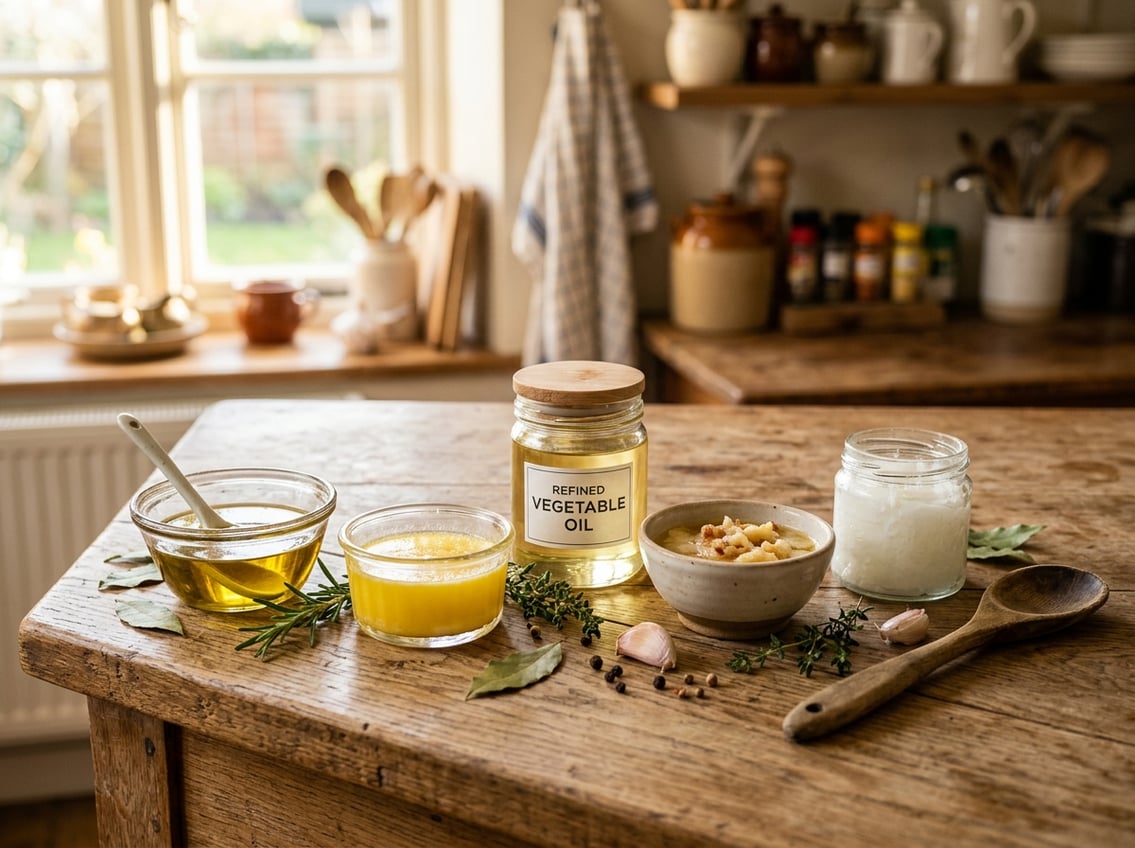
Rendered chicken fat (schmaltz) brings a unique flavor and texture to dishes. Choosing the best swap depends on whether you’re frying, roasting, making stock, or baking.
You can match smoke points, flavor intensity, and texture so your dish stays true to the original or intentionally shifts toward a new profile.
Understanding Schmaltz and Rendered Chicken Fat
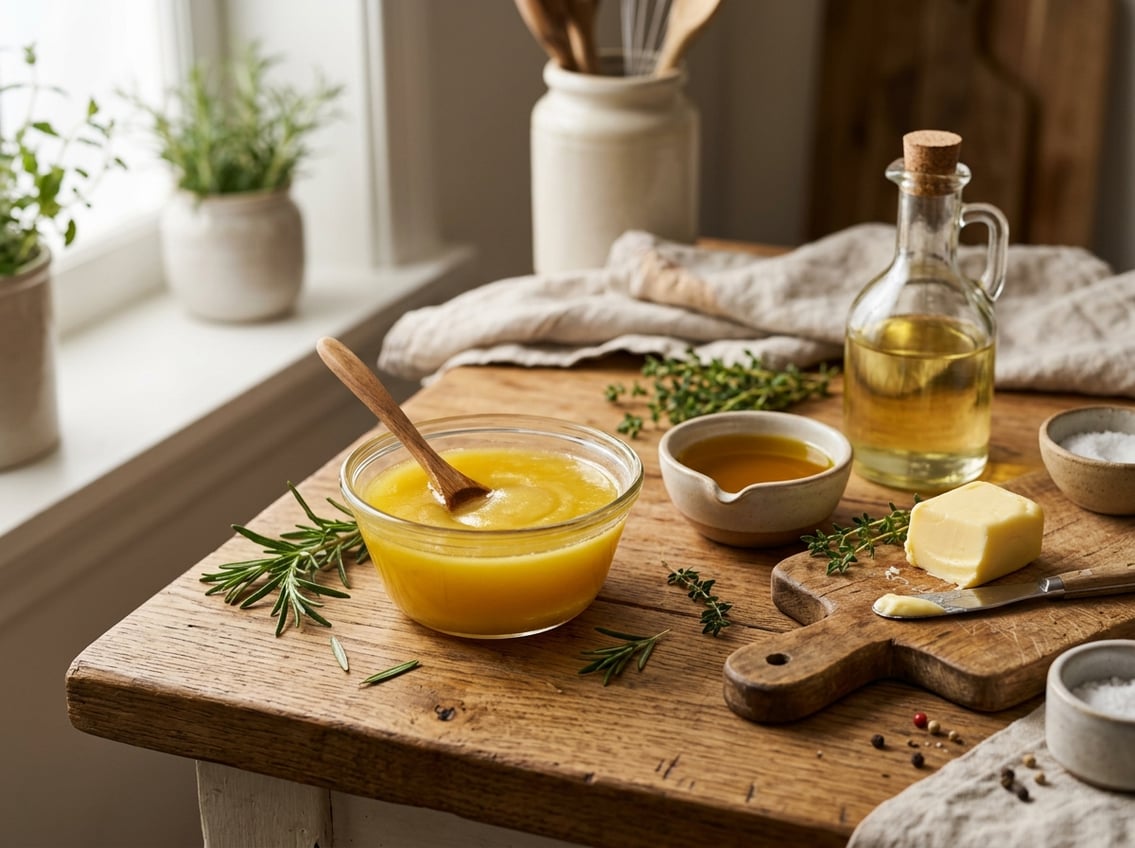
Schmaltz is rendered chicken fat with a savory, poultry-forward flavor and a silky mouthfeel. Cooks use it in specific dishes for its flavor and texture.
Definition and Culinary Uses
You get schmaltz by slowly melting chicken skin and abdominal fat until the liquid separates and the solids crisp. When you strain and cool it, schmaltz solidifies to a spreadable form.
The crispy bits left behind are called gribenes. You can make schmaltz at home by simmering skin with a little onion, then straining and refrigerating the liquid fat.
Use schmaltz for frying, sautéing, and as a flavor base in soups and sauces. It adds a distinct poultry richness that plain vegetable oils lack.
Replace schmaltz 1:1 in recipes that call for a flavorful animal fat. Blend it with neutral oils if you want less pronounced chicken taste.
Traditional Dishes Requiring Schmaltz
Ashkenazi Jewish cooking relies on schmaltz for both flavor and fat content. It binds and flavors chopped liver.
Matzo ball recipes often use schmaltz to give broth and dumplings their characteristic depth and tender texture. Cooks use schmaltz for frying latkes, roasting potatoes, and finishing braises to add savory sheen.
Gribenes serve as a garnish for salads or as a crunchy snack. Schmaltz fills a role similar to clarified butter in texture but with a clear chicken profile.
Benefits and Limitations
Schmaltz delivers concentrated chicken flavor and a high smoke point after rendering. You can use it for both low and high-heat cooking.
It stores well in the refrigerator for weeks and freezes for months. Gribenes add textural interest and help reduce food waste.
Limitations include its strong flavor and animal origin, which can clash in delicate or vegetarian dishes. Schmaltz also contains saturated fat.
If you need a neutral or plant-based fat, use clarified butter, refined oils, or vegetable shortening. For kosher cooking, avoid pork-derived fats and choose vegetable shortening or rendered goose fat.
Most Flavorful Animal-Based Substitutes
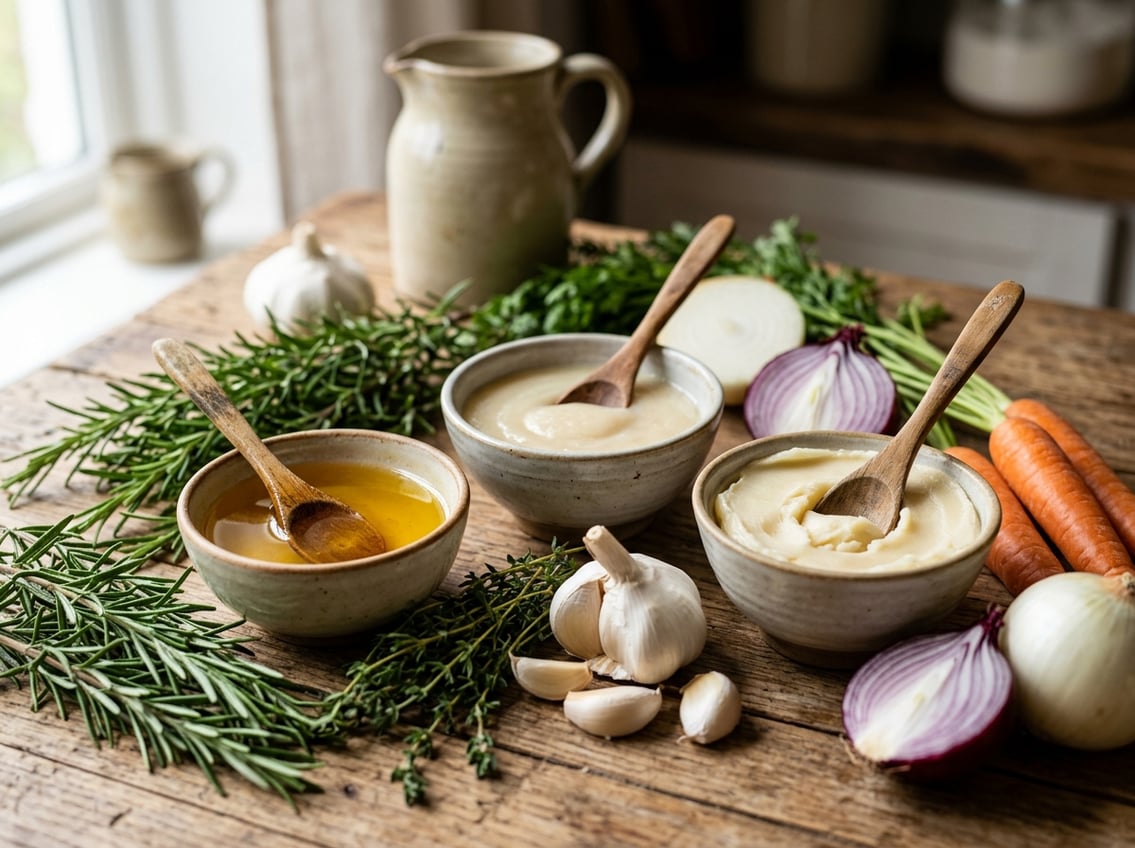
These options deliver rich mouthfeel, high smoke points, and strong savory flavor. Choose by flavor intensity, cooking temperature, and whether you want rendered solids for texture.
Duck Fat as a Rich Alternative
Duck fat offers a clean, poultry-forward flavor that closely mimics the savory roundness of chicken fat. It has a silkier mouthfeel.
Use duck fat for roasting potatoes, searing, or confit. It crisps skins and yields an appealing golden color.
Duck fat’s smoke point is around 375–400°F (190–205°C). You can sauté or shallow-fry without burning quickly.
Store rendered duck fat in the fridge for several months or freeze it for longer-term use. Duck fat works well in stuffing or to finish sauces where you’d miss chicken fat’s richness.
It won’t provide gribenes, so add pan-fried cracklings separately if you want that texture.
Lard and Bacon Grease Options
Lard gives a neutral, porky richness that excels in pie crusts, frying, and pan sauces. Use leaf lard for a very mild flavor in pastries.
Use regular rendered lard for roasting or frying where you want fat that behaves similarly to chicken fat. Bacon grease brings a pronounced smoky-salty profile.
Reserve bacon drippings after cooking and strain out solids. Use bacon grease sparingly in soups, sautés, or mashed potatoes to avoid overpowering the dish.
Both fats store well refrigerated. Lard suits recipes that need a subtle animal fat backbone.
Bacon grease is best when a smoky accent complements the dish.
Ghee and Clarified Butter for Depth
Ghee and clarified butter add nutty, buttery depth with less water and milk solids than regular butter. Ghee’s toasted aroma amplifies roasted vegetables, pan sauces, and braises.
Clarified butter has a higher smoke point than whole butter (around 450°F/230°C). You can use it for high-heat searing.
Use ghee when you need sustained heat stability and a subtle caramelized butter note. Neither gives you poultry-specific flavors like schmaltz or gribenes.
If you want that chicken character, combine a small amount of ghee with a dab of rendered chicken fat or a pinch of poultry seasoning.
Neutral and Plant-Based Cooking Fats
These options work when you want a neutral flavor, a plant-based ingredient, or a high smoke point for frying and roasting. Choose based on texture needs, heat tolerance, and whether you need a solid fat or a pourable oil.
Vegetable Shortening and Crisco
Vegetable shortening gives a solid, spreadable texture similar to rendered chicken fat. Use it in pie crusts, biscuits, and any recipe that relies on a solid fat to create flakiness.
Shortening has little flavor, so it won’t add savory richness like schmaltz. Add a pinch of poultry seasoning or a small amount of rendered butter if you want more depth.
Shortening works for frying because it remains stable at medium-high heat. Replace schmaltz 1:1 with shortening for stuffing or matzo ball recipes and boost savory notes separately.
Shortening is high in saturated fats, so use sparingly if you follow heart-healthy guidelines.
Vegetable Oils and Canola Oil
Neutral vegetable oils and canola oil are versatile chicken fat substitutes for sautéing, roasting, and pan-frying. Canola oil has a mild taste and a smoke point around 400°F (204°C).
Measure oil by volume when swapping. Use about 3/4 to 1 times the amount of liquid oil for rendered fat, since oils lack the emulsifying solids of schmaltz.
For sauces or dressings, whisk oil with an acidic element to help carry flavor. Use cold-pressed olive oil only when its flavor suits the dish.
Otherwise, prefer refined vegetable or canola oil for neutrality and higher heat tolerance.
Refined Coconut Oil and Avocado Oil
Refined coconut oil and refined avocado oil both offer high smoke points and mostly neutral flavors. Pick based on texture needs and health priorities.
Refined coconut oil is solid at cooler room temperatures, making it useful when you want a semi-solid fat like schmaltz in baking or certain spreads. Avocado oil has a very high smoke point (about 500°F / 260°C) and a light, slightly buttery flavor.
Both oils work as chicken fat substitutes for frying and general cooking. Coconut oil contains more saturated fat than avocado oil.
When you want savory richness, add a small amount of browned onion or garlic-infused oil to mimic the aromatic character of rendered chicken fat.
Healthier and Specialty Alternatives
Choose fats that match your cooking method and health goals. Some oils tolerate high heat and supply heart-healthy fats, while others give rich flavor with moderate smoke points or meet vegan and kosher needs.
Monounsaturated and Medium-Chain Triglyceride Oils
Use oils high in monounsaturated fat for a stable, heart-friendlier substitute for chicken fat. Avocado oil and high-oleic sunflower oil have smoke points above 450°F.
They work for searing, roasting, and shallow frying without breaking down. Olive oil—especially light or refined—offers monounsaturated benefits and suits medium-heat sautéing or finishing.
Extra-virgin olive oil works best for dressings and low-heat uses. Replace chicken fat 1:1 with these oils in pan sauces and sautés.
If you want MCTs, choose coconut oil for baking or medium-heat frying. Coconut oil supplies faster-metabolized fats but increases saturated-fat intake, so use sparingly.
Butter and Olive Oil for Health-Conscious Cooks
Butter gives a savory mouthfeel that many recipes rely on. Use it when flavor and texture matter more than smoke-point performance.
For sautéing at moderate temperatures or for pan sauces and finishing, substitute butter 1:1 for chicken fat to preserve richness. Clarified butter (ghee) raises the smoke point to about 485°F.
Olive oil balances health and versatility. Swap olive oil for chicken fat in roasted vegetables, dressings, and most braises.
For baking where a solid fat is required, combine olive oil with a small amount of chilled butter or use a vegan butter alternative to mimic texture.
Vegan and Kosher-Friendly Substitutes
If you need a plant-based or kosher substitute, several options match functionality and flavor. Solid coconut oil works in pie crusts and biscuits because it’s solid at room temperature.
Commercial vegan butters (look for blends of sunflower, canola, or olive oils) replace chicken fat in baking and as a finishing spread. For savory cooking, use a 1:1 swap of olive or avocado oil for chicken fat.
Blend a neutral oil with a teaspoon of vegetable-based umami paste or miso to recover some savory depth. Check labels for kosher certification and avoid animal-based fats to maintain both vegan and kosher compliance.
Selecting the Best Substitute by Recipe Type
Choose substitutes based on the role chicken fat plays: flavor, moisture, or texture. Pick liquid fats for frying and roasting, semi-solid or emulsified options for baking and matzo balls, and intensely flavored alternatives for chopped liver.
Baking and Pastry Considerations
In baked goods where schmaltz supplies tenderness and richness, use solid or semi-solid fats that mimic mouthfeel. Use chilled butter for pastries to recreate flakiness and substitute equal weight for schmaltz.
For tender cakes or cookies, replace half the fat with unsweetened applesauce or mashed banana to retain moisture while lowering saturated fat. Expect a slight flavor and texture change.
If a neutral profile is needed, use vegetable shortening (equal weight) for structure without adding poultry flavor. When the recipe depends on schmaltz for savory depth, blend olive oil (3/4 volume) with a tablespoon of rendered bacon fat or concentrated poultry stock to add umami.
Sautéing and Roasting Uses
For high-heat methods, pick fats with appropriate smoke points and flavor. Use refined avocado oil or light olive oil for roasting at higher temperatures and swap on a 1:1 volume basis for schmaltz.
If you want a poultry-like aroma, add a small amount of chicken stock reduction or powdered chicken bouillon to the oil. When you need browning and crisp skin, use clarified butter (ghee) for flavor and high smoke point.
For pan-sautéing vegetables where you want savory depth without animal fat, combine neutral oil with butter or use melted chicken butter sparingly to preserve traditional taste.
Iconic Dishes
Matzo balls get their buoyancy and flavor from schmaltz. If you avoid schmaltz, blend melted butter and a tablespoon of vegetable oil per egg to create similar richness.
Use chicken broth instead of water to maintain savory notes. For kosher or vegan versions, substitute vegetable oil and a teaspoon of nutritional yeast per two tablespoons of oil to add savory complexity, and reduce the liquid slightly to keep the dough consistent.
Chopped liver features schmaltz for its authentic taste. You can replace schmaltz with good-quality duck fat for a similar flavor, using equal amounts.
If you avoid animal fats, use olive oil with finely chopped sautéed mushrooms or caramelized onions to recreate umami. Add a teaspoon of miso or powdered chicken bouillon for a closer chicken-liver flavor.
To mimic the effect of “chicken butter” in spreads, temper softened butter with a splash of concentrated chicken stock and fold it into the mix.
Techniques and Tips for Using Substitutes
Choose substitutes based on whether you need flavor, moisture, or crisping. Match smoke point, salt and seasoning, and consider how the fat behaves during cooking for the best results.
Flavor Adjustments with Substitutes
To get the savory, poultry-like note of schmaltz, start with butter or a small amount of rendered pork fat and add a pinch of poultry seasoning or a teaspoon of chicken bouillon per cup of fat. Olive oil and avocado oil give a milder taste; boost umami with toasted shallots, garlic, or a splash of soy sauce.
When using plant-based swaps like coconut oil, use less at first and add citrus zest or smoked paprika to balance sweetness. Taste as you go.
Add salt late when using salted butter or bouillon to avoid over-salting. When you replace schmaltz in soups or braises, brown aromatics in the substitute to bring back the nutty, roasted notes.
Texture and Mouthfeel Comparisons
Chicken fat creates a silky mouthfeel and helps crisp skin. Use equal parts butter or ghee for pan sauces to mimic the fat’s richness.
For frying or roasting where crispness matters, use lard or vegetable shortening. These fats hold structure at high heat and create a crisper crust.
Liquid oils like canola or sunflower oil do not provide the same body in sauces or spreads. To compensate, finish sauces with a small pat of cold butter or whisk oil into warm stock to restore viscosity.
In baking, replace schmaltz with solid fats such as shortening or chilled butter to maintain flakiness.
Storage and Handling of Fats
Store rendered schmaltz or lard in an airtight container in the refrigerator for up to 3 months. Freeze them for 6 to 12 months.
Label jars with the date and contents. Keep solid fats like butter, ghee, and shortening at room temperature only for a short time.
Refrigerate these fats if you will not use them within a few days. Check smoke points when you use oils.
Extra-virgin olive oil smokes around 375°F (190°C). Avocado oil can handle higher heat, over 500°F (260°C).
Heat fats slowly when you render aromatics to avoid burning. Cool rendered fat slightly before you transfer it to glass jars to prevent thermal shock.


