
How Long Does Chicken Thighs Take to Cook: Best Times and Methods
You want a quick, reliable answer: bone-in chicken thighs typically take about 35–45 minutes at 400°F (200°C), while boneless thighs usually finish in 20–30 minutes. Always confirm doneness with an internal temperature of 165°F (74°C).
Bone-in chicken thighs typically take about 35–45 minutes at 400°F (200°C), while boneless thighs usually finish in 20–30 minutes. Always confirm doneness with an internal temperature of 165°F (74°C).
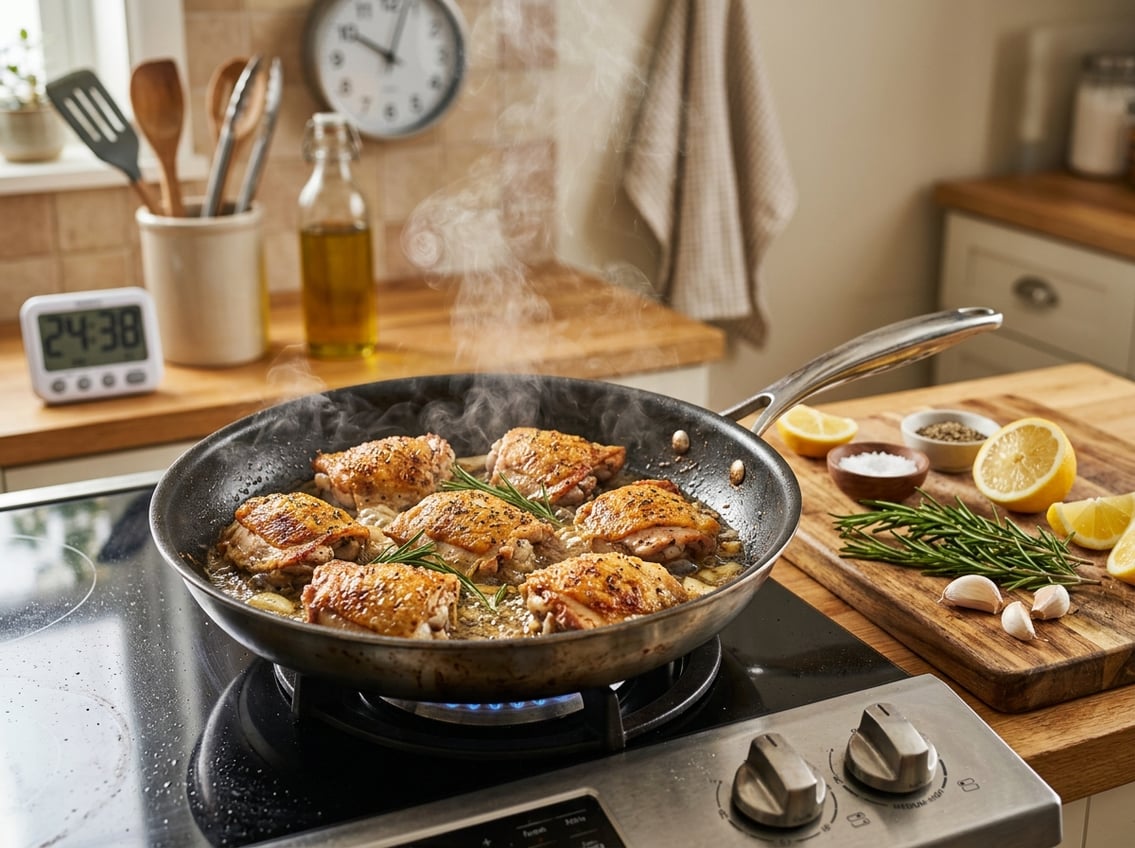
Oven temperature, bone-in or boneless pieces, thickness, and starting temperature (room temperature or fridge) all affect cook time. This article covers those key factors, oven-baking and roasting times, grilling and pan-roasting options, prepping and marinating tips, and steps to get juicy, safe chicken every time.
Key Factors Affecting Chicken Thigh Cooking Time
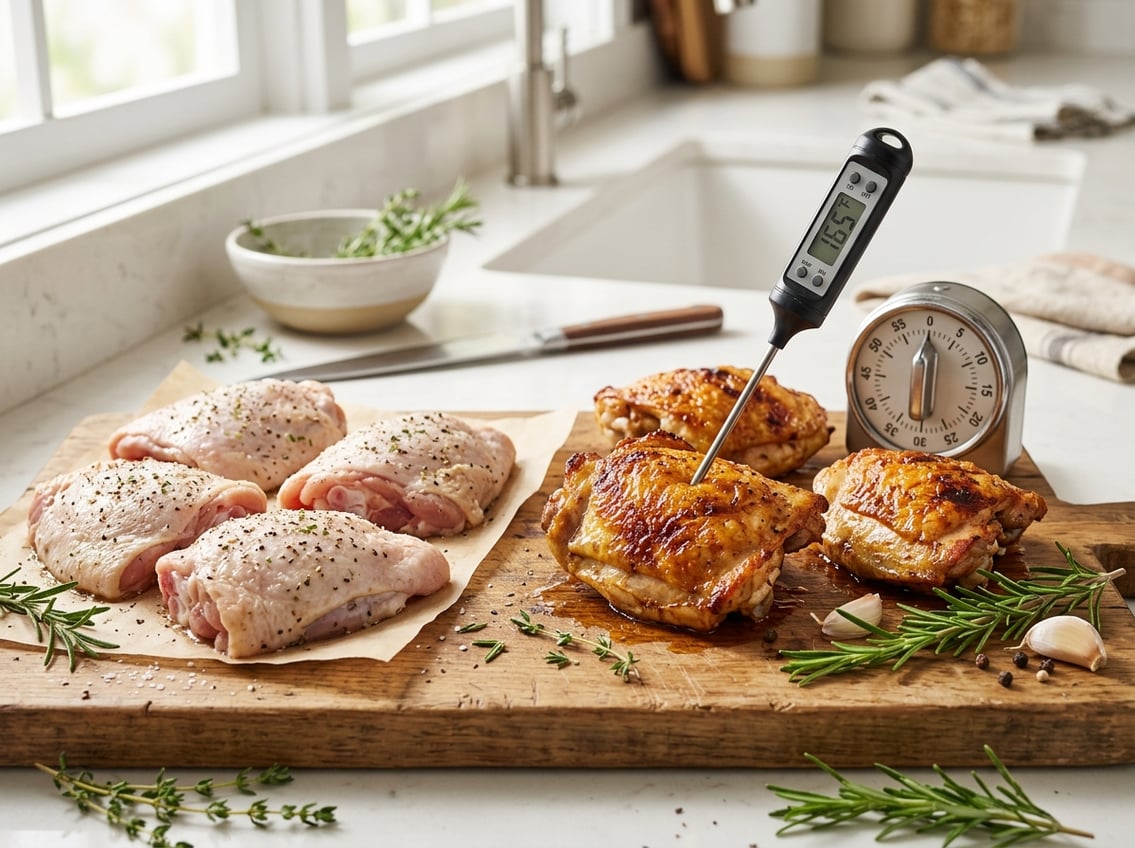
Cut, skin, and thickness change cooking times. These factors affect how heat reaches a safe internal temperature and how much time fat and collagen need to render.
Bone-In vs. Boneless Cuts
Bone-in chicken thighs take longer to cook than boneless thighs because the bone slows heat transfer. Expect about 5–15 extra minutes for bone-in pieces at typical oven temperatures. The bone’s thermal mass keeps the center cooler and delays the thigh reaching 165°F (74°C).
If you use a meat thermometer, insert it into the thickest part of the flesh without touching bone.
Boneless chicken thighs cook faster and more evenly. They’re thinner and lack the insulating bone, so they often finish 10–20 minutes sooner in the oven or after shorter pan-searing times.
When using boneless instead of bone-in in recipes, reduce cooking time and check doneness earlier to avoid drying out.
Skin-On vs. Skinless Options
Skin-on chicken thighs take longer to reach internal temperature because the skin and fat slow direct heat. The skin also renders fat during cooking, which helps baste the meat and keeps it juicier.
Crisping skin works best with higher initial oven temperatures (425°F/220°C) or a final blast of heat. Finishing times depend on whether the cut is bone-in or boneless.
Skinless thighs heat and evaporate moisture more quickly. They require shorter cook times and careful monitoring to prevent dryness.
Use marinades or sauces and lower oven temperatures (350–375°F/175–190°C) for tender results without skin.
Thickness and Size Considerations
Thickness affects cook time more than overall weight. A thin boneless thigh (about 1/2 inch) can finish in 12–18 minutes at 375°F (190°C). A thick bone-in thigh (1–1.5 inches) may need 35–50 minutes at the same temperature.
Measure thickness at the thickest point and adjust time rather than relying on weight.
Uniform sizing ensures even cooking. If your thighs vary in thickness, flatten thicker pieces or separate bone-in from boneless on the pan so smaller pieces don’t overcook.
Always confirm with an instant-read thermometer. Target 165°F (74°C) in the thickest spot for safety and best texture.
Oven-Baking Chicken Thighs: Times and Temperatures
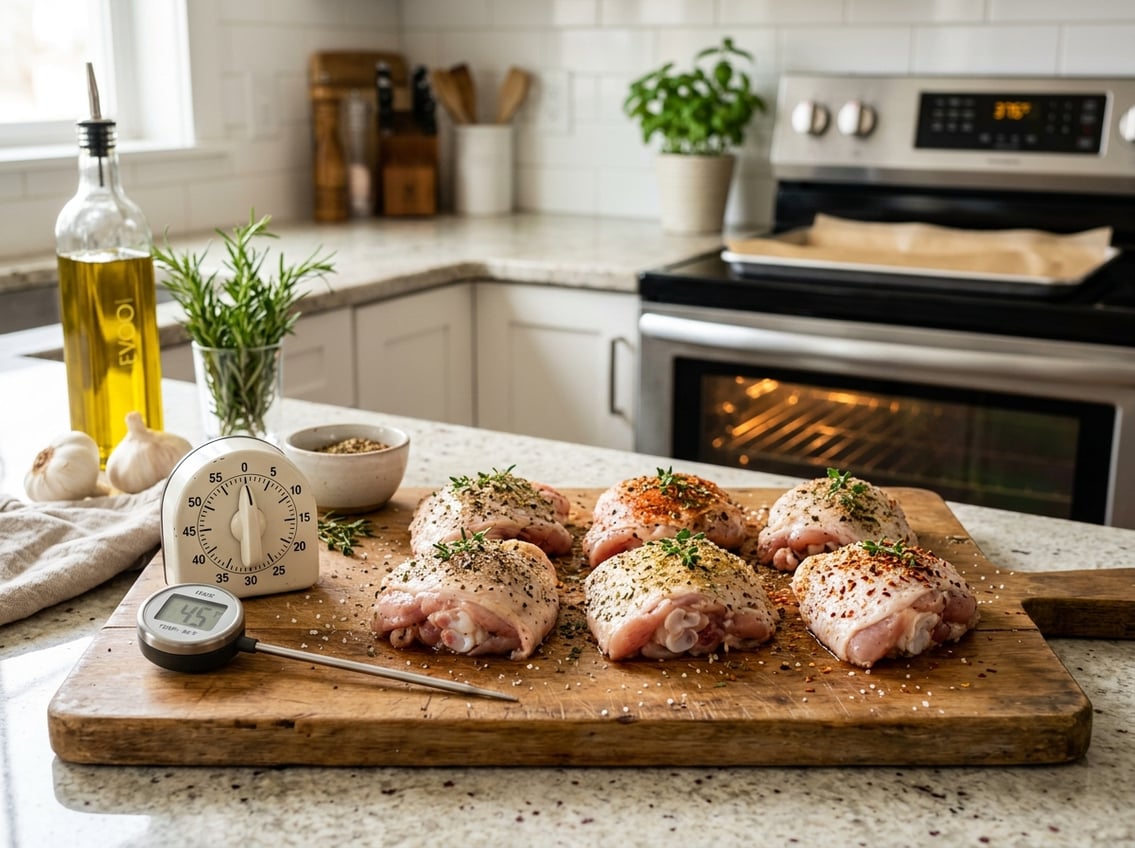
Choose temperature based on thigh type and desired skin crispness. Internal temperature, not time alone, determines doneness.
Baking Boneless Chicken Thighs
Boneless, skinless thighs cook faster because heat reaches meat directly. Preheat your oven to 400–425°F (200–220°C).
Arrange thighs on a rimmed sheet or shallow pan with space between pieces for even browning. At 425°F expect 20–30 minutes; at 400°F expect 25–35 minutes.
Thickness matters. Very thin pieces can finish near 18 minutes, while thicker pieces need the upper end of the range.
Use a single layer and flip halfway for even browning. Rest the thighs 5 minutes after removing them so juices redistribute and the internal temperature rises slightly.
Baking Bone-In Chicken Thighs
Bone-in, skin-on thighs take longer because bones slow heat transfer and skin benefits from higher heat to crisp. Preheat to 425–450°F (220–230°C) for crisp skin, or 375–400°F (190–200°C) for gentler cooking.
At 425°F expect 30–40 minutes; at 375°F expect 40–50 minutes for 4–8 oz pieces. Place skin-side up on a rack set over a sheet pan to let fat render and air circulate.
Avoid overcrowding; crowded pans steam the skin and extend cook time.
Using a Meat Thermometer for Accuracy
Always verify doneness with an instant-read thermometer. Insert into the thickest part of the thigh without touching bone for bone-in pieces.
Target 165°F (74°C) as the safe minimum. If you prefer slightly more tender results, you can remove bone-in thighs at 165°F and allow carryover to reach 170°F (77°C) while resting.
If juices run clear and the thermometer reads 165°F, the thighs are safe.
Roasting Chicken Thighs for Tender Results
Roast at a relatively high oven temperature and use an instant-read thermometer to hit the right doneness. Allow enough time for connective tissue to break down in bone-in pieces while preventing the meat from drying out.
Classic Roasting Method
Preheat your oven to 400–425°F (200–220°C). Arrange skin-on, bone-in chicken thighs on a rimmed baking sheet or in a shallow roasting pan with the skin side up, spaced so air circulates around each piece.
Toss thighs with oil, salt, and aromatics. A light coating of oil promotes even browning and helps seasoning stick.
Roast bone-in thighs about 30–45 minutes at 400°F. Boneless thighs take about 20–30 minutes at 425°F.
Use an instant-read thermometer and pull thighs at 165°F in the thickest part away from the bone. For more tenderness, let them reach 175–185°F if the skin protects the meat.
Rest the thighs 5–10 minutes after roasting. This lets juices redistribute so the meat remains moist.
Achieving Crispy Skin
Start with dry skin. Pat thighs thoroughly with paper towels before seasoning. Excess moisture prevents crisping and causes steaming in the oven.
If time allows, leave seasoned thighs uncovered in the refrigerator for an hour to dry the skin further.
Use higher initial heat and a preheated baking sheet or oven-safe pan to help skin crisp. Roast skin-side up on a hot surface so fat renders away from the skin and edges brown.
For extra crispness, finish under a broiler for 1–3 minutes while watching closely to avoid burning.
Elevate thighs on a wire rack over a baking sheet for maximum air circulation and evenly crisped undersides. Moderate seasoning and minimal oil keep the skin flavorful.
Grilling and Pan-Roasting Chicken Thighs
You can get crispy skin and tender meat by controlling heat and checking internal temperature. Cut (boneless vs bone-in) and skin presence change cook time and technique.
Grilling Times for Different Cuts
Grill bone-in, skin-on thighs at medium-high heat (about 425–450°F) for roughly 25–30 minutes. Start skin-side up briefly, then cook skin-side down in short intervals to limit flare-ups. Move pieces to a cooler zone if flames spike.
Check temperature with a meat thermometer and pull thighs at 185°F for the most tender texture. USDA safety is 165°F but thighs benefit from a higher finish temperature.
Boneless, skinless thighs cook much faster. Plan 10–15 minutes at the same surface temp. Flip every 4–5 minutes and check temperature at the thickest part.
If you have skin-on boneless thighs, treat them closer to bone-in for crisping but expect slightly shorter time. Trim excess fat to reduce flare-ups.
Pan-Roasting for Speed and Flavor
Pan-roasting gives brown, crispy skin with a short stovetop sear and oven finish. Pat skin-on thighs dry, season, then sear skin-side down in a hot oven-safe skillet for 6–8 minutes until golden and rendered.
Flip, then transfer the skillet to a preheated 400°F oven for 12–18 minutes for bone-in. Boneless usually finish in 8–12 minutes.
Check internal temperature with your meat thermometer in the thickest portion near the bone for bone-in, or center for boneless. Aim for 185°F for ideal tenderness, or 165°F minimum for safety.
Rest thighs 5–10 minutes after cooking so juices redistribute.
Marinating and Prepping Chicken Thighs
Marinate time, salt level, and whether thighs are boneless or skinless affect texture and cook timing. Trim excess fat, pat pieces dry before cooking, and keep marinated thighs chilled until ready to cook.
How to Marinate Chicken Thighs
Use a balance of acid, oil, salt, and aromatics for marinade. For 1–2 pounds of chicken thighs, combine 2 tablespoons acid (lemon juice, vinegar, or yogurt), 2–3 tablespoons oil, 1–1.5 teaspoons salt, and 1–2 cloves minced garlic plus herbs or spices.
If you marinate boneless chicken thighs, 30 minutes at room temperature or 2–6 hours refrigerated gives good flavor. For skin-on or bone-in thighs, marinate 4–12 hours in the fridge for deeper flavor.
Always marinate in a nonreactive container or a sealed plastic bag and turn occasionally for even coverage. Rinse only if the recipe calls for it. Otherwise, pat dry to help skin crisp and avoid steaming during cooking.
Discard used marinade or boil it before using as a sauce.
Resting and Serving Tips
After cooking, rest chicken thighs 5–10 minutes to let juices redistribute. For larger bone-in thighs, rest closer to 10 minutes.
Tent loosely with foil to retain warmth without trapping too much steam.
Slice boneless, skinless thighs across the grain for the most tender bite. For skin-on pieces, serve skin-side up so the crisp exterior remains intact.
If you plan to reheat or store, cool promptly and refrigerate within two hours. Use cooked thighs within 3–4 days or freeze for up to 4 months for best texture.
Tips for Perfectly Cooked Chicken Thighs
Control temperature, use a meat thermometer, and adjust cook time for bone-in vs. boneless cuts and for whether the chicken is frozen. Rest the thighs after cooking to redistribute juices and check internal temperature in the thickest part near the bone.
Cooking From Frozen
Cooking from frozen is safe but requires more time and an accurate thermometer. Bake bone-in, skin-on thighs at 375°F (190°C) for about 45–55 minutes when frozen. Boneless, skinless thighs take about 30–40 minutes.
Times vary with oven accuracy and thigh size, so use a probe thermometer inserted into the thickest part to confirm 165°F (74°C).
Sear frozen thighs first only if thawed partially. Fully frozen meat will steam and prevent browning.
For even cooking, arrange pieces spaced apart on a rimmed baking sheet or in a shallow pan so hot air circulates. If you add sauce or glaze, apply it during the last 10–15 minutes to avoid burning.
Avoiding Overcooking
Use a digital meat thermometer instead of relying on time alone. Check the thickest part of the thigh and remove the meat from heat at 160–162°F (71–72°C).
Carryover heat will raise the temperature to 165°F (74°C) while the meat rests. This helps keep the meat moist.
Adjust temperature and cooking method based on the cut. Boneless thighs usually finish faster, taking about 20–25 minutes at 425°F (220°C) when baking.
Bone-in thighs need 35–45 minutes. Let the cooked thighs rest for 5–10 minutes under loose foil so they retain their juices while the internal temperature rises slightly.
If the skin crisps too quickly, lower the oven temperature to finish cooking without burning the outside.


