
Do You Wash Chicken Thighs Before Cooking? Safe Prep & Food Safety
You might have learned to rinse chicken thighs to remove bacteria or slimy residue, but that habit can do more harm than good.
You do not need to wash raw chicken thighs. Proper handling, surface cleaning, and cooking to the right internal temperature keep your food safe.
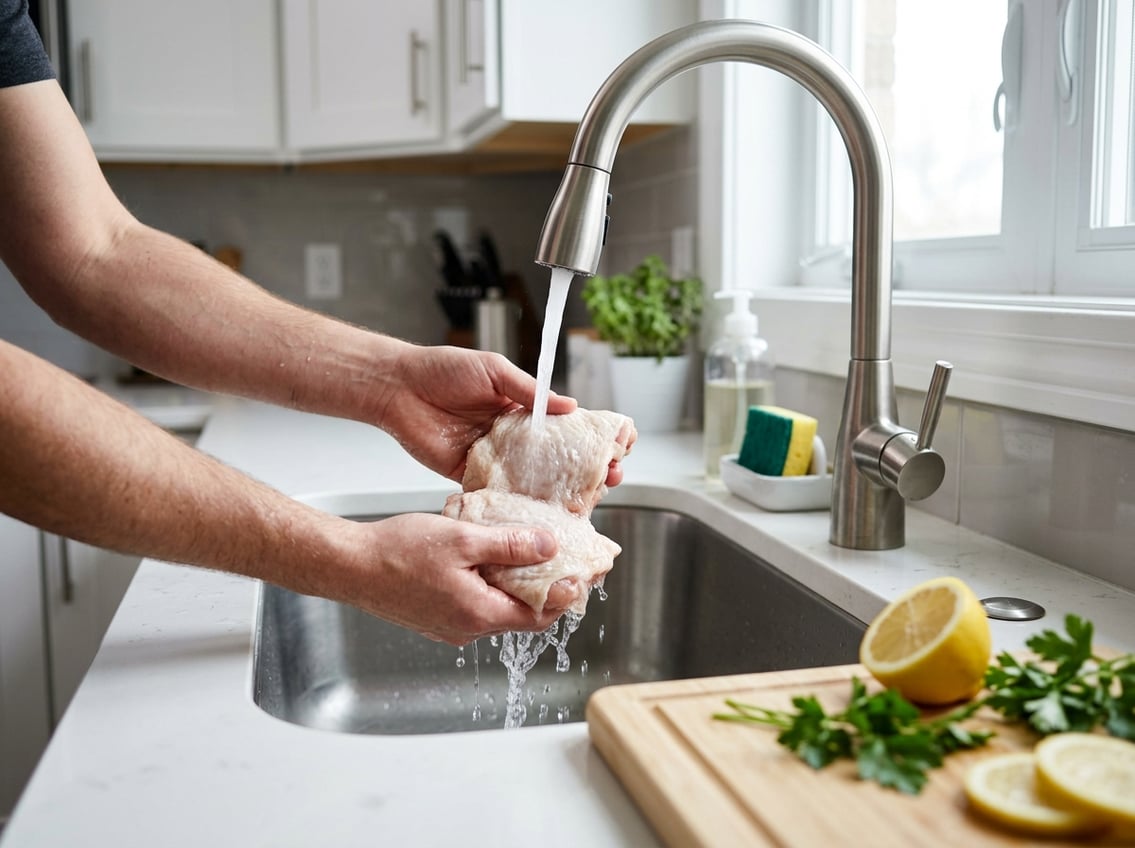
If you worry about cleanliness or flavor, learn the actual risks of washing raw poultry and practical food-safety steps for handling and storing chicken.
Find simple ways to clean and prep thighs that improve browning and safety without splashing bacteria around your kitchen.
Expect clear, actionable tips on sanitizing surfaces, patting and brining techniques, safe cooking temperatures, and why cultural habits around washing chicken persist despite modern guidance.
Risks of Washing Chicken Thighs
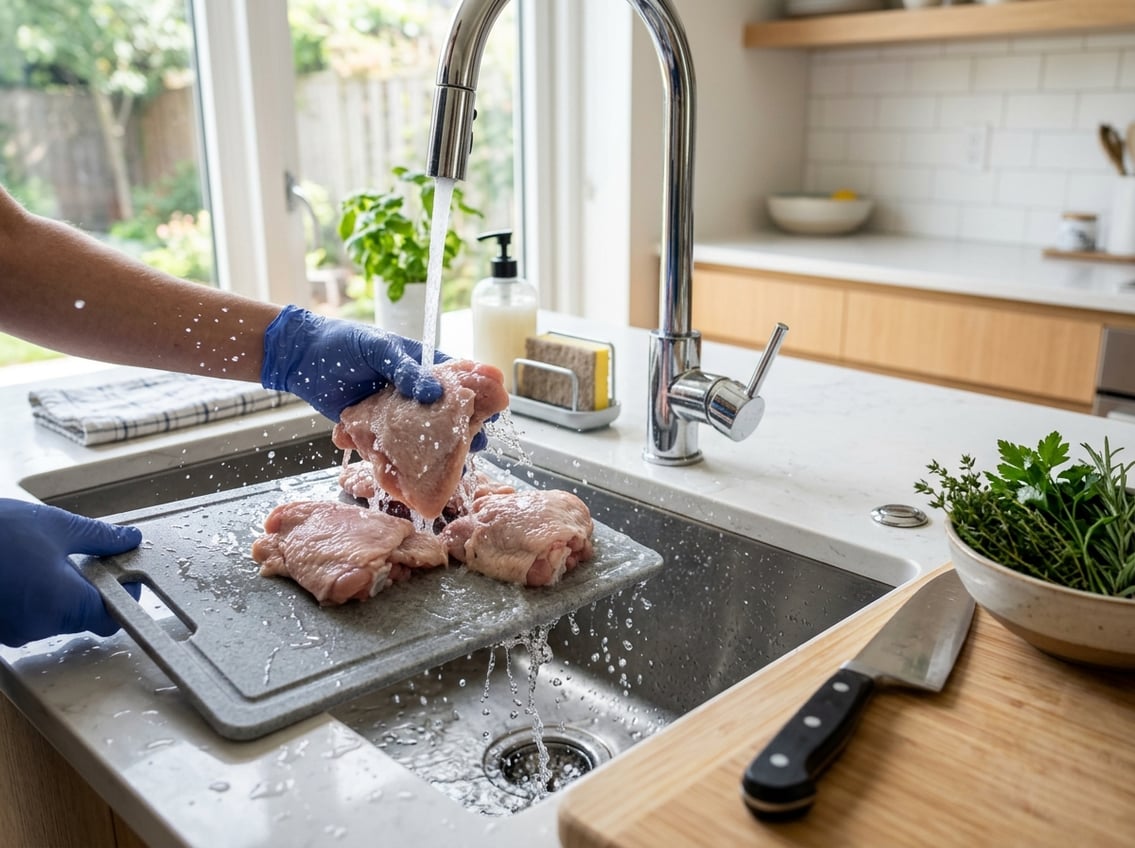
Washing raw chicken thighs can spread bacteria around your kitchen and create more work to make surfaces safe again.
Handling, cooking to the right temperature, and proper cleaning protect you better than rinsing under a faucet.
Cross-Contamination Explained
When you rinse chicken, microscopic droplets and splashes travel beyond the sink and land on countertops, utensils, cutting boards, and nearby foods.
Those droplets can settle on ready-to-eat items like salad greens or bread, creating direct contamination pathways you might not notice.
Clean surfaces immediately after any contact with raw poultry.
Use a dedicated cutting board and knives for raw chicken, or wash them in hot, soapy water or in the dishwasher before reuse.
Wash your hands for at least 20 seconds after handling raw thighs to stop transfer to other objects.
Use disposable paper towels to blot juices and discard them right away.
If a splash reaches sponges or dishcloths, launder or replace them. Sponges can harbor bacteria and recontaminate surfaces.
Salmonella and Campylobacter Hazards
Salmonella and Campylobacter commonly live on raw chicken skin and in meat juices.
These bacteria can cause diarrhea, fever, and abdominal cramps. Vulnerable people such as young children, older adults, pregnant people, and immunocompromised individuals face higher risk of severe illness.
Cooking chicken thighs to an internal temperature of 165°F (74°C) kills these pathogens.
If raw juices contact other foods or utensils, sanitize affected areas with hot, soapy water and then a food-safe sanitizer such as a bleach solution of about 1 teaspoon bleach per quart of water.
That extra step lowers risk if a splash occurs.
Why Washing Does Not Remove Bacteria
Rinsing may remove visible blood or debris, but it does not reliably remove bacteria embedded in meat fibers or on skin crevices.
Water can dislodge bacteria and spread them around rather than eliminating them.
Patting thighs dry with disposable towels reduces surface moisture without creating contaminated spray.
Trimming away feather stubs or bone fragments with a clean knife addresses visible issues more safely than rinsing.
Store thighs on the bottom fridge shelf in sealed containers, thaw safely in the refrigerator or cold water, and always verify doneness with an instant-read thermometer.
These steps prevent foodborne illness more effectively than washing under the tap.
Food Safety Guidelines for Raw Chicken
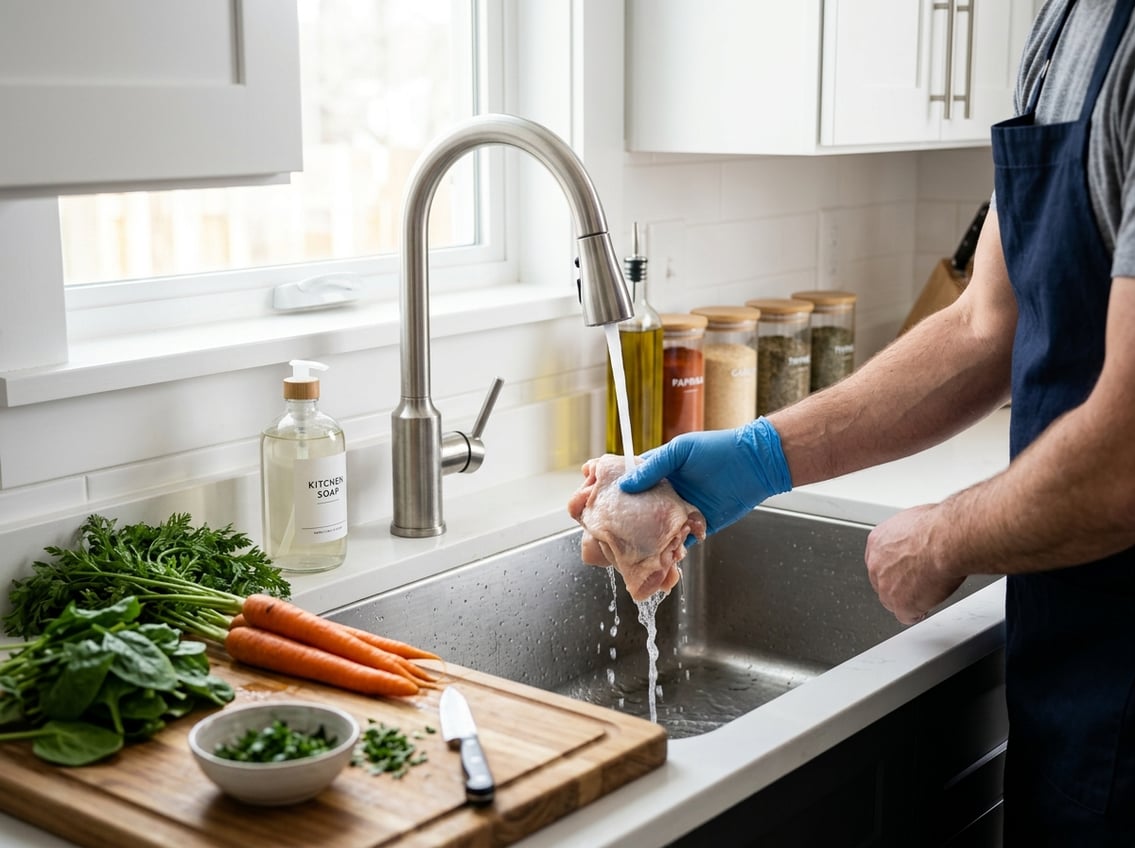
Follow specific steps to prevent foodborne illness when handling raw chicken.
Avoid rinsing, keep raw chicken separate from ready-to-eat foods, and cook to the correct internal temperature.
Clean and sanitize any surfaces or tools that touch raw poultry immediately.
USDA and CDC Recommendations
USDA and CDC advise that you do not wash raw poultry because rinsing spreads bacteria by splashing contaminated juices.
These agencies report that cooking to an internal temperature of 165°F (74°C) reliably kills Salmonella, Campylobacter, and other pathogens, so washing is unnecessary for safety.
When you buy chicken, keep it sealed and place it on the bottom shelf of the refrigerator to prevent drips.
Use a food thermometer to check the thickest part of thighs and other pieces. Check multiple locations for uneven cooking.
If you handle raw chicken, wash your hands for 20 seconds with soap and water immediately afterward.
Alternatives to Rinsing Chicken
Instead of washing, pat chicken thighs dry with paper towels to remove excess moisture that can interfere with browning.
Throw away the used towels right away. Do not reuse cloth towels that touched raw poultry.
If you want to reduce surface contamination, trim visible fat or loose skin with a clean knife rather than rinsing.
Marinate in a covered container in the fridge. Discard any marinade that contacted raw chicken or bring it to a rolling boil before using it as a sauce.
Always keep raw chicken separate from salads, cut fruit, and ready-to-eat items.
Cleaning Workspace and Tools
Immediately wash cutting boards, knives, countertops, and plates that held raw chicken with hot, soapy water.
For added protection, sanitize surfaces with a household bleach solution (1 tablespoon bleach per gallon of water) or an EPA-registered sanitizer after cleaning.
Use separate cutting boards for raw chicken and produce, or wash and sanitize boards between uses.
Run dishcloths and sponges through the hot wash cycle frequently or replace them often.
Never place cooked chicken back on a plate or board that held raw chicken unless it has been thoroughly cleaned and sanitized.
How to Clean Chicken Thighs Effectively
Handle raw thighs with care: remove packaging, contain juices, and prepare to trim and dry the pieces for better cooking and safer handling.
Patting Chicken Thighs Dry
Pat each thigh gently with disposable paper towels to remove surface moisture that prevents browning and increases oil splatter during cooking.
Use one towel per piece and discard immediately to avoid spreading juices.
Press, don’t rub, so you don’t tear the skin or smear juices across the meat.
If you prefer reusable towels, launder them on a hot cycle before reuse and never use them for other kitchen tasks.
After drying, place thighs on a clean plate or shallow pan. Keep raw and ready-to-cook surfaces separate.
Wash your hands for 20 seconds after contact and sanitize any counters or utensils that touched raw juices.
Trimming Fat and Skin
Lay the thigh skin-side up and use a sharp boning knife or kitchen shears to trim excess fat, loose skin flaps, and stray bone fragments.
Remove pieces that look bruised or discolored; they can affect flavor and texture.
For boneless thighs, slide the knife between skin and meat while holding the skin with a paper towel to maintain grip.
Trim connective tissue and silver skin to improve tenderness and ensure even cooking.
Collect trimmed bits on a disposable plate or directly into the trash. Do not place them back on the original packaging.
Clean and sanitize the cutting board and knife immediately after trimming.
Handling Packaging Safely
Open the package over the sink or a disposable tray to catch leaking juices and reduce drips onto counters.
Immediately transfer thighs to a clean plate or container. Fold the original packaging inward and discard it.
Store raw thighs on the bottom shelf of the refrigerator in a sealed container or heavy-duty bag to prevent cross-contamination.
If you won’t cook them within 1–2 days, freeze them in airtight packaging labeled with the date.
Always wash your hands, then sanitize the sink, countertop, and any utensils that contacted the packaging using hot, soapy water followed by a food-safe sanitizer or a diluted bleach solution (1 tablespoon bleach per gallon of water).
Safe Storage and Preparation Practices
Store raw chicken cold, separate it from ready-to-eat foods, and always use a thermometer to confirm safe temperatures.
Freeze or refrigerate promptly and follow thawing methods that keep the meat below bacterial danger-zone temperatures.
Storing Raw and Cooked Chicken Thighs
Keep raw chicken thighs in their original packaging or a sealed container on the bottom shelf of the refrigerator to prevent drips onto other foods.
Store at 40°F (4°C) or below. Use within 1–2 days for raw thighs.
Cooked chicken thighs should go into airtight containers within two hours of cooking.
Refrigerate cooked portions at 40°F (4°C) or below and use within 3–4 days.
Label containers with date and contents to avoid guesswork.
If you buy bulk chicken, divide into meal-sized portions before refrigerating to speed cooling and limit time in the danger zone.
Thawing Frozen Chicken Thighs
Thaw frozen chicken thighs in the refrigerator, not on the counter, to keep the meat at safe temperatures.
Plan ahead: a small package may thaw overnight, while a larger tray can take 24 hours or more.
For faster thawing, submerge sealed thighs in cold water, changing the water every 30 minutes. Cook immediately after thawing.
You can also use the microwave’s defrost setting and then cook right away.
Never refreeze raw chicken that was thawed with cold water or the microwave unless you cook it first.
Always check that thawed meat shows no off-odor or slimy texture before cooking.
Guidelines for Freezing Chicken Thighs
Wrap thighs tightly in plastic wrap and place them in heavy-duty freezer bags or vacuum-seal them to minimize freezer burn.
Remove as much air as possible and label with the date.
Frozen at 0°F (-18°C) or below, raw chicken thighs maintain best quality for about 9 months.
Cooked thighs retain quality for 2–6 months.
Portion before freezing so you only thaw what you need.
Thaw and cook within safe timeframes, and discard any meat that has been above 40°F (4°C) for over two hours or shows signs of spoilage.
Best Practices for Cooking Chicken Thighs
Cook thighs to a safe internal temperature, keep raw and ready-to-eat items physically separated, and use tools and surfaces dedicated to raw poultry to prevent contamination.
Achieving the Right Cooking Temperature
Use an instant-read thermometer to confirm the thickest part of the thigh reaches 165°F (74°C).
Insert the probe avoiding bone; bone reads hotter and gives a false high reading.
If you roast, expect 35–45 minutes at 400°F (204°C) for bone-in thighs. Adjust time for size and oven variation.
For pan-searing, brown skin-side down first, then finish in a 350–375°F (175–190°C) oven until the probe reads 165°F.
Rest cooked thighs 3–5 minutes before slicing so juices redistribute.
If you brine or marinate, factor that into cooking time. Wet surfaces can delay browning but do not change the safe internal temperature target.
Avoiding Cross-Use of Tools
Designate one cutting board and one set of knives for raw poultry, and clearly label or store them separately.
Reusable kitchen towels and sponges should not touch both raw chicken areas and ready-to-eat foods.
After contact with raw thighs, wash tools and surfaces in hot, soapy water, then sanitize with a bleach solution (about 1 teaspoon bleach per quart of water) or a commercial food-safe sanitizer.
If you must reuse a board, run it through the dishwasher or sanitize and air-dry fully before using it for vegetables, salads, or cooked meat.
Always wash your hands for 20 seconds after handling raw chicken.
Ensuring Even Cooking
Trim uneven fat and flap pieces so thighs lie flat. Uniform thickness cooks more evenly and reduces the chance of dry tips.
For bone-in thighs, butterfly or score thick areas if necessary to promote even heat penetration.
Use a heavy skillet or a baking tray with a rack to allow hot air circulation around each piece. Crowding the pan traps steam and prevents crisping.
Turn or rotate pieces halfway through cooking for uniform browning.
Check internal temperature in multiple thighs when batch-cooking, not just one, to ensure consistent doneness across the batch.
Cultural Perspectives and Myths Around Washing Chicken
Many people follow inherited routines when preparing chicken thighs, balancing concerns about cleanliness, texture, and food safety.
Practices range from quick rinses with water to soaking in acidic solutions, and beliefs about safety or flavor influence how you handle raw poultry.
Traditional Practices in Various Cultures
In Southern U.S., Caribbean, and some African diasporic households you’ll often see chicken thighs rinsed or soaked before cooking.
People commonly use cold water, vinegar, or lemon juice to remove visible blood, reduce sliminess, or add a bit of tang before marinating.
Those routines link to historical contexts such as limited refrigeration, home butchering, and variable processing standards that made extra cleaning feel necessary.
You might find specific technique variations: a brief cold-water rinse, a 10–15 minute vinegar or citrus soak, or patting dry with paper towels after rinsing.
When you follow these steps, sanitize the sink and nearby surfaces immediately to reduce contamination risks.
Debunking Common Myths
Many people believe that washing raw chicken removes bacteria. This is not accurate. Rinsing can spread bacteria like Salmonella and Campylobacter onto counters, utensils, and other foods.
Food-safety authorities advise people not to wash raw chicken thighs. Instead, cook chicken to an internal temperature of 165°F (74°C) to kill pathogens.
If you are concerned about texture or “sliminess,” pat chicken thighs dry with paper towels. Using a brief vinegar-brine also achieves similar results with less contamination risk.
Always wash your hands after handling raw chicken. Disinfect surfaces to protect yourself and others.


