
Will Chicken Thighs Shred Like Chicken Breast? Key Differences and Tips
You can confidently use chicken thighs for shredding. They often give juicier, more forgiving results than breasts because of higher fat and connective tissue that turn to gelatin during gentle cooking.
If you cook thighs with moist, low-and-slow methods or under pressure and let them rest, they will pull apart into tender, flavorful shredded chicken just as reliably as breasts. Thighs often shred with less risk of drying out.
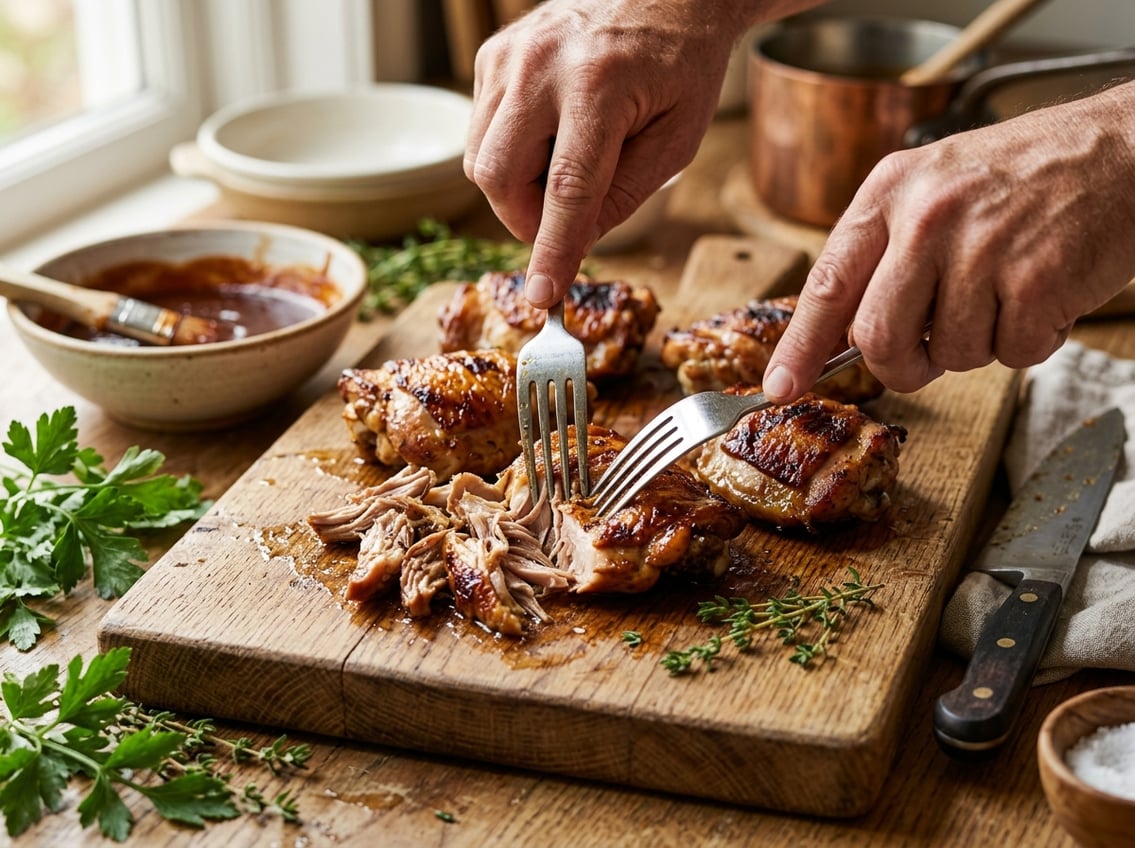
Thighs and breasts differ in texture, moisture, and shredding ease. Cooking methods and practical shredding techniques can help you get consistent results.
You can pick thighs or breasts for specific dishes. Knowing how to store and freeze shredded chicken also helps you plan meals.
How Chicken Thighs and Breasts Differ for Shredding
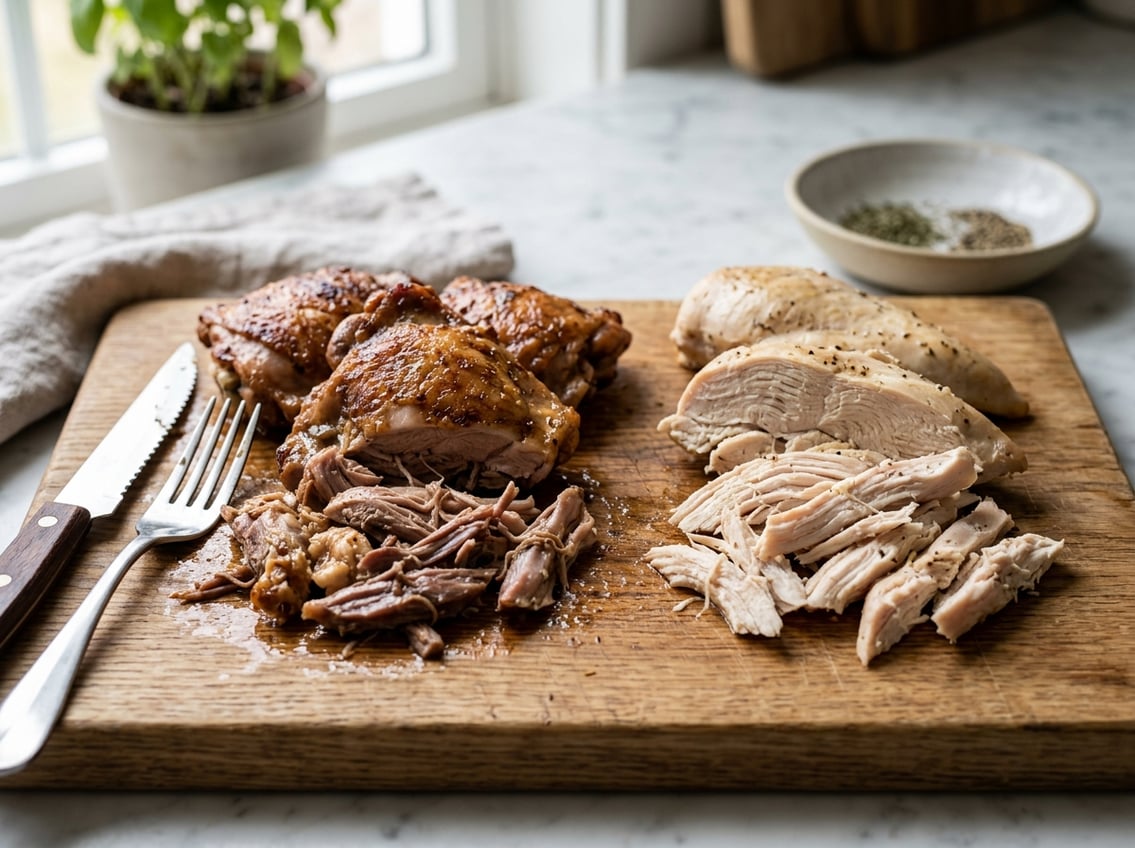
Thighs stay moister and richer, while breasts are leaner and firmer. These differences affect cooking time, shredding method, and final uses like tacos, salads, or sandwiches.
Moisture and Fat Content
Chicken thighs contain more intramuscular fat than chicken breasts. This helps them remain juicy during long cooking or when reheated.
That extra fat means shredded chicken thighs resist drying. You can use higher heat or longer cook times without losing moisture.
Boneless skinless chicken thighs work well for recipes that need moist shredded meat, such as pulled chicken tacos or saucy sandwiches. Bone-in chicken thighs add more flavor during cooking; remove bones before or after shredding.
Breasts have far less fat. To get juicy shredded chicken breast, cook gently and add liquid—broth, oil, or sauce—to avoid dry, stringy results.
If you want lean shredded chicken for salads or low-fat bowls, breasts can work. You must control temperature and rest time carefully.
Texture and Flavor Variations
Thigh meat is darker, softer, and more forgiving. This produces tender, short fibers when shredded.
Shredded chicken thighs have a coarser, more succulent bite that holds up well in stews, enchiladas, and richly sauced dishes. Breast meat shreds into longer, finer strands when cooked properly, giving a cleaner texture useful in chicken salad or light sandwiches.
Those long strands dry out quickly and can become fibrous if overcooked. Aim for precise timing and immediate saucing or dressing.
Thighs deliver more pronounced chicken taste from fat and residual collagen. Use thighs when you want robust flavor without heavy seasoning.
Use breasts when you want a milder canvas that soaks up spices and marinades.
Connective Tissue and Shredding Ease
Thighs contain more connective tissue and collagen than breasts. Slow or moist cooking breaks this down into gelatin.
That breakdown makes shredded chicken thighs silkier and helps strands cling together. This improves mouthfeel in pulled chicken.
Breasts have minimal connective tissue, so they won’t develop the same gelatinous richness. Avoid overworking breast meat during shredding; use two forks or a stand mixer briefly to prevent mushy results.
Poaching or pressure cooking breasts with a little acid or broth helps maintain structure.
If you want effortless shredding, cook bone-in chicken thighs low-and-slow to convert connective tissue into tender meat that pulls apart easily. For quick, lean shredded chicken, breasts require more attention to cooking time and immediate saucing to preserve juiciness.
Best Cooking Methods for Shreddable Chicken Thighs
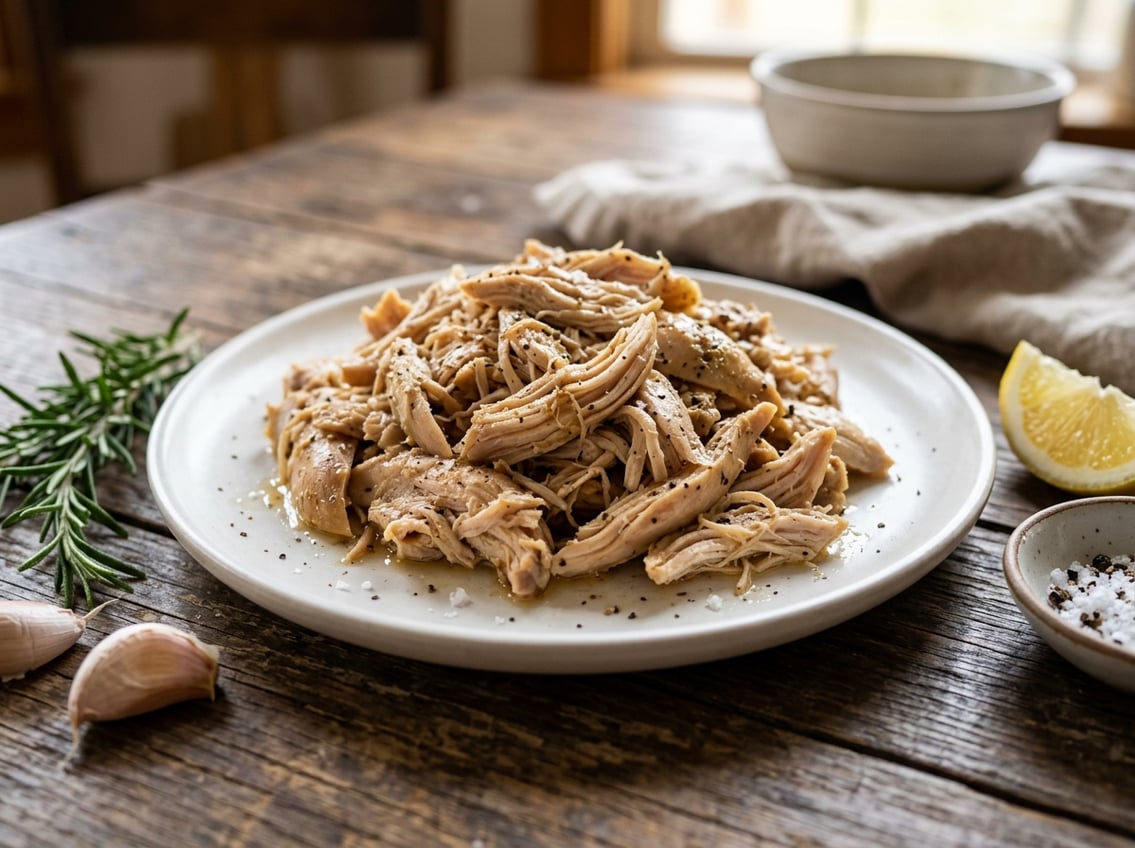
Choose methods that break down connective tissue while keeping fat and moisture. You want tender, easily pulled strands without drying the meat or leaving fatty gristle.
Slow Cooking and Braising Techniques
Slow cookers and low oven braises turn bone-in chicken thighs into juicy shredded chicken. Season thighs, optionally sear skin-side first, then add 1–2 cups of flavorful liquid such as broth, salsa, or a wine-tomato mix.
Cook on low for 6–8 hours in a slow cooker or at 300°F (150°C) in the oven for 2–3 hours until the meat falls from the bone. Use bone-in thighs for richer taste; remove bones before shredding if you prefer boneless texture.
Keep some cooking liquid and spoon it back into the shredded meat to maintain juiciness. Shred while warm using two forks or a stand mixer on low for 10–20 seconds.
Poaching and Simmering
Poaching gives tender results for skinless chicken thighs you plan to shred. Place thighs in a single layer in a pot, cover with cold broth or water by 1–2 inches, and add aromatics like garlic, onion, and peppercorns.
Bring to a gentle simmer, not a rolling boil, then lower heat and cook until internal temperature reaches 165°F (75°C) and fibers pull apart easily. This takes about 10–20 minutes depending on thickness.
Turn off heat and let thighs rest in the hot liquid for 5–10 minutes to finish cooking gently. Remove, reserve some poaching liquid, and shred while warm.
Return a few tablespoons of strained liquid to the shredded chicken to boost moisture without diluting flavor.
Baking and Oven Methods
Baking works well for larger batches and bone-in or skin-on thighs when you want caramelized flavor before shredding. Preheat oven to 375°F (190°C).
Pat thighs dry, season, and arrange skin-side up on a rimmed sheet pan. Roast 25–35 minutes until juices run clear and internal temperature is 165°F (75°C); longer for bone-in pieces until meat pulls easily from the bone.
For very moist shredded chicken thighs, tent the pan with foil for 10 minutes after roasting to let juices redistribute. Remove skin and bones if present, then shred and mix in pan juices or ¼–½ cup of warm broth to preserve juiciness.
Use a mixer for large batches or forks for small portions.
Techniques and Tools for Shredding Chicken Thighs
You can use practical, hands-on methods for shredding thighs. The right tools help with different batch sizes and keeping shreds moist and uniform.
How to Shred Chicken Thighs
Let thighs rest 5–10 minutes after cooking so juices redistribute. Warm meat shreds more cleanly than cold.
Remove skin and bones first if you want consistent strands. Leave bones in while shredding only if you prefer to pick them out afterwards.
Use two forks or your fingers to pull meat along the grain into long strips. Work in short strokes and rotate the piece to keep strand length even.
For larger chunks, pull into 1–2 inch pieces. For tacos or salads, aim for finer ½–1 inch strands.
Reserve 1–2 tablespoons of cooking liquid per cup of shredded chicken and stir it in to restore moisture. Discard visible fat and cartilage to avoid greasy, uneven shreds.
Using Stand Mixers and Forks
For 2–6 thighs, a stand mixer with the paddle attachment saves time and produces consistent shreds. Place warm thighs in the bowl, run on low for 10–20 seconds, and check frequently to avoid over-processing.
Two forks work best for small batches or when you need control over texture. Hold one fork to steady the thigh and pull with the other across the grain.
This gives you control over shred size and keeps fibers intact.
If using a hand mixer, protect your bowl and avoid high speeds. Use a shallow, wide bowl so the meat moves freely and add a splash of reserved broth if the mixer struggles.
Clean tools immediately to prevent residue buildup.
Tips for Consistent Shredding
Always shred while the chicken is warm. Cooling tightens fibers and makes shredding harder.
Cut very large pieces into uniform portions before shredding to keep strand size consistent. Choose boneless skinless thighs for quick prep and even texture; pick bone-in if you want richer flavor but plan for extra handling.
Use a thermometer to ensure thighs reached at least 165°F (74°C) and up to 170–175°F (77–79°C) if you want collagen broken down for softer shreds.
Keep a bowl of reserved cooking liquid nearby and add it in tablespoons until the texture looks moist but not soupy. For storage, portion shredded chicken into meal-sized bags, remove air, and freeze flat so you can thaw only what you need.
When to Choose Thighs Versus Breasts for Shredded Chicken Dishes
Thighs give richer flavor and more forgiving moisture. Breasts give a leaner, milder shred with a firmer texture.
Choose based on desired juiciness, flavor intensity, and the cooking method you plan to use.
Recipe Suitability and Preferences
If you want juicy shredded chicken with a richer mouthfeel, use boneless skinless chicken thighs. Thighs tolerate long braises, slow-cooker time, and higher final shredding because their higher fat and connective tissue stay moist and break down into tender pulled chicken.
They shine in barbecue, taco fillings, and saucy preparations where flavor and moisture matter.
Choose chicken breasts when you need a lean, uniform shred that won’t overpower delicate sauces or salads. Breasts work best for cold chicken salads, light soups, and recipes where you want a firmer texture or lower fat content.
Cook breasts gently (poach or low-and-slow) and avoid overcooking. Rest the meat before shredding to retain juices and prevent stringy, dry pieces.
Cost, Health, and Practical Considerations
Thighs usually cost less per pound and give more forgiving results. Their higher fat content increases calories and saturated fat, which matters if you track macros or serve health-conscious guests.
Breasts are lower in fat and calories, making them the better choice for lean-protein meals and precise nutritional targets. They require careful cooking to avoid dryness.
For mixed dishes, you can combine both cuts to balance flavor, texture, and budget.
Storing and Freezing Shredded Chicken Thighs
Keep shredded chicken chilled promptly, portioned for meals, and protected from air to retain moisture and flavor. Use shallow containers or flat freezer bags, label with date and portion size, and add a small splash of broth if you want juicier results after reheating.
How to Store Shredded Chicken
Cool shredded chicken to room temperature within 1 hour, then move it to the refrigerator. Store in airtight containers or resealable bags with minimal headspace.
Glass or BPA-free plastic containers work well for repeated use. Use 1-cup portions for tacos and sandwiches, 2-cup portions for soups or casseroles, and ½-cup servings for salads or wraps.
This prevents repeated thawing and refreezing. Keep refrigerated shredded chicken at 3–4 days maximum for safety and quality.
If you plan to keep it longer, freeze instead. Label each package with the date and intended use so you can rotate older packs first.
Freezing Shredded Chicken Thighs and Breasts
Portion shredded chicken thighs or breasts into meal-sized amounts before freezing to avoid refreezing leftovers. Lay flat in freezer bags, remove as much air as possible, and press into thin, even sheets so they freeze and thaw quickly.
Add 1–2 tablespoons of broth, pan juices, or seasoned sauce per portion to prevent dryness. Thighs are more forgiving than breasts but still benefit from added moisture.
Store at 0°F (-18°C) or below. Use frozen shredded chicken within 3 months for best texture and flavor.
To thaw, place packages in the refrigerator overnight, or submerge sealed bags in cold water for faster thawing. You can also cook directly from frozen in soups or casseroles, adjusting cook time as needed.
Popular Uses for Juicy Shredded Chicken Thighs
Shredded chicken thighs bring rich flavor and moist texture that work in fast weeknight meals and make-ahead dishes. Use them to add depth to handhelds, bowls, and bulk-cooking plans.
Tacos, Sandwiches, and Salads
Pile juicy shredded chicken thighs into warm corn or flour tortillas for tacos that stay tender through salsa and toppings. Season the shredded chicken with chili powder, cumin, or a quick pan sauce, then top with diced onion, cilantro, lime, and avocado for contrast.
For sandwiches, mix shredded chicken with a light slaw or a tangy yogurt-mustard dressing. The thigh meat resists drying when pressed between bread or grilled buns.
On salads, scatter warm shredded chicken over mixed greens, roasted vegetables, and hearty grains. The extra fat in chicken thighs keeps the meat flavorful when chilled, so your salads remain satisfying even if you dress them ahead of time.
Soups, Stews, and Meal Prep Ideas
Shredded chicken thighs hold their shape and stay succulent in broths and stews. They add body and mouthfeel where shredded breast might go stringy.
Stir them into brothy bowls like pozole, chicken noodle, or a salsa-verde soup in the last 5–10 minutes of simmering. This way, they heat through without overcooking.
For stews and curries, add shredded thighs early to meld flavors. They remain tender while absorbing spices.
Portion shredded chicken thighs into freezer-safe bags or glass containers with sauce or stock for meal prep. Reheat gently over low heat or in the microwave with a splash of liquid to preserve juiciness.
Use the chicken across sandwiches, grain bowls, or quick pasta dishes.


