
Where Is Kirkland Chicken Breast From? Source and Facts
When you ask where is Kirkland chicken breast from, the short answer is that Costco says its fresh Kirkland Signature Chicken Breasts are hatched, raised, and harvested in the USA.
The package for Kirkland Signature Fresh Boneless Skinless Chicken Breasts also points to USA-based production, which helps explain why the product is so widely sold in U.S. Costco warehouses.
“From” can mean more than one thing with Costco chicken, since raising, processing, packaging, and distribution may happen in different places.
You need to look at the label and the product type to know what origin statement applies to the exact package you are buying.
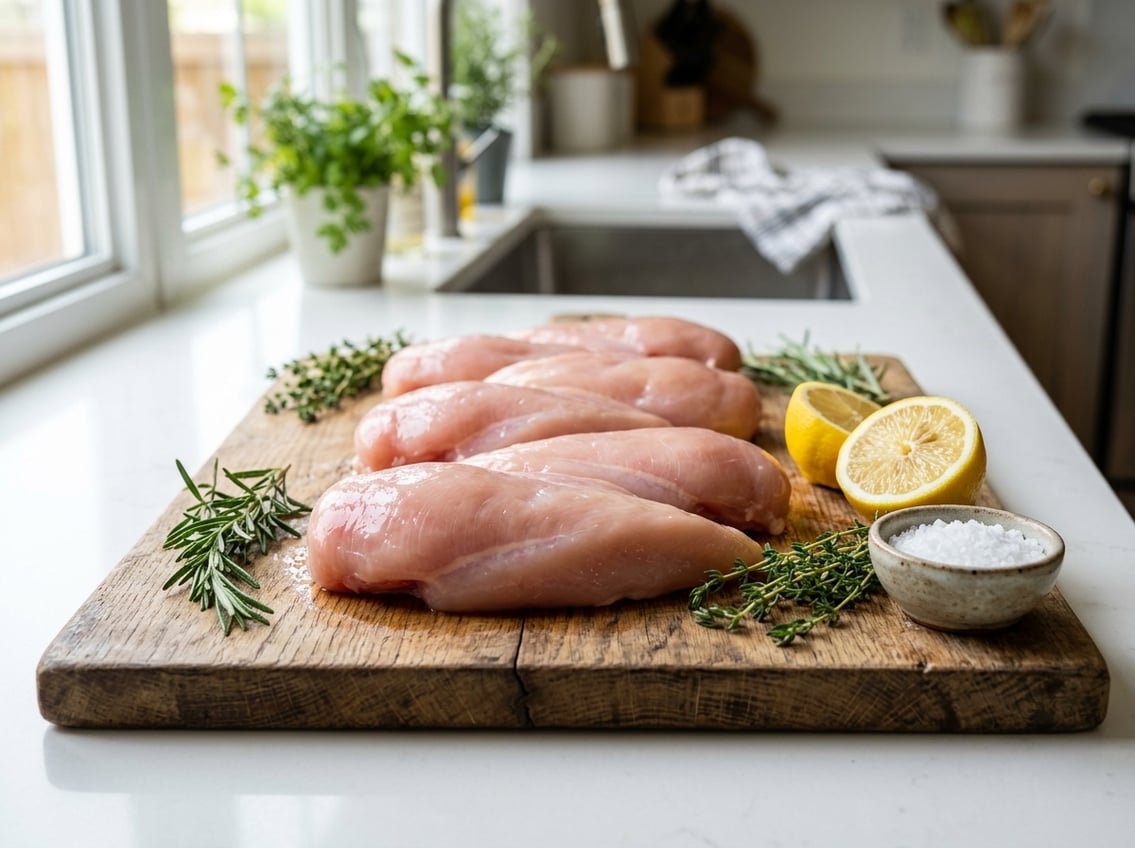
What The Label Typically Points To
For most fresh Kirkland Signature chicken breasts, the label points to U.S. production.
Costco’s product listing says the chicken is hatched, raised and harvested in the USA, which is the clearest public statement you can rely on for this item.
That does not mean every step happens on one farm.
It usually means the birds grew up in the United States and moved through Costco’s poultry supply chain before reaching your local warehouse.
Nebraska Processing and Costco’s In-House Supply Chain
Costco runs its own poultry processing setup in Nebraska, especially for organic chicken.
Public writeups such as Foodly’s summary of Costco organic chicken production say Costco’s organic chicken comes from a Nebraska farm and processing facility.
Costco uses private-label control to keep quality and pricing consistent.
Your chicken breast may come through a network that Costco manages more closely than a typical store-brand purchase.
How Iowa and Nebraska Fit Into Distribution
Midwestern poultry states like Nebraska and Iowa fit neatly into Costco’s U.S. distribution system.
They are close to major production areas, which helps Costco move large volumes of refrigerated chicken to warehouses efficiently.
You may see only a “Product of USA” or “hatched, raised and harvested in the USA” statement on the package.
That label tells you where the chicken was produced, not always where every warehouse shipped it from.
Why Product Origin Can Vary by Item and Region
Not every Kirkland chicken item shares the same origin.
Fresh chicken breasts, frozen chicken, canned chicken, and rotisserie chicken can all come from different parts of Costco’s poultry system.
Regional supply can also change based on availability and warehouse demand.
If you shop in one state, the packaging or supplier details may differ from another Costco warehouse, even when the brand name is the same.
How Costco Sources Different Chicken Products
Costco does not use one single chicken setup for every Kirkland item.
Fresh breasts, frozen products, organic lines, and prepared foods each move through their own sourcing and processing path.
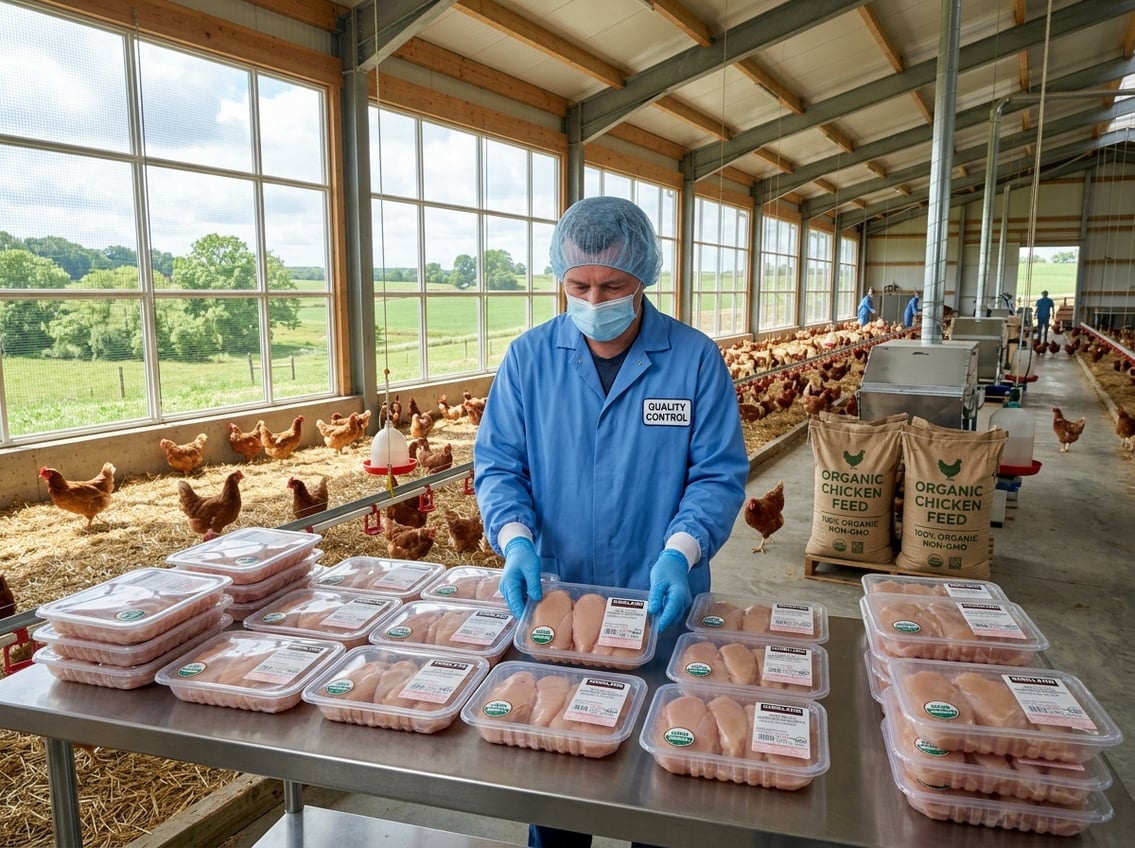
Fresh Kirkland Signature Chicken Breasts
Fresh Kirkland Signature chicken breasts are the easiest item to identify.
Costco’s product listing says they are hatched, raised and harvested in the USA, and the package is designed for bulk home use.
You usually see these in vacuum-packed pouches, ready to refrigerate or freeze.
Kirkland Frozen Chicken Options
Kirkland frozen chicken items can follow a different path than fresh breasts.
Some frozen products are built for longer storage and may come from different suppliers than the fresh case.
Costco’s private-label strategy lets it work with multiple producers.
Frozen items do not always match the same origin wording you see on fresh chicken.
The label is your best guide for the exact package in front of you.
Kirkland Signature Organic Chicken
Organic Kirkland chicken is often discussed separately from the regular fresh line.
Public reports say Costco’s organic chicken comes through a Nebraska-based system tied to Costco’s supply chain, and some explanations note USDA-certified organic farm sourcing.
The organic label carries its own production rules.
If you want organic chicken, you should read both the organic certification and the country-of-origin statement.
How Rotisserie Chicken Fits Into the Same Poultry System
Costco rotisserie chicken is part of the same broad poultry business, even though it is sold cooked.
The prepared chicken may be processed and seasoned differently from raw Kirkland chicken breasts.
Its cost and packaging reflect a separate retail role inside the warehouse.
What Sourcing Means for Shoppers
Where your chicken comes from affects more than curiosity.
It shapes quality, handling, safety, price, and the value you get at the register.
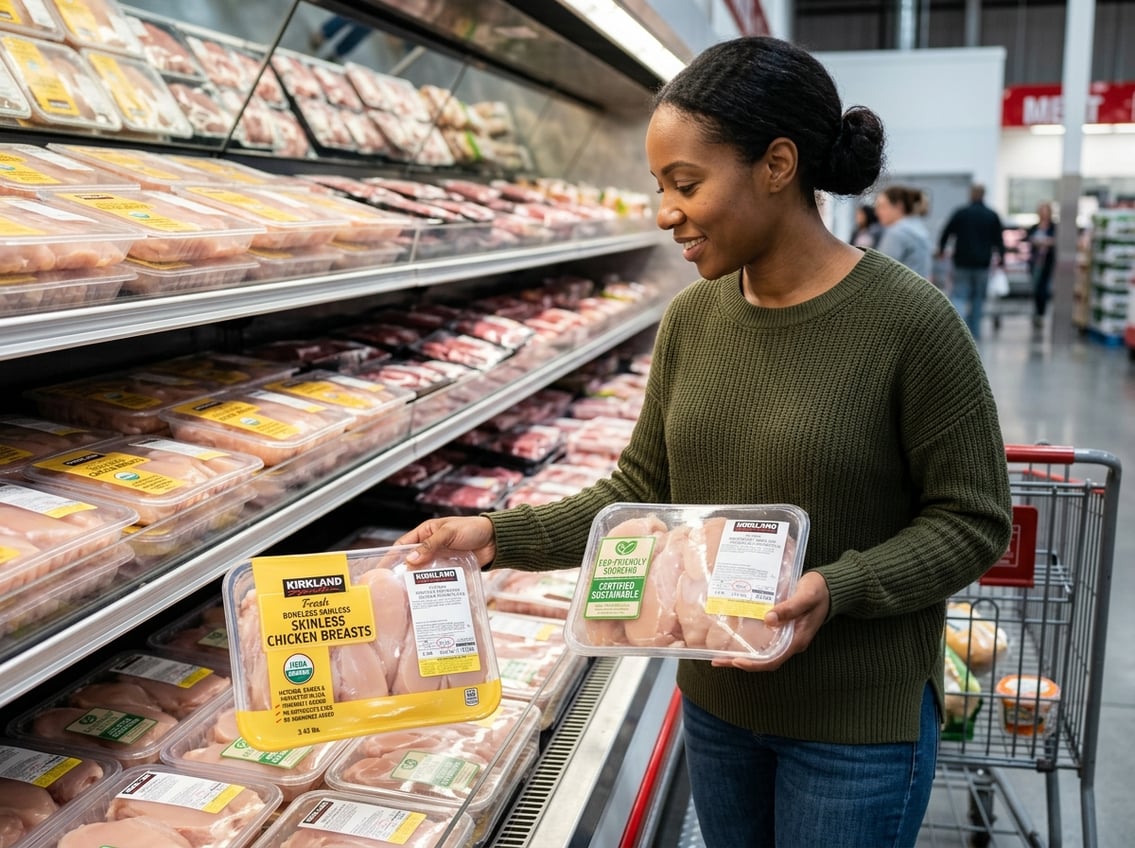
Quality and Processing Standards
Costco sets tight private-label standards, and that includes poultry.
Fresh Kirkland chicken is sold with clear packaging and USDA-grade labeling, which gives you basic traceability and handling information.
You still need to check the package date, seal, and storage instructions.
Safe handling at home matters just as much as good sourcing.
Animal Welfare and Production Practices
Costco has faced more attention around animal welfare in its broader meat business.
Public reporting notes that Costco uses audits for some poultry and egg-related systems, including standards such as Certified Humane in certain cases.
Not every chicken product is identical in production method.
If welfare practices matter to you, you should check the specific label claims on the item you buy.
Pricing, Value, and Why Costco Chicken Stays Competitive
Costco keeps chicken prices low to attract customers. The company uses meat as a way to bring members into the warehouse, where they often buy other items.
Costco chicken and rotisserie chicken remain popular at many locations. Customers get bulk sizing, strong value, and a private-label system that keeps costs under control.


