
How Long Chicken Breast in Fridge: Safe Storage Times
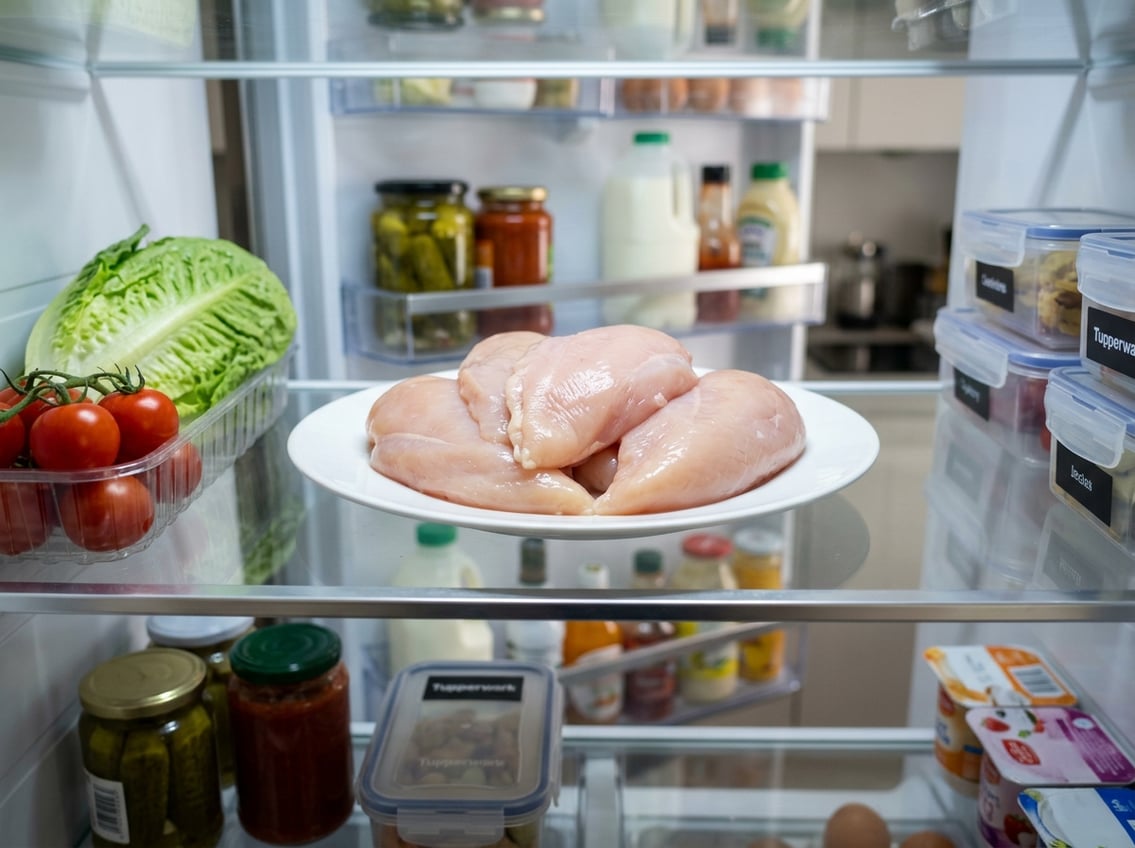
You may wonder how long chicken breast in fridge stays safe. Raw chicken breast usually keeps for 1 to 2 days, while cooked chicken breast keeps for 3 to 4 days when refrigerated properly.
If you freeze it, you can extend storage time much longer.
Chicken breast spoils faster than many other foods, especially if your fridge runs warm or the packaging has already been opened.
Keep chicken cold, store it well, and use it within the right time window.
Safe Refrigeration Timelines
Chicken storage depends on temperature and time. The safe refrigerator window changes based on whether your chicken breast is raw, cooked, thawed, or still sealed.
According to the USDA, raw chicken should be used within 1 to 2 days, while cooked chicken lasts about 3 to 4 days.
Raw Chicken Breast: 1 to 2 Days
If you need to store raw chicken breast, plan to cook it within 1 to 2 days of refrigeration. That is the safest window for quality and food safety.
If your plans change, freeze chicken breast right away instead of stretching fridge time.
Cooked Chicken Breast: 3 to 4 Days
You can store chicken breast that is already cooked for 3 to 4 days in the fridge. Keep it in a sealed container and cool it quickly after cooking.
Leftovers should go into refrigeration within 2 hours, or within 1 hour if the room is very warm.
Thawed Chicken Breast After Freezing
Once you thaw chicken in the fridge, use it within 1 to 2 days if it is raw. If it was cooked before freezing, use it within a few days after thawing.
Do not keep thawed chicken in the fridge longer than the safe raw or cooked timeline.
How Store-Bought Packaging Affects Timing
Store-bought chicken can stay safe a little longer if the package is unopened, sealed well, and kept cold at 40°F or below.
The safest rule still applies: cook raw chicken breast within 1 to 2 days of bringing it home.
Packaging dates such as sell-by or use-by dates can help, but once you open the package, the clock moves faster.
How to Store It Correctly
Proper storage slows spoilage and lowers the chance of cross-contamination.
Your fridge setup matters as much as the number of days chicken sits inside it.
Keep chicken cold, sealed, and placed where drips cannot reach other foods.
Good storage habits also make it easier to freeze chicken before it goes bad.
Best Fridge Temperature and Placement
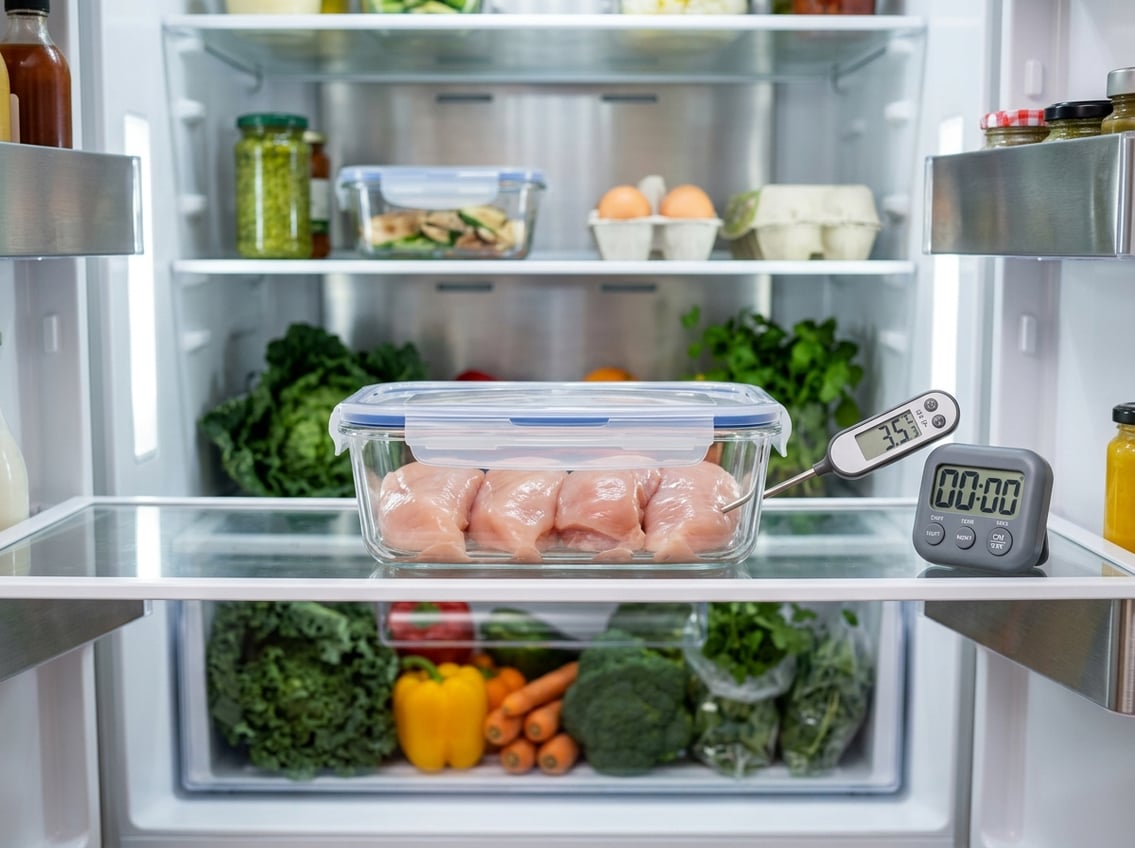
Set your refrigerator to 40°F or below. A refrigerator thermometer gives you a more accurate reading than the dial on the front.
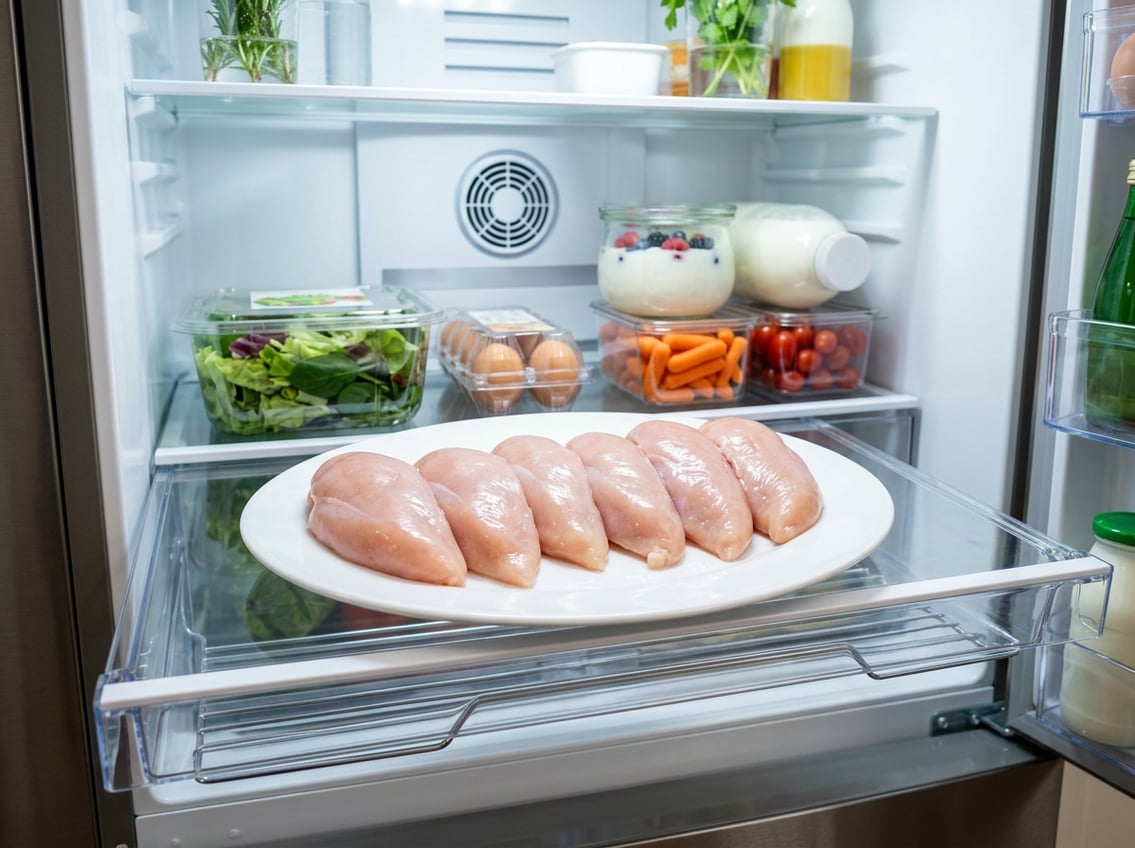
Place raw chicken breast on the bottom shelf in the coldest part of the fridge.
That reduces the chance that juices drip onto produce, leftovers, or ready-to-eat food.
Airtight Wrapping and Leak Prevention
Keep raw chicken in its original packaging if it is unopened and still being used soon.
Once opened, move it to a sealed container or wrap it tightly so air and juices stay in.
Leak-proof storage protects other foods and helps keep odors from spreading.
If you plan to freeze chicken later, airtight wrapping also helps prevent freezer damage.
How to Avoid Cross-Contamination
Use separate cutting boards for raw chicken and other foods. Wash your hands, knives, counters, and storage containers with hot soapy water after contact with raw poultry.
Never place cooked food on a plate that held raw chicken unless you wash it first.
When to Refrigerate or Freeze Right Away
If you know you will not cook raw chicken breast within 1 to 2 days, freeze it right away.
If cooked chicken will sit longer than 3 to 4 days, freeze the leftovers before that window ends.
How to Tell When It Has Gone Bad
Spoiled chicken is not always obvious at first glance.
Smell, color, and texture give useful clues, yet they do not guarantee safety on their own.
A chicken breast can carry harmful bacteria before it looks clearly spoiled.
Changes in Smell, Color, and Texture
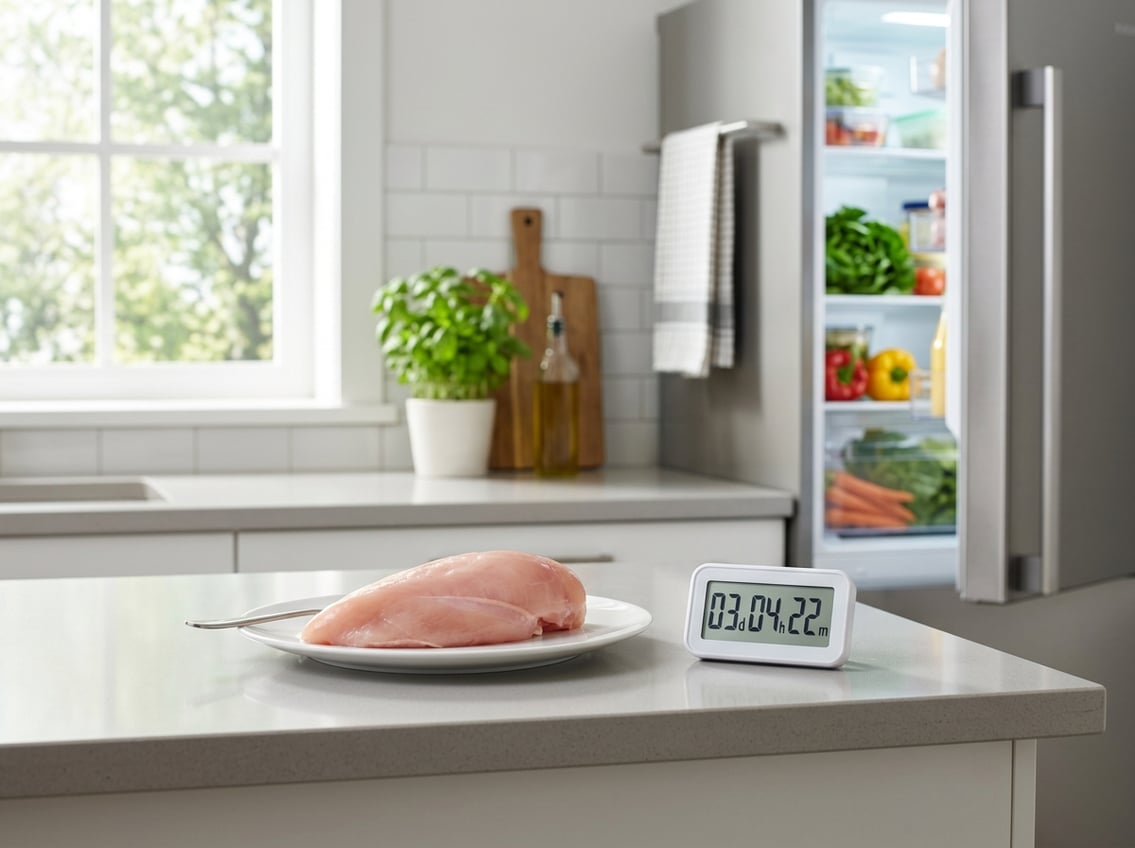
Fresh chicken usually has a mild smell, pale pink color, and firm texture.
If it smells sour, rotten, or ammonia-like, discard it.
Watch for gray or green tones, slimy film, or sticky texture.
Those signs mean the chicken breast is no longer a good choice for your kitchen.
Why Spoilage Can Still Be Risky Before It Looks Obvious
Bacteria can grow before visible spoilage appears.
Chicken may seem normal while still being unsafe.
If raw chicken has been in the fridge too long, throw it out even if it looks fine.
Food Safety Risks From Salmonella and Campylobacter
Two major bacteria linked to chicken are salmonella and campylobacter.
They can cause diarrhea, fever, stomach cramps, and vomiting.
The CDC and USDA warn that these bacteria are common poultry risks.
Careful storage and handling help reduce your chance of illness.
Freezing and Thawing for Longer Storage
Freezing gives you more time than the refrigerator allows.
It helps you keep chicken storage flexible without rushing to cook it.
Good packaging, safe thawing, and quick use after thawing all matter.
If you handle the process correctly, you can freeze chicken breast with less loss of quality.
When Freezing Is the Best Choice
Freeze raw chicken if you will not cook it within 1 to 2 days.
Freeze cooked chicken if you will not eat leftovers within 3 to 4 days.
Freezing works well when you buy in bulk or when a sale gives you more than you can use right away.
How to Prevent Freezer Burn
Wrap chicken tightly in freezer-safe packaging, then remove as much air as possible.
A freezer bag or airtight container works well for most home kitchens.
Label the package with the date so you can track storage time.
Tight wrapping helps prevent freezer burn and protects texture.
How to Thaw Chicken Safely
The safest way to thaw chicken is in the refrigerator.
For faster thawing, use cold water in a leak-proof bag and change the water every 30 minutes.
You can also use the microwave if you plan to cook it immediately after thawing.
Never thaw chicken on the counter, since room temperature raises bacterial growth.
What to Do After You Thaw Chicken
Cook raw chicken soon after it thaws in the fridge. Use it within 1 to 2 days.
If you thaw chicken in cold water or the microwave, cook it right away.
Keep thawed chicken cold until you are ready to cook. Do not leave it sitting out before dinner time.


