
Is It Good to Brine Chicken Breast? When It Helps
Is it good to brine chicken breast? Yes, brining often helps when you want moist chicken, better seasoning, and more forgiveness during cooking. This is especially true with lean boneless skinless chicken breasts.
Brining is not always required, and it works best when you keep the salt level and brining time under control.

Chicken breast is lean, so it can dry out fast if you cook it a little too long. A simple brine gives you a better cushion against that and helps the meat taste seasoned all the way through.
If you want to know how to brine chicken in a practical way, the key is simple. Use the right salt ratio, keep the timing short for thin pieces, and cook it properly after brining.
When Brining Improves Chicken Breast

Brine chicken breast when you want more moisture, better flavor, and less risk of dry meat. The payoff is strongest with lean cuts because they have little fat to protect them during cooking.
A well-made saltwater solution helps the meat hold onto moisture and seasons it more evenly. Quick brining can make chicken juicier and more tender if you do not overdo the time.
Why Lean Meat Benefits Most
Boneless skinless chicken breasts benefit most from brining. They have very little fat, so they dry out more easily than darker cuts.
A brine gives this lean meat a better texture and more flavor without requiring a long marinade. That makes it useful for weeknight cooking, grilling, roasting, or pan cooking.
How Brining Boosts Moisture Retention
Brining chicken breast improves moisture retention because salt changes how the meat behaves as it cooks. The saltwater solution helps the muscle hold onto more liquid, which gives you a juicier result.
This matters most when your cooking method uses high heat or when you might miss the perfect doneness by a minute or two. A brined chicken breast stays more forgiving than an unbrined one.
Protein Denaturation and Interior Seasoning
Salt affects protein denaturation, which changes the structure of the chicken so it traps water better. That is the main science reason brined chicken tends to stay moist.
It also helps flavor move past the surface. You get chicken breasts that taste more balanced inside and out.
When Brining Is Not Necessary
Brining is not always worth the extra step. If your chicken breast is already thin, you are using a very salty sauce, or you plan to cook it gently and carefully, you may not need it.
It may not be necessary for dishes where strong marinades or sauces do most of the work. In those cases, you can skip brining and still get good results.
Best Brine Method, Ratio, and Timing
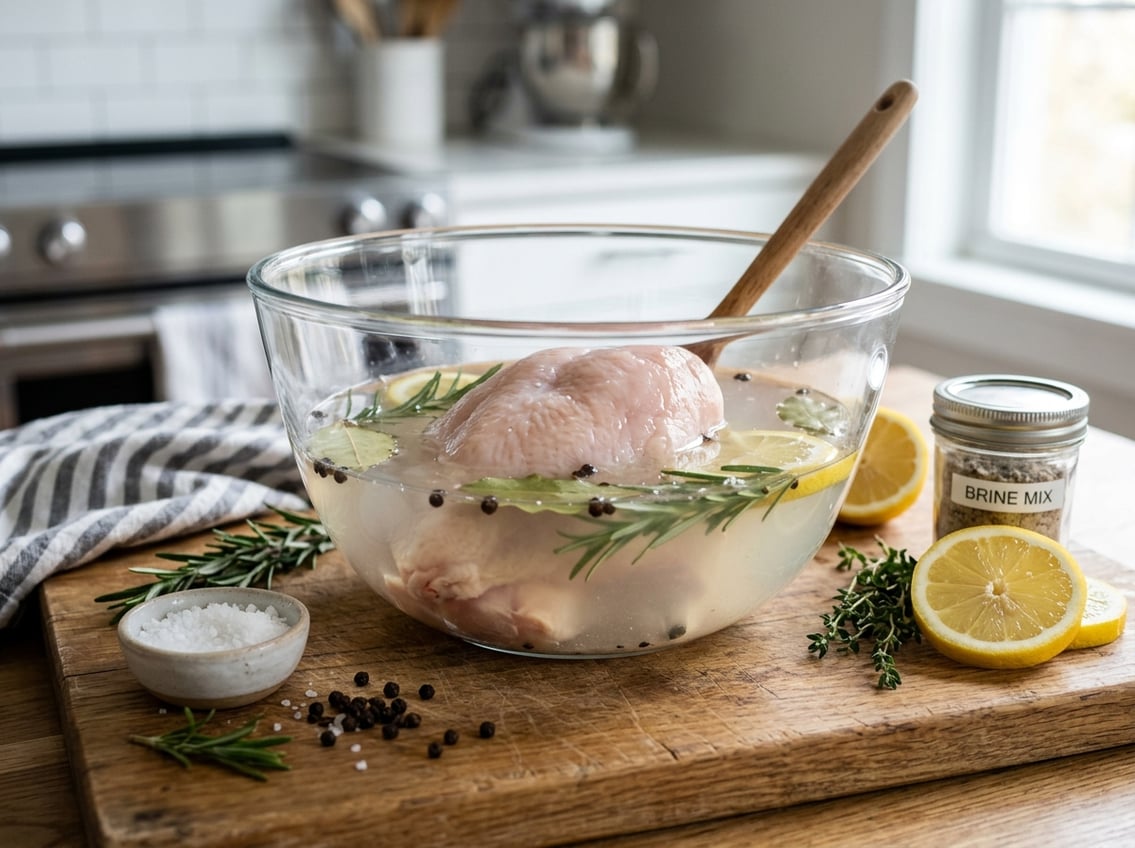
A basic chicken brine is simple: water, salt, and optional flavorings. The most important part is the salt concentration, because too much salt leads to an overly salty chicken breast.
Keep the method simple and match the brining time to the thickness of the meat. Quick brine methods work well for chicken breasts because they do not need long exposure.
Basic Chicken Brine Ingredients
A plain brine recipe usually uses water, kosher salt, and optional sugar. You can also add herbs, garlic, peppercorns, lemon, or spices.
Salt does the main work, and extra flavorings should stay subtle so they do not dominate the meat.
Wet Brine vs Dry Brine
A wet brine uses a brine solution of salt and water, while a dry brine uses salt rubbed directly onto the chicken. Both can help, but they work a little differently.
A wet brine gives full coverage and a fast, even result. A dry brine is often easier, cleaner, and less messy, and it still works well for chicken breasts when you have a few hours or overnight.
How Long to Submerge Chicken
For chicken breast, short brining times are usually best. Many cooks get good results with a quick brine of about 30 minutes for thinner pieces.
Thicker pieces may need a bit longer. The more delicate the cut, the more likely it is to become too salty or slightly spongy if you leave it in too long.
Salt Types and Salt Concentration
Kosher salt is the standard choice for a chicken brine because it is easy to measure and dissolves well. Diamond Crystal kosher salt and other brands do not weigh the same by volume, so measure carefully.
A common ratio is about 1/4 cup kosher salt per quart of water, though the exact amount depends on the brand. If you use table salt or a different kosher salt, adjust for the stronger salt concentration so you do not oversalt the meat.
Mistakes, Safety, and What to Do After Brining

The most common brining mistakes are using too much salt, leaving the chicken in too long, and handling the brine unsafely. Good technique matters just as much as the brine itself.
Once you cook brined chicken, the texture and seasoning should be balanced, not sharp or cured. If the chicken tastes too salty, the problem usually started with the brine or the brining times.
How to Avoid Overly Salty Results
To avoid over-brining, keep the chicken breast in the brine only as long as needed. Thin pieces need less time, and thick pieces need only a modest increase.
Do not add extra salt to the meat before cooking unless the recipe calls for it. That is one of the most common brining mistakes and a fast path to overly salty chicken.
Why Reusing Brine Is Unsafe
Do not reuse brine after raw chicken has sat in it. The liquid can carry bacteria from the chicken, so saving it for another batch is unsafe.
Mix a fresh batch each time you want to brine chicken. The ingredients are cheap, and making new brine is the safer choice.
How to Prep Brined Chicken for Cooking
After brining, remove the chicken and pat it dry with paper towels. You do not need to rinse it in most cases, and drying helps the surface cook better.
If you want to cook brined chicken breast with a nice exterior, let the surface sit briefly so excess moisture can leave. That helps with browning and better texture.
Best Ways to Cook Brined Chicken
Grilling, pan-searing, baking, and roasting all work well for brined chicken. Because the meat already has some built-in moisture protection, it handles direct heat better.
You can also cook brined chicken breast on the stovetop or in an air fryer, as long as you watch the final temperature closely. The brine helps, but it does not replace proper cooking.
Brining Compared With Other Flavoring Options
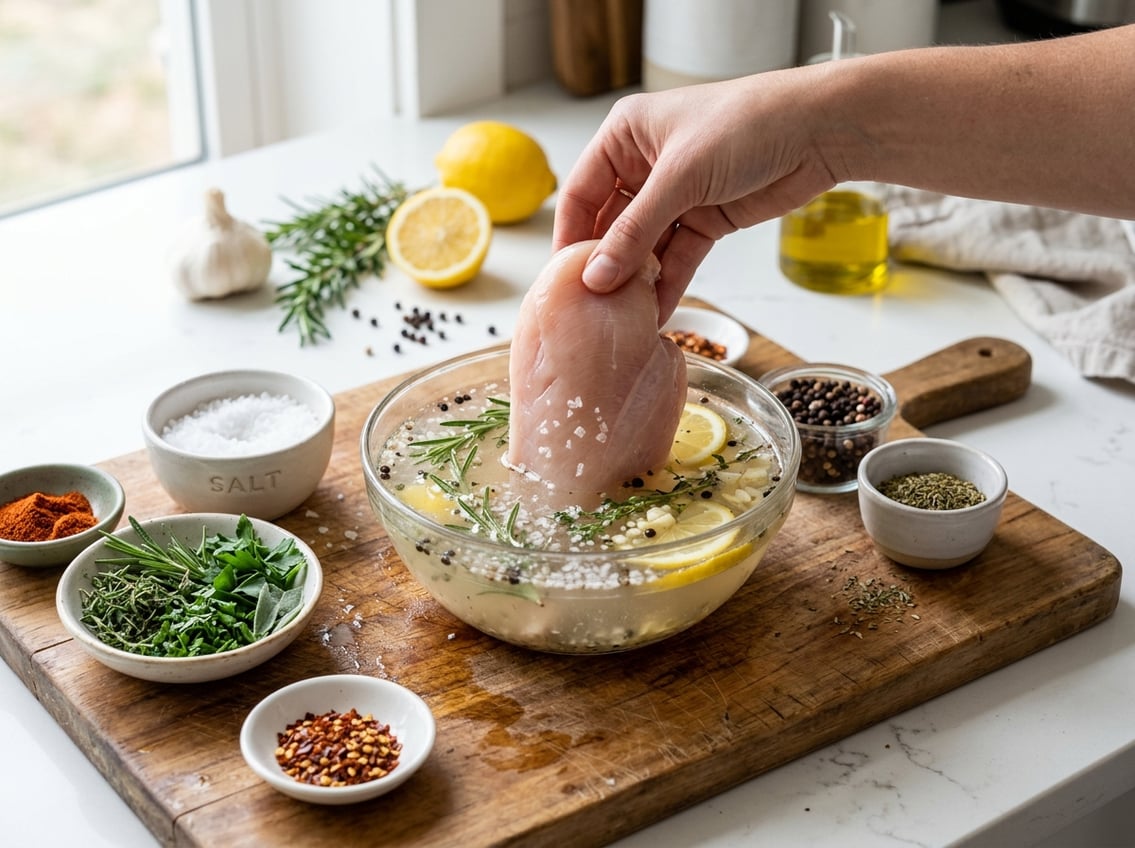
Brining is mainly about moisture and seasoning, while marinating is more about surface flavor and aroma.
A Greek marinade with lemon, garlic, oregano, and olive oil can be a better choice when you want bright flavor on the outside. Brining chicken breast makes more sense when your main goal is juicier meat with a cleaner, salt-based flavor.
Difference Between Brining and Marinating
A brine uses salt and water to change how the meat holds moisture. A marinade usually uses acid, oil, herbs, and spices to add flavor.
If you want to brine chicken, you are focusing on texture and seasoning. If you want a stronger flavor profile, marinating may fit better.
When a Greek Marinade Makes More Sense
A Greek marinade is useful when you want the chicken to taste like lemon, oregano, garlic, and olive oil. That style works well for salads, pitas, and grain bowls.
Choose it when surface flavor matters more than moisture retention. For quick weeknight meals, a marinade can be easier than setting up a wet brine.
How Chicken Breast Differs From Thighs and Pork Chops
Chicken breasts are leaner than chicken thighs. Brining chicken breasts gives you more benefit.
Thighs already have more fat. This makes them more forgiving.
The same idea applies to brining pork chops. Lean cuts usually gain more from a brine, while richer cuts need it less often.


