
Is It Ok to Refreeze Chicken Breast? Safety Rules
You may wonder if it is ok to refreeze chicken breast after it has thawed. The answer depends on how you handled the chicken.
If you thawed it in the refrigerator and kept it cold, you can usually refreeze it safely. If it warmed up too much, you should cook it instead.
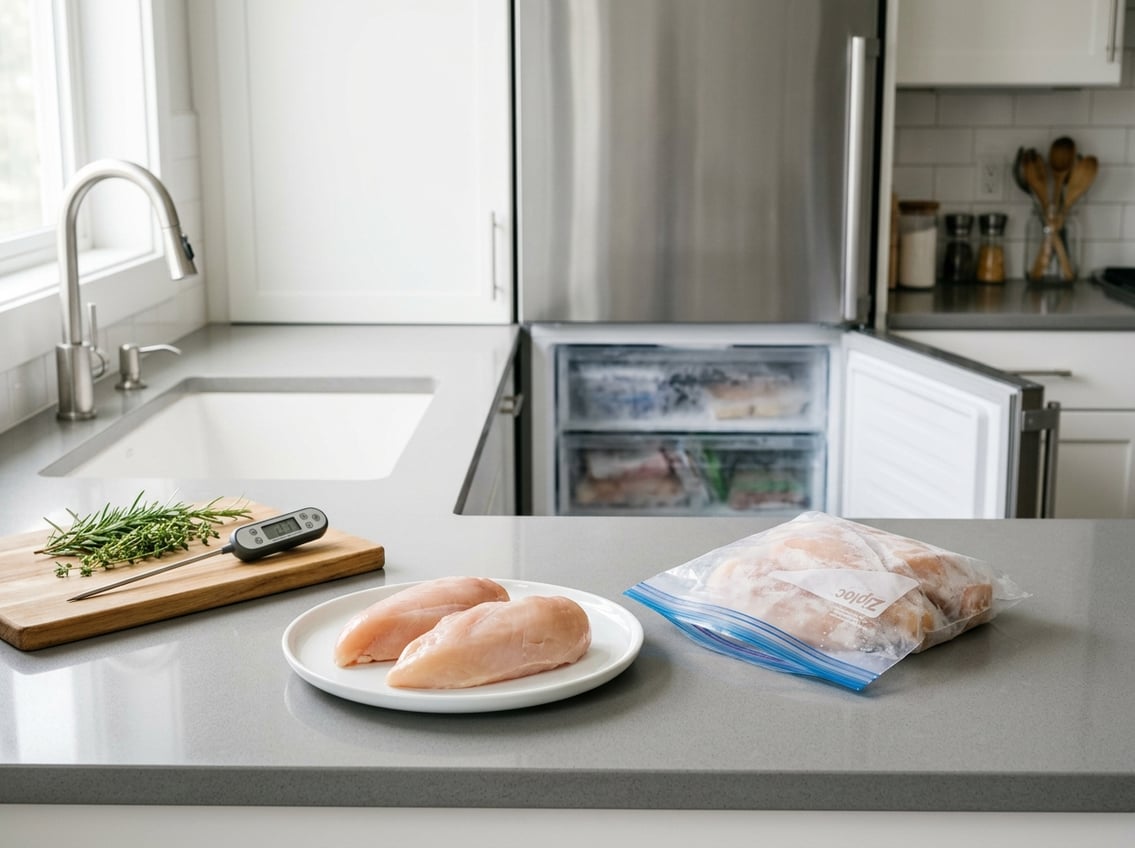
You should only refreeze chicken breast when it has stayed at 40°F or below. If it thawed by a faster method or sat out too long, cook it first to protect both safety and texture.
Refreezing chicken can help reduce waste in home kitchens. The key is knowing when you can safely refreeze chicken and when you should cook it right away.
When Refreezing Is Safe
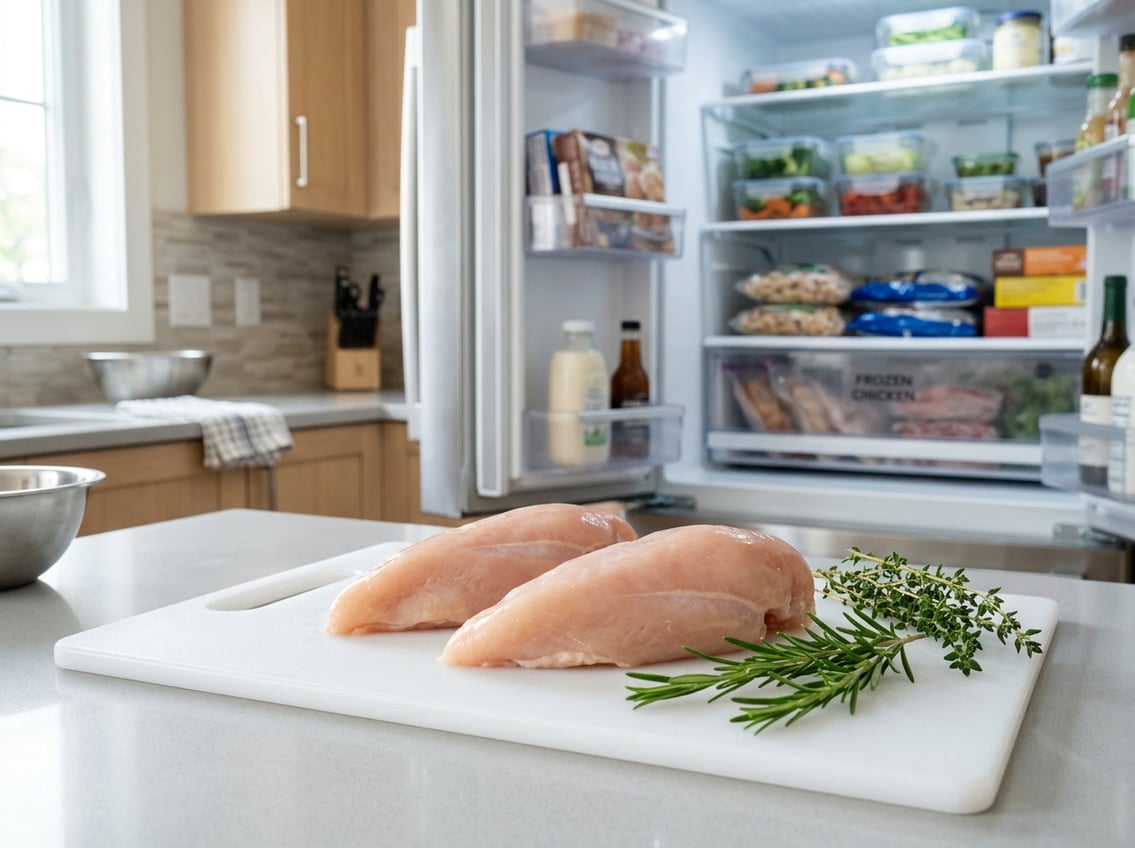
You can refreeze chicken breast if you kept it in a safe temperature range. The main question is whether the chicken stayed cold enough the whole time.
The USDA guidance on chicken and food safety recommends refrigerator thawing as the safest method for refreezing chicken breast.
Refrigerator-Thawed Chicken Breast
If you thawed chicken breast in the refrigerator, you can usually refreeze it before cooking. Keep it at 40°F or below and try to refreeze it within a couple of days.
This applies to both raw chicken and thawed chicken that never left the fridge for long.
Raw Chicken Within the Safe Fridge Window
You can refreeze raw chicken if it still looks and smells normal and never warmed above safe refrigerator temperatures. Keep it cold from start to finish for safe refreezing.
Wrap the chicken well and return it to the freezer quickly.
Cooked Chicken That Can Go Back in the Freezer
You can refreeze cooked chicken breast if you cooled it properly after cooking and then stored it in the fridge. Cool, pack, and freeze the food promptly.
Do not leave it out on the counter.
When You Should Cook It Instead of Refreezing
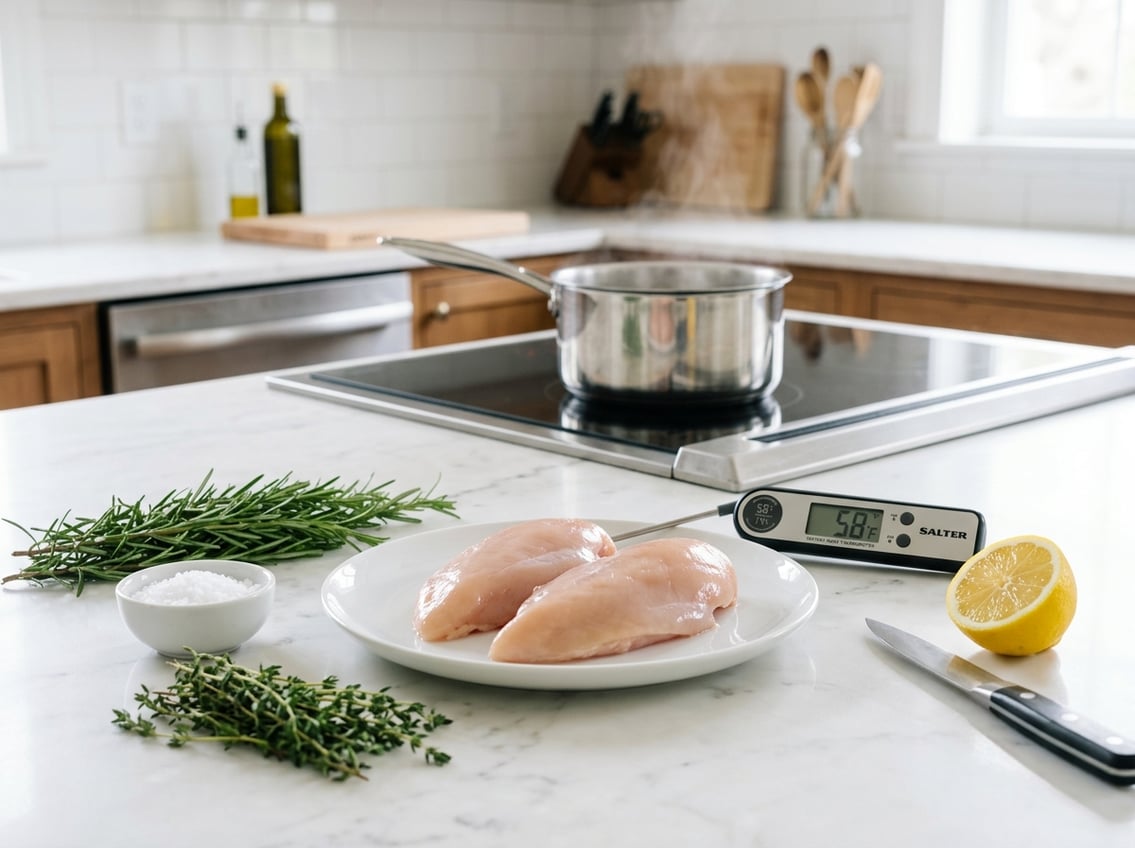
Do not refreeze some thawed chicken. If the thawing method raised the temperature too much, cooking is safer.
If the meat looks spoiled or was left out during thawing, cook it instead.
Chicken Thawed in Cold Water
Cold water thawing moves chicken through the temperature danger zone faster. If you thawed chicken this way, cook it right away instead of refreezing.
Chicken Thawed in the Microwave
Microwave thawing can leave parts of the chicken warm while other parts stay frozen. That uneven heating means you should cook it right after thawing.
After cooking, you can freeze the chicken again if you handled it safely.
Chicken Left Out Too Long or Showing Spoilage
If thawed chicken sat out for more than two hours, do not refreeze it. If it smells sour, feels slimy, or shows gray or green patches, discard it.
How to Refreeze Chicken Breast Properly
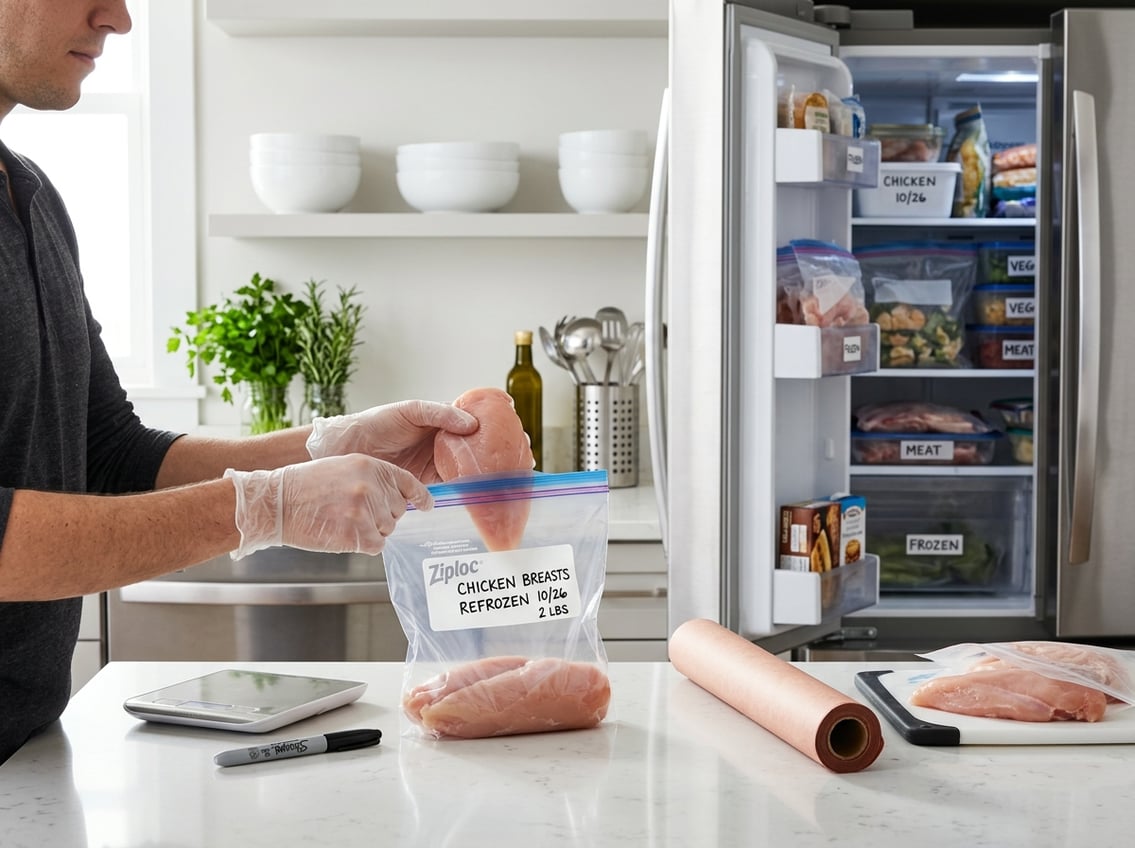
Proper packing is important for quality and safety. Good habits help prevent freezer burn and keep the meat usable.
Pack Tightly to Prevent Freezer Burn
Use freezer-safe bags or airtight wrapping and push out as much air as you can. Air exposure causes freezer burn and dries out the surface.
For best results, refreeze chicken breast in a single, tight layer.
Portion, Label, and Date for Easier Use
Split chicken into meal-sized portions before freezing. Label each package with the date so you can use the oldest food first.
Best Practices for Freezing Raw and Cooked Portions
For raw chicken, freeze it flat and sealed as soon as possible after thawing in the fridge. For cooked chicken, cool it before packaging, then freeze it once it is no longer hot.
Quality Changes and Mistakes to Avoid
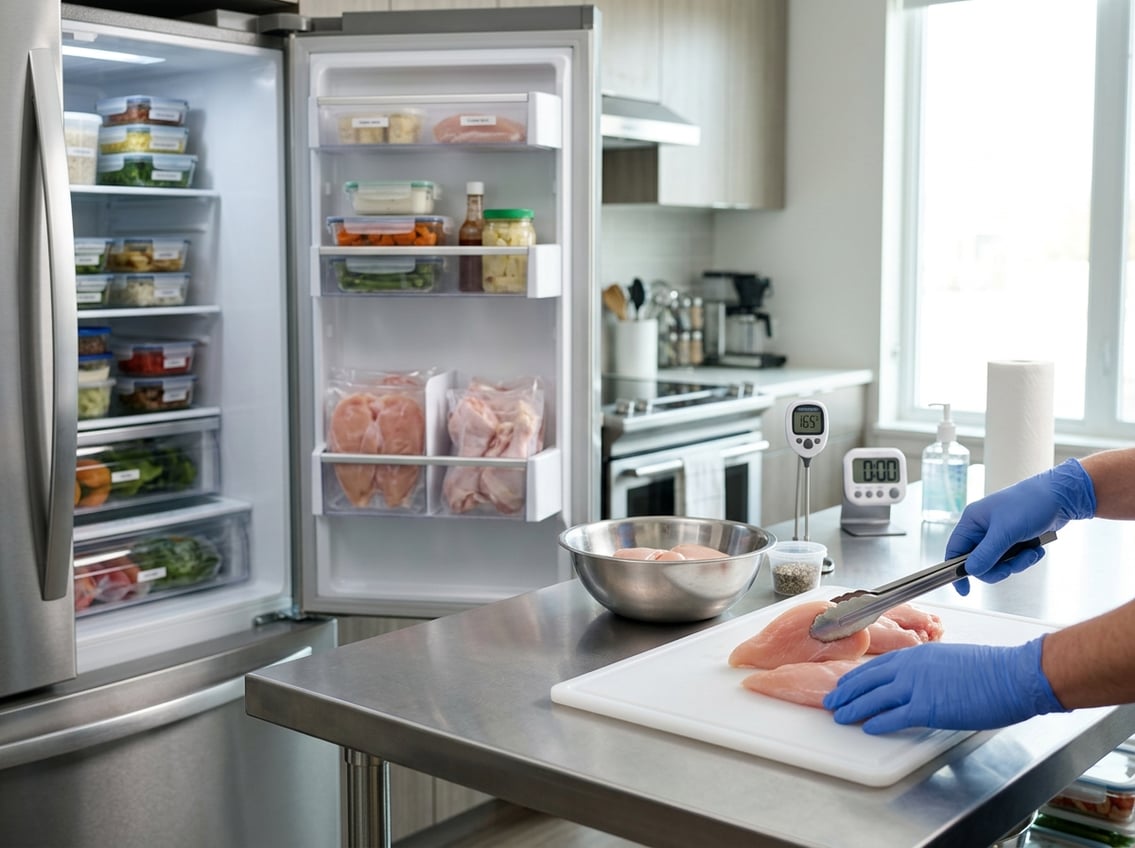
Refreezing chicken breast is usually safe under the right conditions, but quality drops each time food thaws and freezes again. Moisture loss is the biggest issue, especially with lean cuts like chicken breast.
The more often you repeat the process, the more likely you are to notice changes in texture and flavor, as noted by Freeze Or Not.
Why Refrozen Chicken Breast Can Turn Dry or Tough
When you freeze chicken, ice crystals form and can break down the meat’s structure. After refreezing chicken breast, it often cooks up drier or tougher than fresh chicken.
That does not mean it is unsafe to eat, but the texture may not be as good.
How Many Freeze-Thaw Cycles Are Too Many
One extra freeze-thaw cycle is usually the practical limit at home. More cycles raise the chance of poor texture and handling errors.
If you keep moving the same chicken between the fridge and freezer, quality and safety both become harder to manage.
Signs Chicken Should Be Discarded
Throw it away if it smells off or feels slimy.
Get rid of chicken if you notice strange color changes.
If you are unsure how long it stayed warm or if it was not kept cold enough, discard the chicken.


