
Chicken Breast vs Tenders: Key Differences
Chicken breast and tenders come from the same bird, but they cook and eat a little differently. Choosing the right cut for your recipe, budget, and texture preference makes a difference.
Chicken breast gives you a larger, leaner, firmer piece of white meat. Chicken tenders are smaller, softer, and usually a better fit when you want fast cooking and a juicier bite.

Stores often use the terms chicken tender, chicken tenderloin, and chicken tenderloins interchangeably. In the US, this usually refers to the small strip of meat attached under a chicken breast, but some packages contain fully separated tenderloins while others use breast meat cut to look similar.
Knowing what is chicken breast and what is a real tender helps you avoid paying more than you need to. It also makes it easier to pick the best cut for grilled chicken, baked chicken, salads, sandwiches, and fried chicken dishes.
What Each Cut Is

Both cuts are white meat from the same side of the bird, but they come from different muscles and have different shapes. One feels firmer and larger, while the other feels smaller and more delicate.
Where Chicken Breast Comes From
Chicken breast comes from the large chest muscle called the pectoralis major. This is the main muscle most people think of when they buy a boneless breast.
Because it is large and used more than the tenderloin, it has a firmer texture and a more compact grain. This makes the breast a good cut when you want slices, cutlets, or a full portion for one or two people.
Where Chicken Tenderloin Comes From
Chicken tenderloin, also called chicken tender, comes from the smaller muscle under the breast called the pectoralis minor. Each chicken has two tenderloins, and they often stay attached to the breast when sold.
According to Foodiosity’s chicken tenders vs breast guide, tenders sit closer to the ribs, move less, and are naturally more tender. They are usually softer and cook faster than chicken breast.
Size, Shape, and Structure
Chicken breast is larger, thicker, and more uniform. Chicken tenders are narrow, small, and curved, which makes them easier to portion for quick meals.
The texture and flavor are close, but the structure changes how each cut feels when cooked. Chicken breast keeps a firm texture when cooked well, while tenders are softer and more delicate.
Texture, Nutrition, and Tradeoffs
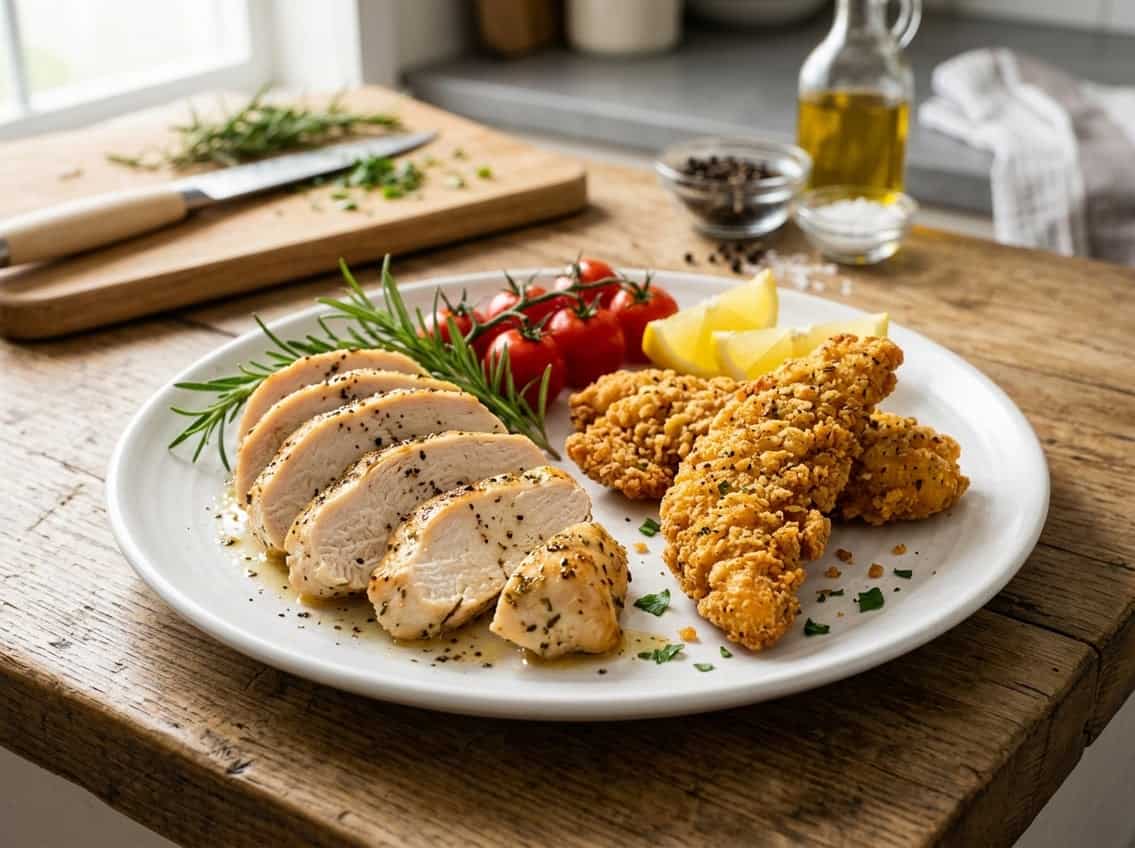
The biggest tradeoff is simple. Breast gives you leaner, more versatile meat. Tenders give you a softer texture and faster cooking.
Mild Flavor vs Pronounced Flavor
Chicken breast has a mild flavor, which makes it easy to season in many directions. It picks up marinades, rubs, and sauces well.
Chicken tenders often taste a little richer because they stay juicier during cooking. They have a slightly more pronounced flavor in many dishes, even though the base flavor is still chicken.
Lean Protein and Fat Content
Both cuts are good sources of lean protein. Chicken breast is usually the leaner option, so it is often the better pick when you want less fat content and lower saturated fat.
Chicken tenders can still fit a balanced diet, especially if you bake or grill them instead of frying. Chicken breast tends to be the easier choice when you want a very lean meal with fewer extras.
Both cuts also provide nutrients such as niacin, vitamin b6, and selenium. The main difference is how the cut is prepared.
Calories and Weight Loss
If you are tracking calories or aiming for weight loss, chicken breast is often the simpler choice because it is usually lower in fat and calories per serving. This makes it a common fit for meal prep and high-protein diets.
Chicken tenders can still work well if you keep portions in check and avoid heavy breading or frying. For a juicy texture with less effort, tenders can be a practical middle ground.
Best Uses in the Kitchen

Your best choice depends on the final dish. Some cooking methods work better with the larger size of breast meat, while others benefit from the quick cook time and tenderness of tenders.
When Chicken Breast Works Best
Chicken breast is a strong choice for grilled chicken, baked chicken, sliced sandwiches, salads, and wraps. It also works well when you need neat slices or larger portions.
If you want a main protein that can be seasoned many ways, breast is usually the more flexible cut. It fits recipes where you want to use chicken breast in place of cutlets or sliced meat.
When Tenders Are the Better Choice
Chicken tenders are ideal for chicken fingers, chicken strips, chicken nuggets, and quick appetizers. They also work well when you want a fast-cooking cut with a softer bite.
Tenders are a good choice for a chicken schnitzel style dish or many chicken tenderloin recipes because they are already close to the right shape and thickness. For a simple chicken tenderloin recipe, a quick marinade and fast cook time are often enough.
How to Substitute One for the Other
You can usually use chicken tenders instead of breast, or use chicken breast instead of tenders, with only minor cooking changes. The main difference is thickness and timing.
If a recipe uses tenders but you only have breast, cut the breast into even strips. If a recipe uses breast, tenders can work as long as you watch the cook time so they do not dry out.
Cooking Time, Cost, and Buying Tips
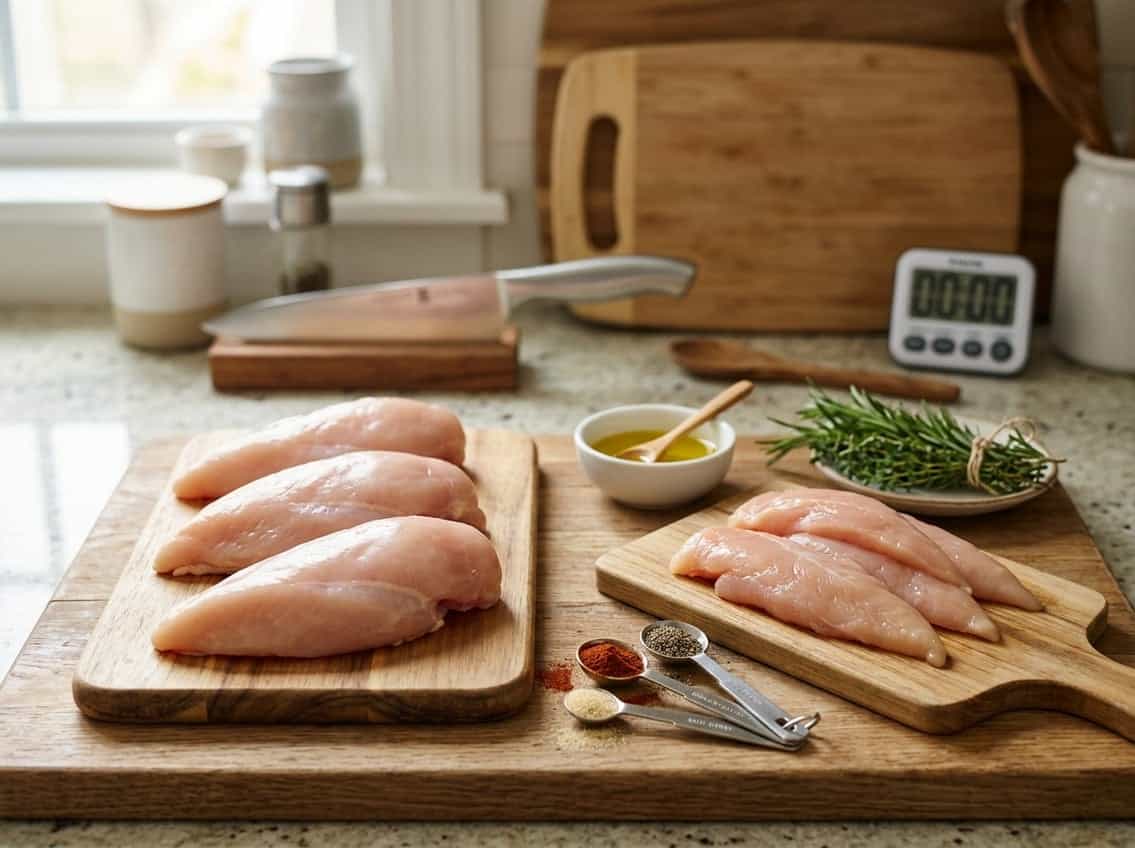
Chicken tenders cook faster, cost more, and need less cutting. Chicken breast is usually cheaper and gives you more meat per package, which is why it is common in everyday meals.
Cooking Time
Chicken tenders are smaller and thinner, so they cook faster than chicken breast. This makes them useful when you want to bake chicken tenders or pan-cook dinner quickly.
Chicken breast takes longer because of its size and thickness. Use a meat thermometer to make sure both cuts reach a safe internal temperature without overcooking.
How to Keep Both Cuts Juicy
Marinating chicken can improve flavor and help protect the meat from drying out. Even a short marinade can help, especially with lean breast meat.
Watch the heat closely when you grill or bake. Overcooking is the fastest way to lose a juicy texture, especially with chicken breast and chicken strips cut from it.
Price, Packaging, and What to Look For at the Store
Chicken breast usually costs less than separately packaged tenders. True chicken tenderloins often cost more because they are smaller and need extra trimming.
Foodiosity’s breakdown of chicken tenderloin vs breast shows that tenders can be double the price in some stores.
Check packaging carefully at the store. Some products labeled as tenders actually use breast meat cut into strips.
These can work fine, but they are not the same cut. If you want real chicken tenderloins, look for pieces that are long, narrow, and naturally loose in texture.


