
Will Chicken Breast Defrost in the Fridge? Timing and Safety
You can use the fridge to defrost chicken breast, and it is the safest way to do it.
If you plan ahead, you can thaw chicken in the fridge with very little effort while keeping it out of unsafe temperatures.
The main tradeoff is time.
Refrigerator thawing is slow, so you need to move the chicken from freezer to fridge early enough for it to finish before dinner.
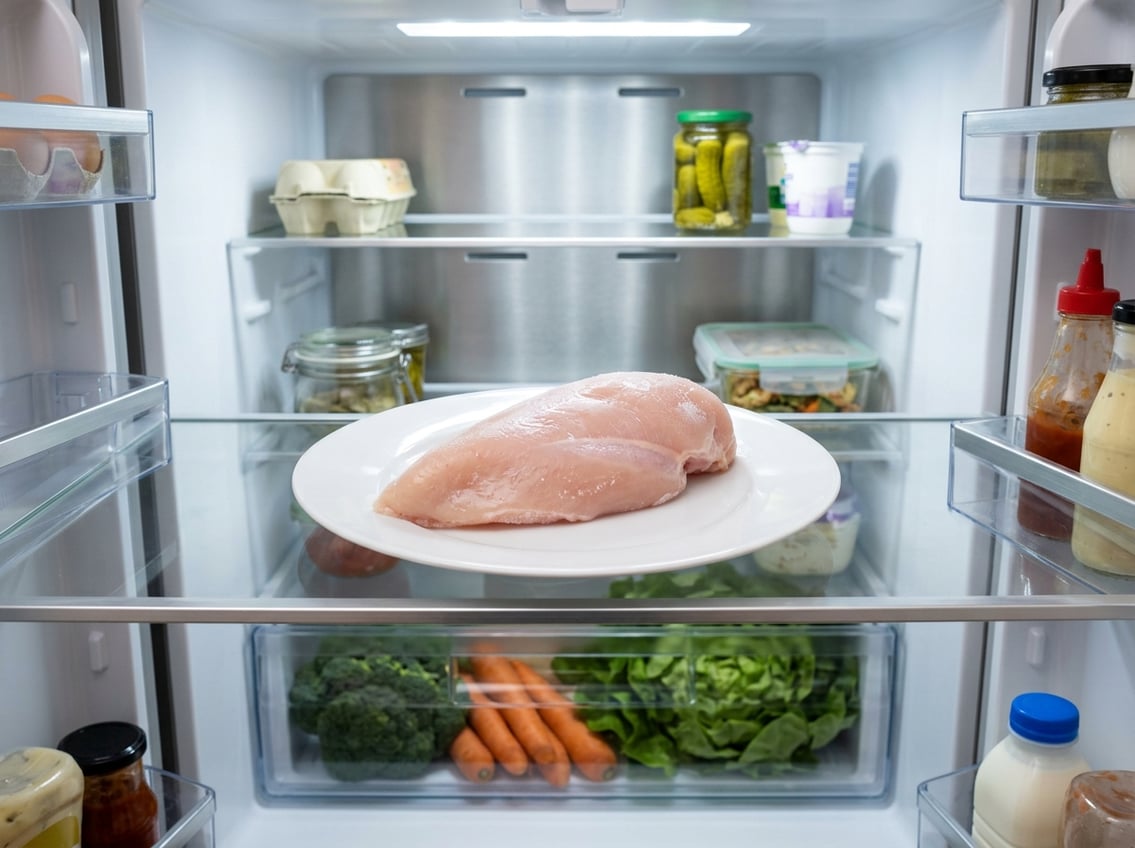
That extra time is worth it for safety and quality.
The fridge is the best way to defrost chicken, especially when you want to cook chicken breasts later the same day or the next day.
How Long Refrigerator Thawing Takes
The time needed to defrost chicken depends on size, thickness, and whether the breasts are boneless or bone-in.
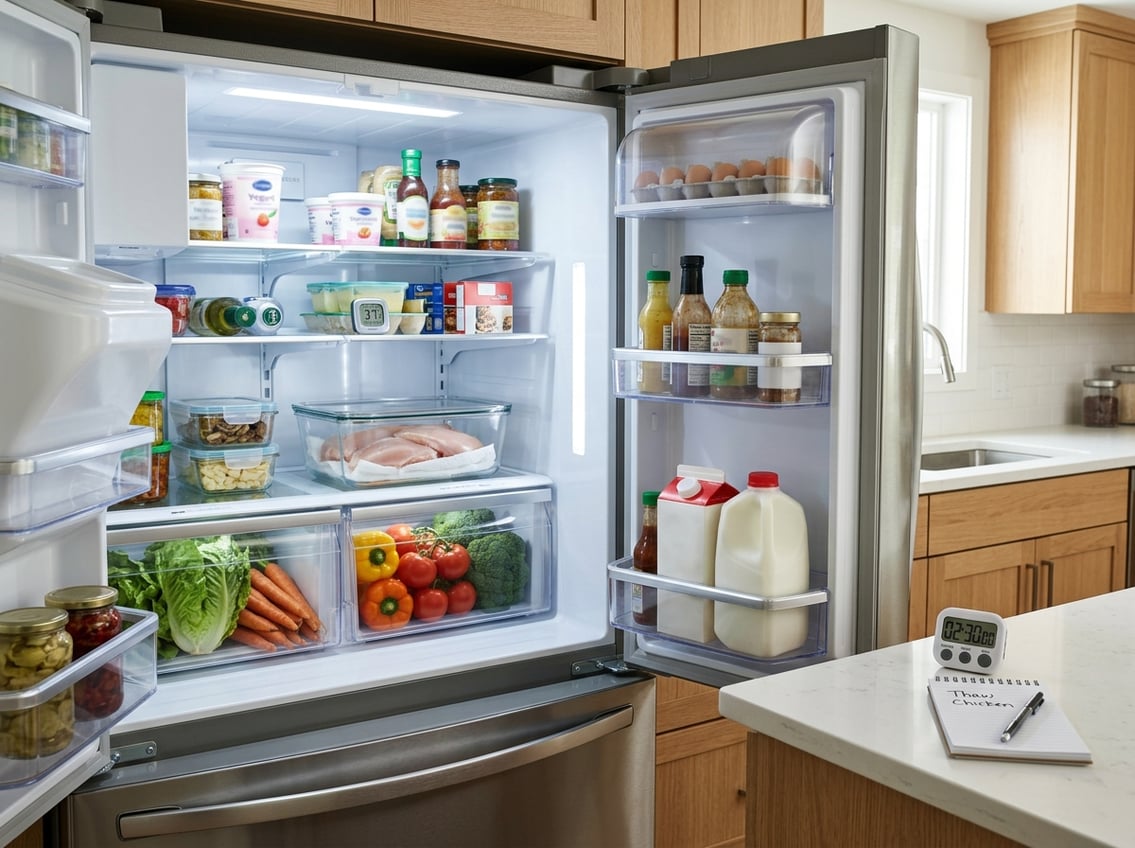
In the fridge, thawing chicken breasts is usually a same-day or overnight task.
Typical Time for Boneless and Bone-In Breasts
Boneless breasts thaw faster than bone-in pieces.
A single boneless chicken breast may take about 12 to 24 hours in the fridge, while thicker or bone-in breasts can take closer to a full day.
If the breasts are frozen together in a tight stack, the thawing time can stretch longer.
A chart from Eat and Geek’s defrosting guide notes that fridge thawing is often a matter of several hours to overnight for smaller cuts.
What Changes the Defrost Time
Thickness matters more than weight alone.
A thin breast can thaw much faster than a thick one of the same weight.
Your refrigerator setting also affects thawing.
A colder fridge slows thawing, and crowded shelves can reduce airflow and slow the process.
Packaging that traps the breasts in one clump can add more time.
When It Is Ready to Cook
Chicken is ready when it feels soft all the way through and no icy center remains.
If the thickest part still feels hard or cold like a block of ice, it needs more time.
For even thawing, place the chicken in a leak-proof container and check it near the end of the expected thaw time.
If you are unsure, give it more time in the fridge instead of rushing it on the counter.
Why the Fridge Is the Safest Option
The fridge keeps chicken at a stable, cold temperature while it thaws.
That lowers the chance of bacteria growth and makes it the best choice when you want safe thawing with little monitoring.
How It Keeps Poultry Out of the Temperature Danger Zone
Chicken should stay out of the temperature danger zone, which is roughly 40°F to 140°F.
That range allows harmful bacteria to grow quickly.
When you thaw chicken in the fridge, the meat stays cold enough that it does not sit at unsafe temperatures while the outside thaws first.
That is why refrigerator thawing is safer than leaving chicken on the counter.
Where to Place Chicken to Prevent Leaks and Cross-Contamination
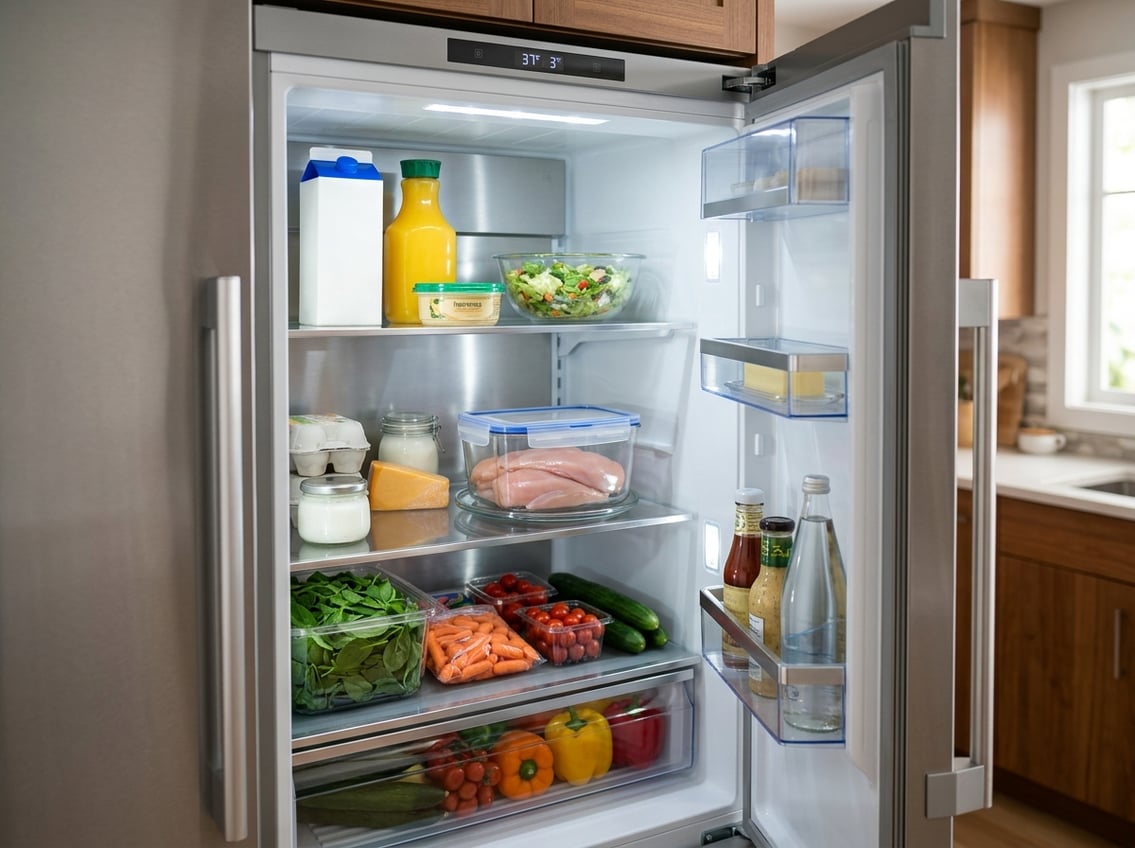
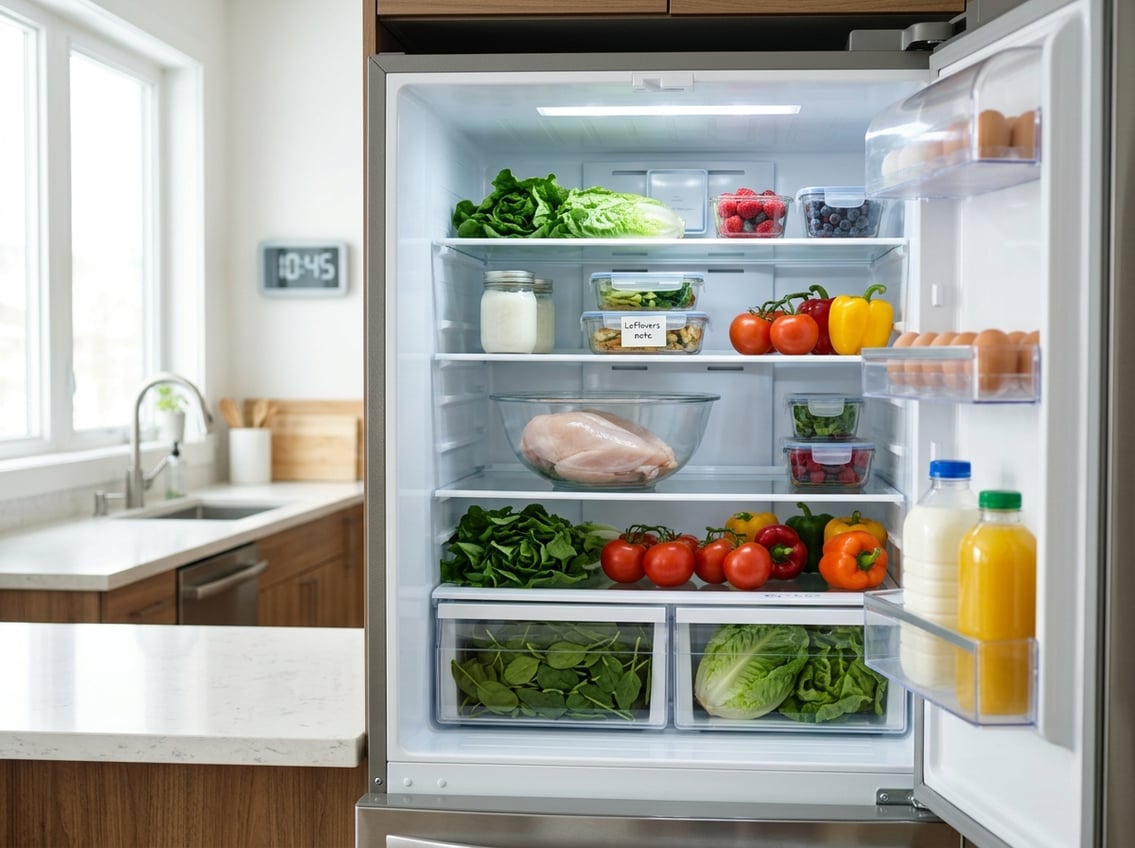
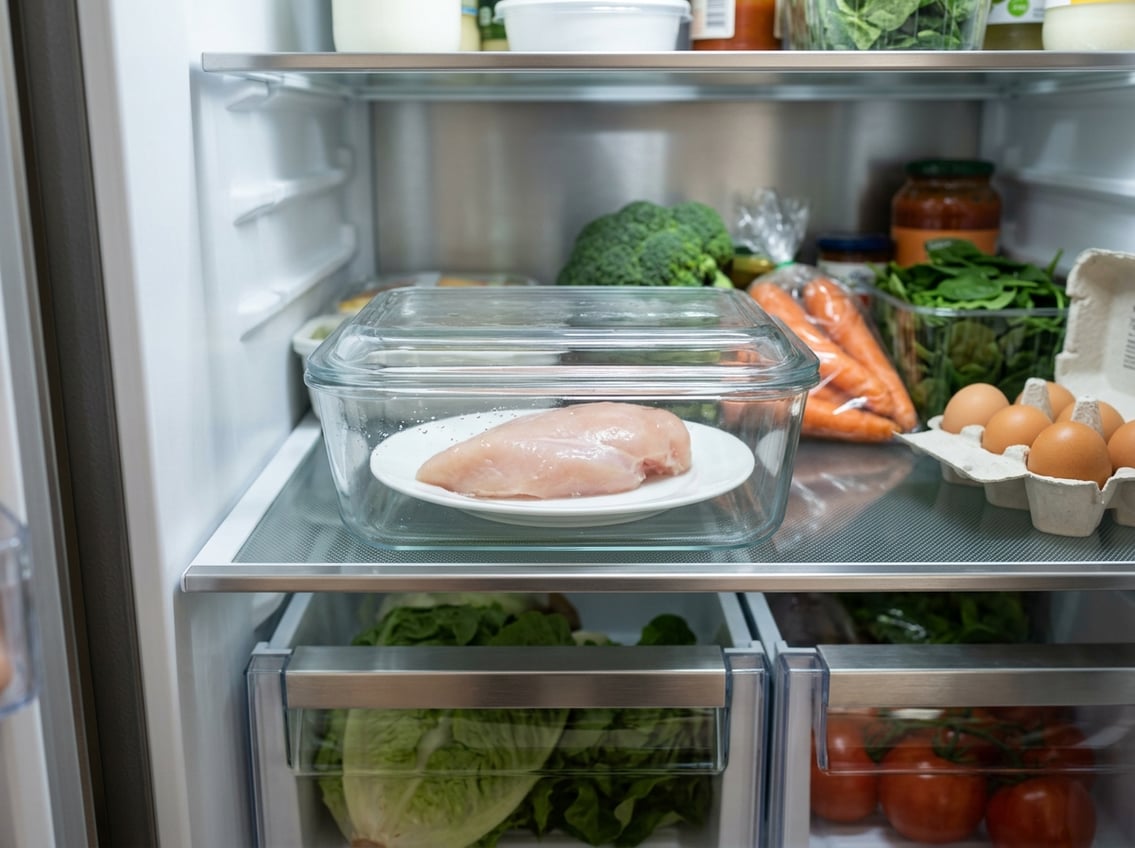
Place the chicken on a plate, tray, or in a shallow container on a middle or bottom shelf.
This helps catch any drips and keeps raw juices away from ready-to-eat foods.
Use sealed packaging or a leak-proof bag so juices do not spread.
This step helps prevent cross-contamination with produce, leftovers, and anything that will not be cooked.
How Long Thawed Chicken Can Stay Refrigerated
Once thawed in the fridge, chicken can usually stay refrigerated for 1 to 2 days before cooking.
If you are not ready to use it within that window, cook it first and then store the cooked chicken.
Do not thaw chicken in the fridge and then leave it there for several extra days.
Safe timing still matters after the chicken finishes thawing.
Faster Ways to Thaw When You Are Short on Time
If you need dinner sooner, you still have safe options.
Cold water and microwave thawing are faster than the fridge, though each one needs more attention and quicker cooking.
Thawing Chicken in Cold Water
Thawing chicken in cold water is the best fast method for many cooks.
Keep the chicken sealed in leak-proof packaging, submerge it in cold water, and change the water every 30 minutes.
According to The Kitchn’s testing of chicken thawing methods, this method can thaw chicken breasts in about 1 to 1 1/2 hours, depending on size.
It is faster than fridge thawing, yet still keeps the chicken cold enough to stay safe.
When Microwave Defrosting Makes Sense
Microwave thawing works when you need to cook right away.
Use the defrost setting and watch closely so parts of the chicken do not start to cook.
This method is best for small portions or when you are short on time and can move straight from thawing to cooking.
Once the chicken is thawed in the microwave, cook it immediately.
Methods to Avoid
Do not thaw chicken on the counter or in warm water.
Those methods can let the outside warm up into the danger zone while the inside is still frozen.
Avoid leaving thawed chicken at room temperature for long periods.
If you are not cooking soon, put it back in the fridge only if it was thawed there in the first place.
If It Is Still Frozen at Dinner Time
If your chicken breast is still frozen close to dinner, you may still have options.
Some recipes let you cook frozen chicken safely, while others need the meat fully thawed first for even results.
When You Can Cook Frozen Chicken
You can cook frozen chicken if the recipe and cooking method allow enough time for it to reach a safe internal temperature.
It works best for baked, braised, or simmered dishes where the chicken has room to cook through evenly.
If you choose this route, expect the cooking time to be longer than usual.
Make sure the center reaches 165°F before serving.
Recipes That Need Fully Thawed Chicken First
Many recipes work better with fully thawed chicken breasts.
Stir-fries, cutlets, stuffed chicken, and dishes that call for quick searing usually need chicken that is thawed all the way through.
Thin, even cooking is harder when the center is still frozen.
If you need clean slicing or fast browning, finish thawing first.
Simple Planning Tips for Future Meals
Move chicken breasts from the freezer to the fridge the day before you plan to cook them.
If they are thick or bone-in, give them even more time.
Freeze chicken in smaller portions so each package thaws faster.
This method helps you avoid last-minute meal stress.


