
What Is the Best Chicken Breast Seasoning for Flavor
The best chicken breast seasoning gives you enough salt for flavor, enough spice for depth, and enough balance to keep lean chicken from tasting flat. Most home cooks use a simple mix of salt, garlic powder, paprika, black pepper, and onion powder.
Start with a balanced homemade blend and adjust the flavor profile to match how you cook the chicken. This approach works for baked, grilled, pan-seared, and meal-prep chicken breasts.
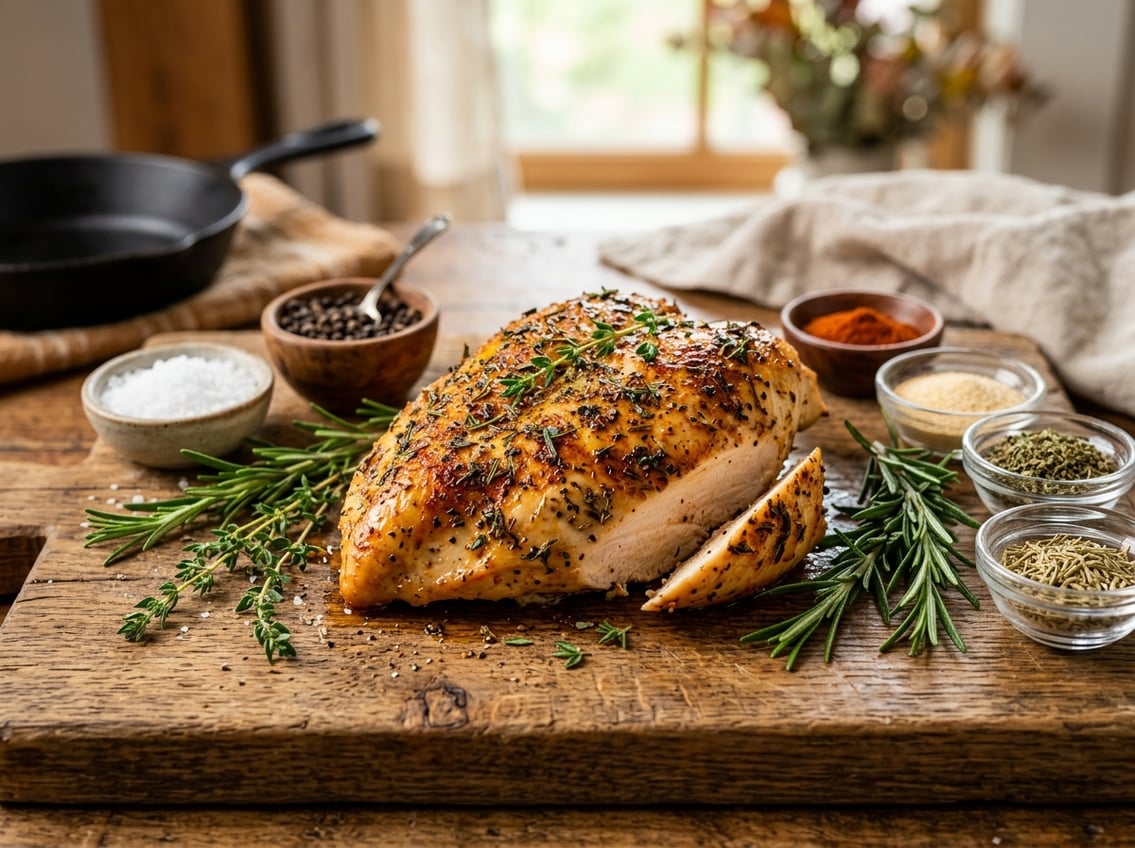
Chicken breast is mild, so it needs seasoning that adds flavor without overpowering the meat. A good blend should taste savory, slightly aromatic, and well salted, with optional herbs or heat depending on your meal.
What Makes a Seasoning Blend Work on Chicken Breast
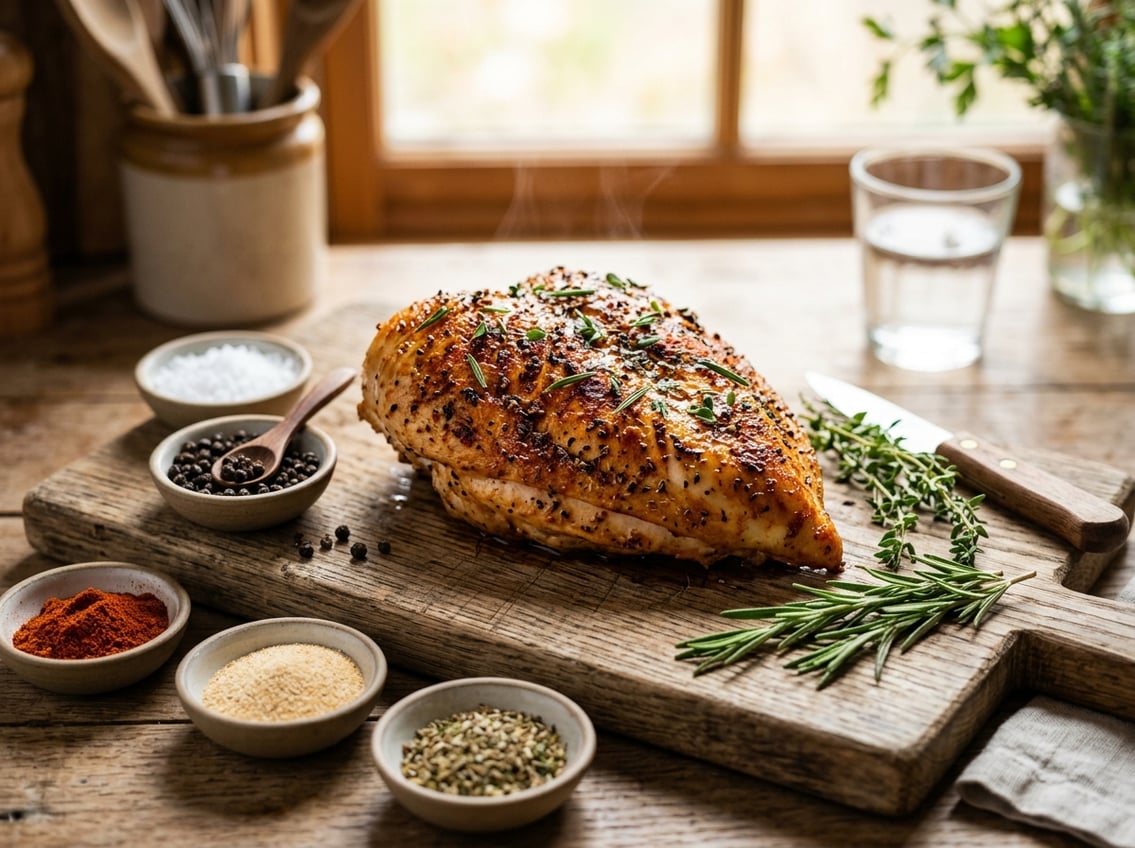
A strong chicken seasoning recipe balances salt, savory spices, and a little heat. That balance matters even more on chicken breast, since lean meat can dry out and taste bland if the blend is too weak or too one-note.
The best homemade chicken seasoning uses ingredients that are easy to find and easy to repeat. Garlic powder, paprika, black pepper, and onion powder form a reliable base, while herbs and spice add-ons change the final flavor.
Why Lean Meat Needs Balanced Salt, Savory Notes, and Mild Heat
Chicken breast has a mild flavor, so salt does more than season the surface. It brings out the meat’s natural taste and helps the finished chicken seem juicier.
Savory spices like garlic powder and onion powder give the blend depth. Black pepper or cayenne pepper adds mild heat.
If you want more herb flavor, dried thyme, dried basil, dried parsley, or dried rosemary can make the seasoning feel more complete. Kosher salt and sea salt both work well, as long as you use them consistently.
For sharper bite, freshly ground black pepper gives more flavor than ground pepper that has been sitting in a cabinet.
The Core Flavor Base for Everyday Use
For an all-purpose chicken seasoning, start with salt, garlic powder, paprika, onion powder, and black pepper. That mix gives you a clean savory flavor that fits baked, grilled, or sautéed chicken.
This homemade spice blend stays flexible. You can make it smokier with smoked paprika or warmer with a pinch of cayenne pepper.
If you want an Italian-style profile, dried thyme, dried basil, dried parsley, and dried rosemary work well with garlic and salt. For a more basic pantry blend, keep it simple and let the cooking method do the rest.
When Smoky, Herby, or Spicy Profiles Make More Sense
Smoked paprika works well when you want a grilled or roasted taste without using a grill. It gives chicken a deeper color and a mild smoky note.
Herby blends fit baked chicken breasts, especially when you want a lighter flavor with less heat. Red pepper flakes or cayenne pepper work better when you want a sharper finish, such as in taco bowls or spiced meal prep chicken.
An Italian seasoning blend is useful when you want a quick option with dried herbs already combined. For a more custom result, build your own homemade spice blends instead of relying on one fixed jar.
Best Seasoning Blends by Flavor Profile
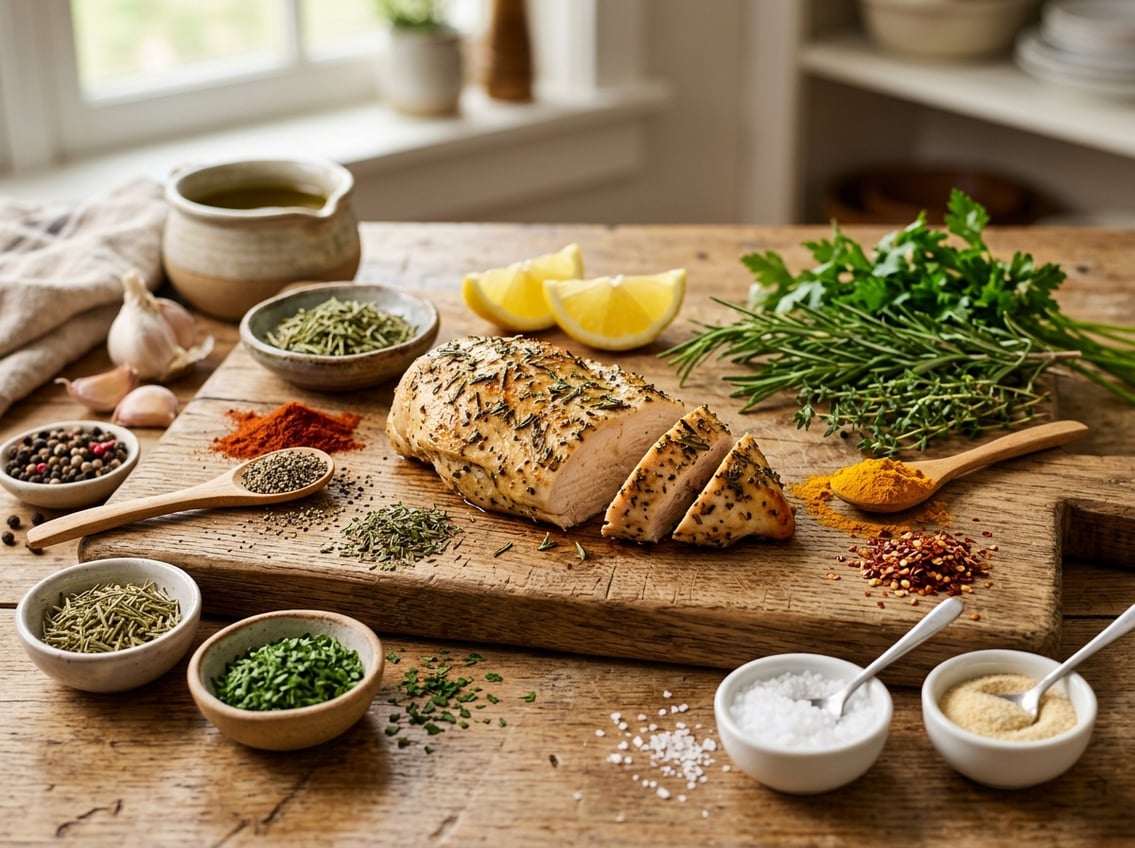
You can match the seasoning to the meal instead of using one blend for everything. A good chicken rub should fit the cooking method, the side dishes, and the final flavor you want.
These blends give you a practical starting point for the best seasoning for chicken. Each one uses common pantry spices and can be adjusted to taste.
Classic Savory Blend for Everyday Chicken Breasts
This is the most useful homemade chicken seasoning for daily cooking:
- 2 teaspoons kosher salt
- 1 teaspoon garlic powder
- 1 teaspoon paprika
- 1 teaspoon onion powder
- 1 teaspoon black pepper
This blend works well as an all-purpose chicken seasoning for baked, grilled, or skillet chicken. If you want a stronger pepper taste, use freshly ground black pepper.
It also works as a simple seasoning for baked chicken when you do not want herbs or heat.
Smoky and Bold Blend for Grilled or Roasted Chicken
For a deeper flavor, use this chicken rub:
- 2 teaspoons kosher salt
- 1 teaspoon smoked paprika
- 1 teaspoon paprika
- 1 teaspoon garlic powder
- 1 teaspoon onion powder
- 1/2 teaspoon black pepper
- 1/4 teaspoon cayenne pepper
This blend works especially well for grilled chicken or oven-roasted chicken. Smoked paprika gives the meat a darker, more savory finish.
If you want more heat, add red pepper flakes. For a BBQ-style taste, use a little chili powder with the paprika and garlic.
Herb-Forward Blend for Baked Chicken
For a lighter seasoning for baked chicken, try this mix:
- 2 teaspoons kosher salt
- 1 teaspoon garlic powder
- 1 teaspoon onion powder
- 1 teaspoon dried thyme
- 1 teaspoon dried parsley
- 1/2 teaspoon dried basil
- 1/2 teaspoon dried rosemary
- 1 teaspoon black pepper
This blend gives you a clean herby flavor that works with rice, potatoes, or vegetables. It also pairs well with olive oil and lemon.
If you already keep Italian seasoning in your pantry, you can use that as a shortcut.
Tex-Mex Style Blend for Tacos, Bowls, and Meal Prep
For taco bowls and weekday meal prep, use this blend:
- 2 teaspoons kosher salt
- 1 teaspoon chili powder
- 1 teaspoon ground cumin
- 1 teaspoon paprika
- 1 teaspoon garlic powder
- 1 teaspoon onion powder
- 1/2 teaspoon cayenne pepper or red pepper flakes
- 1/2 teaspoon black pepper
This blend gives chicken a warm, savory taste that works well in wraps, salads, and rice bowls. Ground cumin brings a deeper earthiness that makes the seasoning feel more complete.
If you want a store-bought shortcut, Montreal chicken seasoning and taco seasoning both work in a pinch. A homemade version still gives you better control over salt and heat.
How to Season Chicken Breast for the Best Results
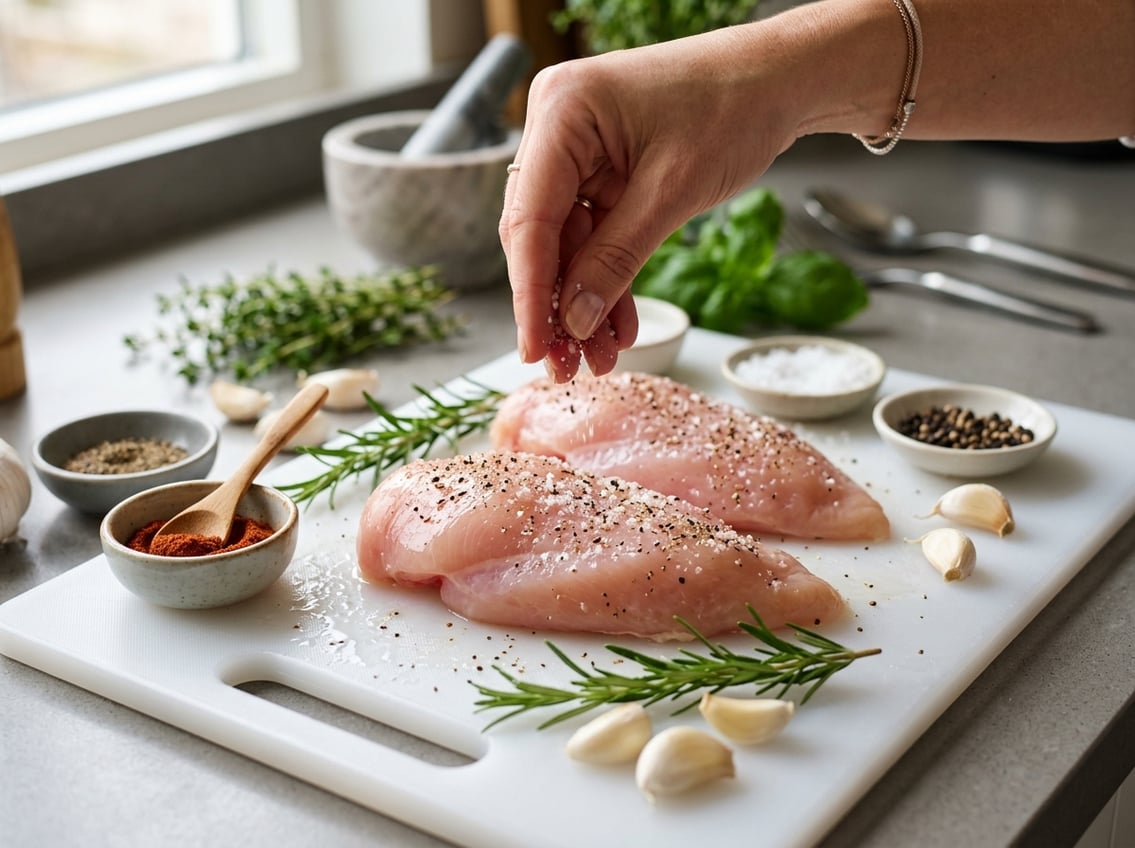
Knowing how to season chicken matters as much as choosing the right blend. Even a good mix can taste weak if you apply it unevenly or use too little.
The goal is simple: even coverage and enough time for the seasoning to cling to the meat. A little oil, proper salt, and a short rest can make a clear difference.
How to Season Chicken Evenly and Avoid Bland Spots
Start by patting the chicken dry so the seasoning sticks. Sprinkle the mixture from above, then use your hands to press it onto both sides.
Make sure you hit the thicker edges and any uneven spots. If you are cooking skin-on chicken, seasoning under the skin adds more flavor where it matters most.
For seasoning chicken breasts, the surface should look lightly coated, not buried under a thick layer. Even coverage gives you better results than piling seasoning in one spot.
How Much Seasoning to Use Per Pound
A good starting point is 1 tablespoon per pound of chicken. If you want stronger flavor, move a little higher, especially if the blend is low in salt.
For homemade chicken seasoning, keep the salt level balanced with the rest of the spices. A seasoning per pound approach helps you scale up for meal prep without guessing.
If your blend already contains a lot of salt, use less on the meat itself. That keeps the chicken from tasting too salty after cooking.
When to Add Oil, Rest Time, and Dry Rub Technique
A light coating of oil helps the seasoning cling and promotes better browning. It also helps a dry rub spread more evenly over the surface.
After seasoning, let the chicken rest for about 15 minutes before cooking. That short wait gives the salt time to start working and helps the flavor settle in.
For baked chicken, a dry rub technique works especially well. For grilled or pan-seared chicken, oil plus seasoning gives you a better crust and stronger flavor.
Skinless vs. Skin-On Chicken Breast
You need to pay more attention to skinless chicken breast because the meat is exposed. Use a balanced all-purpose chicken seasoning and cover the whole surface.
Skin-on chicken can handle more seasoning since the skin adds texture and fat. For stronger flavor, season under the skin as well as on top.
Freshly ground black pepper stands out more on skinless chicken. Paprika and dried herbs work well on both cuts.


