
Is There Any Fiber in Chicken Breast? Nutrition Explained
You may be wondering, is there any fiber in chicken breast? The answer is no, plain chicken breast does not contain dietary fiber.
It is a protein food, not a plant food, so its nutrition facts show protein, fat, and trace carbs, not fiber. That makes chicken breast useful for building a high-protein meal, especially if you want a lean main dish.
You need to add plant foods if you want fiber in the same meal.
The Direct Answer on Fiber Content
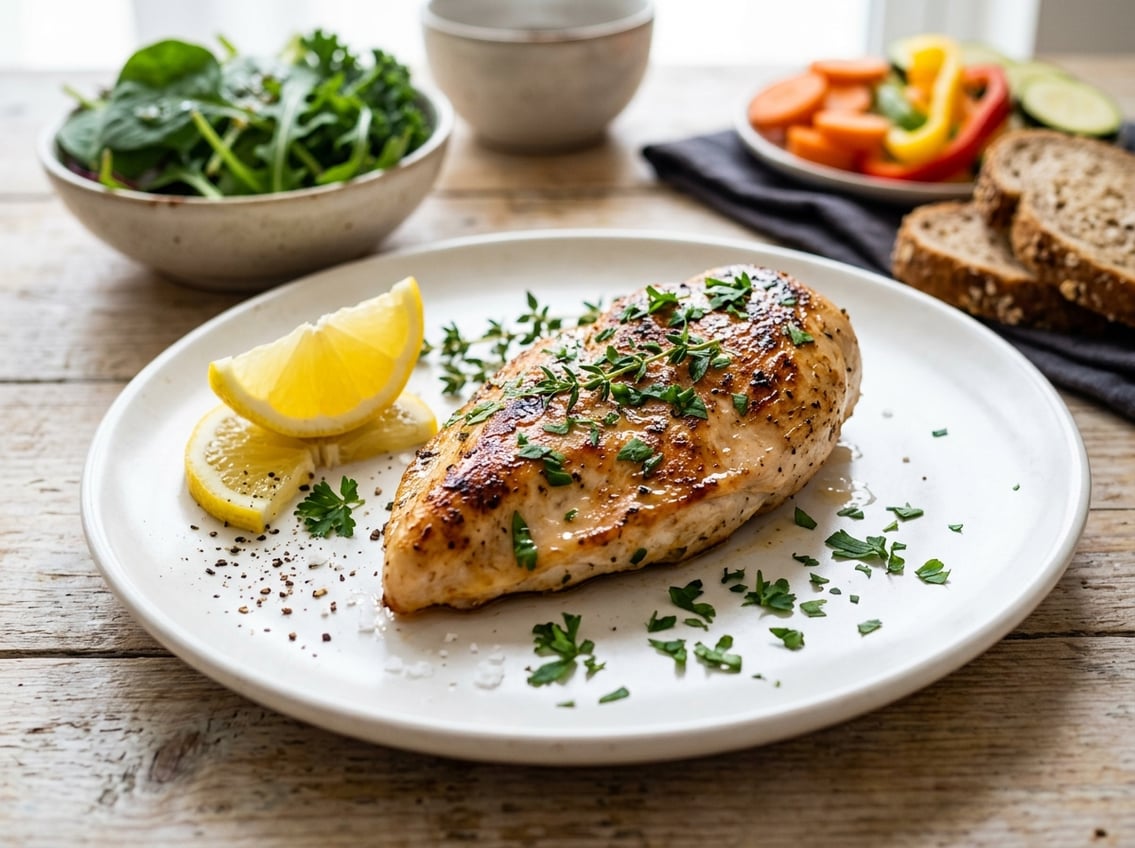
Plain chicken breast has zero grams of fiber. This remains true for raw, cooked, grilled, baked, or roasted chicken breast when you do not add anything fibrous.
Nutrition databases and package labels list chicken breast as a food with protein, fat, and almost no carbohydrates. For example, a nutrition breakdown for cooked chicken breast shows about 33 grams of protein and 0.51 grams of carbs per 100 grams, with no fiber present, according to Chicken breast nutrition facts.
Why Plain Chicken Breast Has 0 Grams of Fiber
Fiber comes from plant cell walls, not from animal muscle tissue. Chicken breast is muscle meat, so it does not naturally contain dietary fiber.
A plain piece of chicken breast contains protein and water, along with small amounts of fat and minerals.
What Nutrition Labels Usually Show
On a standard nutrition facts panel, chicken breast shows 0 grams of fiber and very low or zero total carbohydrates. That is why most meal plans treat it as a pure protein food.
If you buy plain boneless, skinless chicken breast, the label should reflect that. Any fiber in a chicken item comes from added ingredients, not the meat itself.
Chicken Products That Can Contain Fiber
Some chicken products can contain small amounts of fiber if they include breading, fillers, sauces, or plant-based ingredients. Breaded nuggets, chicken patties, and frozen meals may list fiber because of flour, whole grains, vegetables, legumes, or added gums and starches.
That fiber comes from the recipe, not from the chicken muscle. Always check the ingredient list and the nutrition facts panel if fiber matters to you.
Why Fiber Comes From Plants, Not Meat
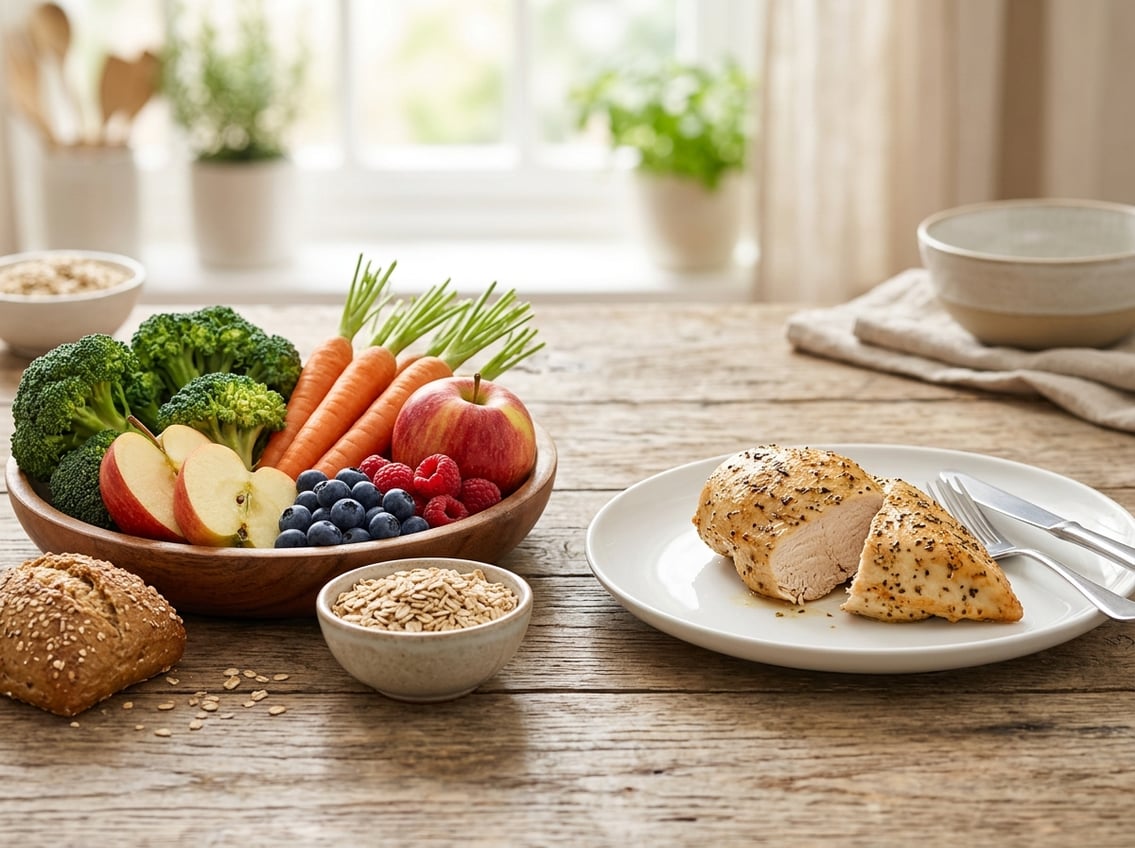
Dietary fiber is a carbohydrate found in plant foods. Meat, fish, eggs, and dairy do not provide fiber because they do not have plant cell walls.
What Dietary Fiber Is
Dietary fiber is the part of plant food that your body does not fully break down. It passes through the digestive tract and helps with bowel regularity, fullness, and other digestive functions.
Foods like beans, oats, vegetables, fruits, nuts, and whole grains are common fiber sources. Chicken breast is not in that group.
Soluble Fiber vs Insoluble Fiber
Soluble fiber dissolves in water and forms a gel-like substance. Foods such as oats, beans, apples, and citrus provide this type of fiber.
Insoluble fiber does not dissolve in water. It adds bulk to stool and is found in foods such as whole wheat, nuts, seeds, and many vegetables.
Why Animal Muscle Tissue Does Not Provide Fiber
Chicken breast consists of animal muscle fibers, which are not the same as dietary fiber. Muscle tissue contains protein, amino acids, water, and small amounts of fat, not the plant structures that create fiber.
That is why meat, including chicken breast, has no meaningful fiber content. Dietary fiber guidance from Utah State University Extension also notes that fiber is found only in plant foods.
What Chicken Breast Provides Nutritionally
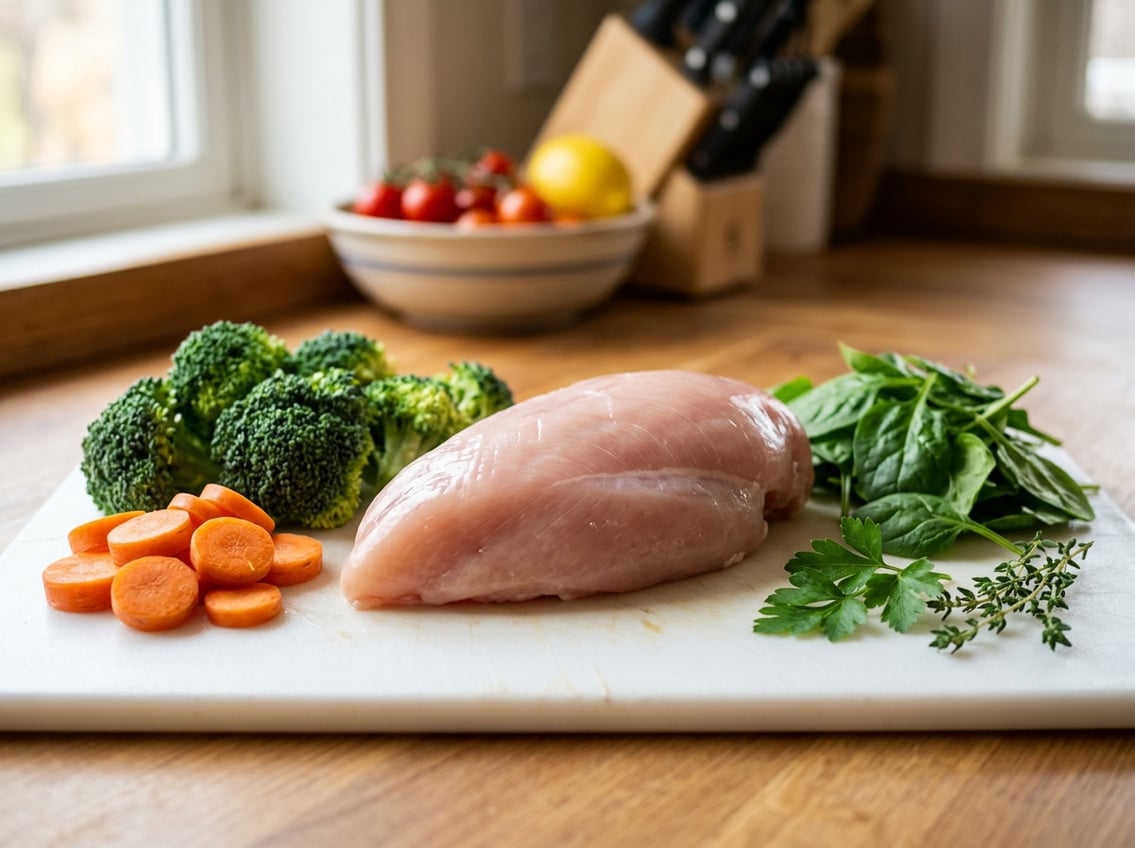
Chicken breast gives you a lot of protein for relatively few calories. It also supplies key amino acids and small amounts of vitamins and minerals.
Protein Content and Essential Amino Acids
Chicken breast is a complete protein, which means it provides all the essential amino acids your body needs. In a common nutrition breakdown, 100 grams of cooked chicken breast provides about 33 grams of protein, according to Chicken breast nutrition facts.
This makes it useful for muscle repair, satiety, and general protein intake. It is also low in carbs, so many people pair it with fiber-rich plant foods.
Notable Amino Acids
Chicken breast contains many amino acids beyond the essential ones, including arginine and glutamic acid. Arginine helps with protein structure and other body functions, while glutamic acid is important in protein metabolism and contributes to flavor.
These amino acids make chicken breast a strong protein choice. They do not replace fiber, since amino acids and fiber serve different roles.
Other Important Nutrients in Chicken Breast
Chicken breast provides B vitamins, phosphorus, selenium, and small amounts of other minerals. It is low in vitamin C and contains almost no carbohydrates.
A standard 100-gram serving from one nutrition database shows about 187 calories, 4.7 grams of fat, and 33 grams of protein, with zero vitamin C and very low carbs, according to Chicken breast nutrition facts.
How to Build a Higher-Fiber Chicken Meal
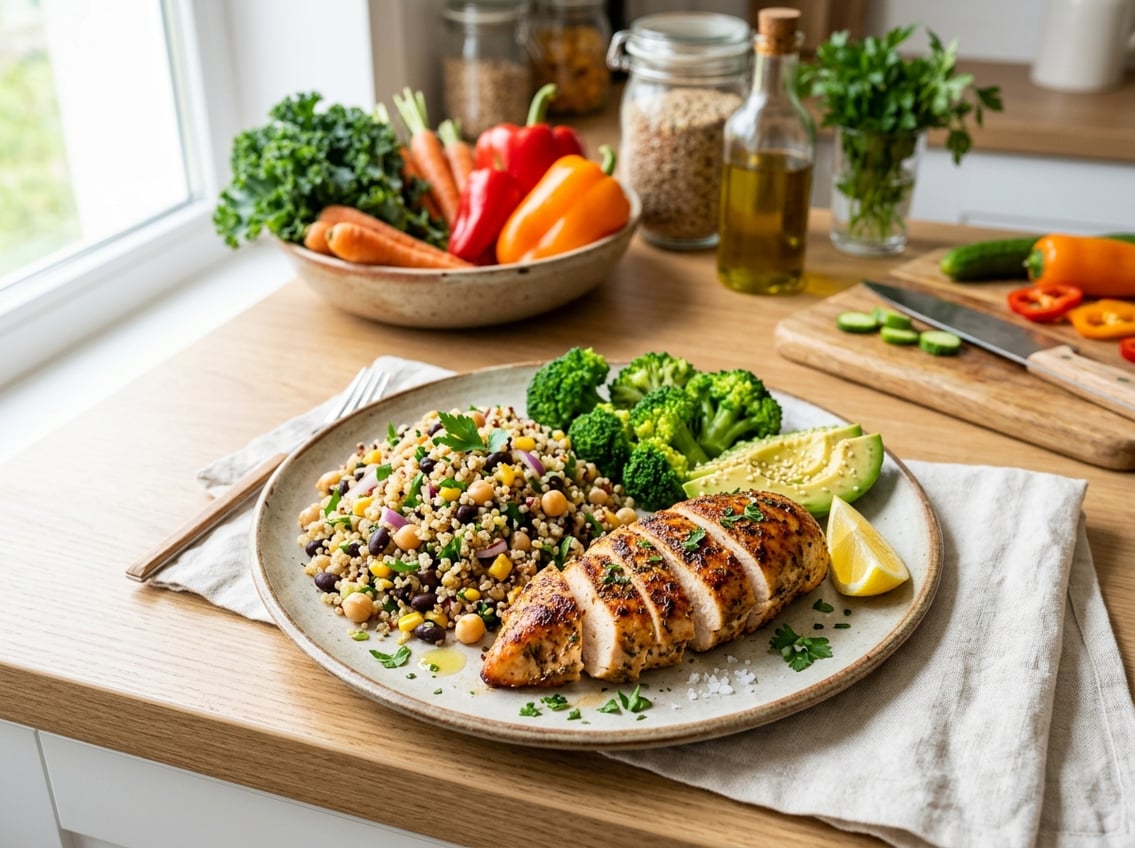
You can keep chicken breast as your protein source and add fiber through the rest of the plate. The easiest way is to combine chicken with vegetables, beans, whole grains, fruit, nuts, or seeds.
Best Side Dishes to Add Fiber
Good high-fiber sides include broccoli, Brussels sprouts, green beans, lentils, black beans, chickpeas, quinoa, brown rice, sweet potatoes, berries, and leafy greens. These foods bring both soluble fiber and insoluble fiber to the meal.
A plate of chicken breast with roasted vegetables and quinoa is a much better fiber source than chicken with white rice alone. If you want more fullness and steadier digestion, choose sides with intact plant structure.
How to Spot Fiber in Breaded or Processed Chicken Items
Check the nutrition facts label for total carbohydrate and fiber grams. Breaded chicken often has more carbs than plain chicken, and some products contain fiber if whole grains or plant ingredients are used.
Read the ingredient list too. If you see wheat flour, oat fiber, corn fiber, beans, vegetables, or seeds, the product may contain some fiber from added ingredients.
Plain chicken alone still does not.
Simple Meal Ideas That Balance Protein and Fiber
Try grilled chicken breast with black beans and salsa. Bake chicken with broccoli and brown rice.
Slice chicken and add it to a salad with chickpeas and avocado. Serve chicken with roasted cauliflower, quinoa, and a side of fruit.
You keep the high protein from chicken breast and add fiber from plants. This makes the meal more filling and balanced.


