
Will Chicken Breast Defrost in 3 Hours? Safe Timing Guide
Will chicken breast defrost in 3 hours? In many cases, yes, if you use a safe thawing method and the pieces are not too large.
Thin or small chicken breasts can thaw within that window, while thicker breasts may still need more time.
The key is not just speed; you must keep the chicken out of the temperature danger zone while it thaws.
If you plan ahead, thawing chicken safely is simple.
If you are short on time, you still have safe options for defrosting chicken quickly.
The Short Answer on Timing
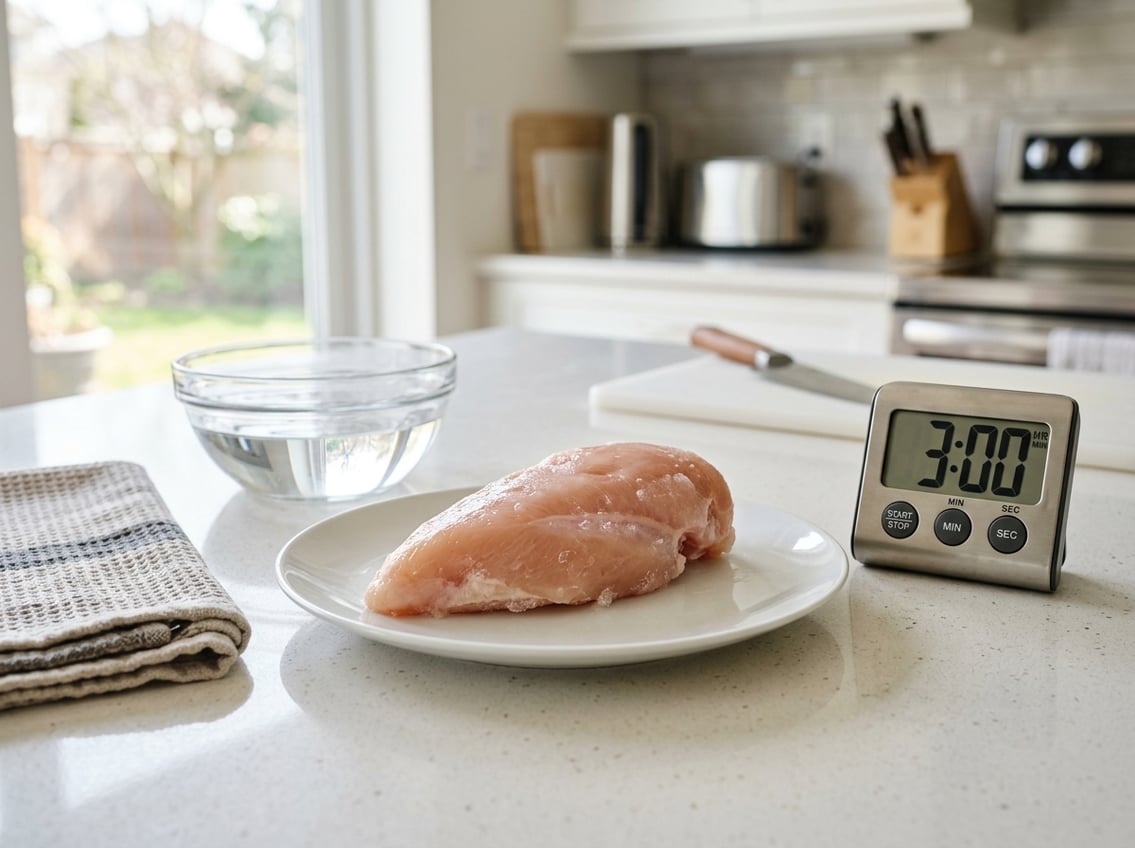
Three hours is enough for many chicken breasts, especially if you use cold water thawing.
Some small breasts may thaw in the refrigerator in that time, though fridge thawing usually takes longer.
The best way to defrost chicken depends on your timing and your food safety needs.
If you want the most reliable results, choose refrigerator thawing for safety.
If you need speed, use cold water for a balance of fast and safe.
When 3 Hours Is Enough for Chicken Breasts
Three hours is usually enough to defrost chicken breasts in cold water.
It can be enough for smaller portions in the fridge.
According to Meat Chef Tools, cold water thawing can take about 1 to 3 hours.
If the breasts are thin, separated, and sealed well, they may thaw even faster.
Microwave defrosting can also work in less than 3 hours, but you must cook the chicken right away.
When 3 Hours Is Not Enough
Three hours is often not enough for large, thick, or tightly packed chicken breasts.
If the pieces are frozen together in a block, the center can stay hard while the outside softens first.
Refrigerator thawing can take 12 to 24 hours for many breasts, and sometimes longer, as noted by Kitchen Prep and The Kitchen Today.
If you started too late, you may need to finish thawing with cold water or cook the chicken frozen.
What Changes Thaw Time Most
Size is the biggest factor.
Thick breasts take longer than thin ones, and a full package takes longer than a single piece.
Packaging also matters.
Chicken in a sealed bag thaws faster in water than chicken left in a foam tray or wrapped too tightly.
Refrigerator temperature, water temperature, and whether the pieces are separated all affect thawing time.
Safe Methods That Actually Work
You can safely defrost chicken using three practical methods.
The safest method is the fridge.
The fastest safe method is cold water.
The most urgent option is the microwave.
The best way to defrost chicken depends on whether you care more about safety, texture, or speed.
Each method works if you follow the right steps.
Refrigerator Thawing for Best Safety and Quality
Refrigerator thawing gives the safest results and usually the best texture.
Place the chicken on a plate or tray on the bottom shelf so juices do not drip onto other food.
This method is slow, but it keeps the chicken cold the whole time.
It works best when you plan a day ahead.
Cold Water Thawing for Faster Results
Cold water thawing helps when you need chicken within a few hours.
Put the chicken in a leak-proof bag and submerge it in cold water, changing the water every 30 minutes.
According to Meat Chef Tools, this method often takes 1 to 3 hours.
This method works well when you need to thaw chicken more quickly without using the microwave.
Microwave Thawing When You Need It Immediately
Microwave thawing is the quickest option.
It works in minutes when you need to move straight to cooking.
Microwaves can start to warm or partially cook the outside of the chicken, so the meat may cook unevenly later.
Use the defrost setting, check often, and cook the chicken right away.
How to Tell Whether the Chicken Is Still Safe
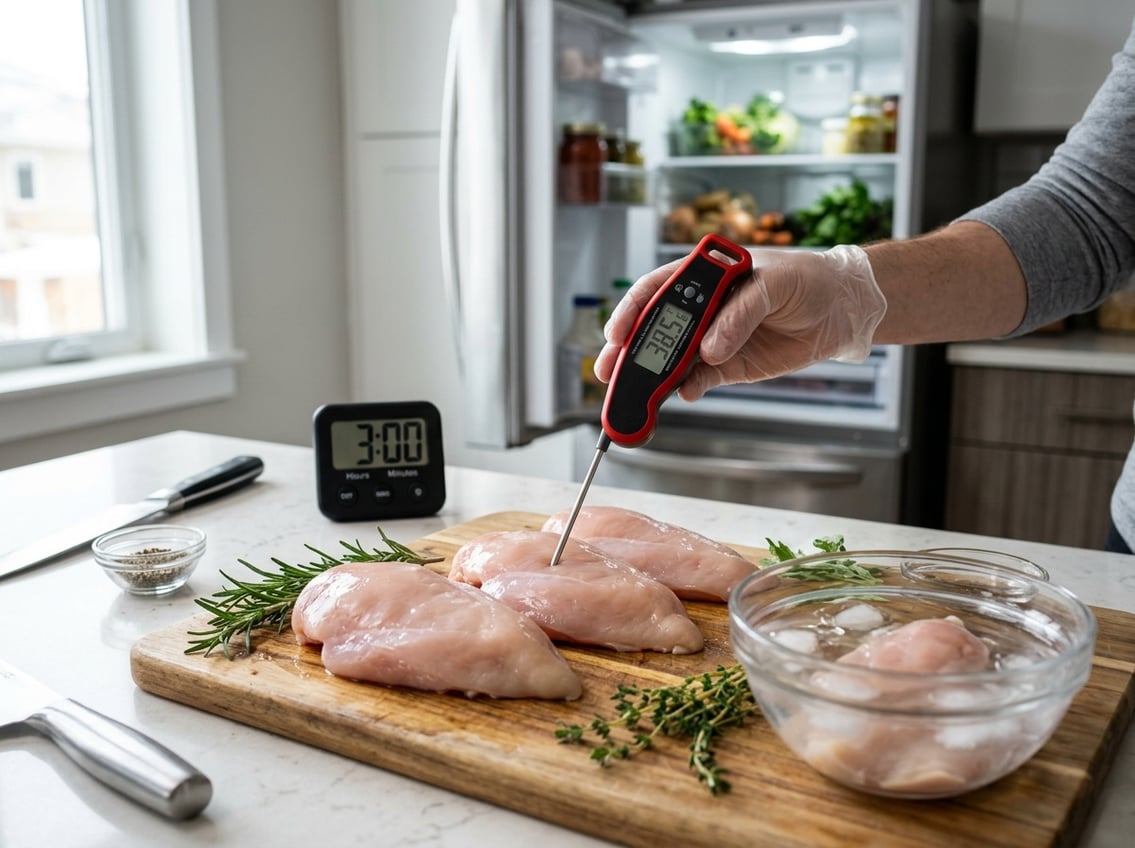
Safety depends on time and temperature, not just whether the chicken feels soft.
If the meat stayed cold, you can keep thawing or cook it.
If the chicken sat out warm, the risk goes up quickly.
You need to know where the temperature danger zone starts and how to react if thawing went wrong.
Why the Temperature Danger Zone Matters
Bacteria grow fast between 40°F and 140°F.
Keep chicken out of that range as much as possible while you defrost it.
If the outside of the chicken warms up while the center is still frozen, bacteria can multiply on the surface.
Safe thawing keeps the meat in the fridge, cold water, or the microwave, not on the counter.
Why Counter Thawing Is Risky
Counter thawing is risky because the outside of the chicken can warm long before the inside is ready.
That creates a safe-looking piece of meat that may still carry food safety risks.
The USDA advises against thawing meat at room temperature.
Meat Chef Tools notes the same concern.
If you want to thaw chicken safely, keep it chilled or cook it from frozen.
When You Must Cook It Right Away
If you used the microwave to thaw chicken, cook it right away.
The same is true if the chicken has started to warm up during thawing.
If the chicken smells sour, feels slimy, or has odd color changes, discard it.
If it still feels cold and has only partially thawed, you can keep thawing it safely or move straight to cooking.
What to Do If It Is Still Frozen at Mealtime
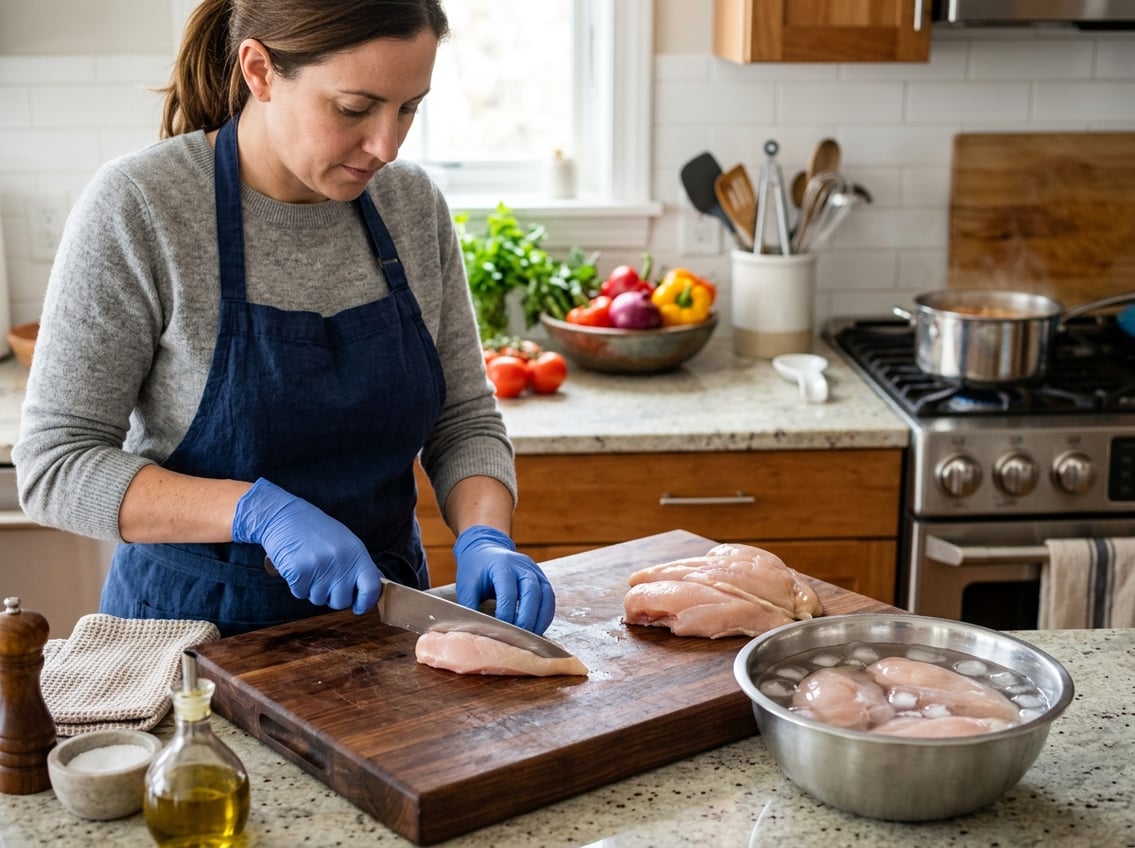
If dinner time is close and the chicken is still icy, you still have options.
You can finish thawing it faster, or you can cook frozen chicken safely with the right method.
The main goal is to avoid uneven thawing and unsafe warm spots.
A little planning keeps the texture better and lowers the risk of undercooked meat.
How to Finish Thawing Without Ruining Texture
If you still have time, put the chicken into sealed bags and use cold water with fresh water changes every 30 minutes.
This is the most practical fast way to defrost chicken without damaging the meat too much.
For small or thin breasts, this may finish the job in under an hour.
Keep the pieces separate if you can, since tightly packed chicken breasts thaw more slowly.
When It Makes Sense to Cook Frozen Chicken
It makes sense to cook frozen chicken when you are out of thawing time.
The oven is usually the best choice.
Food Network notes that frozen chicken breast can be cooked successfully.
You will need extra cooking time, and the final temperature must still reach 165°F in the thickest part.
This is often safer than rushing a partial thaw.
Mistakes to Avoid With Partially Thawed Breasts
Do not start thawing chicken in the microwave and then leave it on the counter.
Avoid placing chicken in warm water, as this can push the meat into the danger zone.
Do not assume the outside is ready just because it looks thawed.
Use a thermometer to check the temperature, and only serve chicken when the center reaches 165°F.
If the breasts are only partly thawed, keep thawing them safely or cook them all the way through.


