
What Causes Chicken Breast to Be Dry? Key Reasons
Heat, timing, and the cut itself usually cause chicken breast to be dry. Chicken breast is lean, so it has less natural protection than darker meat.
It can lose moisture quickly if you cook it too long or at too high a temperature.

If you want juicy chicken breast, control the cooking temperature and stop at the right internal temperature. Avoid giving the meat more heat than it needs.
Small choices in prep and cooking method can turn dry chicken into moist chicken breast with a better bite.
The Most Common Reasons Chicken Breast Turns Dry
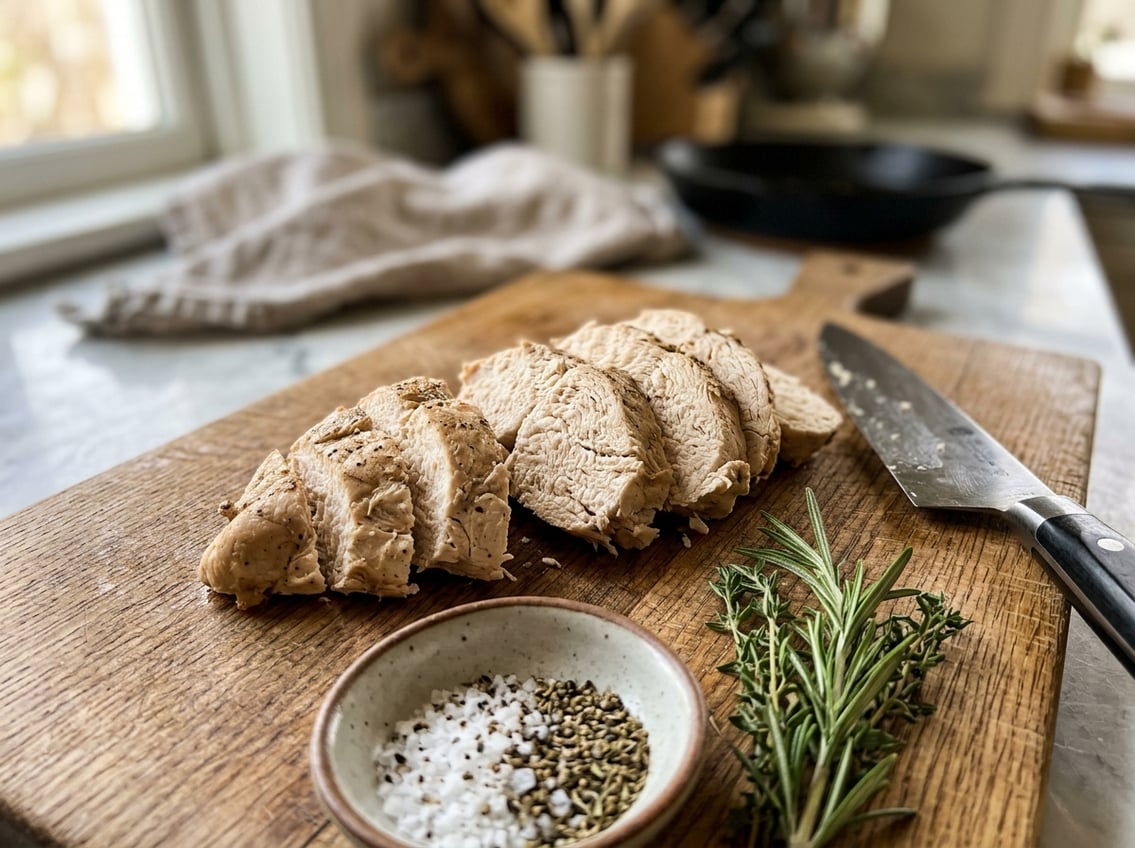
A few repeat mistakes usually cause dry chicken breast. Overcooked chicken, uneven thickness, and heat that is too aggressive for a lean cut are the biggest issues.
Overcooking Pushes Out Moisture Fast
When you cook chicken too long, the muscle fibers tighten and squeeze out liquid. Overcooked chicken often feels chewy instead of tender.
The safe internal temperature for chicken is 165°F, or 74°C. If you let chicken breast go well past that point, the texture suffers.
High Heat Dries the Outside Before the Center Finishes
Very high cooking temperature dries the outside while the center still cooks. You may get browning fast, but the chicken breast can feel dry by the time it is fully cooked.
Moderate heat helps you avoid a chewy chicken breast with a dry edge and an underdone middle.
Uneven Thickness Creates Dry Spots
Chicken breasts often have a thick end and a thin end. The thin part cooks faster, so it can dry out while the thicker part finishes.
If you pound or trim chicken breasts for even thickness, you help the whole piece cook at a similar rate.
Lean White Meat Has Less Natural Protection
Chicken breast is lean white meat and has less fat to buffer the effects of heat. Moisture escapes more easily during cooking.
Juicy chicken is harder to get from chicken breasts than from fattier cuts. Lean meat needs careful timing and better temperature control to stay tender.
How Heat Changes Texture and Juiciness
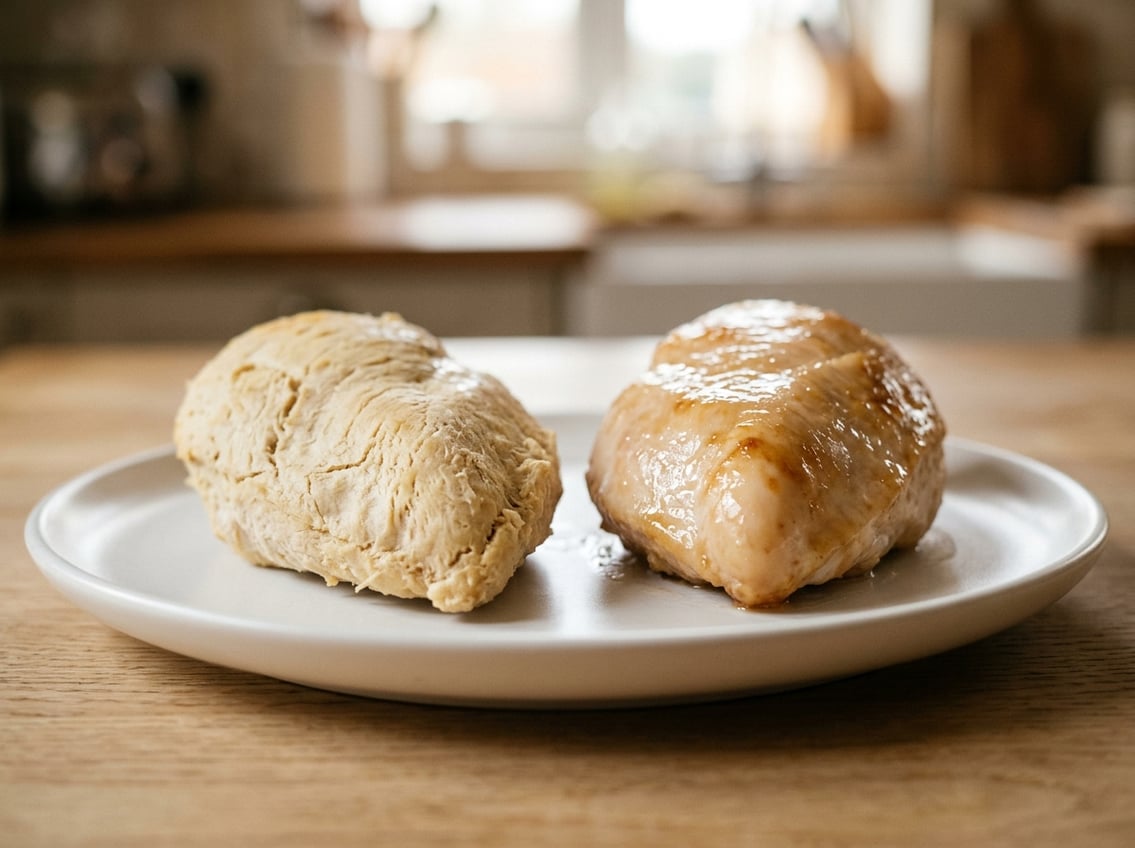
Heat changes the proteins inside the meat, which affects how the chicken feels when you bite into it. As the fibers tighten, they push out moisture.
The goal is to heat the meat enough for safety without stripping away too much juice.
Why Protein Tightening Leads to Moisture Loss
As chicken heats up, the proteins firm up. This is normal and helps a moist chicken breast turn opaque and fully cooked.
If you apply too much heat, those proteins tighten more than needed and force out liquid. A meat thermometer shows when the internal temperature is close to done.
How Carryover Cooking Affects Final Doneness
Chicken keeps cooking after you remove it from the pan or oven. Carryover cooking can raise the internal temperature a few more degrees.
You should pull the meat before it goes past 165°F, or 74°C. Extra cooking can make the texture less tender.
Why Resting Helps Moisture Retention
Resting gives the juices time to settle back through the meat. This step matters as much as cooking temperature.
A short rest can help you keep juicy chicken and improve the feel of the meat.
Prep Choices That Can Help or Hurt
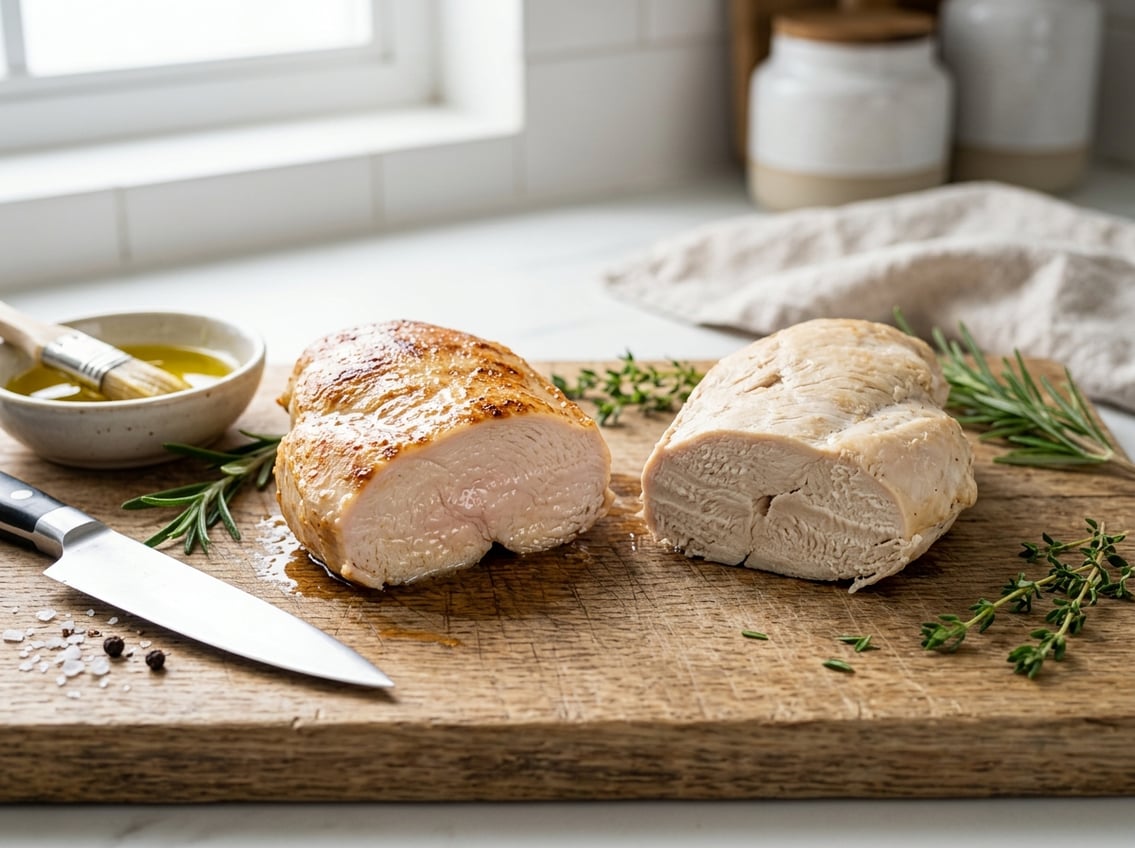
Your prep choices change how much moisture the chicken can hold during cooking. Brine, marinade, and the quality of the chicken breasts all play different roles.
When Brine Improves Moisture Retention
A brine helps chicken breasts hold onto more moisture by adding salt and water before cooking. Even a short brine can improve seasoning and help the final texture.
How Marinade Affects Flavor More Than Deep Moisture
Marinating chicken flavors the surface and can improve tenderness at the outside layer. It does not usually fix dryness deep inside the breast.
A good marinade often includes olive oil and seasonings, and it may use lemon juice or vinegar for flavor.
Why Acidic Marinade Needs Careful Timing
An acidic marinade can make the outer layer of the meat feel softer, but too much time can hurt the texture. Lemon juice and vinegar are strong enough to change the surface quickly.
If you leave chicken breasts in an acidic marinade too long, the texture can turn mealy or soft. Keep marinating time moderate so the meat gains flavor without losing structure.
How Quality Chicken Influences Texture
Quality chicken starts with the product you buy. Some chicken breasts are more watery, while others have a better natural texture.
Better quality chicken often cooks more evenly and gives a cleaner bite.
Cooking Adjustments That Prevent Dry Results
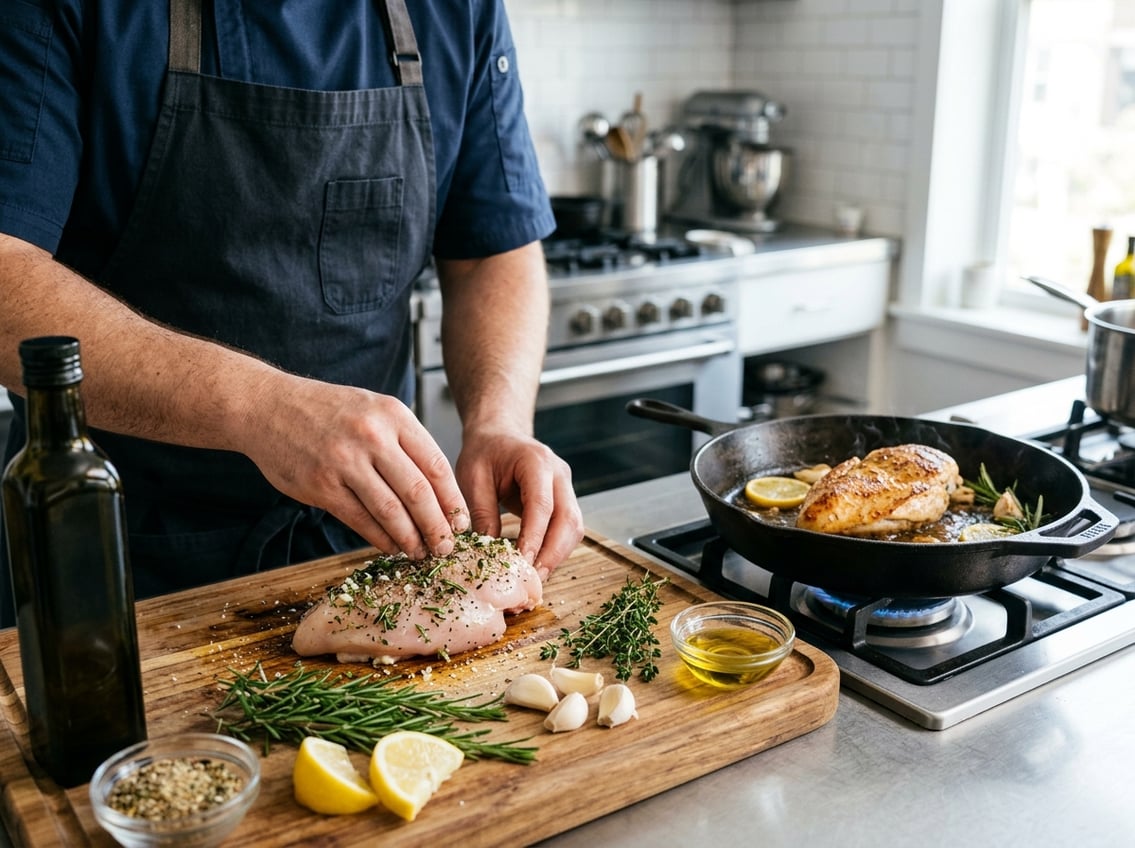
The right cooking method matters as much as prep. Simple changes in timing, temperature, and measurement help you avoid overcooked chicken.
Use a Meat Thermometer Instead of Guessing
A meat thermometer is the most reliable tool for chicken breasts. Color alone can mislead you, especially if the outside browns before the inside is done.
Check the thickest part of the breast and aim for an internal temperature of 165°F, or 74°C.
Pull Chicken at the Right Moment
You do not need to keep chicken on the heat until carryover cooking is done in the pan. Pulling it at the right moment helps you avoid dry chicken breast.
The meat can finish through residual heat while it rests.
Match Cooking Time to Thickness and Method
Cooking time should match the size of the chicken breast and the method you use. Thin pieces cook fast, while thick pieces need more care.
If you roast, pan-cook, or grill, adjust timing based on thickness rather than a fixed clock. This helps keep the texture more even.
Choose Moderate Heat for Better Control
Moderate heat gives you more control over cooking temperature.
It lets the inside catch up before the outside dries out.
High heat works well for browning.
However, you can easily push chicken too far with high heat.
A steady, moderate approach usually gives you a more moist chicken breast.


