
What Do I Cook Chicken Breast at? Best Temps by Method
You can cook chicken breast at several temperatures. The best one depends on the method you use.
For juicy and tender chicken breast, use enough heat to cook it through fast without going past safe doneness.
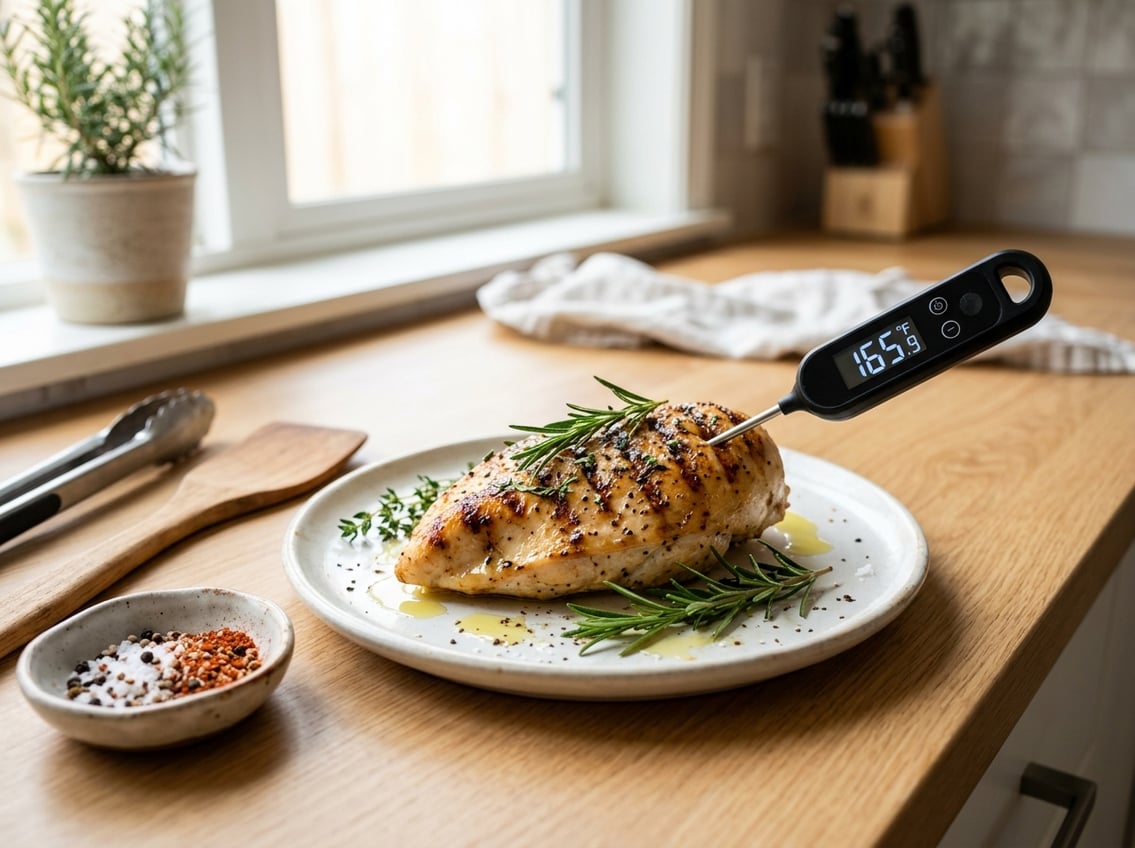
The simplest answer is to cook chicken breast to 165°F internally. Set oven or skillet heat based on the cut and cooking method.
That target helps you avoid dry chicken while still serving a safe meal.
If you want to make chicken breast for salads, sandwiches, meal prep, or dinner, the right temperature matters as much as seasoning.
Small choices, like thickness, pan heat, and resting time, make a big difference in the result.
Best Cooking Temperatures by Method
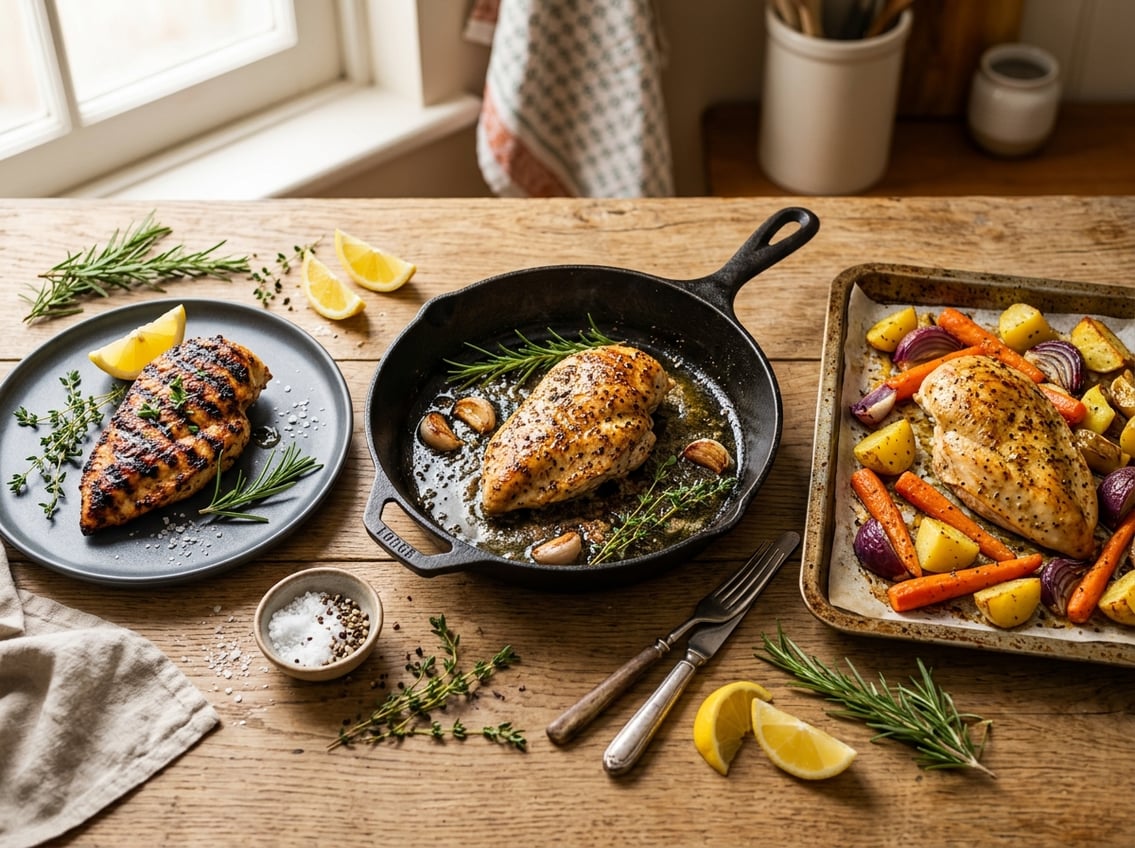
You can bake, sear, or roast chicken breasts and still get good results. The best temperature depends on whether you use boneless, bone-in, or skin-on chicken breast.
Oven Heat for Boneless, Skinless Pieces
For baking chicken breast in the oven, a hot oven works well. Allrecipes recommends roasting at 450°F for 15 to 18 minutes or baking at 375°F for 30 to 35 minutes until the chicken reaches 165°F inside.
That higher heat gives baked chicken a better outside texture and helps it cook fast.
If you make baked chicken breasts for dinner, aim for even thickness so the pieces finish at the same time.
Skillet Heat for Golden, Juicy Results
If you cook chicken breast in a pan, use medium-high heat. Allrecipes suggests cooking for about four minutes on the first side, then three to four minutes after flipping.
This method gives pan-seared chicken breasts a well-browned crust. Use enough oil to coat the pan, and let the chicken sit to develop color.
Temperature Differences for Bone-In and Skin-On Cuts
A boneless chicken breast cooks faster than a bone-in chicken breast. Bone and skin slow the cooking slightly, which helps prevent drying out.
A skin-on chicken breast does well with oven heat that crisps the skin while cooking the meat through. For thicker cuts, lower oven heat for a longer time helps the inside cook evenly.
How Long It Takes and When It Is Done
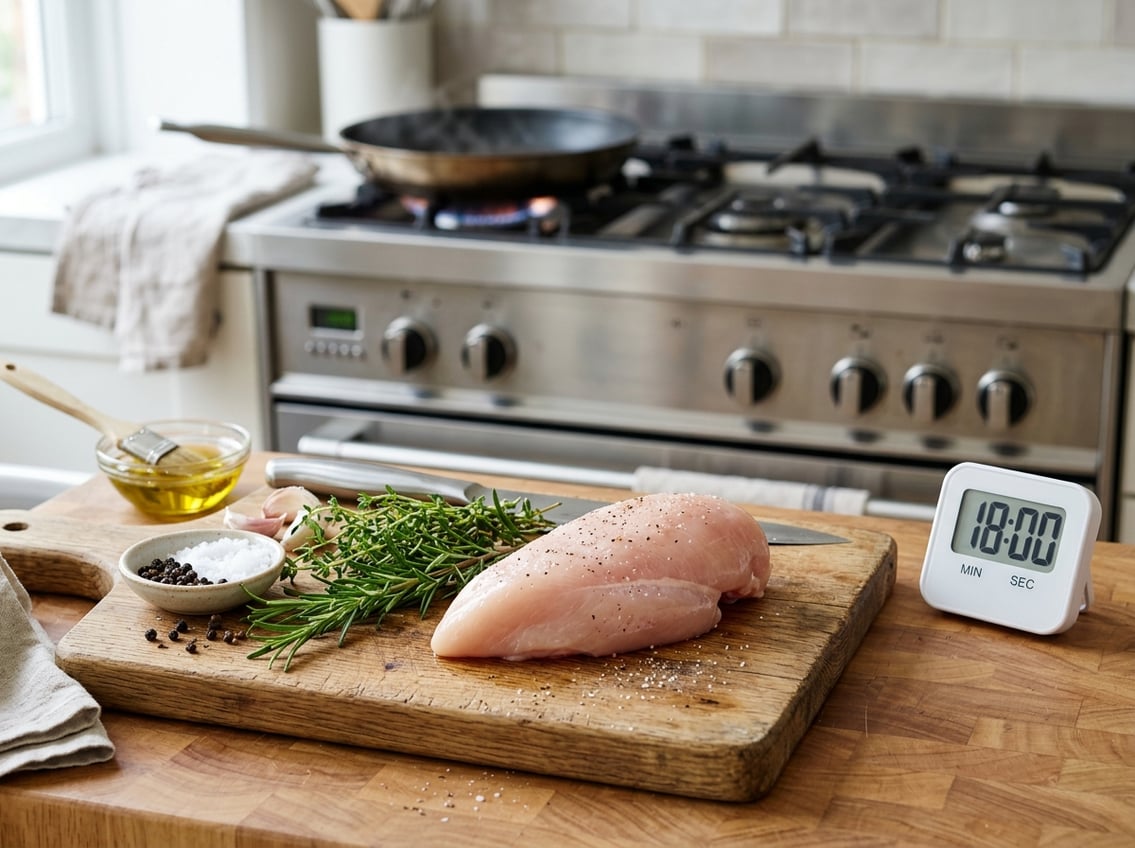
How long to bake chicken breast depends on size, thickness, and oven temperature. The safest way to judge doneness is by internal temperature, not just time.
How Long to Bake by Size and Thickness
Thinner pieces finish much faster than thick ones. A standard boneless breast may need about 15 to 18 minutes at 450°F or 30 to 35 minutes at 375°F, while thicker pieces may take longer.
Size matters more than the number of pieces. A large, thick breast can take several extra minutes, even if the oven temperature stays the same.
Why 165°F Matters for Safety
Chicken is safe to eat when the thickest part reaches 165°F. That is the key number for cooked poultry and helps avoid undercooking.
Some cooks pull chicken slightly before that point and let carryover heat finish the job, but 165°F is the standard target for home cooking.
How to Check Doneness Without Guesswork
A meat thermometer or instant read thermometer removes the guesswork. Insert it into the thickest part of the breast, away from bone, and check the temperature before slicing.
If you cook chicken breast often, this tool helps you stop at the right moment.
How to Keep It Juicy and Well Seasoned
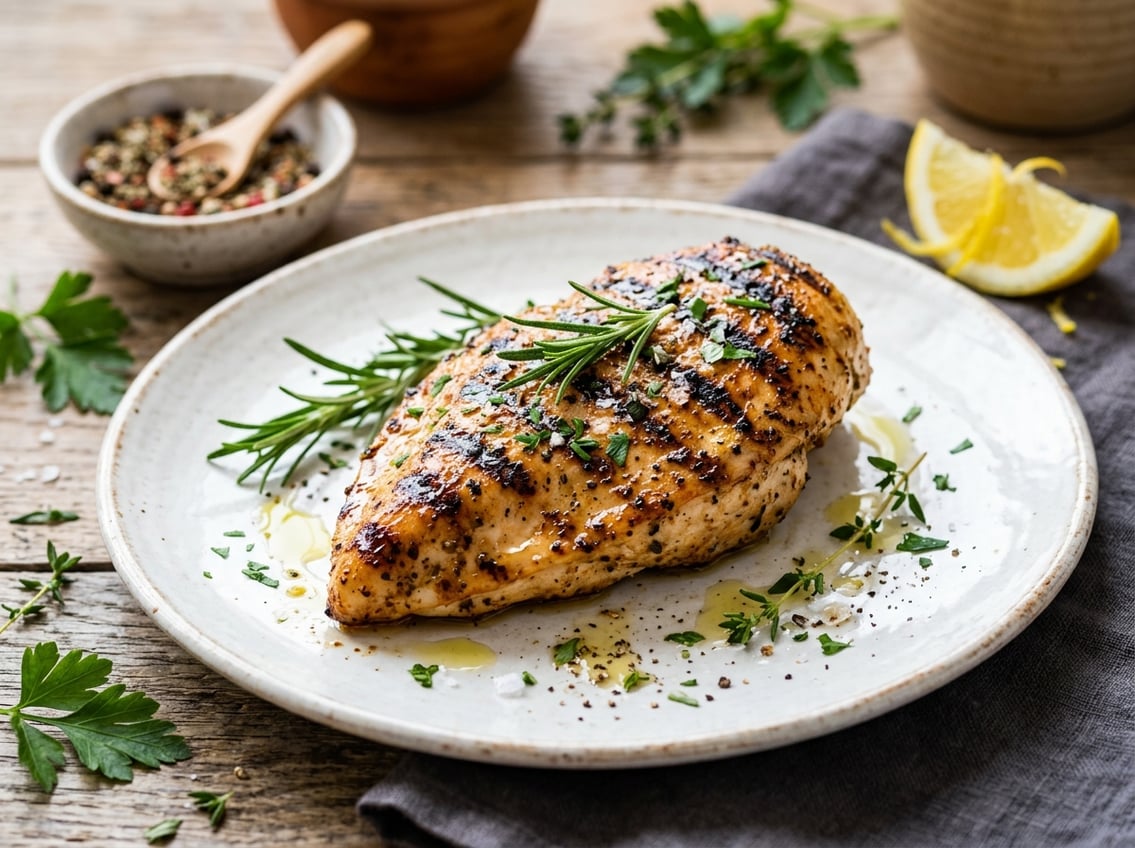
Dry chicken usually comes from too much heat, too little seasoning, or slicing too soon. A few simple steps help you make juicy baked chicken with better flavor and texture.
Prep Steps That Prevent Dryness
If your skinless chicken breast is very thick, pound it to an even size before cooking. Even thickness helps it cook at the same rate and protects the thinner end from drying out.
A light coating of nonstick spray or oil helps, especially for oven baking. Marinating or brining can also help keep chicken juicy and add flavor.
Simple Seasoning That Works Every Time
You do not need a long ingredient list for good flavor. Salt, pepper, and garlic powder are enough for many chicken breast recipes.
Season both sides before cooking. Add other spices if you want more flavor and keep the coating even for balanced taste after baking or pan-searing.
Resting, Slicing, and Using Leftovers
Let the chicken rest for a few minutes after cooking. This pause helps the juices stay in the meat instead of running onto the cutting board.
Store leftover cooked chicken in the fridge. Use it for salads, wraps, soups, or shredded chicken.
Properly cooled and stored chicken breast can make several easy meals from one batch.


