
Can Chicken Breast Be Slightly Pink? Safety Explained
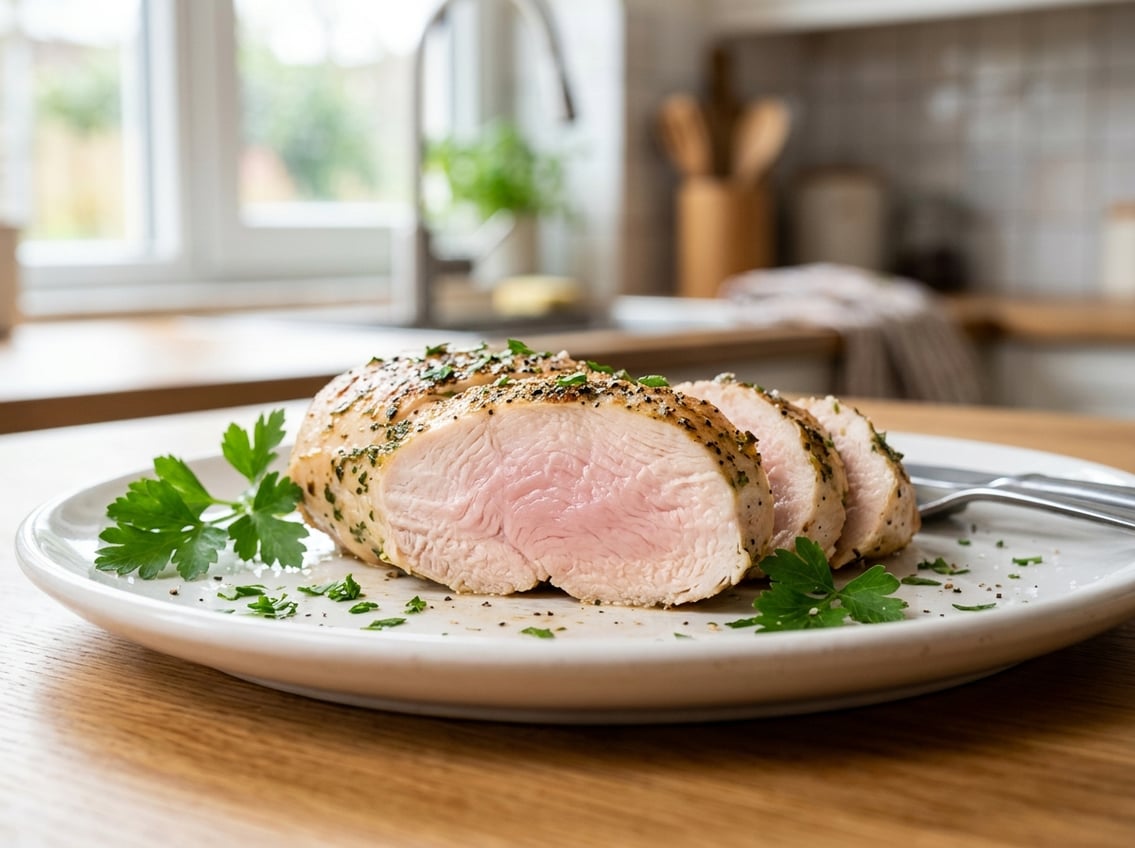
If you are asking can chicken breast be slightly pink, the short answer is yes, it can be safe if it has reached the right internal temperature.
Color alone does not tell you whether the chicken is done.
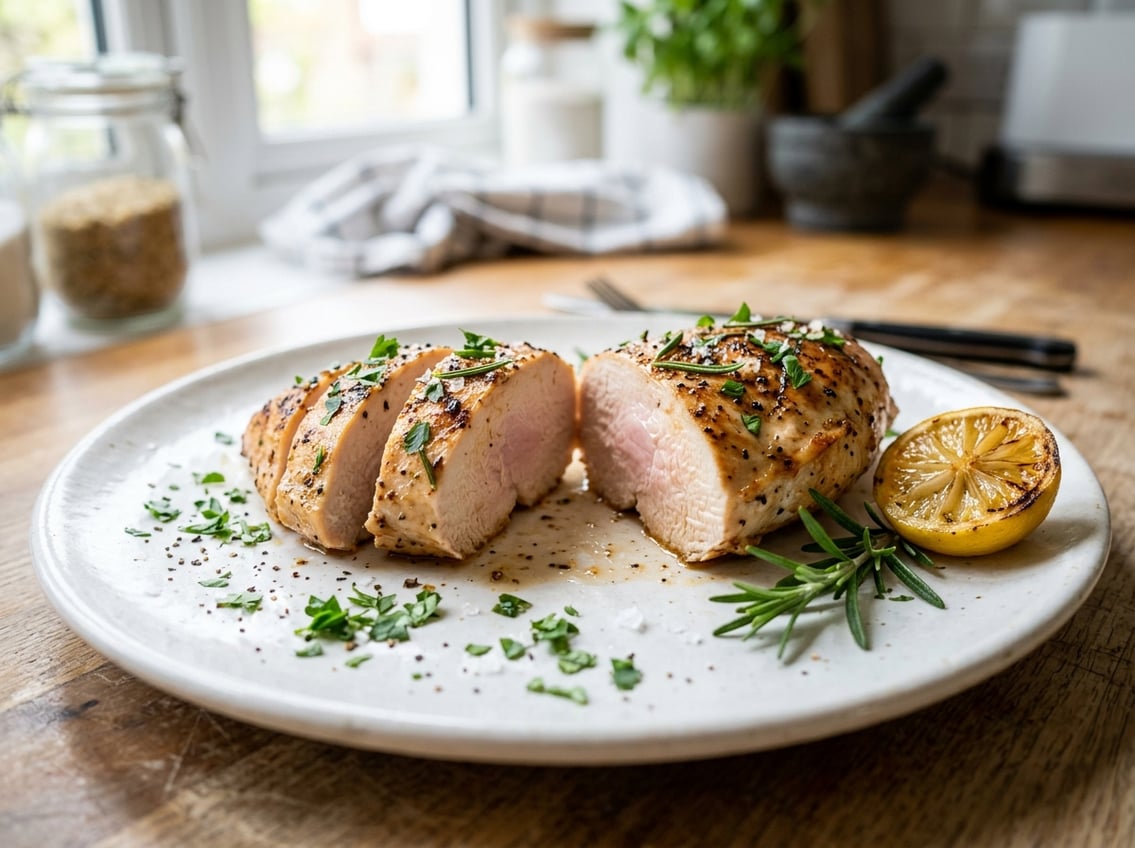
The safest way to judge chicken breast is by temperature, not by color.
Fully cooked meat can still look a little rosy.
Pink chicken can mean either safe, properly cooked meat or undercooked chicken that still carries a food safety risk.
You do not need to guess.
If you know what to look for and how to check doneness correctly, you can cook chicken breast that is both juicy and safe.
When Pink Is Safe and When It Is Not
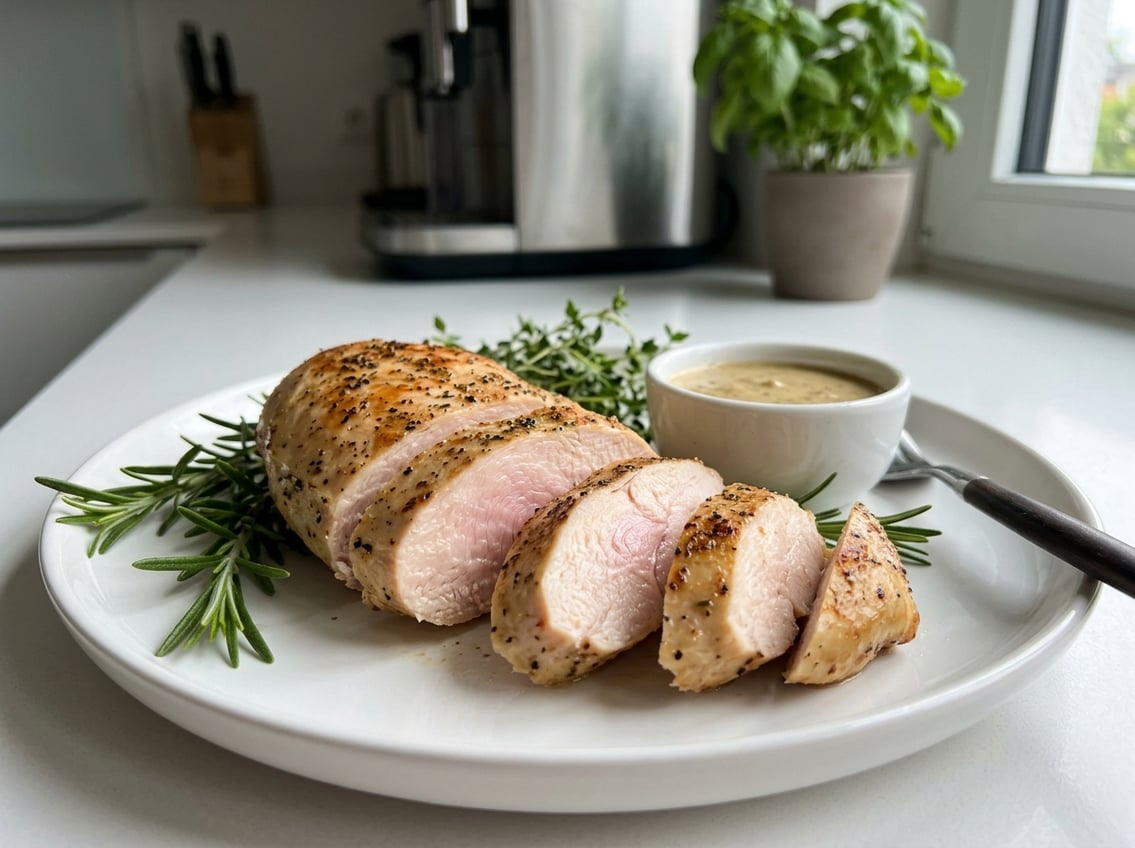
Pink chicken and pink chicken breast are not always signs of danger.
They are not proof of safety either.
The key is whether the meat has reached a safe internal temperature and whether the texture and juices match fully cooked poultry.
Why Internal Temperature Matters More Than Color
Heat changes the color of chicken, but not in a perfectly reliable way.
Chicken breast can still look pink even after it reaches a safe temperature.
Chicken that looks white can still be undercooked in the center.
The USDA recommends cooking chicken to 165°F.
That standard is more dependable than appearance.
According to MeatChefTools, slightly pink chicken can still be safe when it has reached that temperature.
Signs That Suggest True Undercooking
Undercooked chicken usually feels soft, rubbery, or squishy in the center.
The juices may look red or cloudy, and the thickest part may still feel cool.
If the meat tears easily and looks glossy or wet in the middle, keep cooking it.
When you see these signs along with pink meat, treat it as undercooked chicken until proven otherwise.
Why Undercooked Poultry Is a Health Risk
Raw or undercooked poultry can carry bacteria such as Campylobacter, which can cause foodborne illness.
Symptoms can include stomach cramps, diarrhea, and fever.
That risk is why safe cooking matters even when the chicken seems close to done.
A little pink on its own is not the issue, but eating chicken that is truly undercooked can make you sick.
How to Check Doneness Accurately
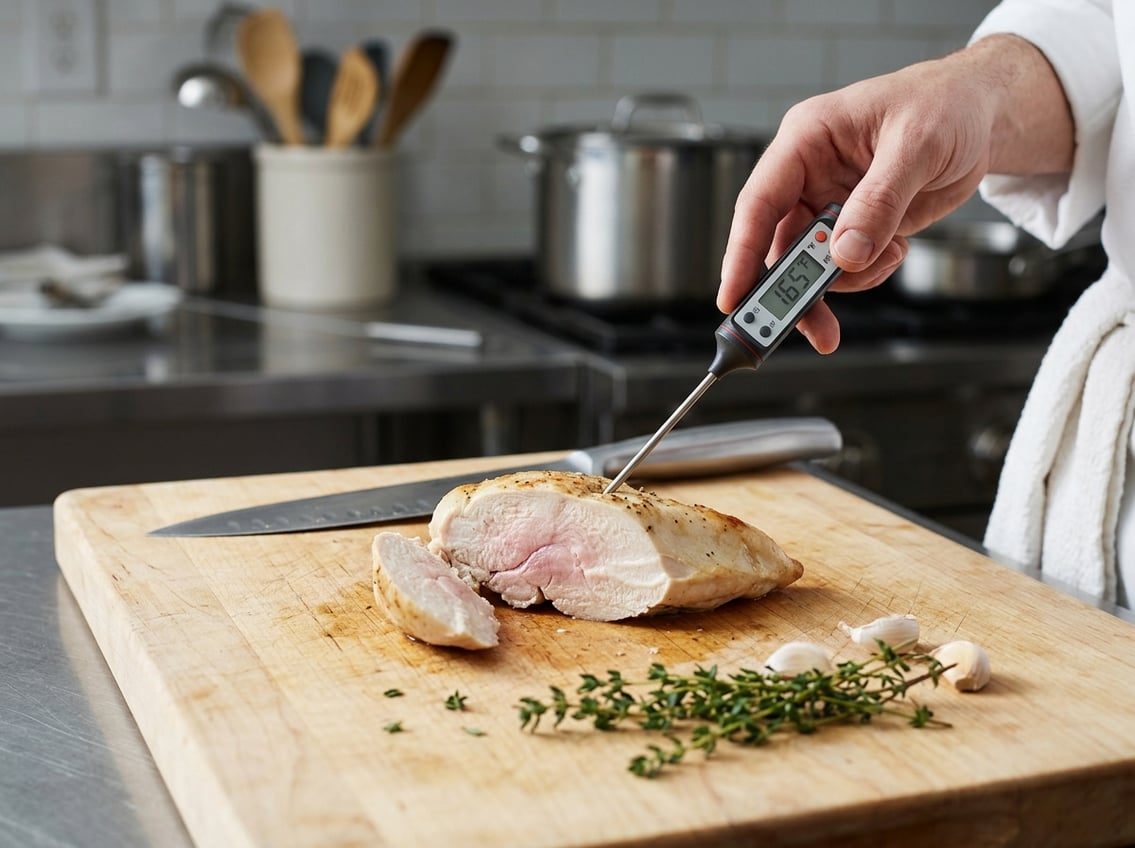
Use a meat thermometer to check doneness.
When you cook chicken breast, a thermometer gives you a clear reading instead of a guess based on color or timing.
Where to Insert the Thermometer in the Thickest Part
Insert the thermometer into the thickest part of the breast.
That spot takes the longest to cook.
Avoid touching bone, fat, or the pan, since those can give false readings.
If the chicken breast is uneven in shape, check the deepest area from the side if needed.
That helps you measure the part most likely to be underdone.
Why You Should Check More Than One Spot
A chicken breast can cook unevenly, especially if one end is thicker than the other.
Check more than one spot if the piece is large or irregular.
Using a meat thermometer in more than one place gives you better confidence that the whole breast is safe.
If one spot reads 165°F but another reads lower, keep cooking.
Resting Time and Final Temperature Confidence
After cooking, let the chicken rest for a few minutes.
The internal temperature can rise slightly during resting, which adds a little more safety margin.
Do not rely on resting alone to finish undercooked chicken.
Use the thermometer to confirm that the thickest part has reached a safe temperature before you serve it.
Why Fully Cooked Meat Can Still Look Rosy
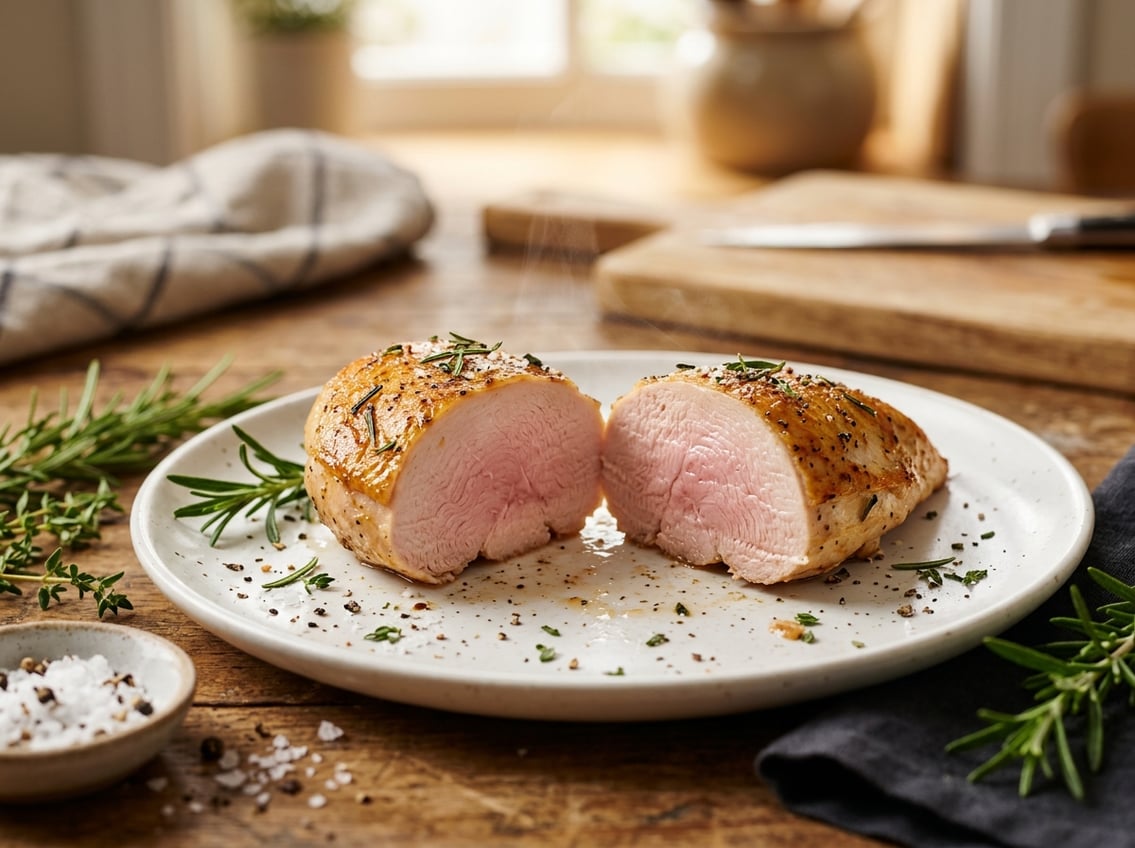
A pink chicken breast is not always undercooked.
Several natural factors can leave cooked meat with a rosy tint even when it is safe.
Myoglobin, Bone Marrow, and Natural Pigments
Myoglobin is a protein in muscle tissue that can leave meat looking pink or red.
It is one reason a pink chicken breast may still be fully cooked.
Near the bone, color can also change from contact with bone marrow or other natural pigments.
That can make some parts look less white than you expect, especially in younger birds.
How Smoking, Grilling, and Brining Affect Color
Cooking methods can change the final color of chicken breast.
Smoking and grilling can create a pink ring or a rosy center even after the meat has reached a safe temperature.
Brining can also affect how the meat looks and holds moisture.
As noted by MeatChefTools, these methods can leave a slight pink hue without making the chicken unsafe.
Why Breast Meat Usually Looks Different From Dark Meat
Breast meat is lighter than thighs and legs, so any pink color stands out more.
Dark meat naturally contains more myoglobin, which is why it often stays darker even when fully cooked.
That difference can make chicken breast look more confusing than other cuts.
A little rosy color in breast meat does not mean the same thing in every case.
Common Mistakes That Lead to Confusion
Many cooking mistakes happen when people guess instead of checking.
If you rely only on sight, you can end up with undercooked chicken or dry, overcooked meat.
Relying on Juices, Timing, or Appearance Alone
Clear juices are a helpful sign, but they are not enough by themselves.
Cooking time varies by thickness, oven accuracy, and method, so a timer alone can mislead you.
A white-looking outside does not guarantee safety inside.
The only dependable way to know is to use a meat thermometer and check the internal temperature.
Cutting Into Chicken Too Early
If you slice into chicken breast too soon, juices can run out and the meat may dry out.
You also lose the chance to get an accurate temperature reading in the thickest part.
Let the chicken rest briefly, then check it with a thermometer before serving.
That gives you better results and less guesswork.
Avoiding Overcooking While Keeping It Safe
You do not need to cook chicken until it is dry just to make it safe.
Use a meat thermometer to stop cooking at the right point before the texture gets tough.
If you want juicy chicken breast, pull it as soon as it reaches a safe temperature.
That way, you protect both flavor and food safety.


