
What Makes Chicken Breast Tough? Common Causes and Fixes
Chicken breast often turns tough because of heat, timing, or the quality of the meat.
If you have ever wondered what makes chicken breast tough, the answer is usually that the meat lost too much moisture, cooked unevenly, or started with a quality issue that made it harder to stay tender.
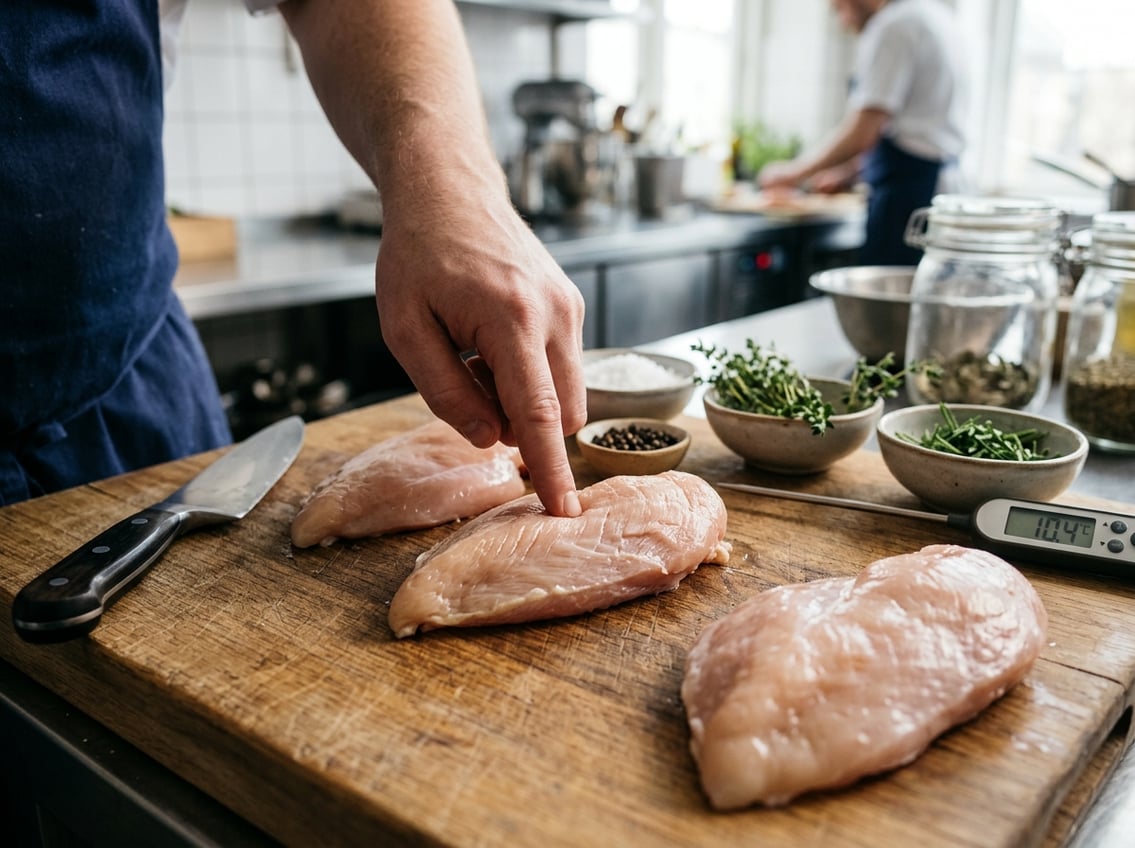
You can avoid tough chicken breast by controlling temperature, using simple prep steps like dry brining or marinating, and choosing better-quality chicken when possible.
That gives you a much better chance of getting juicy chicken breast instead of dry or rubbery meat.
A few small changes can make a big difference in texture, especially because chicken breast is lean and cooks quickly.
The Main Reasons Texture Goes Wrong
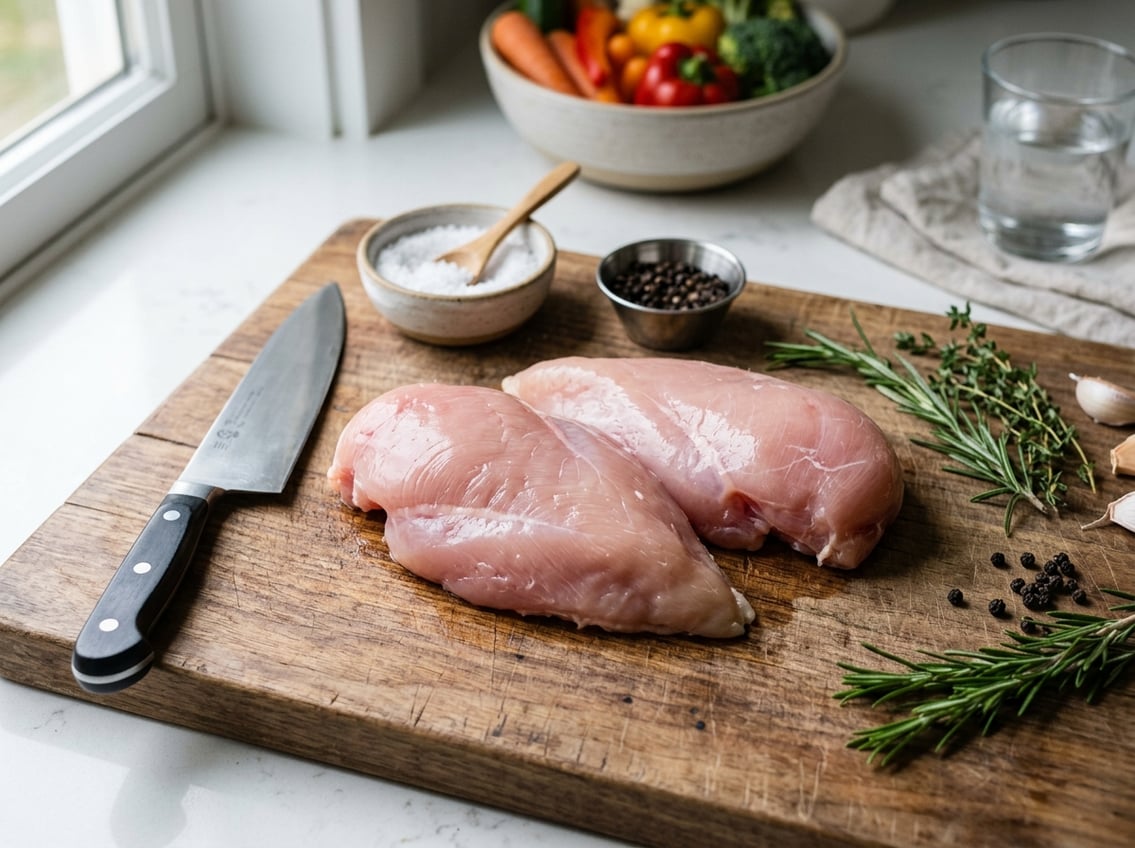
Most texture problems happen because of how the meat is heated.
Chicken breast has little fat, so it can go from juicy to dry fast if the cook time or temperature is off.
Overcooking and Moisture Loss
Overcooked chicken becomes tough because the muscle fibers tighten and push out moisture.
A meat thermometer helps you stop at the right point. Chicken is safe at 165°F, which helps you avoid cooking it past the point where it stays tender.
Undercooking and a Rubbery Bite
Undercooked chicken can feel rubbery instead of soft.
The texture may seem springy or slick because the proteins have not fully set.
You still need to cook chicken breast to a safe internal temperature.
A properly cooked piece should be firm, not raw in the center.
High Heat and Uneven Cooking
High heat can dry out the outside before the center is done.
If one side is much thicker, the thinner end may overcook while you wait for the thick part to finish.
Why Lean Meat Dries Out Fast
Chicken breast is lean, so it lacks the fat that helps other cuts stay moist.
Gentle heat, even thickness, and close temperature control all help keep chicken breast tender.
Preparation Steps That Improve Tenderness
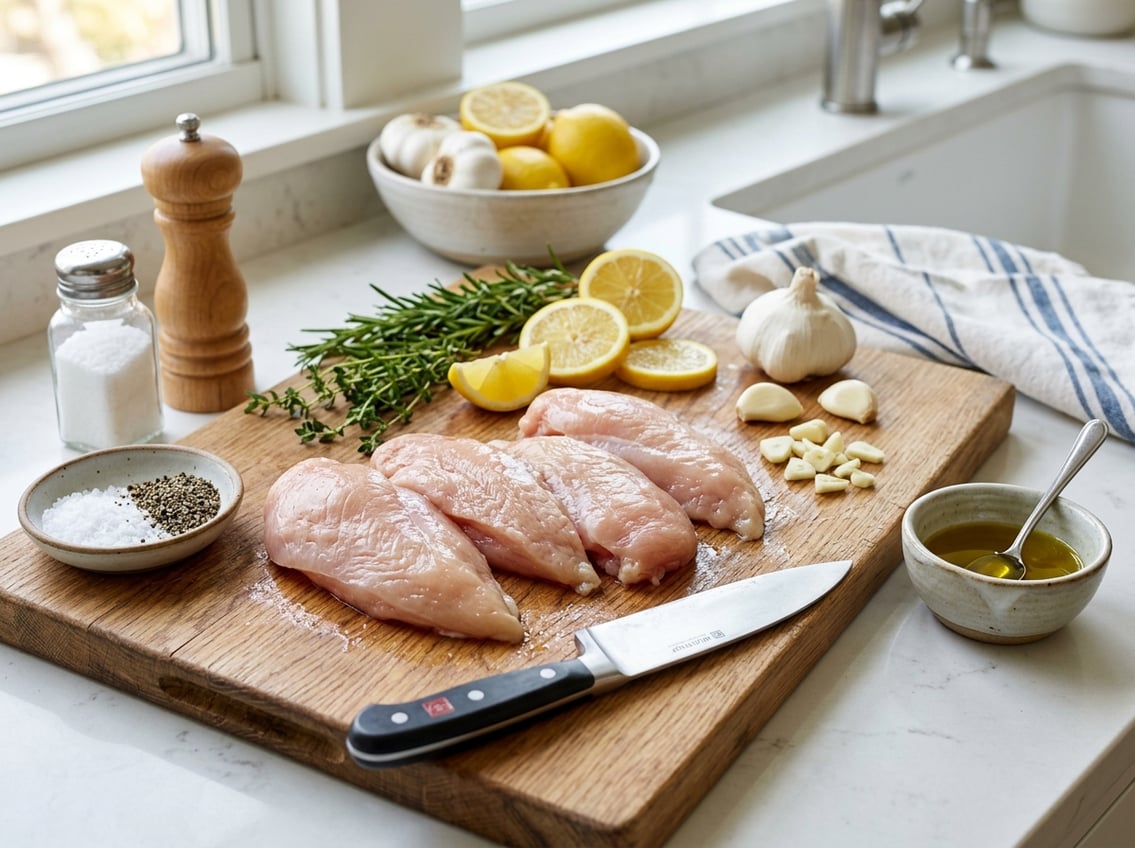
The best results often start before the pan, grill, or oven is hot.
Simple prep steps can help chicken hold moisture, cook more evenly, and stay softer after it is done.
Dry Brining for Better Moisture Retention
Dry brining uses salt to help the meat hold on to moisture during cooking.
It also seasons the chicken breast more evenly.
For best results, salt the chicken and let it rest in the fridge for several hours or overnight.
A simple dry brining method for chicken breast can help you get more tender chicken breasts.
Marinating for Flavor and Softening
Marinating chicken breast adds flavor and can improve tenderness.
Marinades with salt, acid, or dairy can help the surface soften a little before cooking.
Keep the timing reasonable. A short marinating window can help, and longer time is not always better if the marinade is very acidic.
Pounding Chicken Breast to an Even Thickness
Pounding chicken breast helps the meat cook at a more even rate.
When the thickness is similar from end to end, the whole piece reaches doneness at nearly the same time.
That lowers the risk of a dry outside and underdone center.
It also helps you get a more tender chicken breast for cutlets, sandwiches, and skillet meals.
Resting and Carryover Cooking
Resting matters after cooking.
During carryover cooking, the internal temperature keeps rising for a short time, so pulling the chicken at the right moment prevents overcooking.
Let the meat rest before slicing.
This helps the juices stay in the chicken breast instead of running out onto the cutting board.
When the Problem Starts With the Chicken Itself
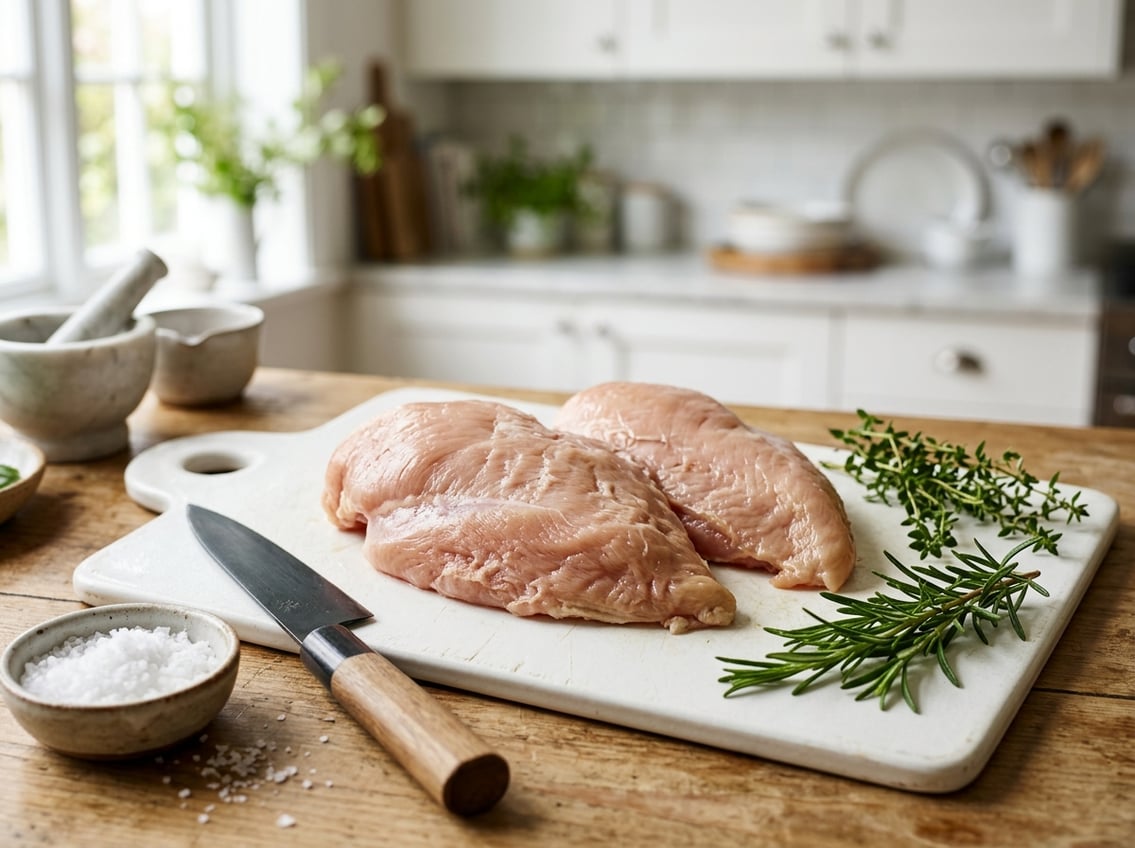
Sometimes the issue is not your technique.
The chicken itself may start with too much added water, poor structure, or a defect that affects texture.
Poor Quality Chicken and Water-Logged Meat
Poor quality chicken can cook unevenly and lose more liquid in the pan.
Water-logged meat may also shrink more, which makes the final texture less pleasant.
Buy from a trusted store and check the package for excess liquid.
More moisture in the package does not always mean better meat.
Organic Chicken and Air-Chilled Options
Organic chicken can be a good choice if you prefer that label, but the term alone does not guarantee tenderness.
Freshness, handling, and chilling method matter too.
Air-chilled chicken often has less added water than some other processing methods.
That can help you get a firmer texture and better browning.
Woody Breast and Other Quality Defects
Woody breast is a real quality defect that affects some chicken breast pieces.
The meat can feel hard, dense, or chewy even when you cook it correctly.
If you cut into chicken and it feels unusually firm or stringy before cooking, the problem may start there.
In that case, the issue is not just technique; it is the meat itself.
How to Fix Tough Chicken Breast After Cooking
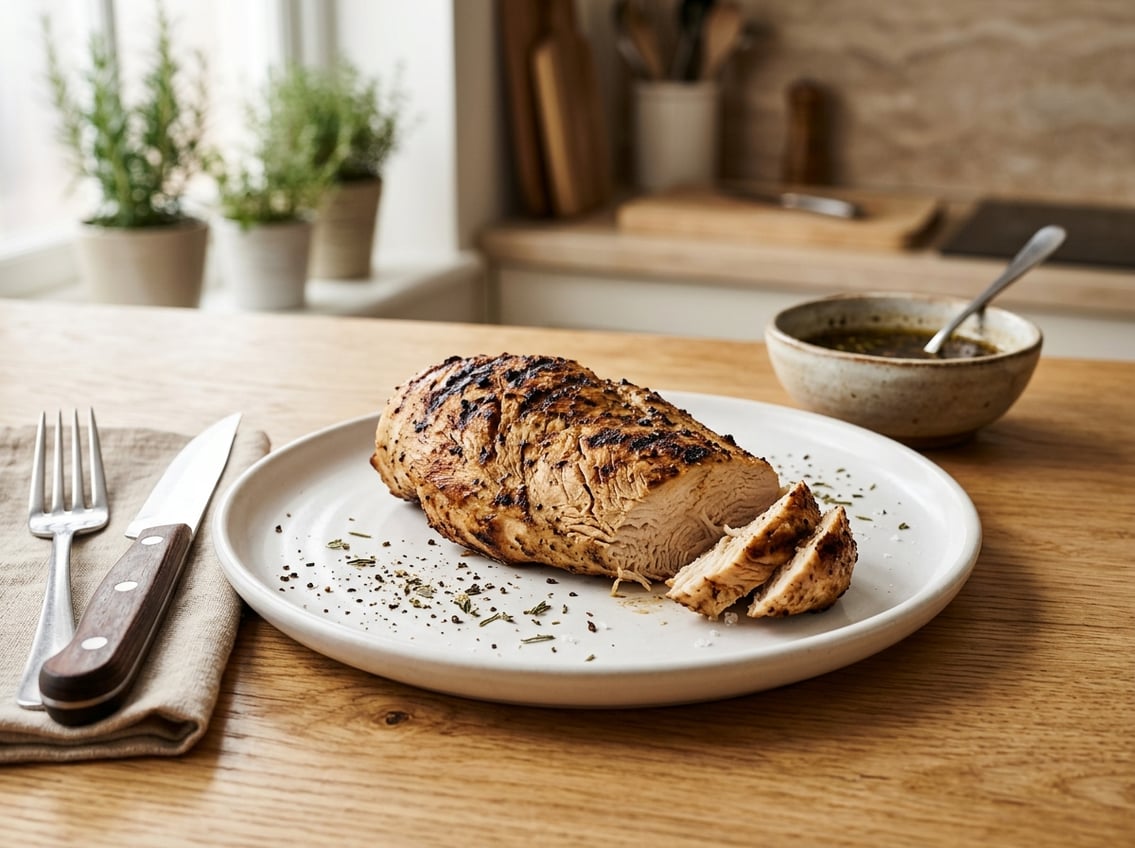
You cannot fully undo every texture problem, but you can often make the meal much better.
The right fix depends on whether the chicken is just a little dry or truly tough.
Best Ways to Save Slightly Dry Meat
If the chicken is only a little dry, add moisture back with sauce, broth, or a light dressing.
Serving it over rice, pasta, or in a warm grain bowl can help it feel less dry.
Thin slices on top of a moist base work better than serving a thick dry piece on its own.
That is often the easiest way to fix tough chicken breast without starting over.
When Slicing or Shredding Helps
Slicing across the grain shortens the muscle fibers and makes the meat easier to chew.
Shredding works well for soups, salads, tacos, and casseroles where the chicken is mixed with other ingredients.
This is one of the best ways to fix tough chicken after it has already been cooked.
It does not change the meat itself, but it improves the eating experience.
When Tough Texture Cannot Be Fully Repaired
Severely overcooked, very rubbery, or already dry chicken will not improve much in texture. Reheating often worsens the problem.
Try using the chicken in a dish with plenty of liquid, sauce, or chopped ingredients. You can still make it useful in a new meal.


