
Are Chicken Breasts Healthier Than Thighs? Key Differences
If you ask, are chicken breasts healthier than thighs, the short answer is yes for many nutrition goals, especially if you want fewer calories and more protein per serving.
Chicken thighs still have a place in a healthy diet, since they bring more flavor, more fat, and useful minerals.
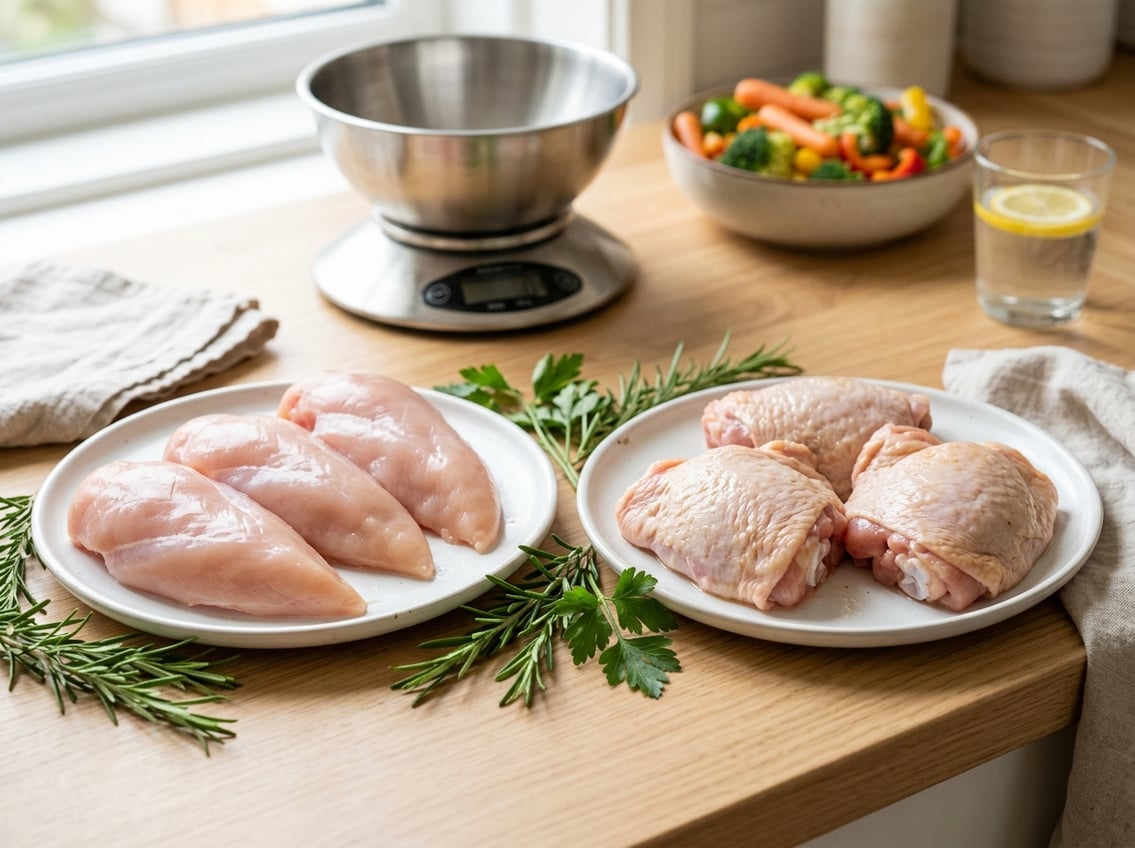
Your best choice depends on what you value most.
Chicken breasts are usually leaner, while chicken thighs are richer and often more satisfying.
If your main goal is weight control or lean protein, skinless chicken breast is usually the better pick. If you care more about taste, tenderness, and budget, chicken thighs can be the smarter choice.
Quick Verdict: Which Cut Fits Which Goal

Chicken breasts and chicken thighs each fit different needs.
The best cut depends on your calorie target, protein needs, and how you plan to cook it.
Best Choice for Lower Calories and Higher Protein
Skinless chicken breast offers the leanest option.
According to Verywell Health’s comparison of chicken breast vs thigh, roasted skinless breast has fewer calories, less fat, and more protein than roasted skinless thigh.
Chicken breast works well for high-protein meals and weight-loss plans.
It also fits recipes where you want a mild flavor.
Best Choice for Flavor, Tenderness, and Fullness
Chicken thighs taste richer and stay juicier after cooking.
They also tend to feel more filling because they contain more fat.
If you want a softer texture and more flavor without much effort, chicken thighs often work better than chicken breasts.
When Using Both Cuts Makes Sense
You do not need to choose just one cut for every meal.
Mixing chicken breasts and chicken thighs in the same dish can give you lean protein plus extra flavor.
That approach works well in soups, stews, casseroles, tacos, and meal prep bowls.
Nutrition Differences That Matter Most
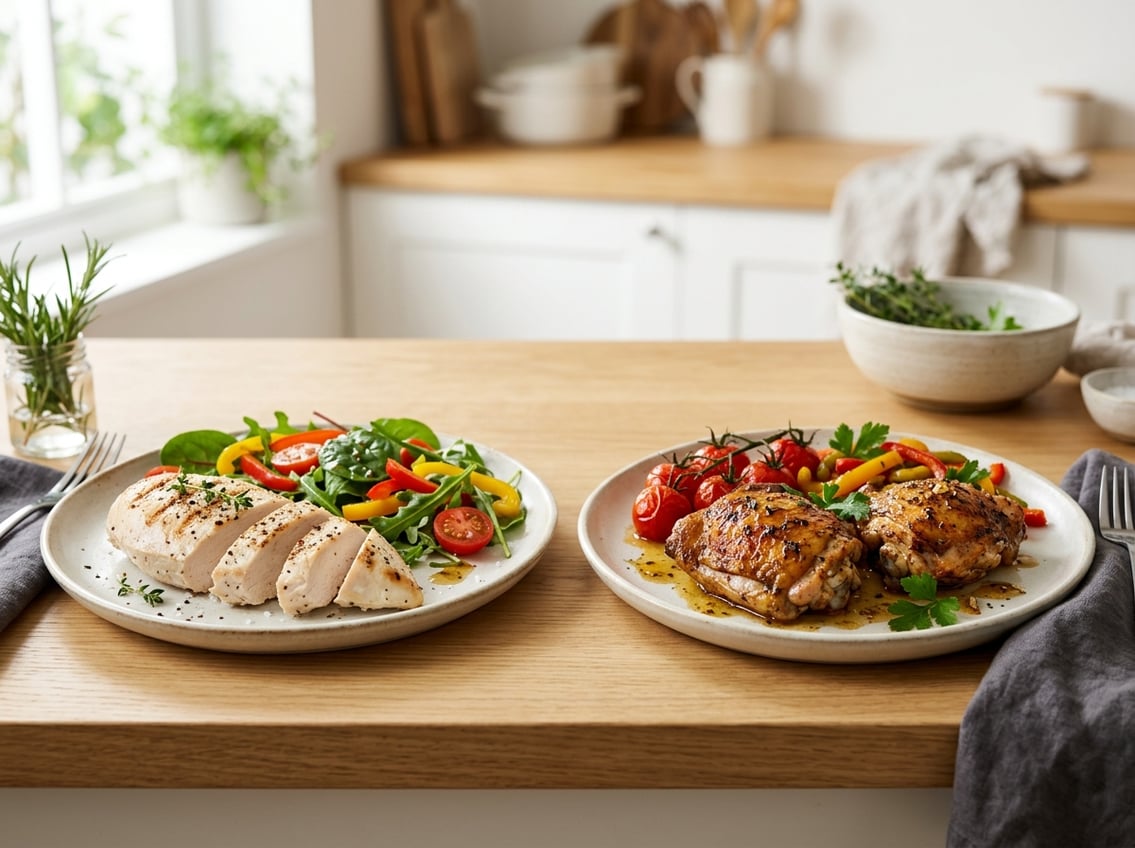
The biggest nutrition gap is fat and protein.
Chicken breasts are leaner, while chicken thighs bring more calories and a few more minerals.
Calories, Fat, and Protein Per Serving
In the roasted, skinless comparison from Verywell Health, 100 grams of chicken breast has about 165 calories, 3.57 grams of fat, and 31 grams of protein.
The same amount of chicken thigh has about 179 calories, 8.15 grams of fat, and 24.8 grams of protein.
Chicken breast gives you more protein for fewer calories.
Chicken thigh gives you more fat, which raises calories and can help with taste and satiety.
Iron, Zinc, B Vitamins, and Choline
Chicken thighs usually have more iron and zinc.
In the same Verywell Health data, thighs have slightly more iron and much more zinc, while breasts have more vitamin B6 and choline.
If you want a lean protein source, breast is the better fit.
If you want more iron and zinc in your meals, thigh has an edge.
How Skin Changes the Nutrition Profile
Skin changes the picture fast.
Leaving skin on either cut raises fat and calorie counts, and Verywell Health notes that skin can increase both by about 25% to 30%.
If you want a healthier choice, skinless chicken is usually the better option.
Skinless chicken breast stays the leanest, while skinless chicken thigh still gives you more fat than breast.
How Cooking Method Changes the Health Question

Cooking method can matter as much as the cut itself.
Baking, roasting, and grilling keep chicken lighter, while breading and frying add extra fat and calories.
Baked Chicken and Roasted Chicken as Healthier Options
Baked chicken and roasted chicken are usually better choices than fried versions.
They let the meat cook through without soaking in added oil.
That matters for both chicken breasts and chicken thighs, especially if you want to keep your meal lower in calories.
Why Fried Chicken Shifts Fat and Calorie Counts
Fried chicken absorbs oil during cooking, which changes the nutrition profile quickly.
Breaded and fried chicken can also add refined carbs and extra sodium.
A lean cut becomes much less lean once you fry it.
The health gap between breasts and thighs gets smaller when both are fried.
How to Keep Breast Moist and Thigh Leaner
Skinless chicken breast can dry out if you overcook it.
Use a thermometer, cook it just until safe, and let it rest before slicing.
Skinless chicken thigh can still be a smart choice if you trim visible fat, roast it on a rack, and avoid heavy sauces.
Verywell Health notes that grilling, baking, and roasting are healthier methods for both cuts.
Choosing Based on Taste, Budget, and Everyday Use

Health is only one part of the choice.
Texture, price, and how easy the meat is to cook can matter just as much in real life.
Texture, Juiciness, and Ease of Cooking
Chicken breasts have a mild taste and a firm texture.
They work well when you want a lean protein that takes on marinades and sauces.
Chicken thighs stay juicier and are more forgiving if cooking times vary.
That makes them a practical pick for busy nights and longer-cooked dishes.
Cost Differences and Meal Prep Value
Chicken thighs often cost less per pound than chicken breasts, according to Verywell Health.
That can make them useful for large families or weekly meal prep.
Chicken breasts may cost more, yet they offer strong protein value when you want lean meals with simple portions.
Recipes and Situations Where Each Cut Works Best
Use chicken breasts for salads and stir-fries.
Grill chicken breasts for quick lunches.
Use chicken thighs for baked chicken and roasted chicken.
Try chicken thighs in curries, tacos, soups, and slow-cooked meals.
Choose skinless chicken breast for the leanest option.
Pick skinless chicken thigh for more flavor and tenderness.


