
Chicken Breast vs Turkey Breast for Nutrition and Cooking
People often compare chicken breast and turkey breast when looking for a lean protein that supports health goals without much fat. Both fit well in high protein meals and can work for weight loss, muscle support, and simple weeknight cooking.
Chicken breast usually has slightly less fat and a milder taste. Turkey breast often gives you a little more protein and a firmer bite.
The better choice depends on your goals, your recipe, and which flavor you prefer.
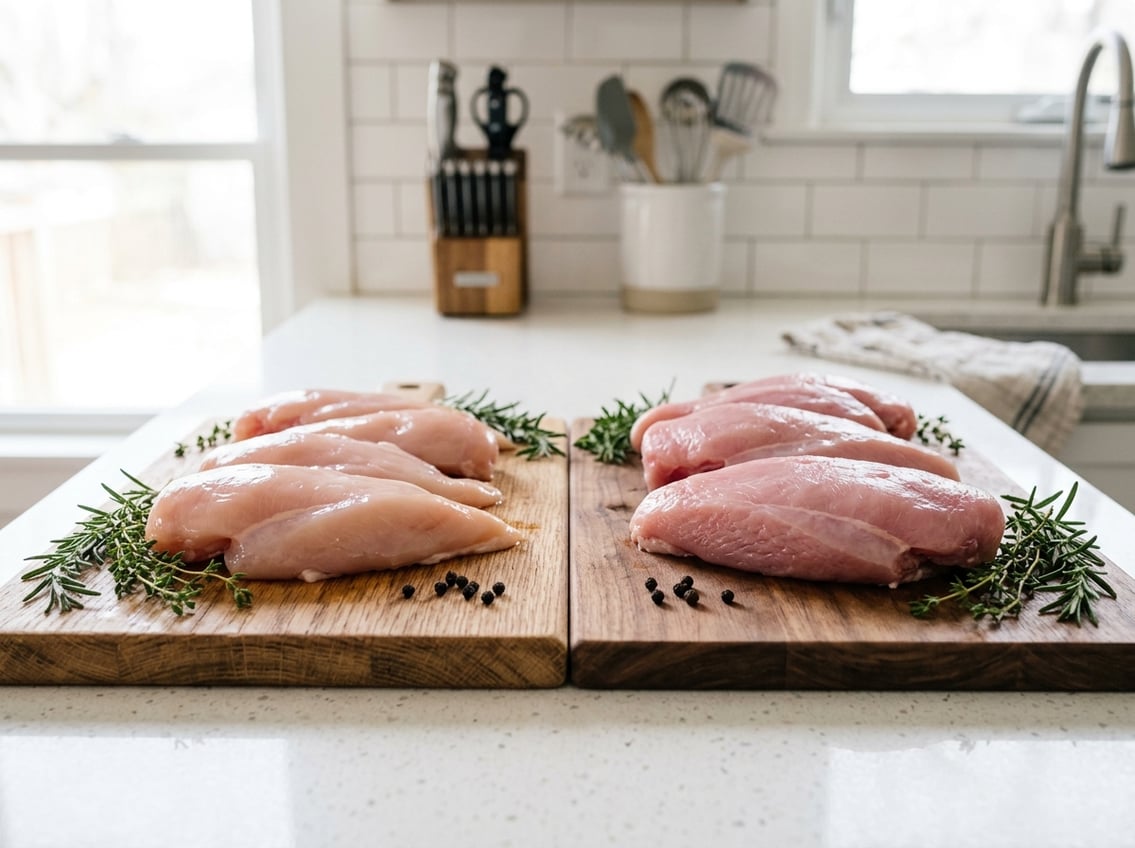
Both meats offer real health benefits. They are rich in protein, low in fat when skinless, and easy to use in many cooking methods.
If you compare turkey breast and chicken breast with nutrition, taste, and price in mind, it becomes easier to spot your best choice.
Nutrition Differences at a Glance
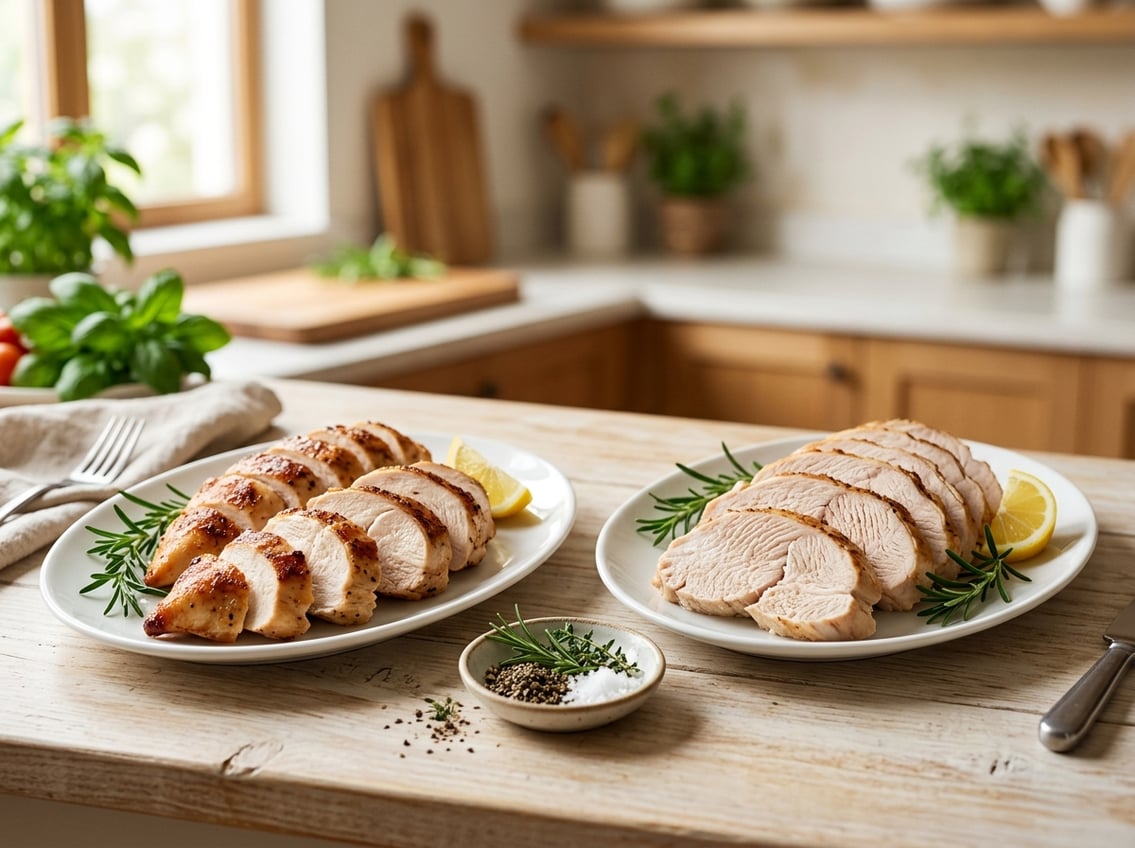
Chicken breast and turkey breast are both lean protein choices that fit into a balanced diet. The main differences come down to protein content, calories, fat content, and a few key vitamins and minerals.
Protein, Calories, and Protein Per Serving
Turkey breast usually delivers a little more protein per serving. Chicken breast often comes in slightly lower in calories.
Recent comparisons show turkey as the more protein-dense option in equal portions, with chicken close behind in total protein (calories-info.com).
If you eat skinless breast meat in standard portions, both can support a high protein diet without adding many calories.
Fat, Saturated Fat, and Cholesterol
Chicken breast is often a bit lower in total fat and saturated fat. That can make it the better pick if you want the lowest fat content possible.
Turkey breast is still a low fat food, especially when skinless. For heart health and lower-fat eating, both are strong choices, and the difference is usually modest.
Vitamins and Minerals: Niacin, Vitamin B6, Vitamin B12, Phosphorus, Selenium, Zinc, and Iron
Chicken breast provides niacin, vitamin B6, and phosphorus. Turkey breast stands out more for selenium, zinc, and vitamin B12.
Both provide iron, which supports red blood cell production, as noted in a detailed chicken breast and turkey breast guide (Cook Geeks).
Chicken gives you strong support for B vitamins and phosphorus. Turkey brings more selenium, zinc, and B12.
Which Option Fits Your Health Goals
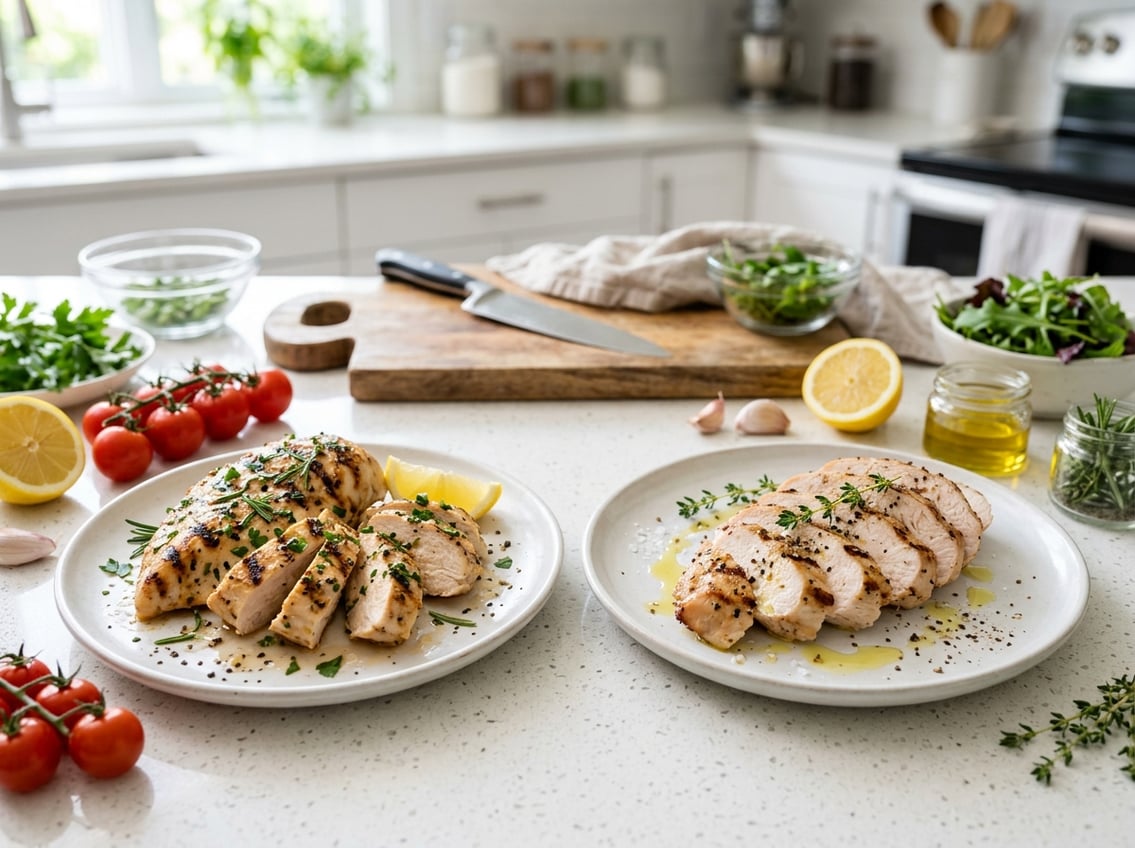
Your best choice depends on what you want to improve. Both meats support protein intake, lean eating, and steady meal planning.
The small nutrition differences can matter for weight loss, heart health, and satiety.
Best Choice for Weight Loss and Calorie Control
If your top goal is weight loss, chicken breast often has the edge because it is usually a little lower in calories and fat. That helps when you want to keep meals filling without raising your daily intake too much.
Turkey breast still works well for calorie control. It remains a high protein, low fat option that fits most weight loss plans.
Heart Health and Lower-Fat Eating
For heart health, you can choose either meat if you pick skinless breast and use healthy cooking methods. Chicken breast tends to be slightly lower in saturated fat, which may give it a small advantage for lower-fat eating.
Turkey breast also fits well in a heart-smart diet. The best choice often comes down to the rest of the meal, including sauces, breading, and added salt.
Muscle Support, Satiety, and Immune Function
Both meats give you complete protein with the amino acids your body needs. Turkey breast may give you a little more protein per serving, which can help if you are trying to reach a higher daily target.
Both can help you feel full because protein supports fullness better than many carbs or fats. Turkey breast also brings more selenium and zinc, nutrients tied to immune function.
Flavor, Texture, and Best Cooking Uses
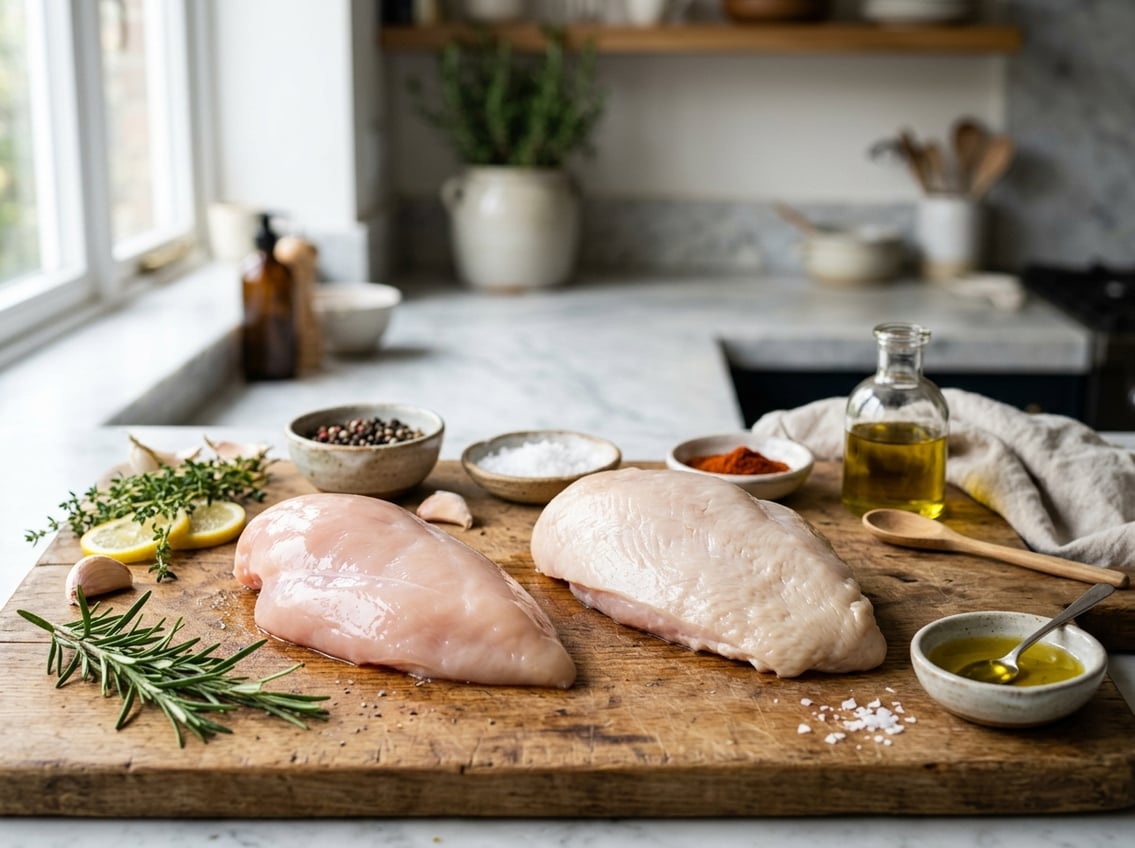
Taste and texture matter as much as nutrition. You are more likely to eat a food you actually enjoy.
Chicken breast and turkey breast both work in simple meals, yet they do not taste or feel the same on the plate.
Mild Versus Pronounced Flavor
Chicken breast has a mild flavor that absorbs seasonings, marinades, and sauces very well. That makes it easy to use in many recipes without changing the dish much.
Turkey breast usually has a more pronounced flavor. Some people prefer that richer taste in sandwiches, grain bowls, and roasted dinners.
Tender Texture Versus Firmer Bite
Chicken breast is usually more tender and juicy when cooked well. Its texture is softer and more delicate, which works well in salads and quick skillet meals.
Turkey breast often feels firmer and slightly denser. That can be a plus in sliced leftovers and meal prep, especially when you want cleaner slices for sandwiches.
Healthy Cooking Methods: Grilling and Baking
Grilling and baking both work well for these meats. These methods let you keep added fat low while still building flavor with herbs, citrus, garlic, and spices.
Chicken breast cooks a bit faster than turkey breast because it is usually smaller. For both, cooking to 165°F keeps the meat safe and moist, as noted in the chicken versus turkey comparison from Cook Geeks (cookgeeks.net).
Price, Availability, and Everyday Practicality
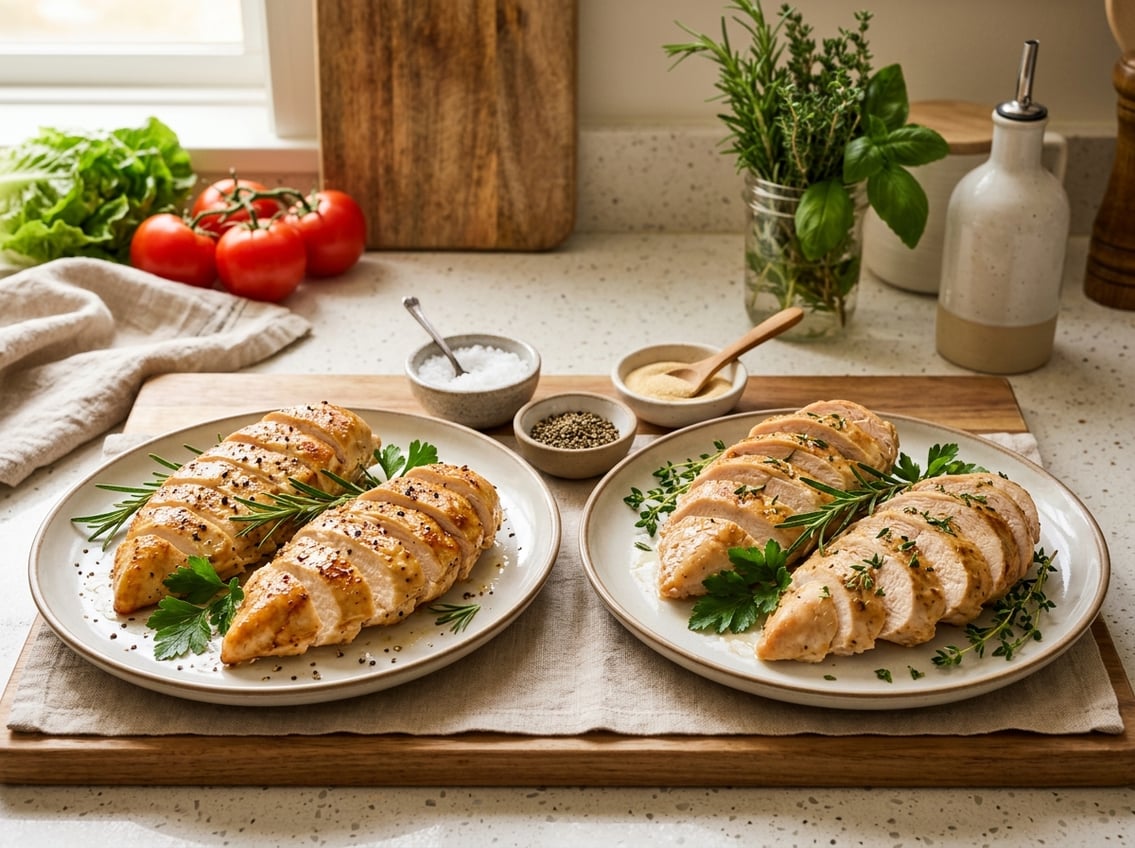
When you shop in the U.S., chicken breast is usually easier to find every week. Turkey breast can feel more seasonal or less common in some stores.
Cost can move either way depending on the cut, the store, and whether you buy fresh, frozen, or deli meat.
Cost and Grocery Store Availability
Chicken breast is widely available in most U.S. grocery stores, and it is often the more convenient everyday option. Turkey breast can be easier to find around holidays, and some stores price whole turkey breast competitively, as noted in a cost comparison from The Economist’s Gre blog (economist.com).
Deli turkey breast is a different case, since processed slices can cost more than raw meat.
When to Choose Each for Meal Prep and Recipes
Choose chicken breast when you want a mild flavor and faster cooking.
You can use it in stir-fries, tacos, salads, and simple baked dinners.
Choose turkey breast when you want a firmer texture and a slightly richer taste.
It works well for roasted slices, sandwich filling, and meal prep bowls.


