
Chicken Breast vs Tenderloin Nutrition at a Glance
Chicken breast and tenderloin nutrition are similar enough that your choice should depend on your goals, recipe, and budget.
Both cuts provide lean protein and fit well in a balanced diet.
If you want the highest protein per bite and a lower-sodium option, choose chicken breast. If you want a smaller, more tender cut that cooks fast, chicken tenderloin is often the better fit.
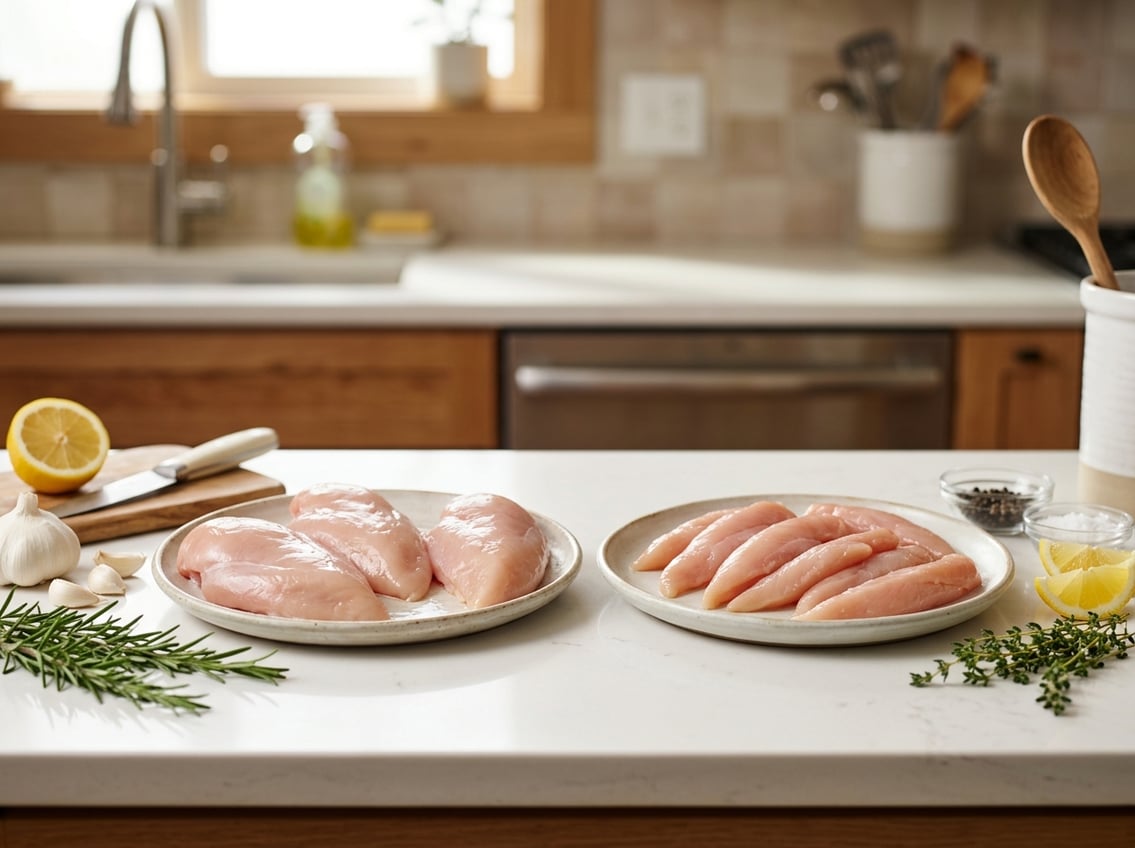
You will usually see the biggest differences in protein content, fat content, and cooking use.
The gap is real, but it is not large enough to make one cut a bad choice.
Nutrition Differences That Matter Most
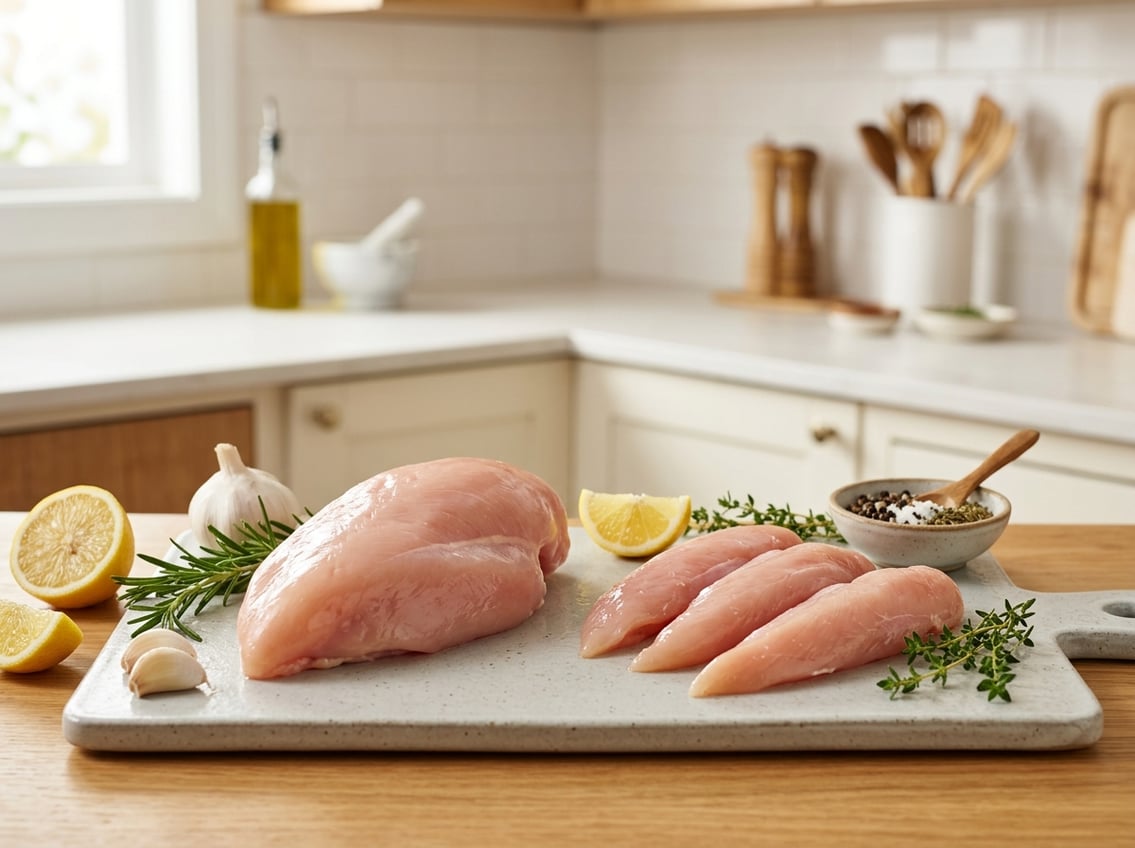
Chicken breast and tenderloin are both lean protein choices, but they do not deliver the same nutrition.
The breast is denser and usually higher in protein, while the tenderloin is smaller, softer, and often lower in calories and fat.
The exact numbers can shift by brand, trim level, and whether the meat is raw or cooked.
For a clear comparison, use standard serving data and consider the cooking method.
Protein Content, Calories, and Fat Content
Per 100 grams, one published comparison lists chicken breast at about 166 calories, 31 grams of protein, and 3.24 grams of fat.
Chicken tenderloin comes in around 107 calories, 22.3 grams of protein, and 1.34 grams of fat according to Tatnuck Meat and Seafood’s chicken tenderloin vs. breast breakdown.
Skinless chicken breast gives you more protein for the same weight.
Tenderloin gives you fewer calories and less fat per serving, which may matter if you want a lighter meal.
Sodium, Cholesterol, and Micronutrient Differences
The same comparison lists chicken breast at about 47 mg of sodium and 116 mg of cholesterol per 100 grams.
Tenderloin has about 80 mg of sodium and 58 mg of cholesterol.
Breast meat often has a slight edge in some micronutrients, including B vitamins.
Skinless chicken breast is often the more predictable choice when you want a very lean protein source.
Why Raw vs Cooked Numbers Often Do Not Match
Cooking changes water content, so raw and cooked nutrition labels rarely match.
When chicken loses water in the pan or oven, the protein and calorie numbers look higher per ounce because the meat weighs less.
Cooking method also changes nutrition.
Breading, oil, butter, and salty marinades can change chicken breast and tenderloin nutrition much more than the cut itself.
What These Cuts Actually Are
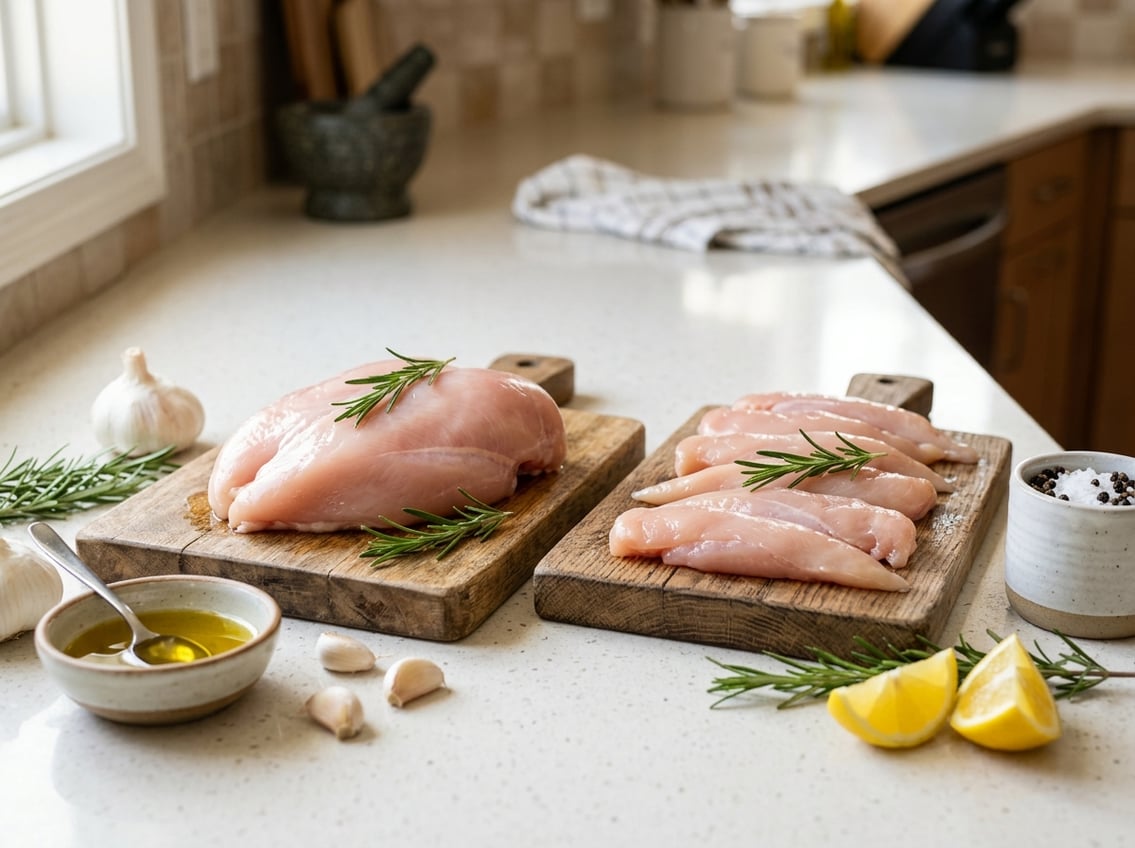
Chicken breast and tenderloin come from different muscles, which is why they look and feel different.
Both are white meat, but they serve different jobs on the bird and behave differently in the kitchen.
You may also see names like chicken tenders, chicken fingers, and chicken strips.
Those labels do not always mean the meat is a true tenderloin.
Pectoralis Major vs Pectoralis Minor
Chicken breast is the pectoralis major, the large chest muscle.
Chicken tenderloin is the pectoralis minor, a smaller muscle tucked under the breast.
Each chicken has two tenderloins and one breast split into two sides for sale.
That smaller supply is one reason tenderloin often costs more.
White Meat, Size, and Texture Differences
Both cuts are white meat, so they share a mild flavor and lean profile.
The breast is larger, thicker, and firmer, while the tenderloin is smaller, thinner, and more delicate.
The breast can dry out if you overcook it.
Tenderloin is naturally softer and cooks quickly, which makes it useful when you need fast meals.
How True Tenderloins Differ From Chicken Tenders
True tenderloins are the small muscles under the breast.
Chicken tenders or chicken strips on menus are often cut from breast meat instead.
Chicken fingers and chicken strips are style names, not always cut names.
If a package says tenderloins, it may be the actual pectoralis minor muscle.
If it says tenders, you should check the label.
Best Uses in the Kitchen
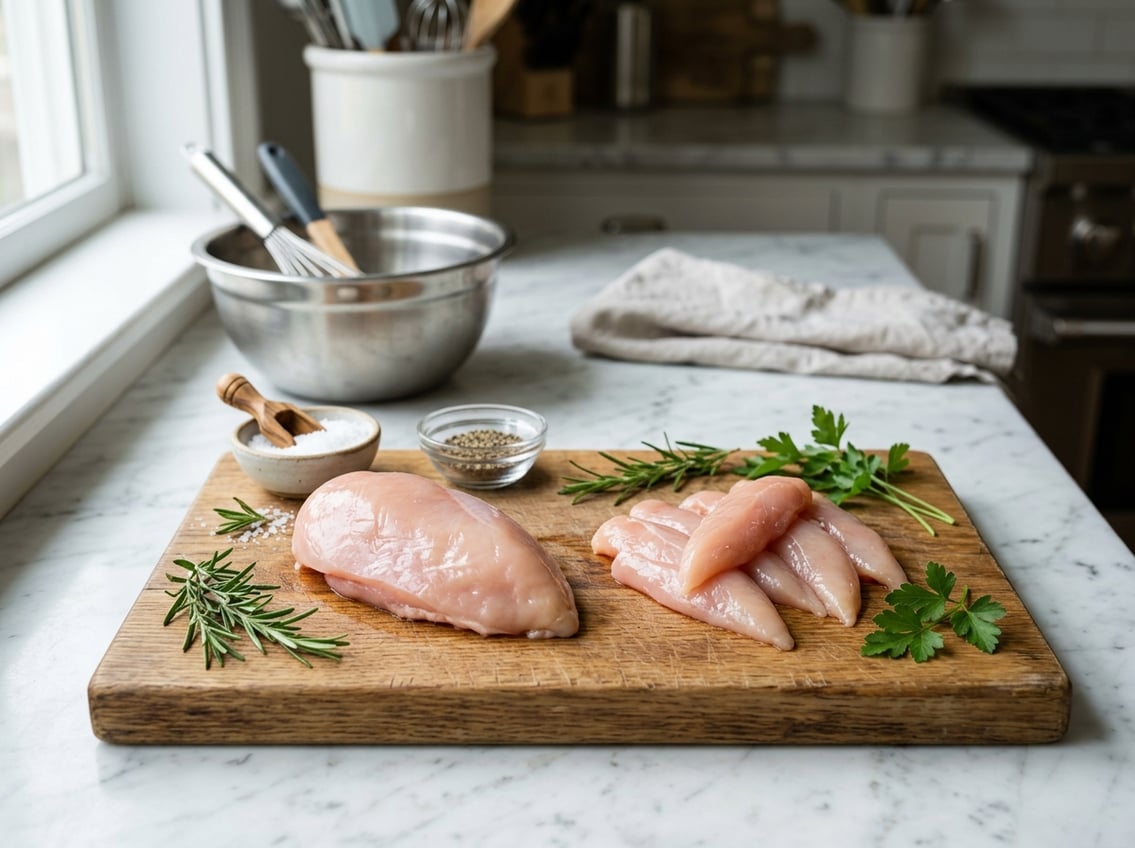
The best cut depends on how you plan to cook it.
Chicken breast works well for larger portions and meal prep, while tenderloin fits quick meals and recipes that need fast, even cooking.
Your health profile also changes with the cooking method.
A plain grilled or baked chicken dish keeps the nutrition cleaner than breaded or fried versions.
When Chicken Breast Is the Better Choice
Chicken breast is a strong choice when you want more protein in each serving.
It also works well for grilled chicken, baked chicken, salads, bowls, and meal prep.
For cooking chicken breast, a simple method often works best.
Skinless chicken breast gives you a lean base that pairs well with seasoning, herbs, and low-fat sauces.
When Tenderloin Works Better for Fast Cooking
Chicken tenderloin is useful when speed and tenderness matter most.
It is a good fit for chicken tenderloin recipes, quick sautés, skewers, and stir-fries.
Because it is smaller, it cooks faster than breast meat.
That makes it a practical choice for weeknight meals, chicken strips, and homemade chicken nuggets when you want a soft bite.
How Cooking Method Changes the Health Profile
The cut matters, but the cooking method often matters more. Grilling and baking usually keep chicken lean.
Frying raises calories and fat. Heavy breading, creamy sauces, or a lot of oil can make chicken breast and tenderloin similar in nutrition.
For the cleanest result, keep the seasoning simple. Cook to 165°F.


