
Is It Ok to Defrost Chicken Breast in the Microwave? Safety Guide
You may wonder, is it ok to defrost chicken breast in the microwave when you need dinner fast. Yes, it is safe if you use low power, watch it closely, and cook it right away after thawing.
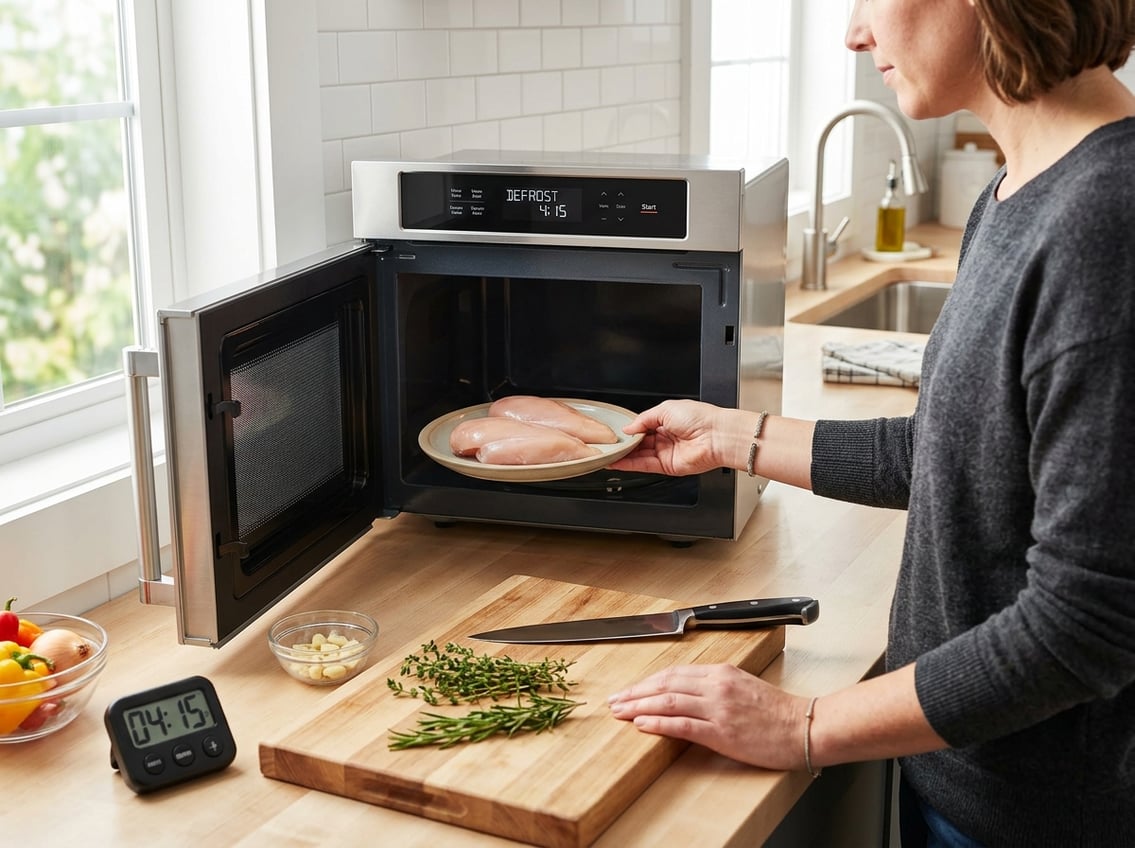
Microwave thawing offers a quick way to defrost chicken, but you need to cook it immediately after thawing.
The microwave often warms the edges before the center thaws, so careful timing matters. If you want the safest and most flexible choice, use the refrigerator to defrost chicken breast.
The Short Answer on Safety
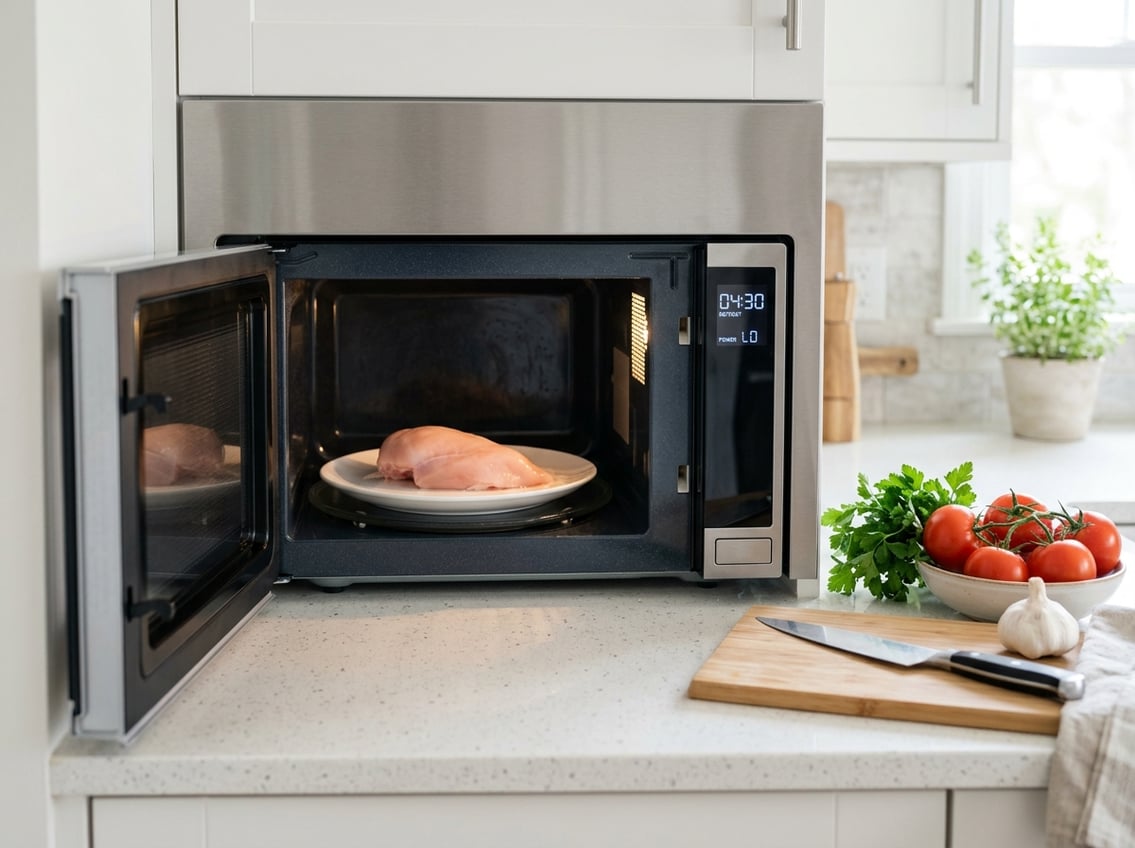
You can safely defrost chicken breast in the microwave when you use low power and cook it right after thawing. Uneven heating can cause partly cooked edges while the center stays frozen.
The best way to defrost chicken is still in the refrigerator if you have time. Use the microwave when you need speed and plan to cook right away.
When Microwave Thawing Is Safe
Microwave thawing stays safe when the chicken remains cold enough to avoid the temperature danger zone. Pay close attention so the outer layers do not start to cook.
Thaw and then cook the chicken immediately to keep it safe.
Why Chicken Breast Needs Immediate Cooking
Chicken breast thaws unevenly because the edges are thin and the center is thick. Some parts may warm up before the center is thawed.
Cook the chicken right away after thawing to reduce bacteria growth.
When the Microwave Is Not the Best Choice
The microwave is not ideal if you want the best texture, need to prep ahead, or have large packs of chicken breast. Thicker pieces may cook at the edges before the center thaws.
If you can wait, thaw chicken in the fridge for better results.
How to Thaw It Properly in the Microwave
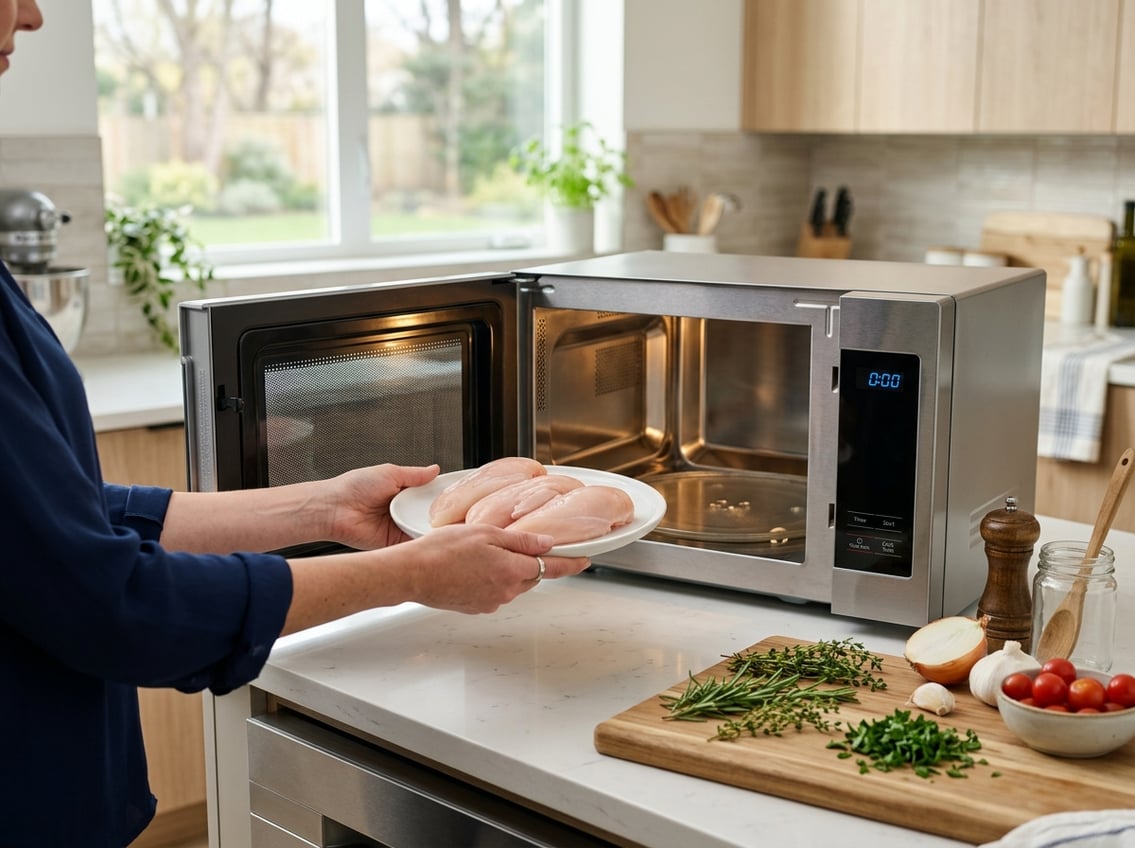
Defrost chicken breast in the microwave by following a few simple steps and watching the meat closely. Aim to thaw the chicken evenly without cooking the outside.
Use a low power setting, short bursts, and a plate that catches juices. This method gives you speed with less risk.
Remove Packaging and Use a Microwave-Safe Plate
Take the chicken out of any foam tray, plastic wrap, or store packaging. Place it on a microwave-safe plate to contain juices.
Only microwave chicken in packaging if the label says it is safe. A shallow plate helps you check the chicken as it thaws.
Use the Defrost Setting or Low Power
Select the defrost setting if your microwave has one. If not, set the power to low, usually around 30% to 50%.
A lower setting helps you defrost chicken breast without cooking the outer layers.
Flip, Separate, and Check in Short Intervals
Stop the microwave every 1 to 2 minutes to check the chicken. Flip it, rotate it, or separate pieces that are stuck together.
This method helps prevent cold spots and partly cooked edges.
How to Tell the Center Is Fully Thawed
The chicken is fully thawed when it feels soft through the center and no icy patches remain. Press gently near the thickest part to check for frozen spots.
If the center still feels hard, give it a few more short bursts at low power. Once thawed, cook the chicken right away.
Common Risks and How to Avoid Them
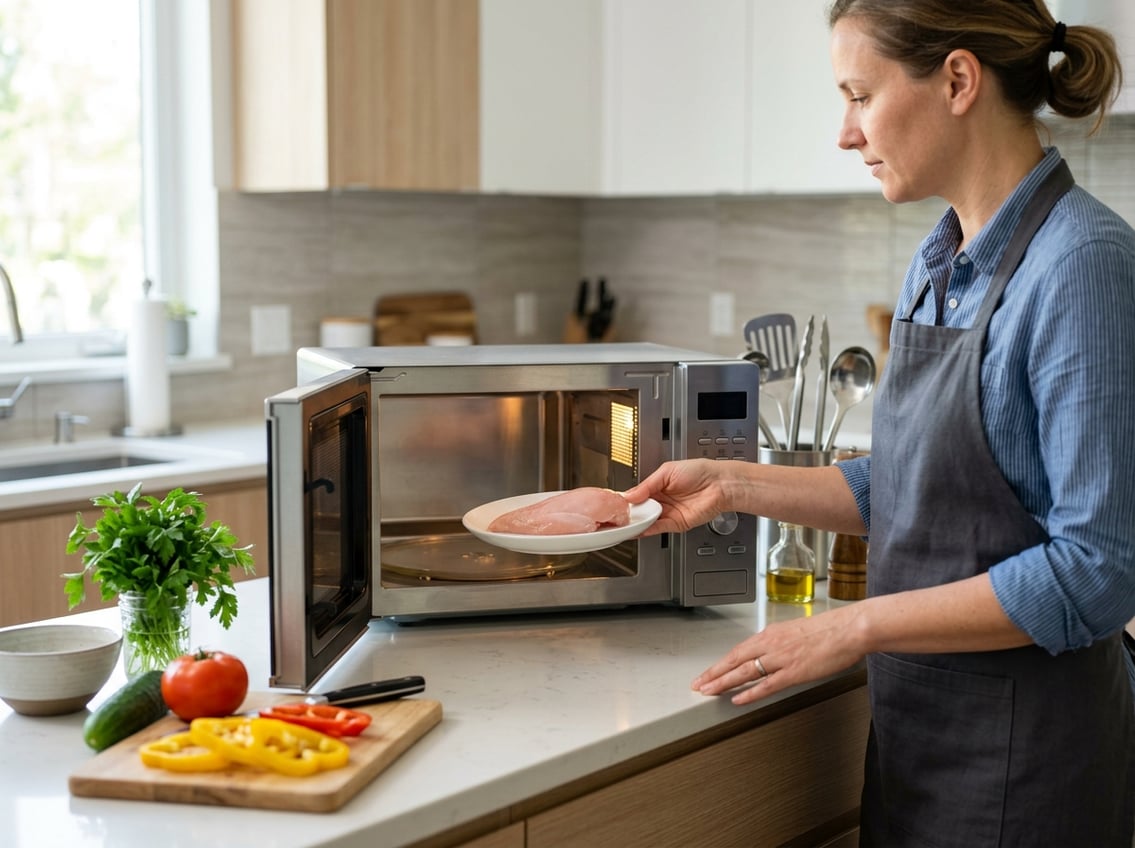
When you defrost chicken in the microwave, the main risks are uneven heating, bacterial growth, and juice spills. Careful handling and immediate cooking prevent most problems.
Keep the chicken cold, keep it moving, and keep things clean.
Preventing Partially Cooked Edges
Keep the power low and use short intervals. High power can cook thin edges before the center thaws.
If you see white, cooked patches, stop and let the chicken rest for a minute before checking again. This pause helps the heat spread more evenly.
Avoiding the Temperature Danger Zone
Do not leave thawed chicken sitting out after microwaving. Bacteria grow faster when food stays too long between 40°F and 140°F.
Microwave thawing is only for same-day cooking. If you are not ready to cook, use another thawing method.
Handling Juices and Cross-Contamination
Chicken juices can drip onto the plate, microwave turntable, or counter. Clean these surfaces right away with hot soapy water or a sanitizing cleaner.
Wash your hands after touching raw chicken or the plate. Keep cutting boards, utensils, and seasonings away from raw meat until it is cooked.
Can You Refreeze Chicken After Microwaving
Do not refreeze chicken that you thawed in the microwave unless you cook it first. Microwaving warms parts of the meat, raising food safety concerns if you freeze it again raw.
If you cooked the chicken after thawing, you can freeze leftovers safely if you handled and cooled them properly.
When to Use Other Thawing Methods Instead
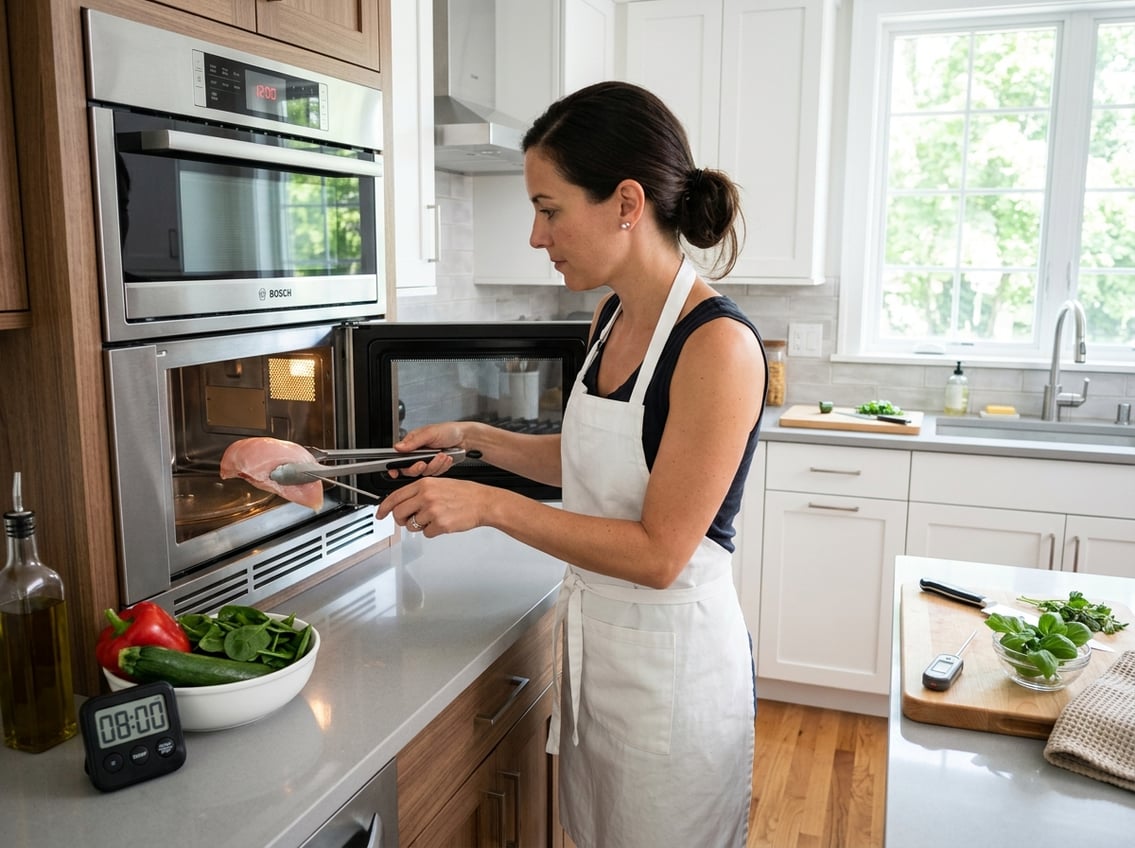
Other thawing methods work better for texture, flexibility, or meal prep timing. The microwave is fast, but not always the right choice.
Think about how much time you have and how you plan to cook the chicken.
Fridge Thawing for Best Texture and Flexibility
Refrigerator thawing gives you the most even results. It keeps the chicken cold while it thaws, which helps protect texture and safety.
Use the fridge when you plan ahead. This method gives you more time before cooking.
Thawing Chicken in Cold Water for Faster Results
Thawing chicken in cold water is a good middle option when you need speed without microwave heating. Seal the chicken in a leak-proof bag, submerge it in cold water, and change the water every 30 minutes.
This method works faster than the fridge and usually gives better texture than the microwave. It takes more attention than fridge thawing since you need to keep the water cold.
Choosing the Best Method for Time and Cut Size
Use the microwave to quickly cook small chicken breasts. Choose the fridge for the best quality.
If you need to defrost chicken faster without uneven heating, use cold water. Thicker chicken breasts and large family packs thaw more safely when you use slower methods.
You can manage smaller pieces more easily in the microwave, especially if you watch them closely.


