
What Is the Temperature Chicken Breast Should Be Cooked to? Quick Guide
If you want to know what temperature chicken breast should be cooked to, the safe answer is 165°F, or 74°C, measured at the thickest part of the meat. This is the standard internal temperature for safe eating and good texture.
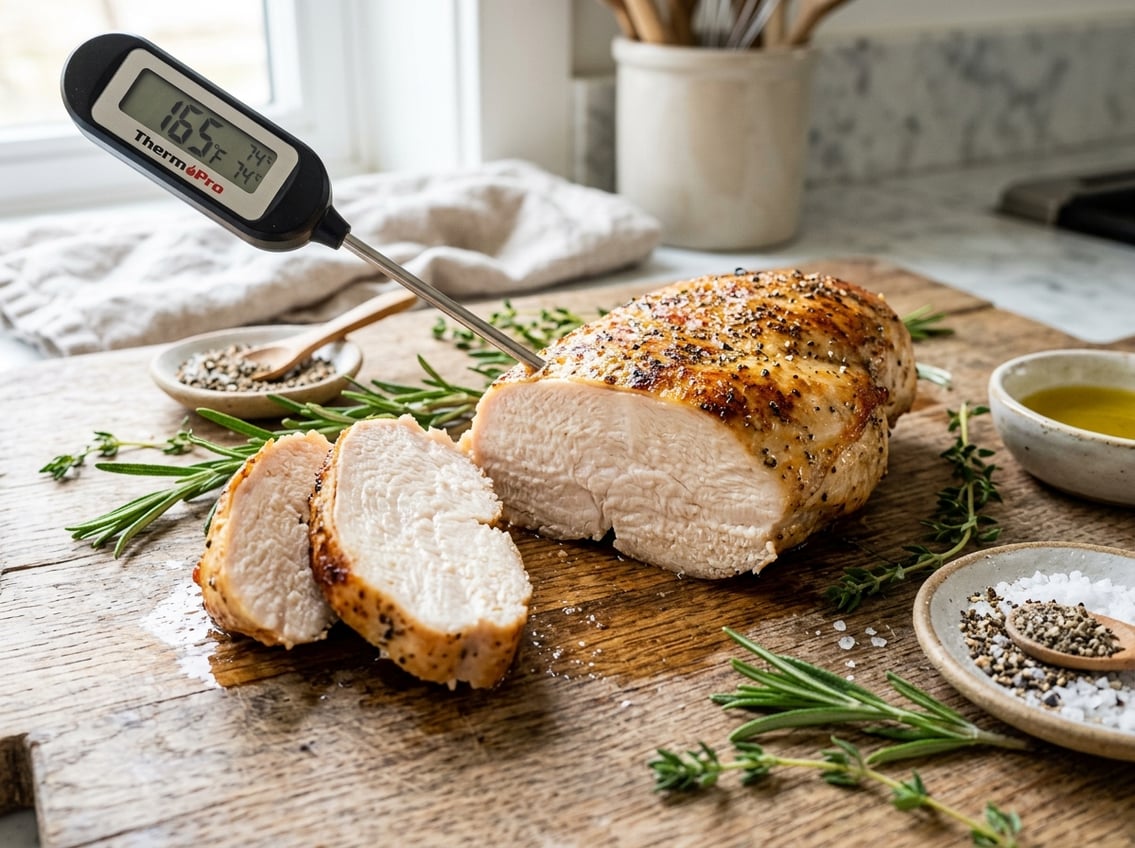
The right chicken temperature matters because breast meat is lean and dries out fast. If you stop too early, the internal temperature may still be unsafe.
If you cook too long, you lose the juicy texture you want. The goal is to reach a safe internal temperature without pushing it far past 165°F.
The Exact Doneness Target for Chicken Breast
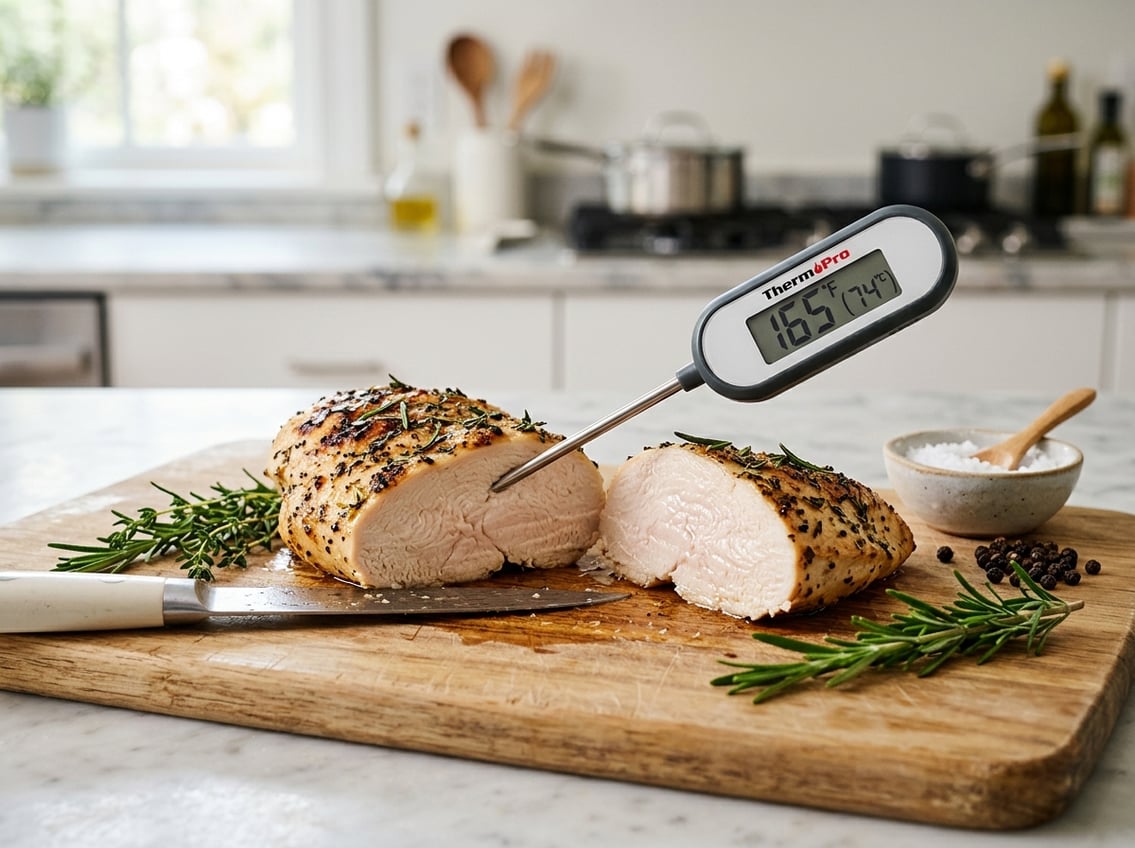
For chicken breast, the exact doneness target is 165°F. This number matches 74°C, and it is the standard safe internal temperature in the U.S.
You get the best reading from the internal temperature in the thickest part of the breast, not near the pan, bone, or surface. Whether you cook boneless or bone-in chicken, the safe finish line stays the same.
Why 165°F Is the Safe Minimum
At 165°F, chicken is safe to eat. Food safety guidance and cooking guides use this number as the minimum internal temperature.
Some recipes may describe different oven temperatures or cooking times, but those are only methods. The real test is the internal temperature, not the color of the meat or the clarity of the juices.
When to Pull Breast Meat Early for Carryover Cooking
You can remove chicken breast from heat a little early if you know the meat will keep cooking while it rests. This process is called carryover cooking.
For carryover cooking to work safely, the chicken should still finish at 165°F after resting. Pulling it too early risks serving undercooked meat.
Boneless vs. Bone-In Breast Temperature Guidance
The safe target does not change between boneless and bone-in chicken breast. Both should reach 165°F in the thickest part.
Bone-in breast meat can cook more slowly because the bone affects heat flow. Boneless pieces may cook faster and are easier to check with a thermometer.
How to Check Temperature Accurately
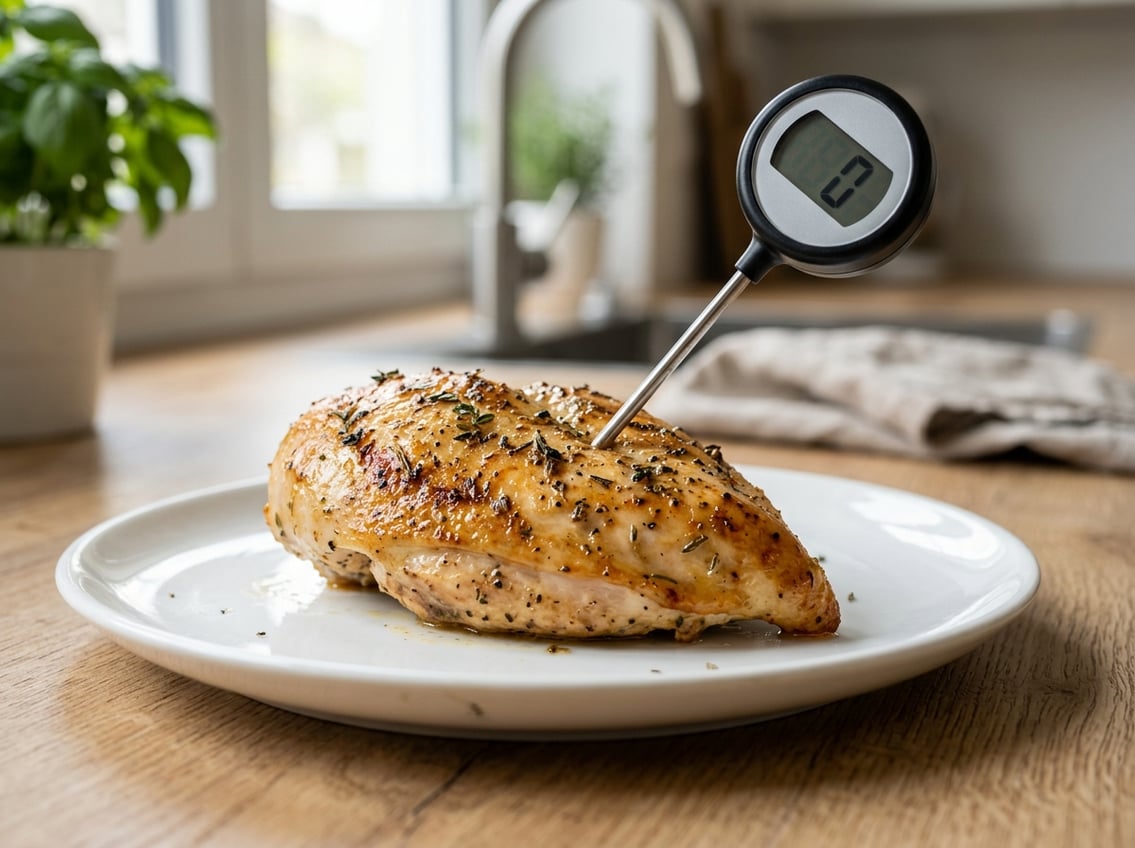
A meat thermometer is the most reliable tool for chicken. An instant-read thermometer gives you a clear answer in seconds.
Accuracy depends on thermometer placement and where you measure the meat. The thickest part is the key spot, especially with bone-in chicken.
How to Use a Meat Thermometer
To measure the internal temperature, insert the probe into the thickest part of the breast. Wait for the reading to settle, then check that it reaches 165°F.
If you use a digital thermometer, clean it before and after contact with raw chicken. This helps prevent cross-contamination.
Best Thermometer Placement in the Thickest Part
Place the thermometer into the center of the thickest area, and avoid touching bone or pan surfaces. Bone can give a false reading, and the pan edge can make the number look hotter than the meat really is.
With bone-in chicken, slide the probe into the breast meat from the side if needed. Your goal is to read the true internal temperature, not the temperature of the bone.
Why an Instant-Read Thermometer Beats Visual Cues
Chicken can look done before it is actually safe. The juices may run clear and the surface may look opaque, yet the center can still be under 165°F.
A thermometer removes the guesswork. This is important with thicker breasts, uneven cuts, and recipes where cooking time changes from batch to batch.
How to Keep Chicken Breast Safe and Juicy
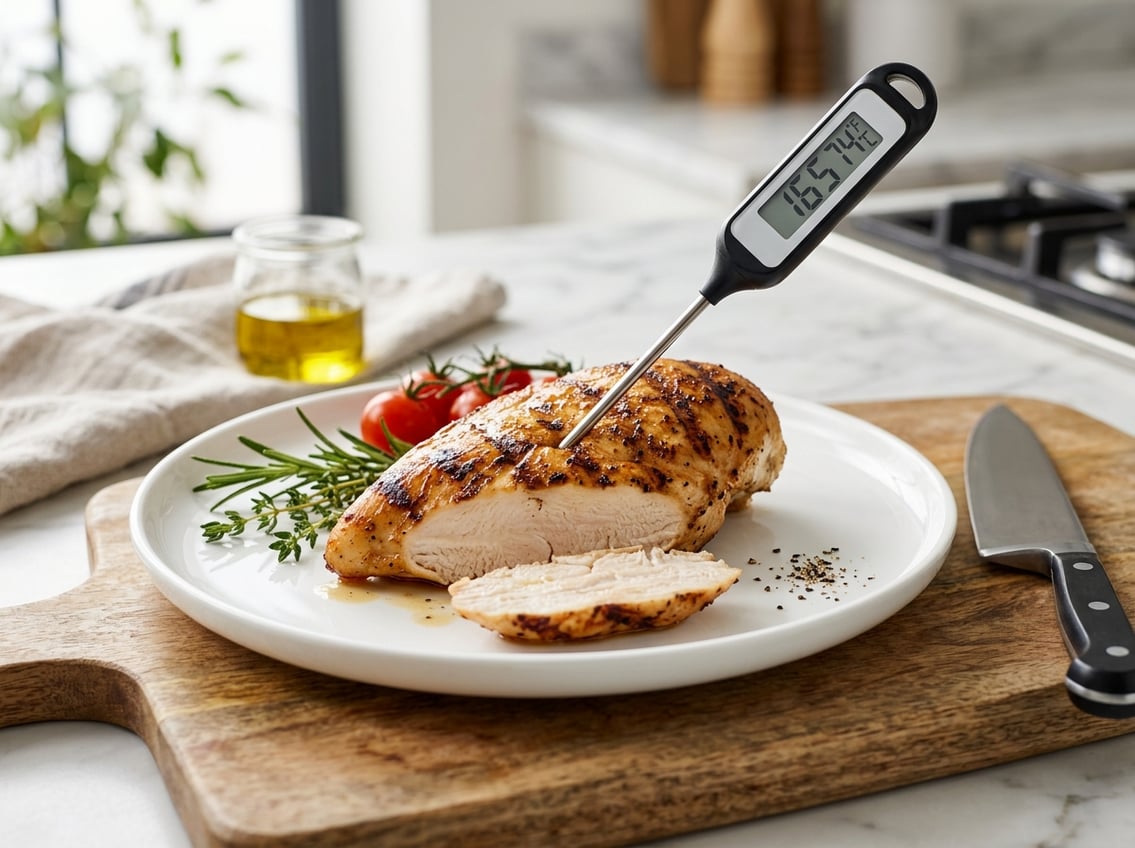
You keep chicken juicy by stopping at the right temperature and avoiding extra heat. Overcooking dries out white meat fast, especially in lean breast cuts.
Food safety also matters, since undercooked poultry can carry bacteria such as campylobacter. Good temperature control protects both texture and safety.
Why Overcooking Dries Out White Meat
Chicken breast has little fat, so it dries out sooner than darker cuts. The more heat it gets after reaching 165°F, the tougher and less juicy it becomes.
Many chicken recipes stress thermometer use. The best results usually come from cooking to temperature, not cooking by time alone.
Food Safety Risks Like Campylobacter
Raw and undercooked chicken can carry harmful bacteria, including campylobacter. Reaching the proper internal temperature is one of the most effective ways to reduce that risk.
Color is not enough to judge safety. A breast can look fully cooked and still miss the safe 165°F mark in the center.
Resting, Roasting, and Everyday Cooking Tips
Let the chicken rest for a few minutes after cooking. This helps the juices settle back into the meat and supports carryover cooking.
A hot oven cooks the outside quickly. Careful timing prevents dryness.
When you roast a whole chicken, check the breast area. The breast often cooks faster than the legs.
A few simple habits help in daily cooking:
- Use an instant-read thermometer every time.
- Check the thickest part of the breast.
- Remove the chicken as soon as it reaches 165°F.
- Let it rest before slicing.
- Use brining or marinating when your recipe allows it.


