
What Is the Best Way to Cook Chicken Breast Fillets? Juicy Methods
The best way to cook chicken breast fillets is to use even thickness, strong seasoning, controlled heat, and a thermometer. When you follow these steps, you can make chicken breast fillets that stay juicy instead of turning dry and stringy.
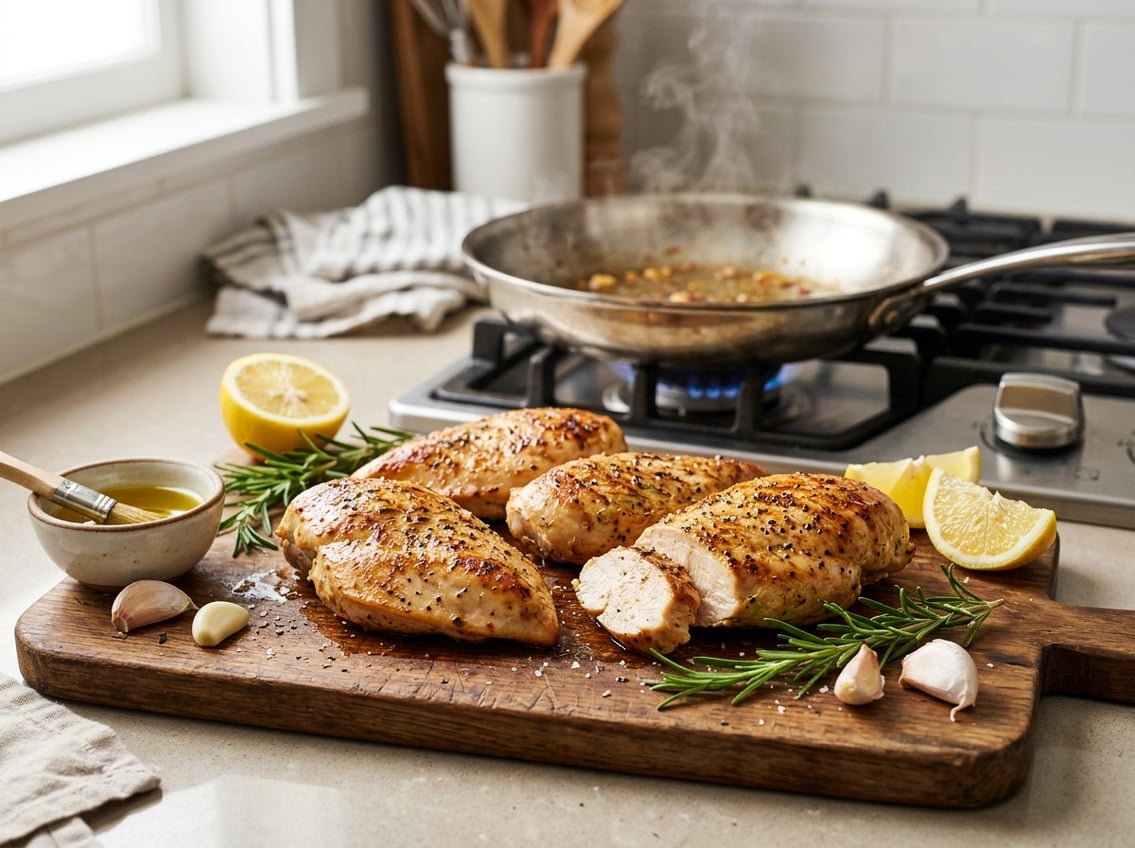
Chicken breast fillet is lean, so it dries out fast if you cook it too long. The best way to cook chicken breast depends on your time and texture preference, but the same basics apply whether you use a skillet, oven, air fryer, or pot.
If you want juicy results, focus on controlling thickness and temperature, then stop cooking at the right moment.
Start With Prep That Keeps Fillets Juicy
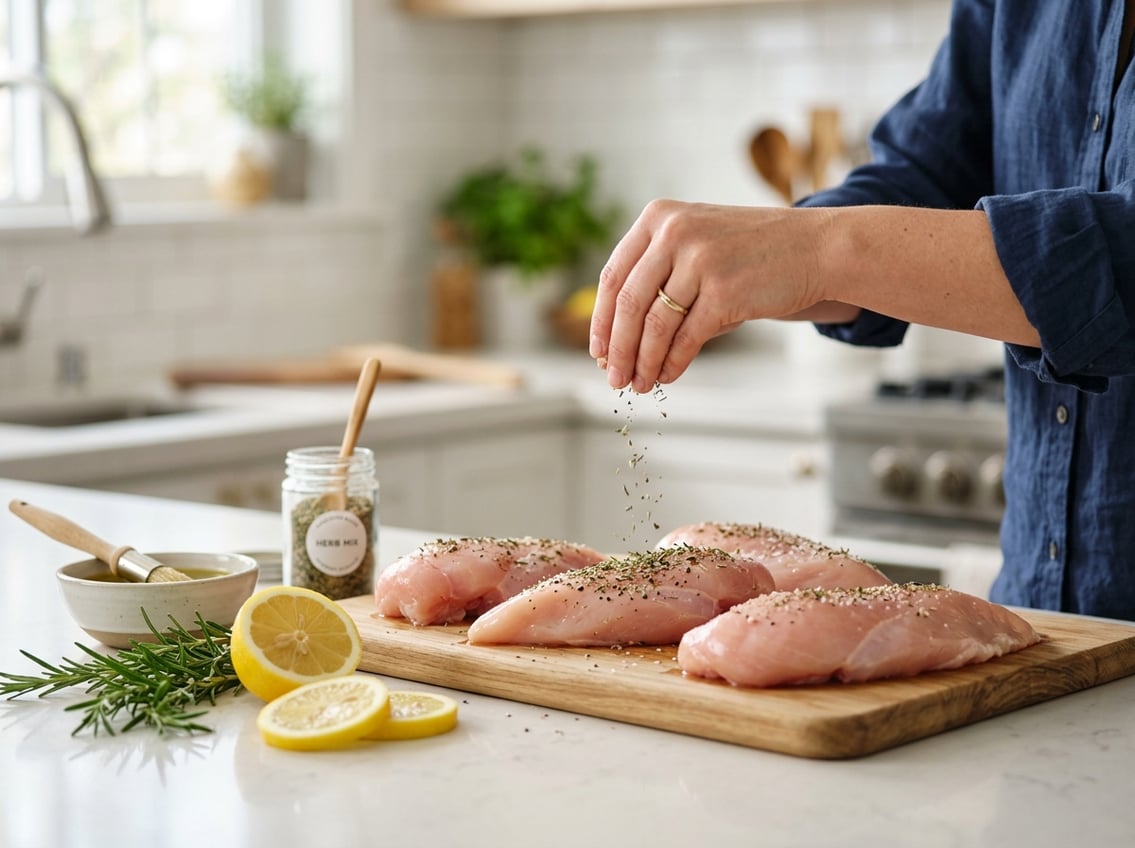
Good prep does most of the work before heat touches the meat. Skinless and boneless chicken breast cuts need extra care because they have less fat to protect them from drying out.
Choose the Right Cut and Thickness
Pick chicken breast fillets that are similar in size for even cooking. If one piece has a thick end and a thin end, you may end up with dry edges before the center is done.
If the fillets are very thick, slice them horizontally or pound them to a more even thickness. This shortens the cooking time and helps you get juicy chicken breast with fewer dry spots.
Flatten for Even Cooking
Place the fillets between plastic wrap or parchment paper and gently pound the thick parts. You only need to make them more even from end to end, not completely flat.
Even thickness helps the whole piece finish at the same time. This step often comes before you preheat the pan or oven.
Season, Dry Brine, or Marinate
Salt does more than add flavor. A short dry brine helps the meat hold onto moisture, supporting a juicier chicken breast during cooking.
You can use simple seasonings like paprika, garlic powder, and onion powder. For more flavor, marinate the fillets for 30 minutes to a few hours.
Pat Dry Before Heat
Before cooking, pat the fillets dry with paper towels. Drying the surface helps browning and keeps the chicken from steaming in the pan.
This improves both flavor and texture. The exterior cooks more cleanly, and the inside is less likely to turn rubbery.
Compare the Best Cooking Methods
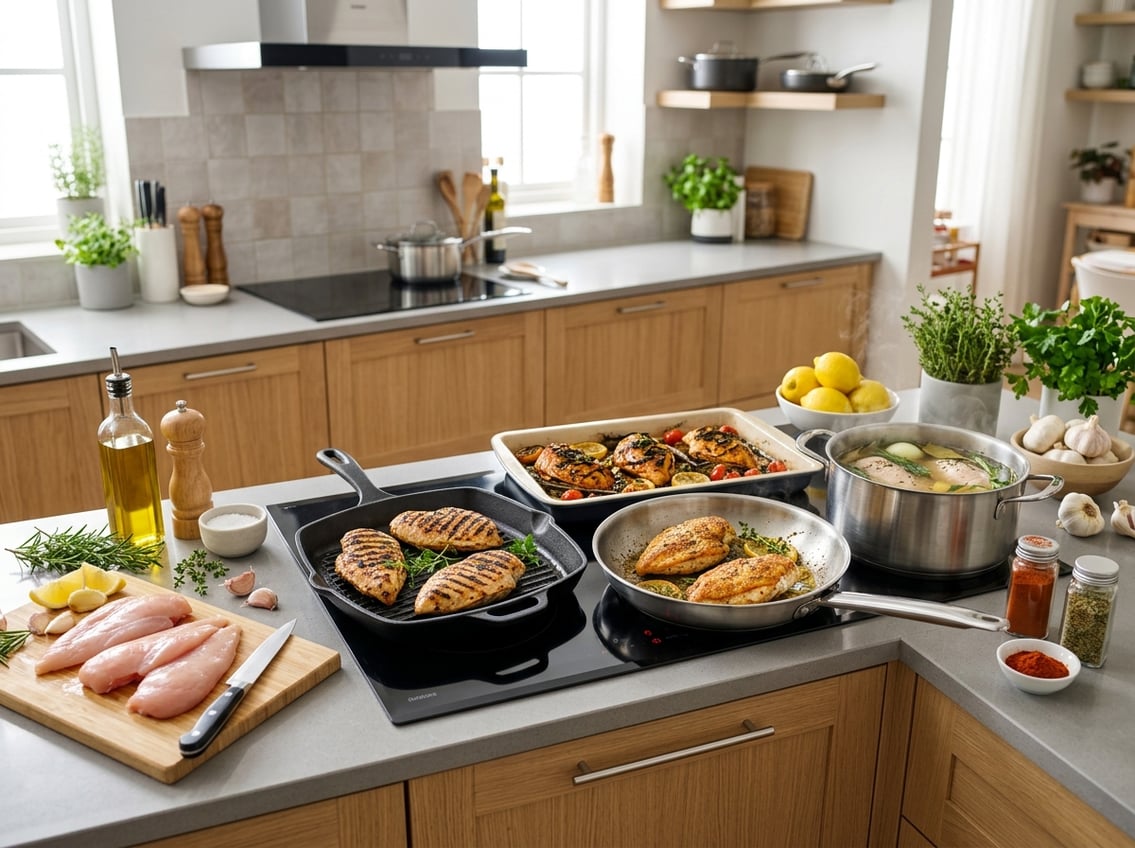
The best way to cook chicken breast fillets depends on what you want most, such as crust, speed, or easy cleanup. Pan-searing gives the most flavor, baking gives steady results, air frying is fast, and poaching is useful when you want soft meat for meal prep.
Pan-Searing for the Best Balance of Flavor and Juiciness
Pan-searing creates a browned outside while keeping the inside tender if you watch the time closely. This method works especially well for a quick dinner.
A heavy skillet, dry surface, and proper seasoning help create a better crust without losing moisture.
Baking for Hands-Off Consistency
Baking chicken breasts is a good choice when you want less hands-on work. It is easier to cook several pieces at once, and it gives you steady heat from all sides.
High heat and shorter time work best for baked chicken breast fillets. Proper temperature control and a meat thermometer help keep baked fillets juicy.
Air Frying for Speed
Air frying is useful when you want dinner fast. It cooks the chicken quickly and can give the outside a light crisp without much oil.
Keep the fillets in a single layer for best results. If you crowd the basket, the chicken can steam instead of browning.
Poaching for Salads and Meal Prep
Poaching gently cooks soft chicken for salads, wraps, and grain bowls. It works best when you use broth, herbs, garlic, or lemon in the liquid.
Use low heat. A strong boil can make the texture tough, while a gentle simmer helps keep the chicken breast fillet tender.
Use Temperature and Resting to Avoid Dry Chicken
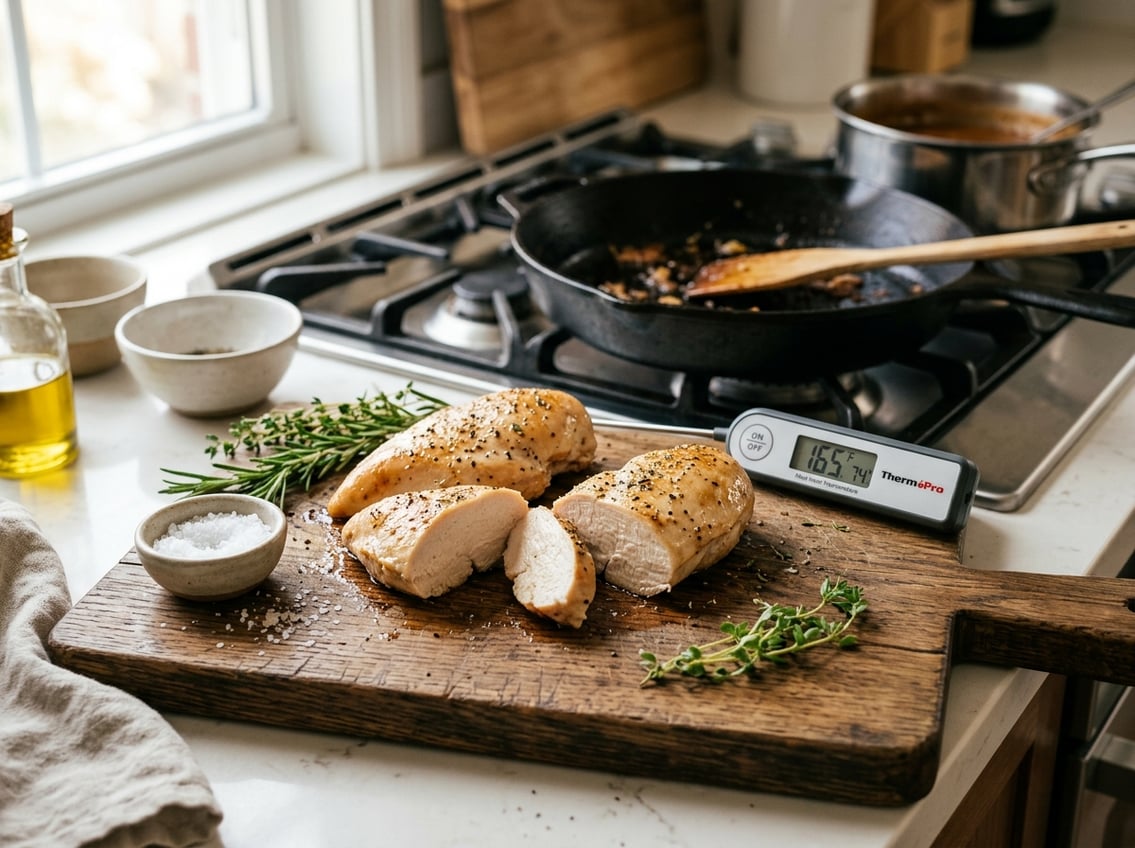
A meat thermometer is the most reliable tool for juicy chicken breast. It removes guesswork and helps you stop cooking at the right point.
When to Pull the Fillets From Heat
Remove chicken breast fillets when the thickest part reaches 165°F. This is the safe finished temperature for poultry and ensures the meat is done without overcooking.
For thick boneless chicken breast, check the center of the largest piece first. Thin ends often finish early.
Why Carryover Cooking Matters
Chicken keeps cooking after you remove it from the pan or oven. Heat moves inward from the outside, so the internal temperature can rise a few degrees while it rests.
Removing it a little early helps you avoid dry chicken. The meat finishes gently instead of overcooking on the heat source.
How Long to Rest Before Slicing
Let the chicken rest for 5 to 10 minutes before slicing. This gives the juices time to settle back into the meat.
If you cut too soon, even a well-cooked breast can seem dry. Resting is a small step with a big effect.
Common Mistakes That Dry Out Chicken
- Cooking at too high a heat for too long
- Skipping the thermometer
- Cutting into the meat right away
- Using uneven fillets that cook at different speeds
- Leaving the pan crowded so the chicken steams
Simple timing and good tools matter more than complicated recipes.
Seasoning Ideas and Easy Serving Uses
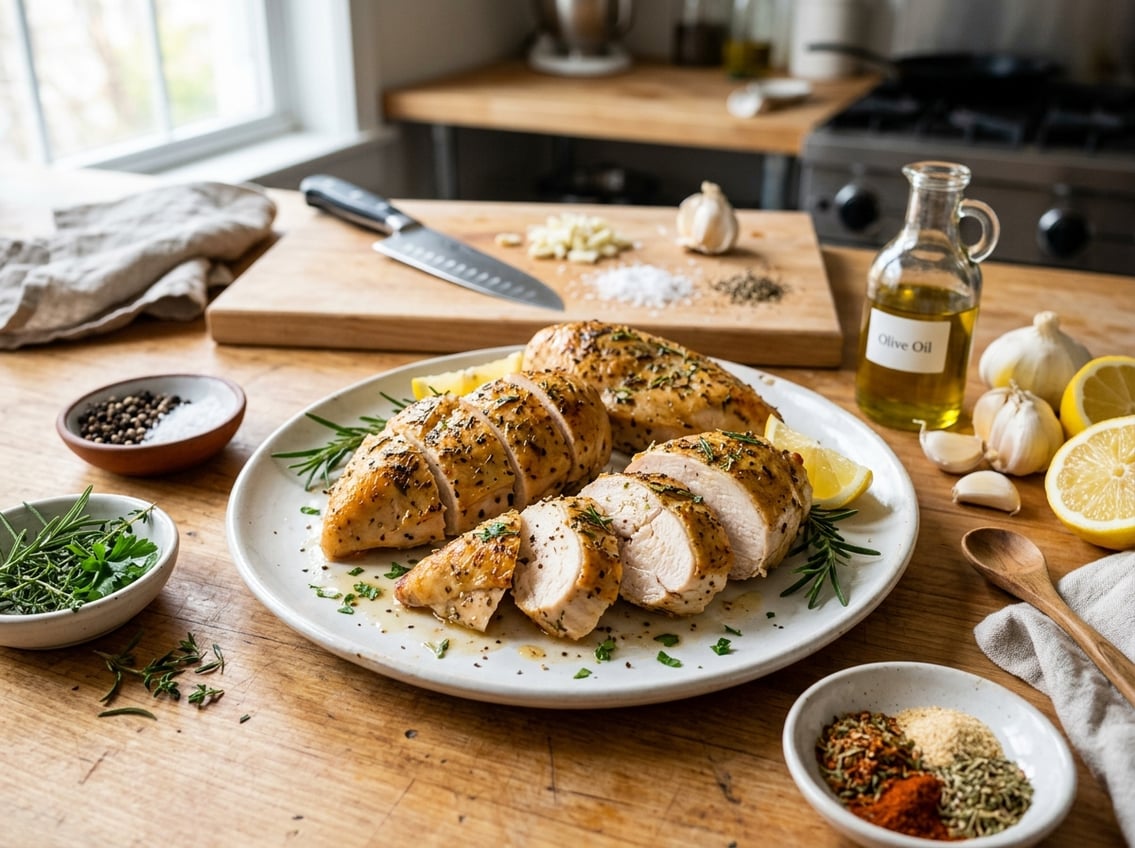
Seasoning helps chicken breast fillet taste complete on its own. A few pantry spices can turn plain cooked chicken breast fillets into a base for dinner, lunch, or meal prep.
Simple Everyday Spice Blend
A basic mix of paprika, garlic powder, onion powder, salt, and black pepper works well for almost any cooking method. It adds color, mild heat, and a savory finish without overpowering the meat.
For more depth, add a pinch of dried thyme or oregano. Keep the coating light so the seasoning supports the chicken rather than covering it.
Mediterranean and Yogurt Marinade Ideas
A yogurt marinade with lemon, garlic, and herbs helps the chicken stay tender. The mild acid and creaminess add flavor while softening the surface of the meat.
For a Mediterranean style, use olive oil, lemon, oregano, garlic, and a little paprika. This works well when you plan to slice the cooked chicken for bowls or wraps.
How to Slice for Bowls, Salads, and Sandwiches
Slice against the grain for the most tender bite. Cut across the lines in the meat instead of along them.
Thin slices work well for salads and sandwiches. Larger strips are better for rice bowls or pasta dishes.
Recipes That Build on Cooked Fillets
Cooked chicken breast fillets work well in many meals. You can add them to pasta or wraps.
Try using them in grain bowls or quesadillas. For chicken parmesan, top the cooked chicken with sauce and cheese.
Keep a few cooked fillets in the fridge. This makes weeknight meals much easier.
A simple chicken breast fillet can quickly become a main dish or a protein add-in.


