
How Long Does It Take to Chicken Breast to Boil? Timing Guide
The answer to how long does it take to chicken breast to boil depends on the cut, thickness, and whether you start with fresh or frozen chicken. Most boneless, skinless breasts finish cooking at a gentle simmer in about 12 to 15 minutes. Bone-in breasts take longer.
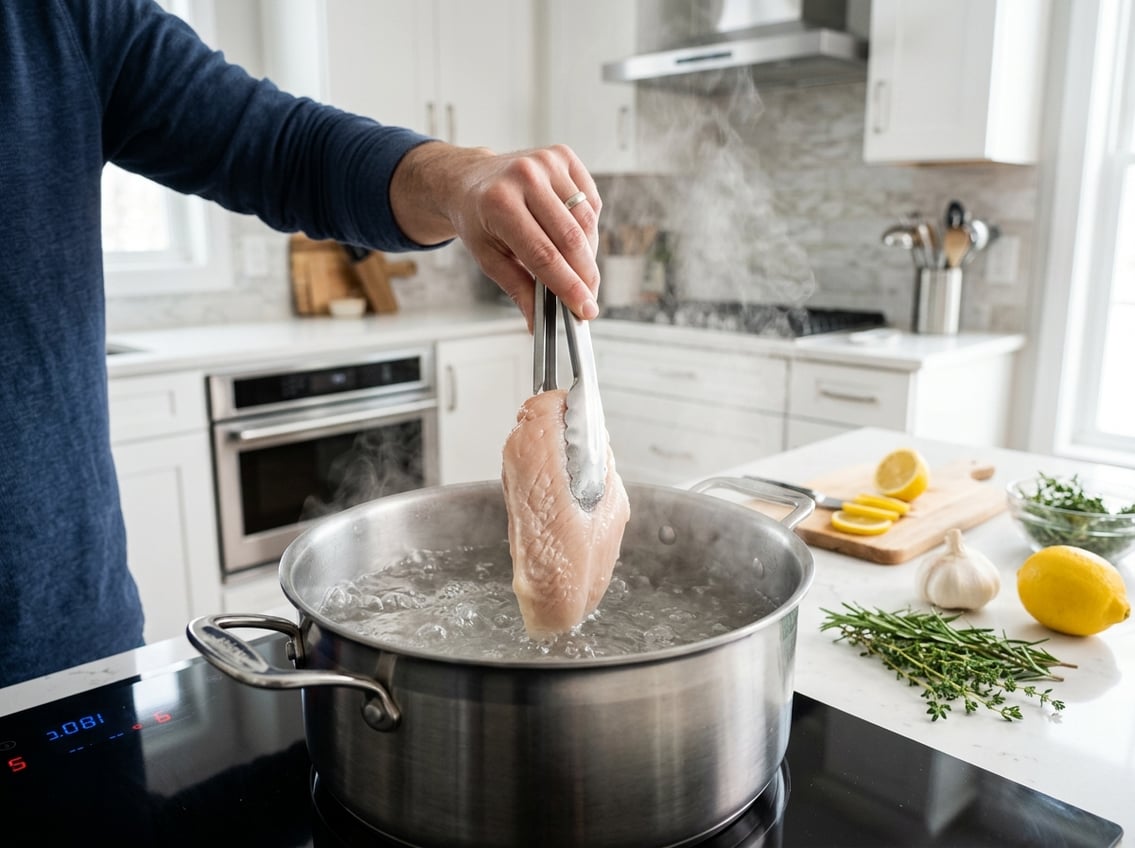
You should judge doneness by temperature, not time. Chicken breast is ready when the center reaches 165°F.
That helps you avoid dry, rubbery chicken and gives better results for salads, meal prep, soups, and casseroles.
If you want tender chicken breast, your method matters as much as timing. Use a gentle simmer, enough liquid, and rest the chicken after cooking for the best results.
Exact Timing by Chicken Breast Type
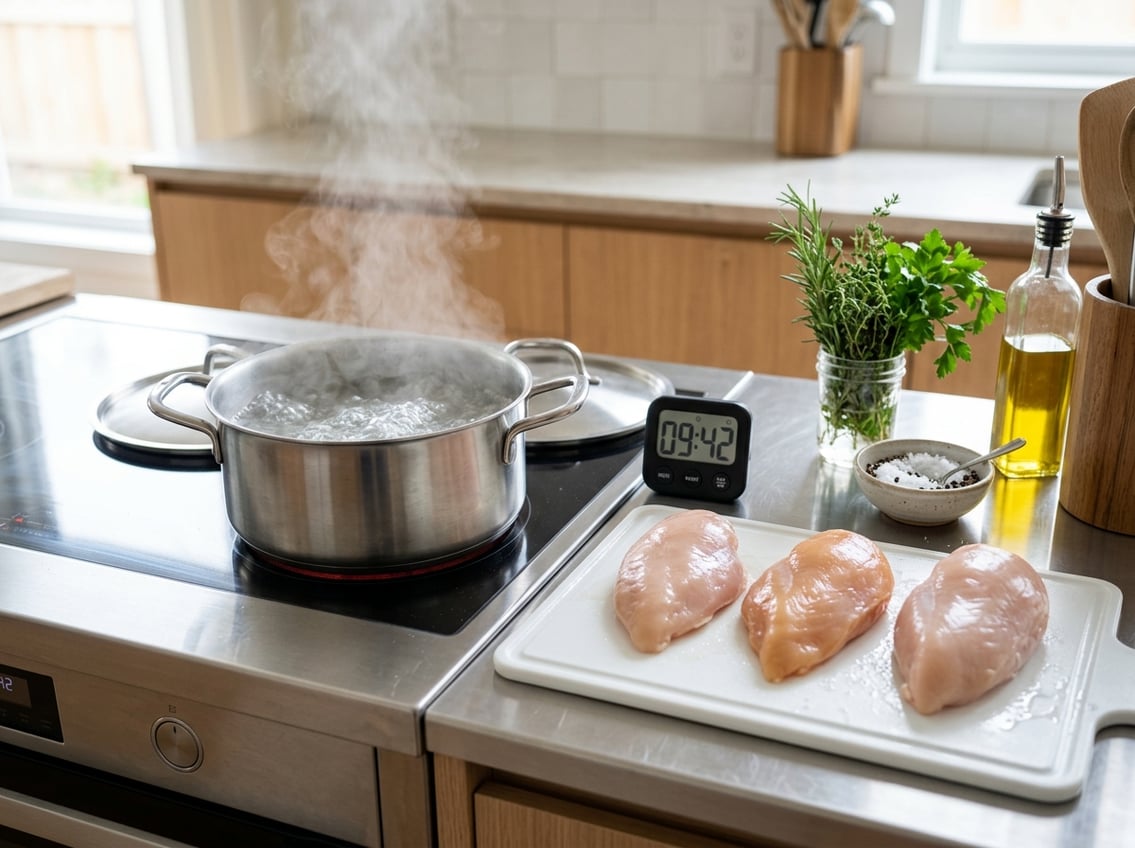
Boiling time depends on whether your chicken breasts are boneless or bone-in. Size and thickness matter too, so use the clock as a guide and check with a thermometer.
Boneless Skinless Breast Timing
Boneless, skinless chicken breast usually cooks in 12 to 15 minutes at a simmer. Better Homes & Gardens suggests this range as a good starting point.
If the pieces are thick, use the longer time. Smaller chunks cook in about 8 to 10 minutes.
Bone-In Breast Timing
Bone-in chicken breasts need about 30 minutes at a gentle simmer. The bone slows down cooking, so check the thickest part near the bone.
Frozen breasts take longer. Always check the center and thickest part for doneness.
How Thickness and Size Change Cook Time
Thicker chicken breasts take longer to cook than thinner ones, even if they weigh the same. Large breasts can stay pink in the center while smaller ones finish.
Choose pieces that are similar in size for even cooking. If you have very large breasts, pound them lightly or cut them in half.
Internal Temperature and Carryover Cooking
Aim for 165°F in the thickest part of the chicken. A meat thermometer gives the most accurate result.
After removing the chicken from the heat, let it rest a few minutes. The temperature can rise slightly as it sits.
Best Method for Juicy Results
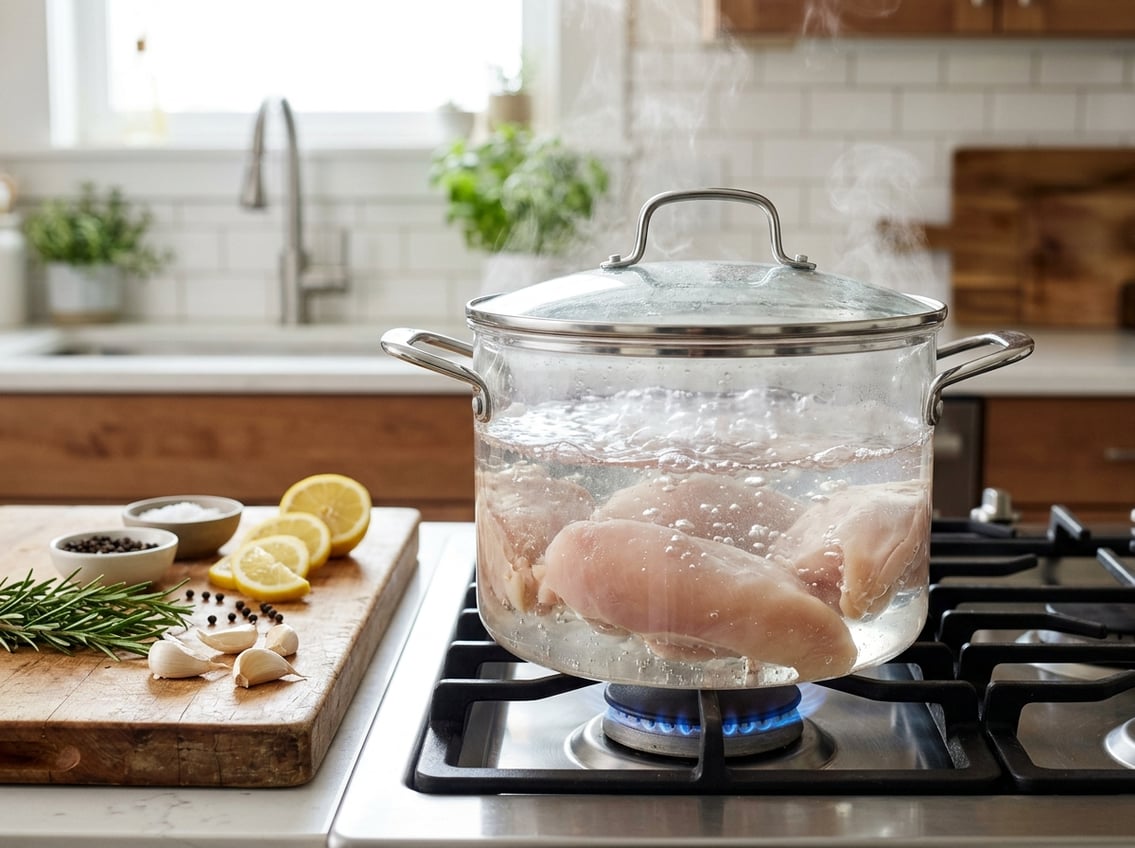
You get juicy boiled chicken by using gentle heat and enough liquid to cover the meat. Steady cooking works better than rapid boiling.
How to Boil Chicken Breast Step by Step
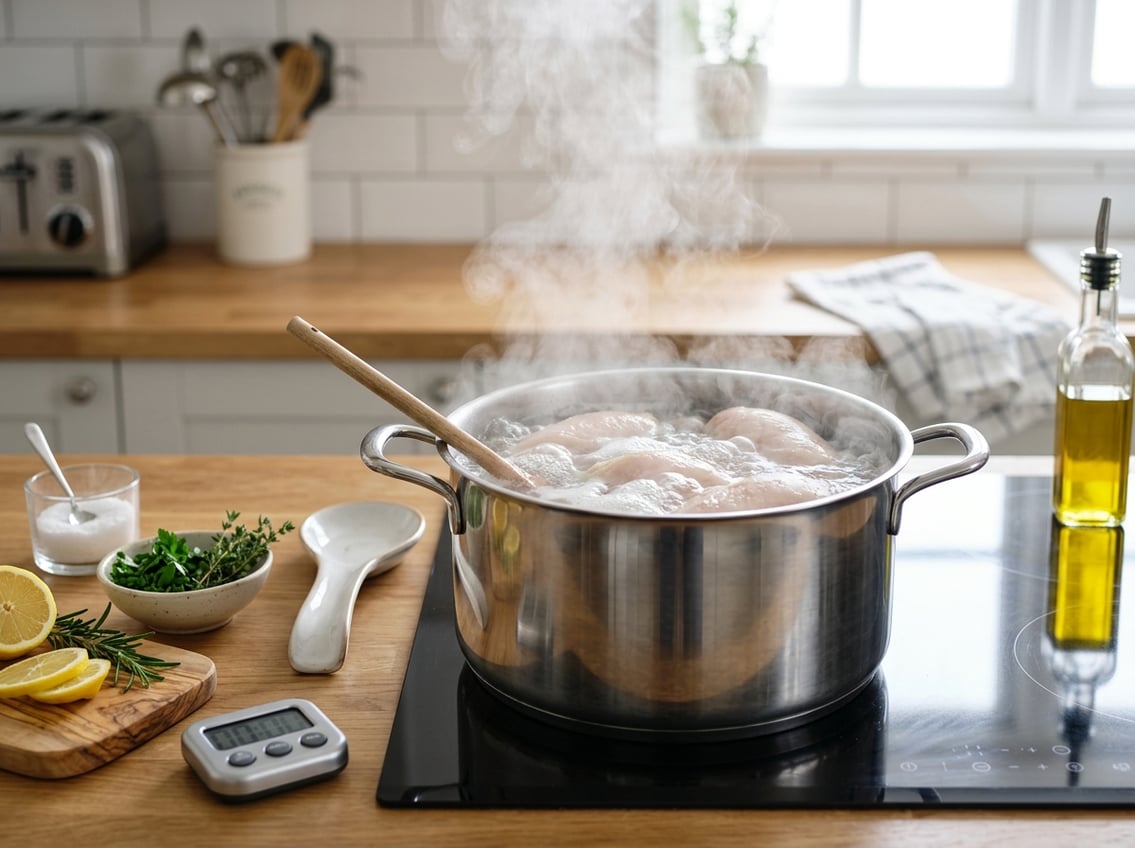
Place the chicken in a pot or deep skillet. Add water or chicken broth to cover the chicken by about an inch.
Bring the liquid to a boil, then reduce the heat to a simmer. Cook until the internal temperature reaches 165°F, then remove the chicken and let it rest before slicing, shredding, or chopping.
Why a Gentle Simmer Beats a Rolling Boil
A rolling boil can make chicken breast tough on the outside while the inside remains undercooked. A gentle simmer cooks the meat more evenly and keeps it tender.
Many recipes use “boiled chicken” and “poached chicken” for the same method. Better Homes & Gardens explains that simmering gives better texture.
Water vs Chicken Broth for Better Flavor
Water works well if you want a plain base for many recipes. Chicken broth gives the meat deeper flavor and makes the cooking liquid more useful.
You can add onion, garlic, celery, herbs, or lemon to either liquid. These extras add flavor, especially if you use the chicken in soups, casseroles, or chicken salad.
When Boiled Chicken and Poached Chicken Mean the Same Thing
In most home kitchens, boiled chicken and poached chicken both mean cooking chicken in liquid until done.
Aim for a gentle simmer for the best texture and results.
Frozen Chicken, Shredding, and Common Mistakes
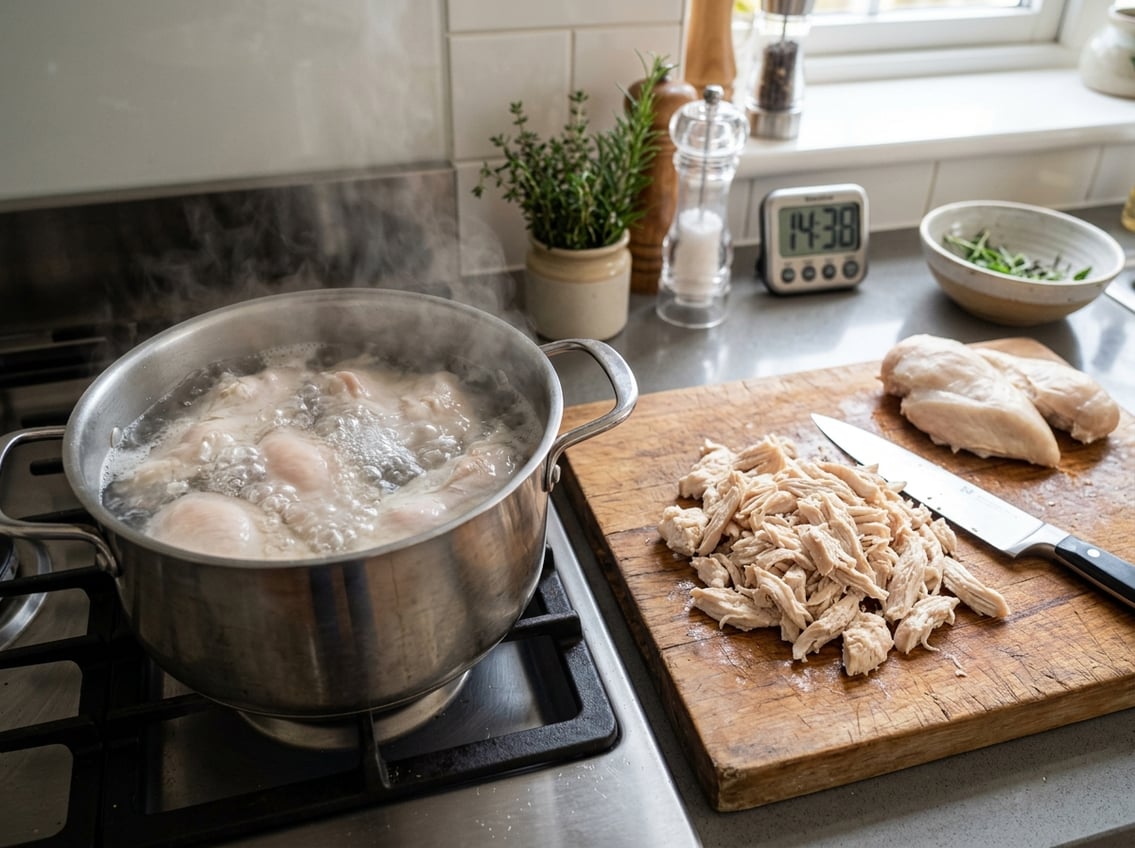
You can cook frozen chicken, shred it, and use it in meals, but thawing first is often easier. The biggest problems come from high heat, uneven pieces, and stopping too soon.
Boiling Frozen Chicken Safely
If you boil frozen chicken, use a gentle simmer and expect a longer cook time. Better Homes & Gardens says frozen bone-in breasts take around 45 minutes, and frozen boneless breasts take about 18 to 22 minutes.
Use a thermometer and check that the thickest part reaches 165°F.
How to Make Shredded or Chopped Chicken
Let the chicken cool until you can handle it, then pull it apart with two forks or your fingers. For chopped chicken, slice it into cubes after resting.
Shredded chicken works well for tacos, sandwiches, casseroles, and soup. Chopped chicken fits best in salads or pot pie.
Signs the Chicken Is Overcooked or Undercooked
Overcooked chicken breast looks dry and stringy. It tastes bland and feels tight when you bite it.
Undercooked chicken can look pink near the center or feel slippery. Keep cooking until the center reaches 165°F.
Mistakes That Make Chicken Rubbery
A hard boil often makes chicken rubbery. Cooking pieces that are much thicker on one end without adjusting the time also causes problems.
Remove the chicken from hot liquid as soon as it reaches temperature. Let it rest outside the pot.
How to Use and Store Cooked Chicken
Boiled chicken is easy to use in meals for the week. Safe storage keeps texture and flavor.
Best Ways to Use Boiled Chicken
Use boiled chicken in soups, wraps, rice bowls, pasta dishes, and enchiladas. It makes a mild protein that takes on sauce easily.
Shredded chicken is best for tacos, sliders, and soups. Chopped chicken fits better in salads and pasta bakes.
Ideas for Chicken Salad and Chicken Pot Pie
Boiled chicken makes a great base for chicken salad, blending well with mayo, yogurt, celery, grapes, or herbs. It also works well in chicken pot pie.
For pot pie, chopped chicken is usually better than shredded because the pieces stay distinct.
How to Store Boiled Chicken in the Fridge or Freezer
Let the chicken cool fully before storing. Better Homes & Gardens recommends refrigerating boiled chicken for up to three days or freezing it for up to two months.
Store chicken in a sealed container and label the date. Portion it before freezing so you can thaw only what you need.
When to Save the Cooking Liquid
Save the cooking liquid when you want extra flavor for soup, rice, or sauce.
Strain out solids first. Cool and store it in a clean container.
Use the liquid as a quick chicken broth base. If you used herbs, onion, or celery, the flavor may be useful in another recipe soon after.


