
Is It Normal for Chicken Breast to Be Pink? Safety Guide
You may slice into a chicken breast and wonder, is it normal for chicken breast to be pink? In many cases, a little pink does not automatically mean the meat is unsafe, especially if the chicken reached the right internal temperature.
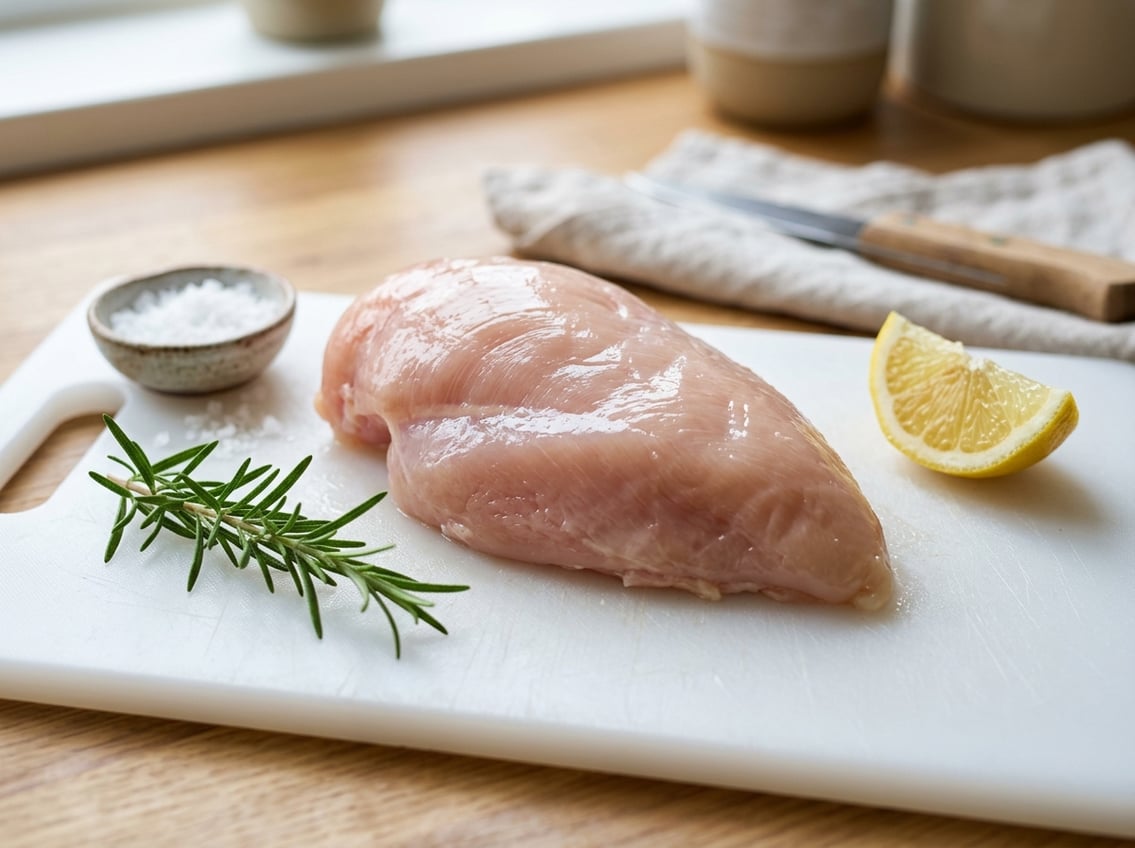
The safest way to judge chicken is by internal temperature, not by color alone. A chicken breast can look slightly pink and still be fully cooked, while chicken that looks white can still be undercooked inside.
The key question is whether your chicken is truly done. You should check the temperature, the texture, and any signs that point to undercooked chicken or food safety risks.
How to Tell If Chicken Breast Is Safe to Eat
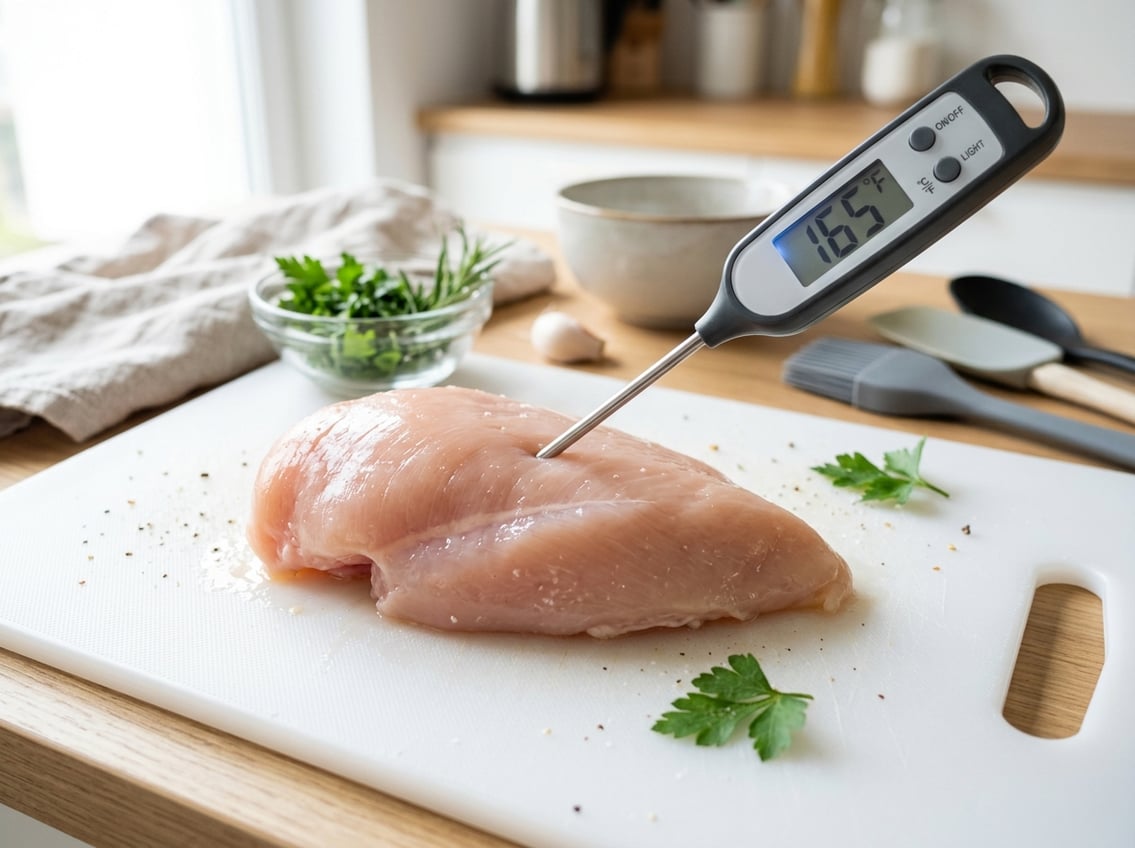
You cannot tell safety from meat color alone. A proper check uses temperature, because that is what tells you whether harmful bacteria have been destroyed.
Why Internal Temperature Matters More Than Meat Color
Meat color changes for many reasons, and those changes do not always match doneness. A chicken breast can look cooked on the outside and still be unsafe in the center.
A meat thermometer or food thermometer gives you a direct reading of the internal temperature. That is the most reliable food safety check for cooked chicken.
The Safe Minimum: 165°F and 74°C
Chicken breast is safe to eat at 165°F, which is 74°C. At that temperature, harmful bacteria have been killed.
The USDA states that poultry should reach this safe temperature for doneness. You can read the USDA guidance on poultry safety in its official chicken cooking chart.
How to Use a Meat Thermometer Correctly
Insert the thermometer into the thickest part of the breast, away from bone and pan surfaces. Bone can give you a false reading, and a hot pan can make the number look higher than it really is.
Wait until the reading settles before you decide the chicken is done. If it is below 165°F, keep cooking and check again.
What the USDA Says About Doneness
The USDA relies on temperature, not color, to judge doneness. A pink tint does not automatically make chicken unsafe if the meat has reached 165°F.
If you want a reliable answer to whether your cooked chicken is safe, the USDA standard is the clearest guide.
Why Fully Cooked Chicken Breast Can Still Look Pink
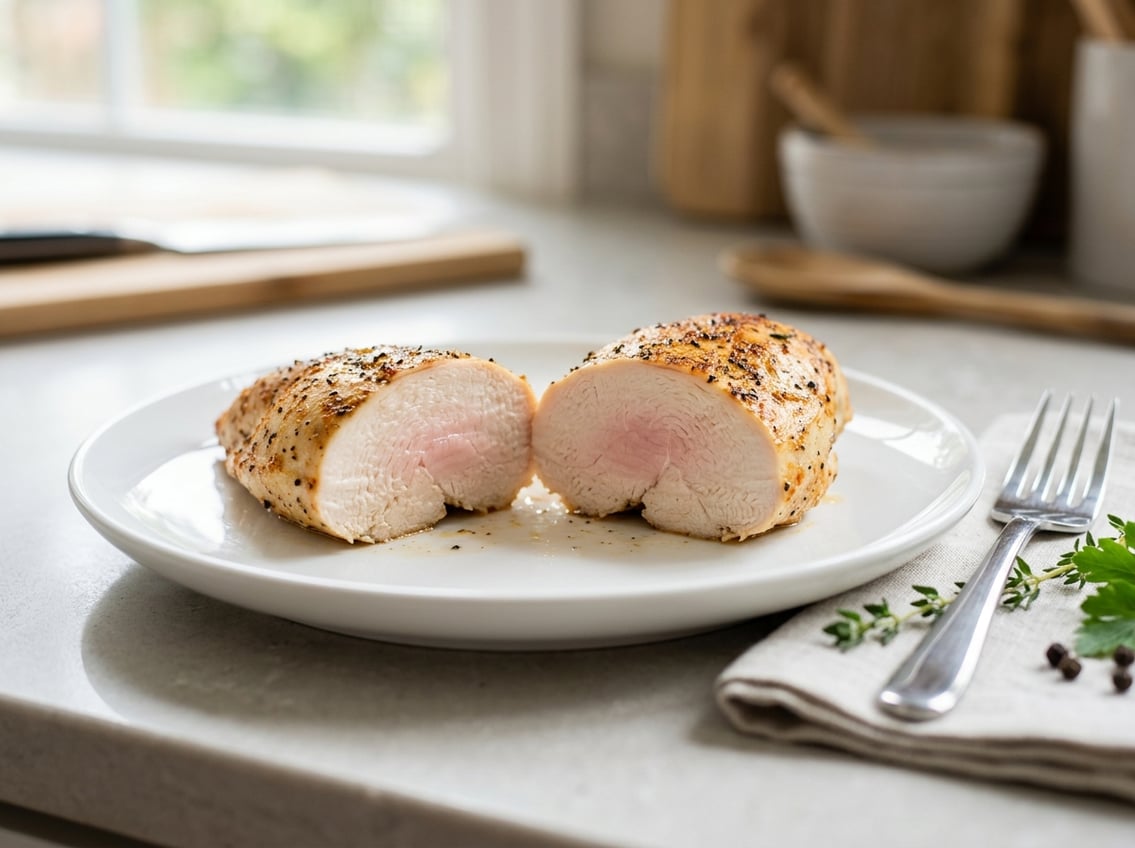
Pink color in cooked chicken often comes from natural meat pigments, cooking methods, or added ingredients. The color can look unusual even when the chicken is fully safe to eat.
Myoglobin and Natural Meat Pigments
Myoglobin is a protein that helps give meat its color. In chicken, it can leave a pink or reddish tone even after cooking, especially near the bone or in thicker parts of the breast.
A properly cooked breast can still look a little pink and remain safe if it reached the right temperature.
Young Chickens and Pinkness Near the Bone
Young chickens can sometimes show more pink around the bone after cooking. The bone marrow and surrounding tissue can affect the final color of the meat.
That pink area can be surprising, but it does not always mean the chicken is raw. Texture and temperature still matter more than a small color change.
Smoking, Smoke Ring, and Color Changes
Smoking and grilling can create a smoke ring, which is a pink layer near the surface of the meat. This effect is common in cooked poultry and is not the same as undercooked chicken.
Heat, smoke, and the cooking environment can all change the look of cooked chicken. Pink color from smoking is not a reliable warning sign by itself.
How Marinades, Nitrites, and Nitrates Affect Appearance
Some marinades, especially acidic marinades, can affect how chicken looks after cooking. Salt, vinegar, citrus, and other ingredients may change moisture and color during cooking.
Ingredients with nitrites or nitrates can also support pink color retention. These are more common in cured foods, not plain chicken breast, but they can still affect appearance when present.
When Pink Chicken Breast Is a Warning Sign
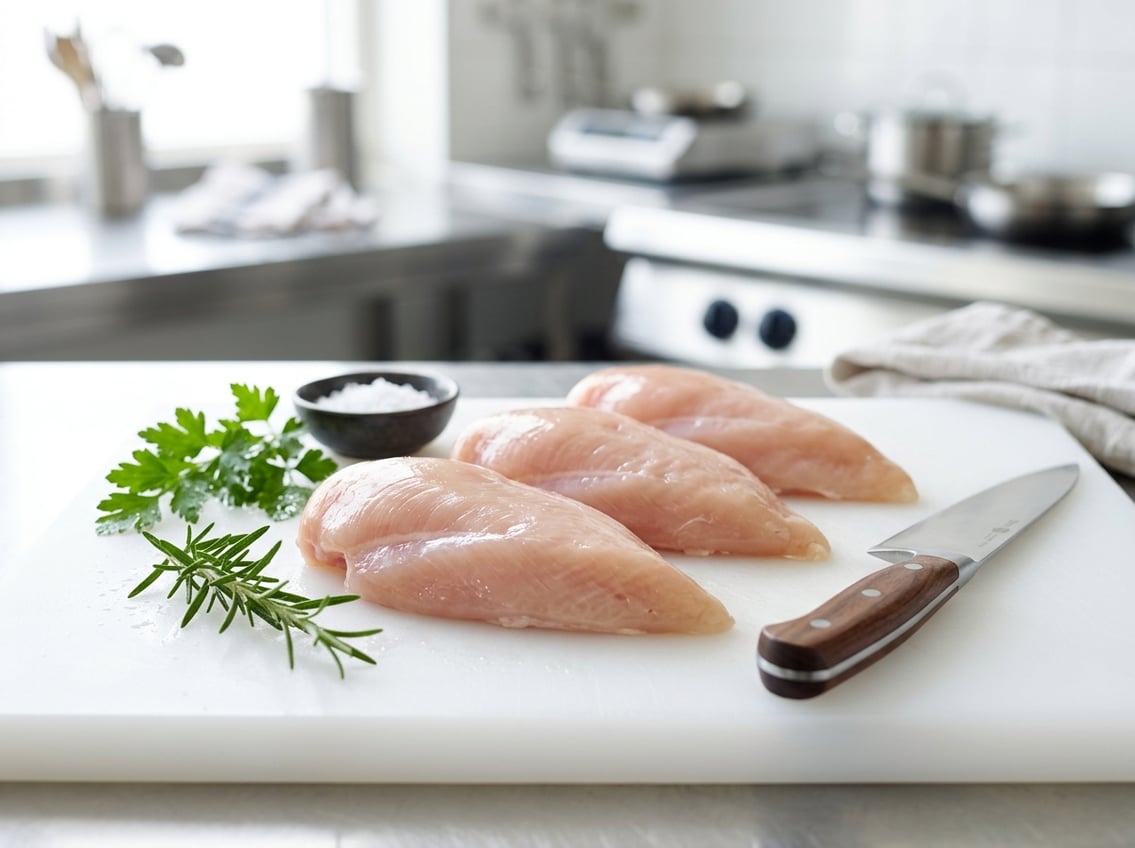
Pink color alone is not enough to call chicken unsafe. The warning signs appear when pink meat is paired with a soft center, bloody juices, or a temperature below the safe minimum.
Signs of Undercooked Texture and Appearance
Undercooked chicken often feels rubbery or spongy in the center. It may also look glossy or translucent in thick areas instead of firm and opaque.
If the breast is still soft and the middle looks raw, do not eat it yet. Keep cooking until it reaches 165°F.
Pink Chicken With Rubbery Texture or Bloody Juices
Pink chicken becomes more concerning when the texture is off and the juices are not clear. Pink liquid or bloody liquid near the center can point to undercooking.
A breast that is pink, rubbery, and wet in a raw-looking way should go back on the heat. Food safety is more important than keeping the meat slightly moist.
Foodborne Illness Risks From Salmonella and Campylobacter
Undercooked poultry can carry salmonella and campylobacter, two major causes of foodborne illness. These bacteria can survive if the chicken does not reach a safe internal temperature.
Symptoms can include stomach cramps, diarrhea, nausea, vomiting, and fever. The CDC explains food safety concerns with chicken and why proper cooking matters.
Common Mistakes That Lead to Confusion
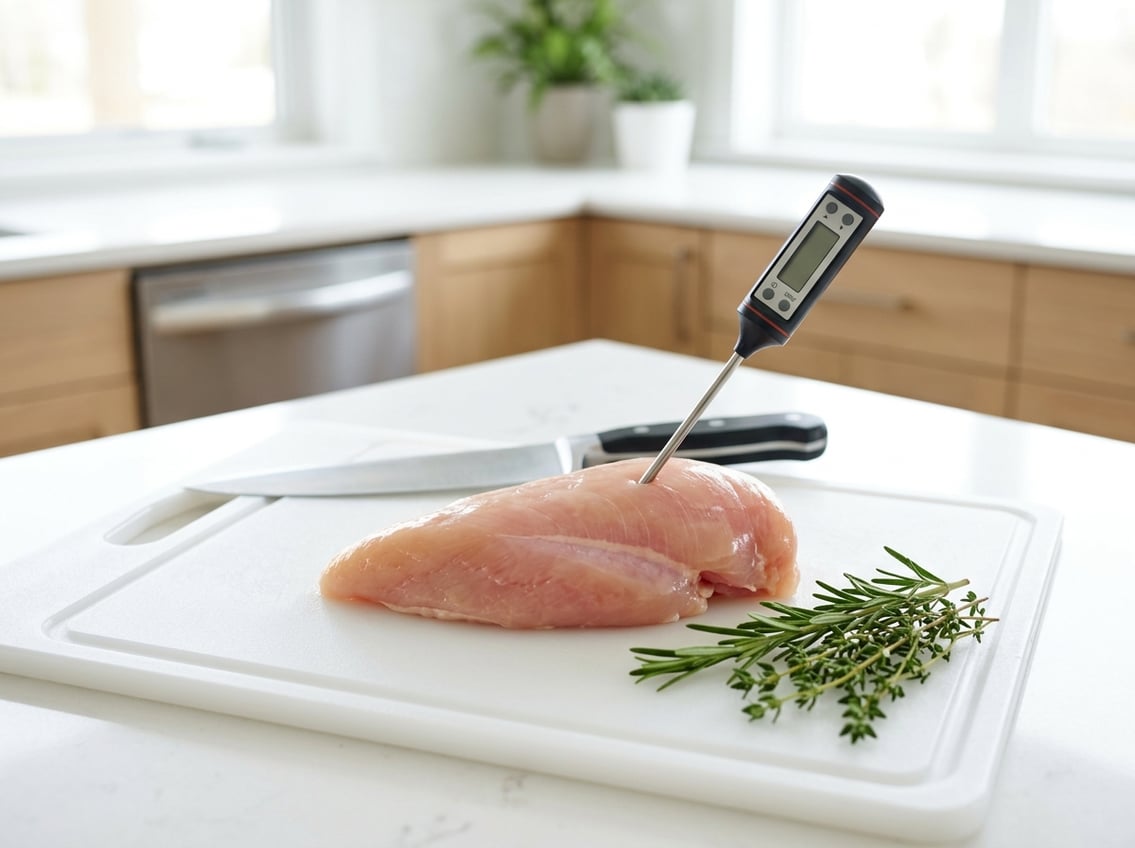
Most confusion comes from relying on quick visual checks. Color, juices, and surface looks can all mislead you if you skip the thermometer.
Why Clear Juices Are Not a Perfect Test
Clear juices can suggest doneness, but they are not enough on their own. Chicken can release clear liquid before the center reaches a safe internal temperature.
A food thermometer gives you a more accurate answer. If the center is still below 165°F, the chicken is not done, even if the juices look clear.
Why Chicken Breast Differs From Dark Meat
Chicken breast and dark meat do not behave the same way during cooking. Breast meat is leaner, so it often changes from pink to white sooner on the outside, while the center may lag behind.
That difference is why meat color is such a poor guide for breasts. Doneness depends on heat, not just how the meat looks.
What to Do If You Cut Into a Pink Center
If you cut into the breast and see a pink center, check the temperature before deciding if it is safe to eat.
If you do not have a thermometer, continue cooking until the thickest part reaches 165°F.
If the meat stays pink but the thermometer shows the right temperature, it is usually safe to eat.
If the texture feels rubbery or the center looks raw, keep cooking and check again before serving.


