
Is It Safe to Eat Chicken Breast With Freezer Burn? What to Know
The answer to is it safe to eat chicken breast with freezer burn is usually yes, as long as the chicken has stayed frozen and shows no signs of spoilage. Freezer burn affects texture and taste more than safety because it is mainly a moisture loss problem, not a bacteria growth problem.
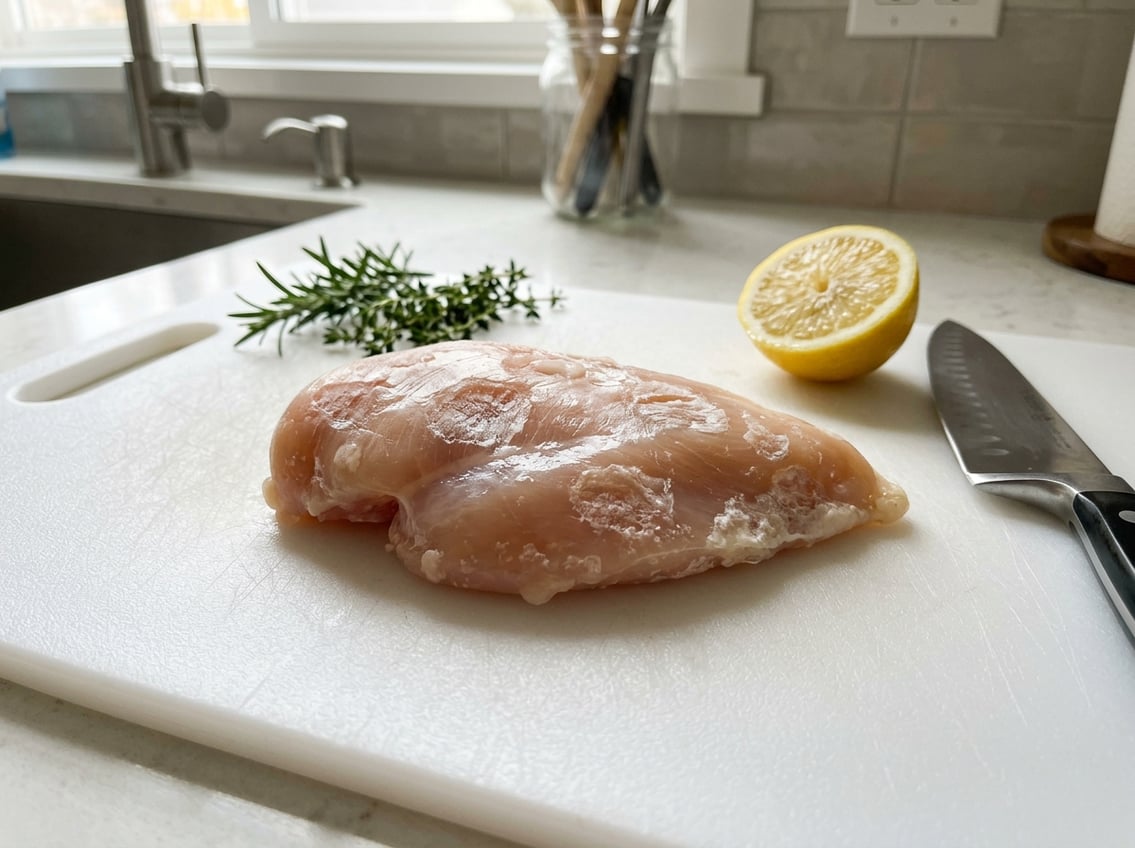
You can usually cook and eat freezer-burned chicken breast safely if it was fresh when frozen, kept at a safe frozen temperature, and still smells and looks normal after thawing. If the chicken shows spoilage, you should throw it out.
Freezer burn can make chicken breast dry, pale, and tough after cooking. That is unpleasant, but it does not automatically mean the meat is unsafe.
The key is to check for real signs of spoilage, not just icy patches or faded color.
Safety First: When Chicken Breast Is Still Fine to Eat
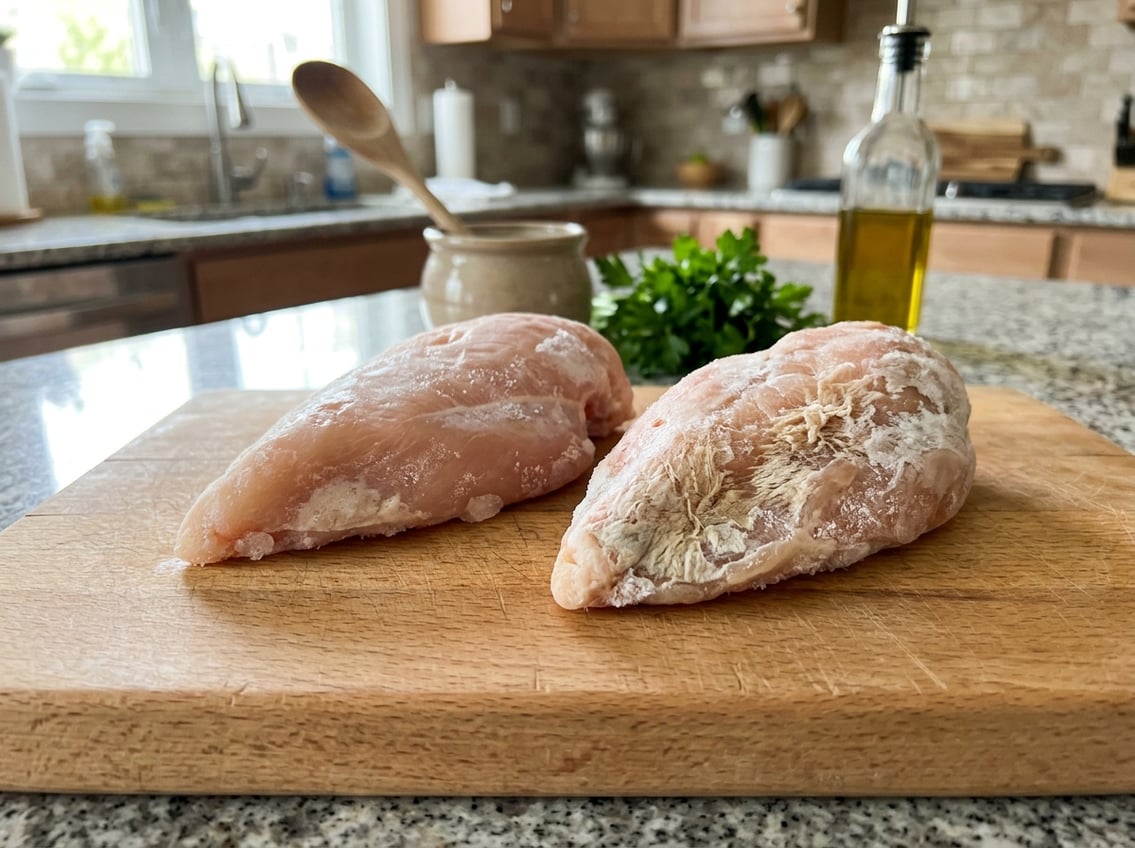
Freezer burn is a quality issue, while food safety depends on whether the chicken stayed frozen and free of spoilage. If you handle and cook it properly, you can still make a safe meal with freezer-burned chicken.
What Is Freezer Burn?
Freezer burn happens when moisture leaves the surface of food and the exposed areas dry out in cold air. As Laura Fuentes explains, moisture evaporates from the meat and freezes around it.
You may see white or gray dry spots, ice crystals, or a dull surface. Those changes are common in freezer-burned chicken and do not, by themselves, mean the chicken is bad.
Freezer Burn vs. Spoilage
Freezer burn changes texture and flavor. Spoilage changes safety.
Chicken that smells sour, feels slimy, or has an odd sticky surface should be discarded, even if it was frozen. Freezing slows bacteria growth like salmonella and campylobacter, but it does not kill all germs.
Safe storage and cooking still matter. If the chicken was thawed and left too long in the refrigerator or at room temperature, freezer burn is no longer the main issue.
When to Throw It Out Instead
Throw out the chicken if you notice any of these after thawing:
- Sour, rotten, or ammonia-like smell
- Slimy or tacky texture
- Gray-green discoloration that looks beyond normal freezer burn
- Torn packaging with clear thawing and refreezing
- Unknown storage history
If you are unsure, food safety should come first.
A small amount of quality loss is acceptable, but visible spoilage is not.
How Freezer Burn Changes Chicken Breast
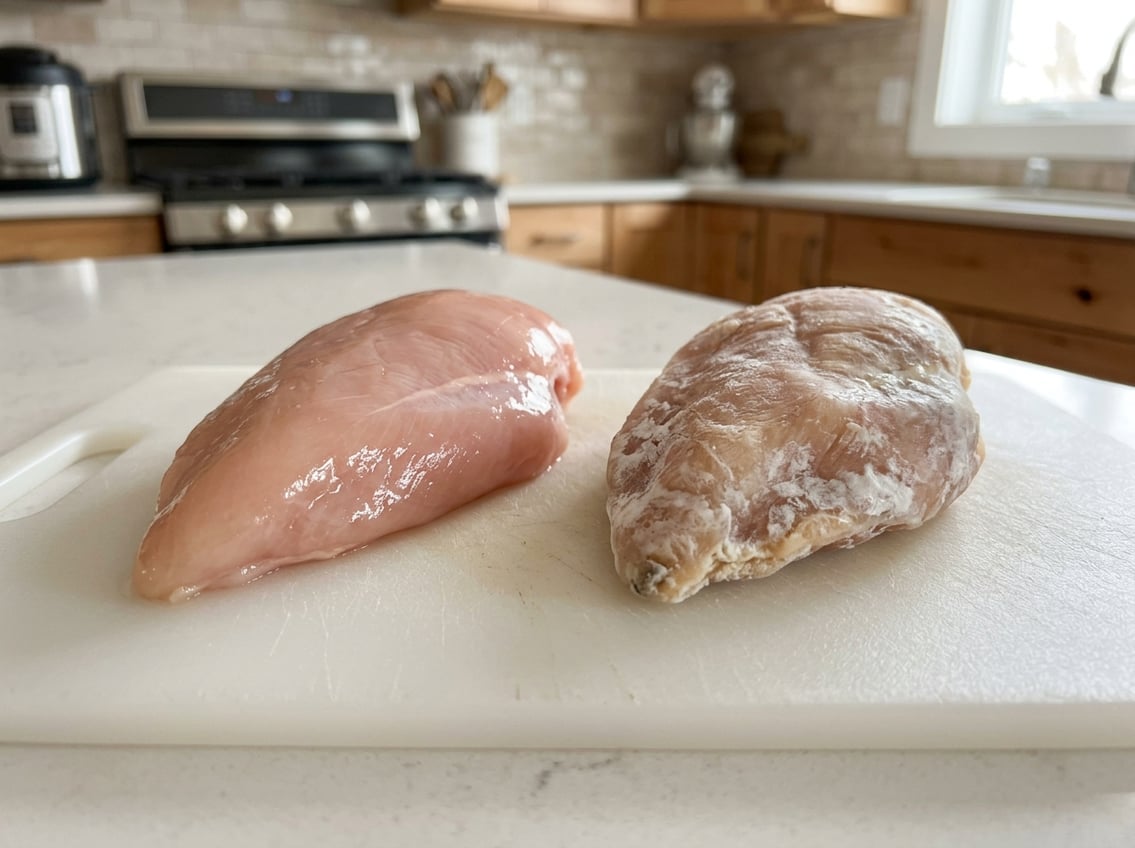
Freezer burn changes the outside of the meat first, especially when air reaches the surface. Dehydration and oxidation damage texture, flavor, and appearance.
Dehydration and Oxidation Explained
Dehydration pulls water out of the chicken breast. Oxidation happens when air reacts with the meat’s surface and changes its color and taste.
Together, these effects make the chicken look faded and feel dry. This is why freezer-burned chicken often cooks up with a tougher bite.
Effects of Freezer Burn on Chicken
The most common effects of freezer burn on chicken are:
- Dry, papery patches
- Pale or gray areas
- Less flavor
- Tough or stringy texture after cooking
The quality loss is usually worst on boneless, skinless chicken breasts because they have less fat to protect them.
What Improper Packaging Looks Like
Improper packaging often causes freezer burn. Thin store wrap, loose plastic, torn bags, or containers with extra air let moisture escape and cold air enter.
If the chicken was left in weak grocery packaging, that packaging likely did not protect it well enough for long freezer storage. Air exposure is the main reason freezer burn shows up in the first place.
How to Cook Freezer-Burned Chicken Breast
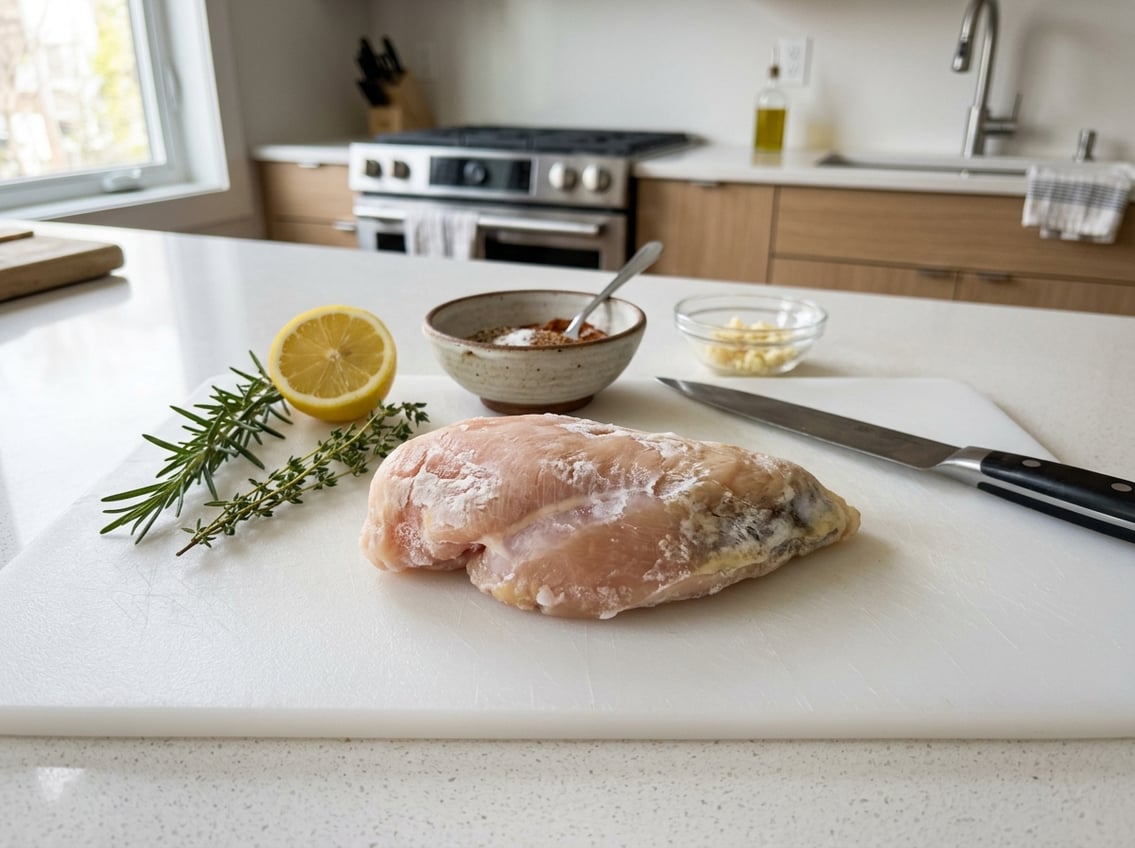
The best way to cook freezer-burned chicken breast is to add moisture during cooking. Gentle methods help the meat stay tender and make dry spots less noticeable.
Best Moist-Heat Methods
Moist-heat cooking works well because it helps rehydrate the chicken as it cooks. Good options include:
- Poaching in broth or water
- Simmering in soup
- Slow cooking in a sauce
- Braising in a covered pan
- Baking in a covered dish with liquid
These methods are a good fit for shredded chicken, casseroles, soups, and tacos.
Why Dry-Heat Cooking Can Make It Worse
Dry-heat methods like grilling can make freezer-burned chicken even drier. When the meat already lost moisture in the freezer, high heat has less room to work with.
Oven roasting can also dry out boneless, skinless breasts if you do not add moisture or watch the time closely. The more damaged the surface looks, the more important it is to choose a moist method.
How to Trim and Improve Texture
Trim off dry or leathery freezer-burned spots before cooking. This will not fix the whole breast, but it can improve the final texture.
Marinating can help a little, especially if you use a sauce-based dish. Even then, you still need to check for signs of spoilage before cooking.
How to Prevent It Next Time
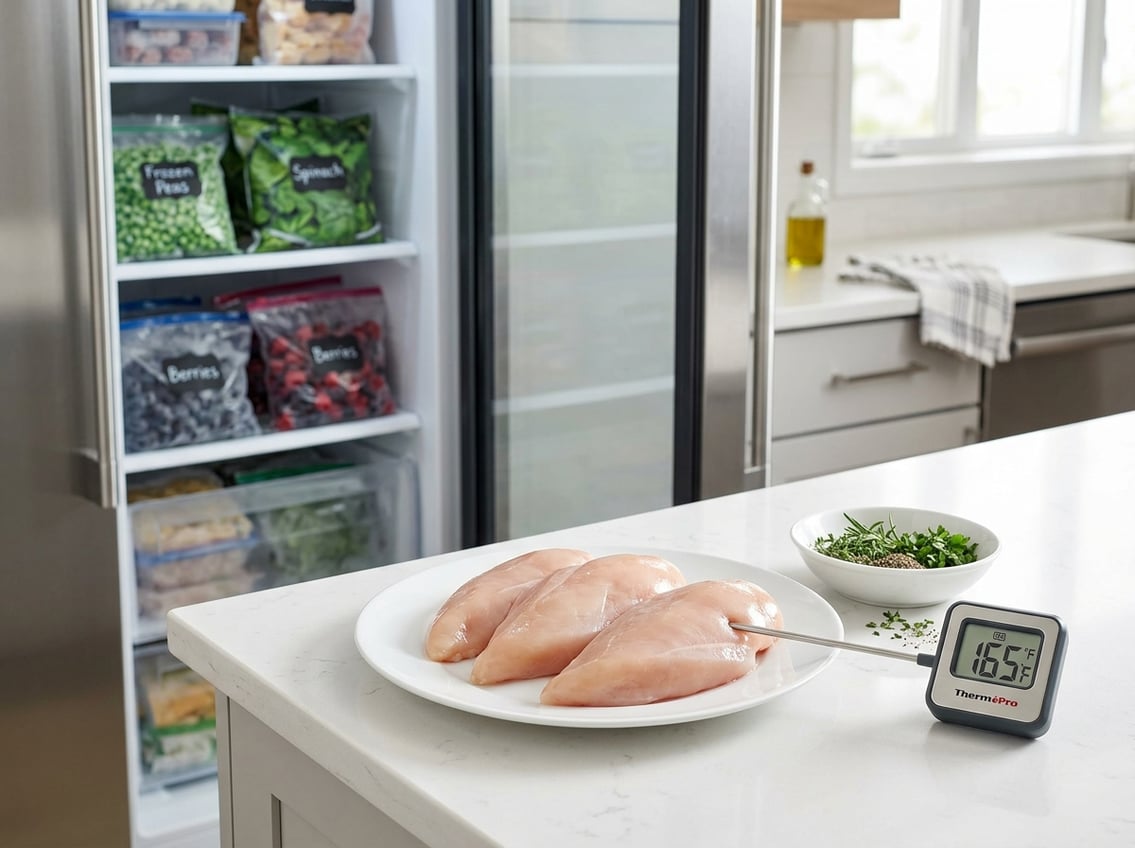
You can prevent freezer burn by keeping air away from the chicken and using packaging made for long freezer storage. Good wrapping makes a big difference in how the chicken looks and tastes later.
Best Wrapping and Storage Materials
The best options are:
- Freezer bags
- Vacuum sealing
- Freezer paper wrapped tightly around the meat
- Heavy-duty airtight containers
Regular grocery wrap is usually not enough for long storage. A tighter seal means less air exposure and less moisture loss.
How Vacuum Sealing Helps
Vacuum sealing removes much of the air around the chicken, which helps prevent freezer burn on chicken breast. Less air means less dehydration and less oxidation.
If you do not have a vacuum sealer, press out as much air as possible from freezer bags before sealing. Thicker freezer-safe bags work better than thin storage bags.
Simple Habits for Preventing Freezer Burn on Chicken
Use these habits to prevent freezer burn:
-
Freeze chicken as soon as possible after buying it.
-
Divide it into meal-size portions.
-
Wrap it tightly before freezing.
-
Label packages with the date.
-
Keep the freezer at a steady cold temperature.
-
Use older packages first.
Poor wrapping often causes freezer burn. Take a few extra minutes to prepare chicken properly before freezing.


