
Can You Steam Chicken Breast? Timing, Methods, and Tips
You can steam chicken breast, and it is one of the simplest ways to cook a lean cut without drying it out.
When you control the heat and timing, you get tender slices that work well for salads, grain bowls, wraps, and meal prep.
Keep the steam steady, cook the chicken to 165°F, and rest it before slicing. That gives you safe chicken with a moist texture instead of stringy meat.
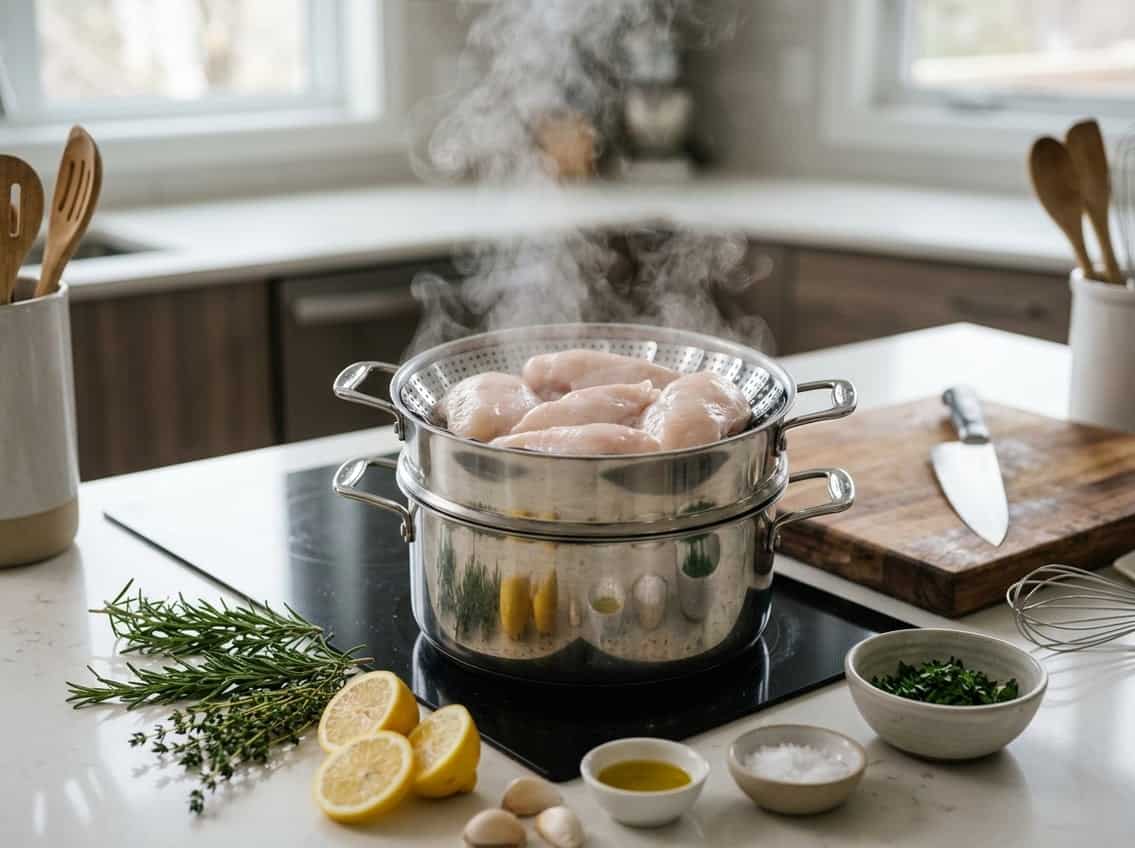
Steaming is gentler than roasting or pan-frying, so it helps protect moisture in a very lean cut.
It also gives you a clean, mild flavor that is easy to season later.
If you want a reliable method for how to steam chicken breast, the steps below will keep it simple.
How to Steam Chicken Breast
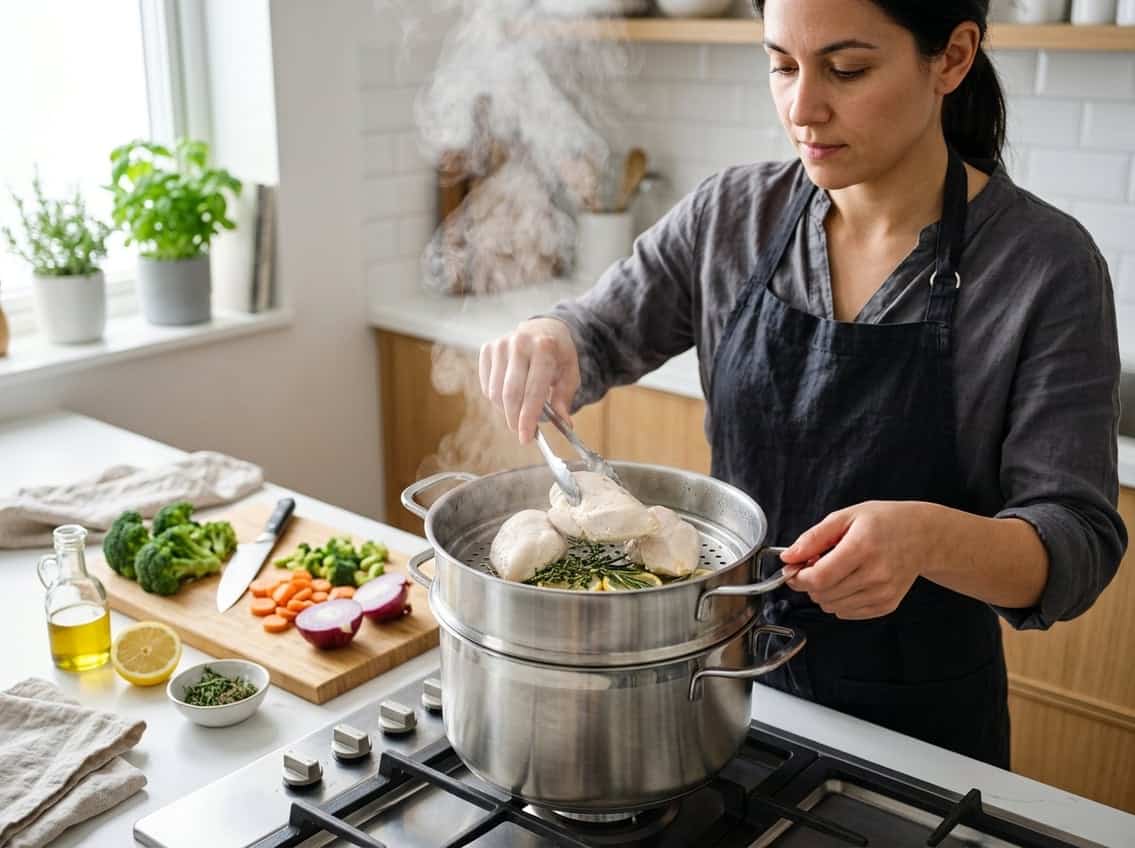
Learning how to steam chicken breast comes down to three things: thickness, heat, and timing.
You want enough steam to cook the meat evenly, not such a hard boil that the surface tightens up before the center cooks through.
A basic stovetop setup works well for most kitchens.
You can use a steamer basket, a bamboo steamer, or a rack that keeps the chicken above the water.
What You Need for a Basic Setup
For steaming chicken, you only need a few tools.
A pot with a tight lid, a steamer basket, and an instant-read thermometer are the most useful items.
A bamboo steamer also works if it fits over your pan.
Use boneless, skinless chicken breasts for the simplest result.
Salt, pepper, and optional aromatics like garlic or ginger are enough for a first try.
Step-by-Step Stovetop Method
Pat the chicken dry and salt it lightly.
If one end is much thicker, flatten it a little so the breast cooks at a more even rate.
Add 1 to 1 1/2 inches of water to the pot, then set in the steamer basket.
Bring the water to a steady simmer, not a hard boil.
Add the chicken in a single layer, cover the pot, and steam until the thickest part reaches 165°F, as recommended in USDA food safety guidance.
How Long It Takes by Thickness
Size changes the steam time for chicken breast.
Thin cutlets may cook in 6 to 9 minutes.
Average breasts often need 14 to 18 minutes.
Larger breasts can take 18 to 24 minutes.
If you steam several pieces at once, keep them in one layer and expect a little extra time.
Crowding blocks steam flow and slows cooking.
How to Check for Doneness
Use a thermometer to check temperature.
Insert it into the thickest part of the breast and look for 165°F.
The meat should feel firm, not soft and raw in the center.
Let the chicken rest for about 5 minutes before slicing so the juices stay in the chicken.
Choosing the Best Steaming Method
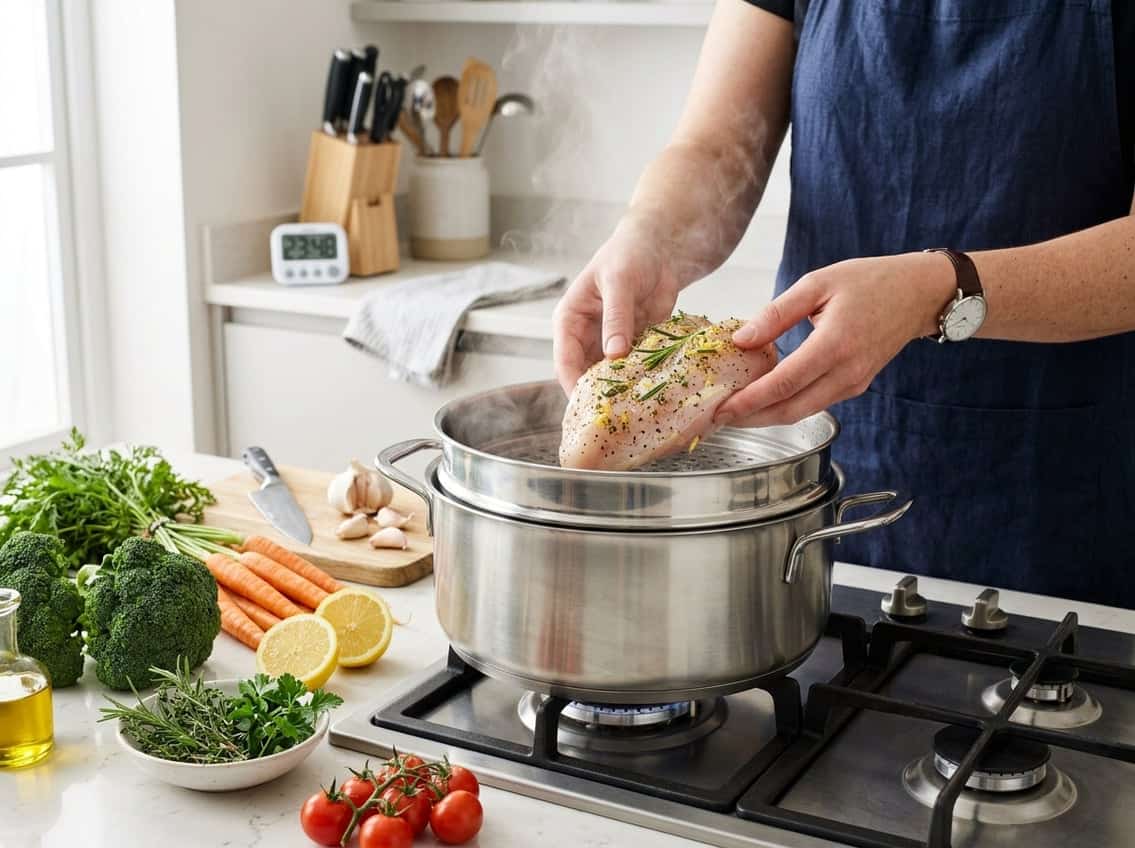
Your kitchen tools and the amount of chicken you want to cook will determine the best method.
A pot and steamer basket give you the most control.
A bamboo steamer can work well for smaller batches.
Electric steamers and steam ovens offer convenience if you use them often.
Using a Pot and Steamer Basket
A pot and steamer basket give you a flexible setup.
You can watch the water level, adjust the heat, and cook one or more breasts in a single layer.
This method is easy to repeat.
It works with simple ingredients you already have.
Using a Bamboo Steamer
A bamboo steamer gives the chicken gentle heat and allows steam to move around the meat.
It is a good option if you want a mild, even result and already use this tool for dumplings or vegetables.
Set it over a wok or pan with simmering water.
Keep the chicken spaced out so steam can reach each piece.
Using an Electric Steamer or Steam Oven
An electric steamer keeps a steady flow of steam without much monitoring.
A steam oven can do the same thing with more precision, which can help if you cook chicken often.
These tools are useful for meal prep and larger batches of steamed chicken.
You still need to check the internal temperature, since thickness changes the cooking time.
Flavor, Seasoning, and Serving Ideas
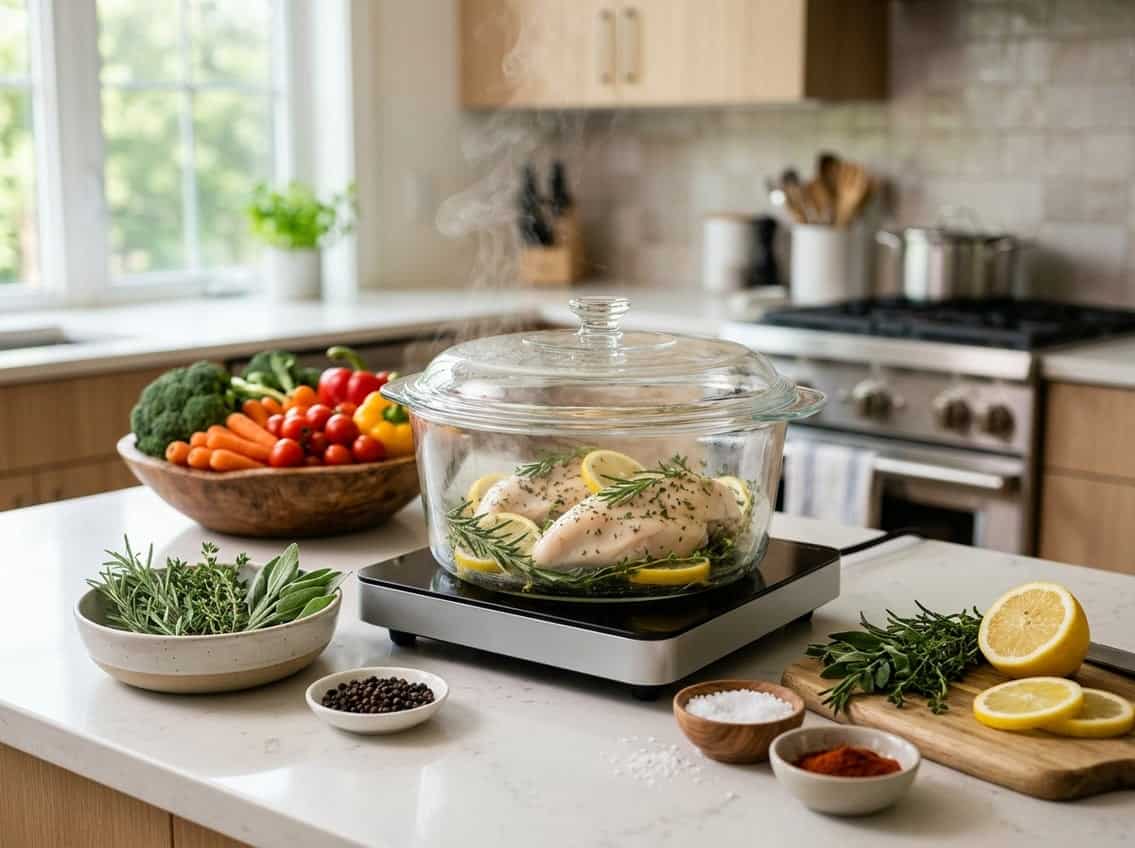
Steamed chicken has a mild flavor, so simple seasoning works best.
You can season before cooking, scent the steam with aromatics, and finish with a sauce after it comes out of the basket.
Simple Seasonings Before Steaming
Salt and black pepper are enough for a clean taste.
You can also use garlic powder, paprika, or a little cumin if you want a stronger base flavor.
Keep the seasoning light so it does not hide the texture of the chicken.
Steamed chicken breast takes on flavor best when you add it in layers.
Soy Sauce and Sesame Oil Variations
You can add a small amount of soy sauce for salt and color after cooking.
A few drops of sesame oil bring a nutty finish that pairs well with steamed chicken and rice.
For a simple bowl, slice the chicken and drizzle it with soy sauce, sesame oil, and a little rice vinegar.
This keeps the flavor balanced without making the meat heavy.
What to Serve Alongside It
Serve steamed chicken with steamed vegetables, rice, noodles, or a fresh salad.
It also fits into wraps and lunch boxes without much extra effort.
Try it with cucumber, broccoli, carrots, or snap peas.
Those sides match the mild taste and keep the meal simple and balanced.
Common Mistakes and Storage Tips
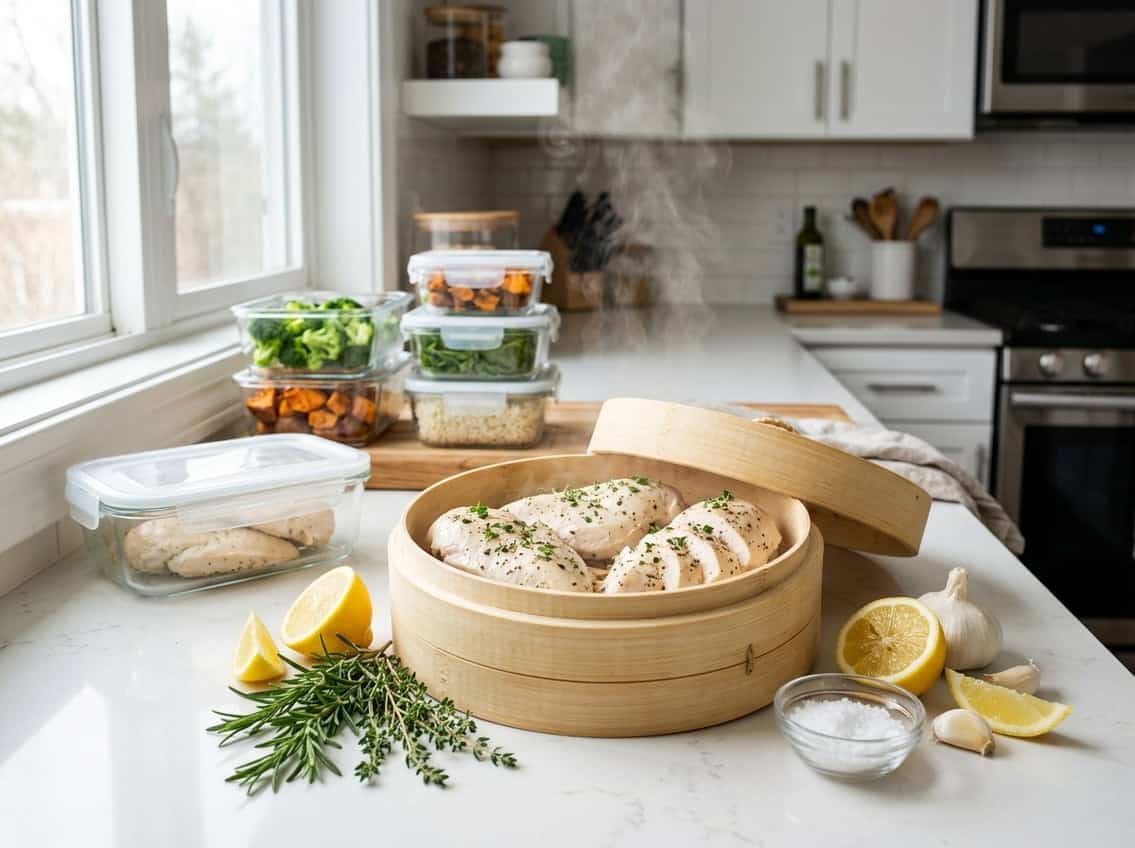
Small mistakes can change the texture fast.
The most common problems are overcooking, crowding the basket, and steaming at too high a heat.
Storage matters too, since steamed chicken breast can dry out during reheating if you treat it like roasted meat.
Why Chicken Turns Tough or Rubbery
Chicken turns tough when it cooks past 165°F or when the steam is too aggressive.
High heat can tighten the outside before the center finishes.
Steamed chicken breast can also feel rubbery if you slice it too soon.
Resting helps the juices settle, which keeps the meat softer.
How to Avoid Overcooking
Check the temperature early, especially with thinner pieces.
Pull the chicken as soon as it reaches 165°F, then let it rest for 5 minutes.
If your breasts are uneven, flatten the thicker side first so the whole piece cooks at about the same speed.
That one step can make steaming chicken much easier to manage.
How to Store and Reheat Leftovers
Place cooled chicken in an airtight container in the refrigerator. Use it within 3 to 4 days for the best quality.
Reheat the chicken gently. Use a covered steamer or a covered dish with a little broth or water to prevent dryness.


