
Can You Fry Chicken Breast? Best Methods and Tips
You can fry chicken breast, and it works well when you control thickness, coating, and heat.
The best results come from a cut that cooks through before the outside gets too dark. This way, the meat stays juicy and the crust stays crisp.
A solid fried chicken breast recipe does not need to be complicated. Good prep makes a difference.
Frying chicken breast works best when you treat it like a lean cut that needs protection from heat.
You can pan fry, shallow fry, or deep fry it. Managing surface moisture and avoiding rushing the process helps.
When Chicken Breast Fries Well
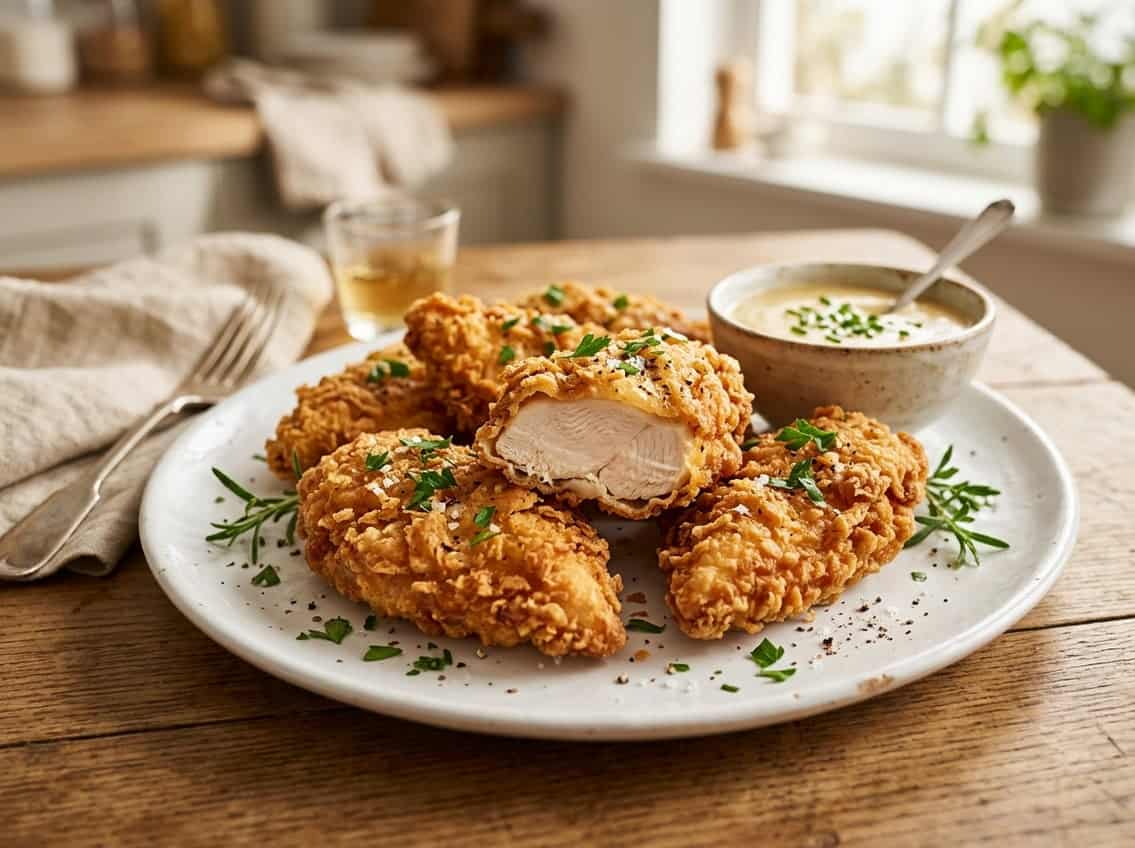
Chicken breast fries well when the pieces are even in size and not too thick.
Boneless skinless chicken breast is easier to control when you flatten or cut it into smaller pieces.
You need to watch heat and time more closely with this lean texture.
Fried chicken breasts are often better when you start with a smaller, flatter shape.
Why Boneless Cuts Need Extra Care
Boneless skinless chicken breast has little fat, so it dries out faster than thigh meat.
Timing, coating, and oil control become more important.
If the piece is uneven, the thin end may overcook before the thick end is done.
A little prep solves most of that problem.
Best Thickness for Even Cooking
Aim for a piece that is about 1/2 to 3/4 inch thick after pounding.
That thickness lets the center cook through at the same time the coating turns golden.
Very thick pieces are harder to fry well in a skillet.
Thin, even pieces are easier to keep juicy.
When to Turn Breasts Into Cutlets or Strips
Chicken cutlets are a good choice when you want fast, even frying.
Chicken tenders also cook quickly and are less likely to dry out.
Turn a whole breast into cutlets or strips when the pieces are large, uneven, or meant for sandwiches.
This shape gives you more control and a better crust.
How to Prepare It for Crisp, Juicy Results
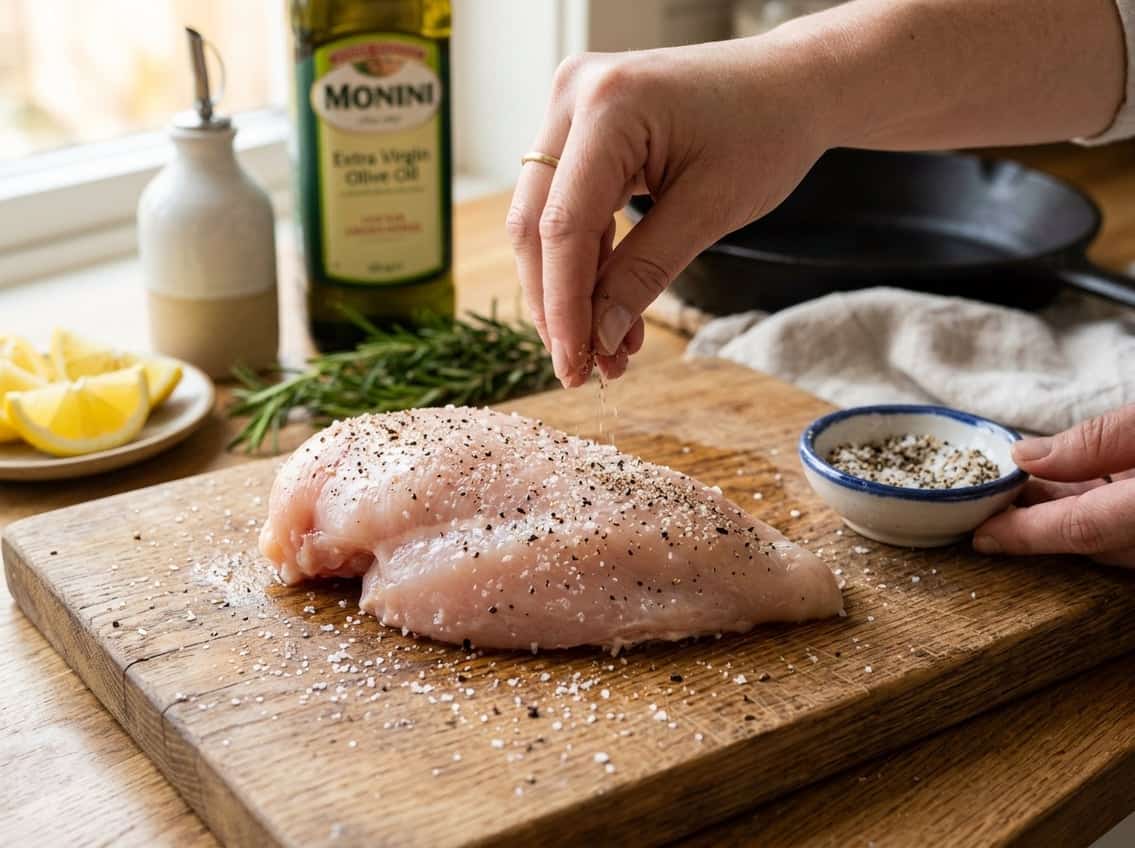
Good prep makes a big difference before the chicken ever hits the pan.
A smart fried chicken breast recipe usually focuses on shaping, drying, seasoning, and giving the coating something to grip.
Pounding, Butterflying, and Drying the Surface
Pound the chicken to an even thickness so it fries at the same rate across the whole piece.
Butterflying lets you open one thick breast into a flatter cutlet.
Pat the surface dry before breading or seasoning.
Extra moisture makes the coating slip and can slow browning.
Seasoning, Brining, and Buttermilk Soaks
Season the meat itself, not just the coating.
Salt, pepper, garlic powder, onion powder, and paprika work well for fried chicken breast.
For extra moisture, use a short brine or buttermilk soak.
Buttermilk adds mild tang and helps the seasoning cling.
Flour, Egg, and Double-Dredge Coatings
A basic coating often starts with flour and seasoning.
Adding an egg dip helps the flour stick, and a second dip can build a thicker crust.
A double-dredge gives you a more textured shell, which works for classic fried chicken breast.
For a lighter crust, use one coating layer and press it on gently.
Best Ways to Cook It in Hot Oil
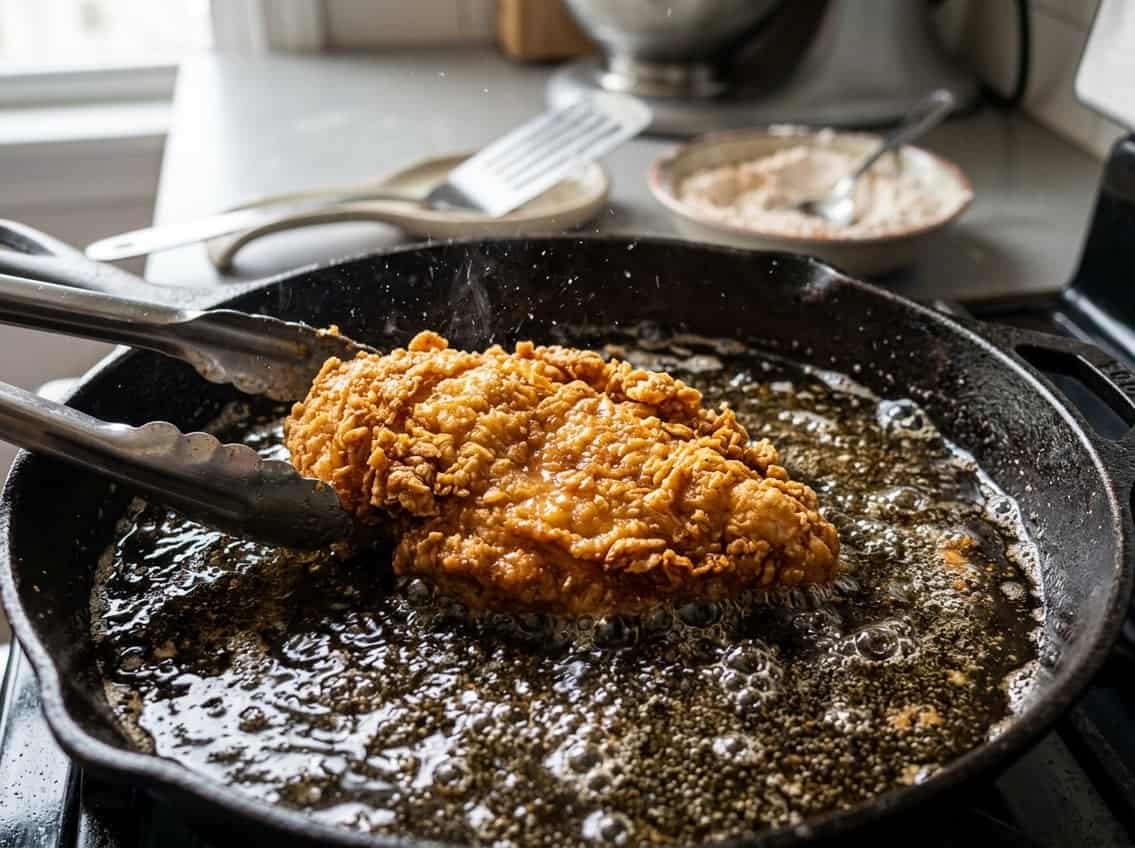
The best method depends on how thick the chicken is and how much crust you want.
Pan fried chicken breast gives you control and a crisp surface. Shallow frying and deeper oil levels can brown the coating more evenly.
Pan Frying vs Shallow Frying
Pan frying uses enough oil to cover the bottom of the skillet and come partway up the sides of the meat.
This method works well for cutlets and thinner pieces.
Shallow frying gives a little more coverage and helps the crust cook evenly.
It is often a good middle ground between a light pan fry and full deep frying.
A reliable reference on basic frying methods says that cooks often fry chicken breast for about 5 to 7 minutes per side in a skillet, depending on thickness and heat, as described by Cooking Smoke.
Oil Temperature and How to Keep It Steady
Set the oil temperature for frying chicken around 350°F.
Many guides place the useful range for frying chicken breast between 350°F and 375°F.
If the oil is too cool, the coating absorbs more oil and turns soggy.
Use a thermometer if you can, and let the oil recover between batches.
A steady oil temperature keeps the crust crisp and helps the meat cook evenly.
How Long to Cook Each Side
For a typical boneless piece, cook about 4 to 6 minutes per side, depending on thickness.
Thicker pieces may need a little longer, while cutlets and tenders cook faster.
The safest endpoint is an internal temperature of 165°F at the thickest part.
A guide from Chef’s Resource notes that many cooks use about 6 to 8 minutes per side, adjusted for thickness and oil temperature.
Common Mistakes That Ruin the Texture
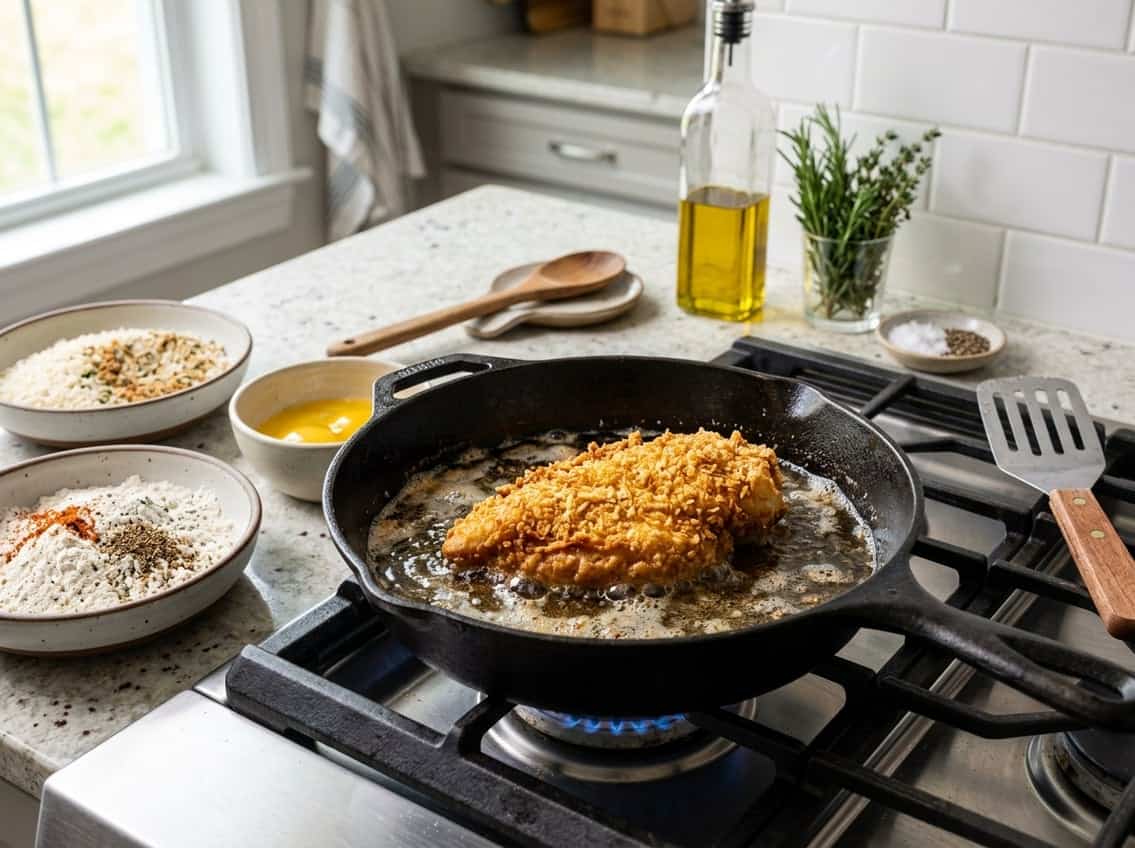
Most texture problems come from moisture, heat, or crowding.
If your fried chicken breasts turn out patchy, oily, or dry, the issue usually comes from a simple technique mistake.
Why the Coating Falls Off
The coating often falls off when the chicken is too wet or the dredge is not pressed on well.
Let the breaded chicken rest for a few minutes before frying so the coating can set.
Moving the chicken too early can also strip the crust.
Flip only once, and use tongs or a thin spatula.
How to Avoid Greasy or Soggy Chicken
Greasy chicken usually means the oil temperature is too low.
Soggy chicken can also happen when the pan is crowded, which drops the heat fast.
Fry in batches and keep the oil steady.
Drain the chicken on a rack if possible, since paper towels can trap steam under the crust.
How to Tell It Is Done Without Overcooking
Insert a meat thermometer in the thickest part of the breast. When the temperature reaches 165°F, remove it from the oil right away.
Look for firm, springy meat and clear juices. Do not rely on color alone.


