
Why Should You Wash Chicken Breast? What to Do Instead
Why should you wash chicken breast? You should not wash it before cooking, because rinsing raw poultry can spread germs around your kitchen without making the meat safer.
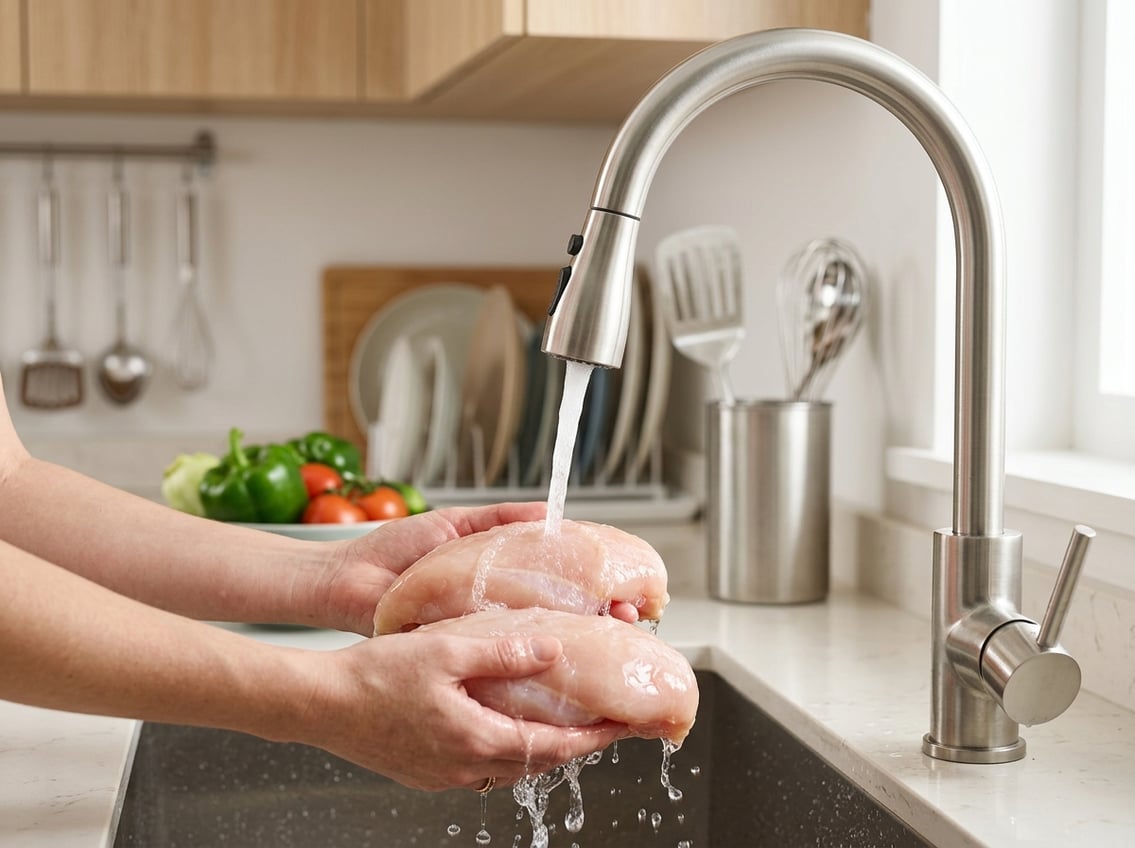
The safer choice is to skip washing, handle the chicken carefully, and cook it to 165°F with a meat thermometer. This approach protects your kitchen from cross-contamination and lowers the risk of foodborne illness.
Many people rinse raw chicken because it looks cleaner or feels more sanitary. Food safety guidance points in the other direction, since washing chicken does not reliably remove harmful bacteria and can spread them to sinks, counters, utensils, and nearby food.
Why Rinsing Chicken Breast Creates More Risk
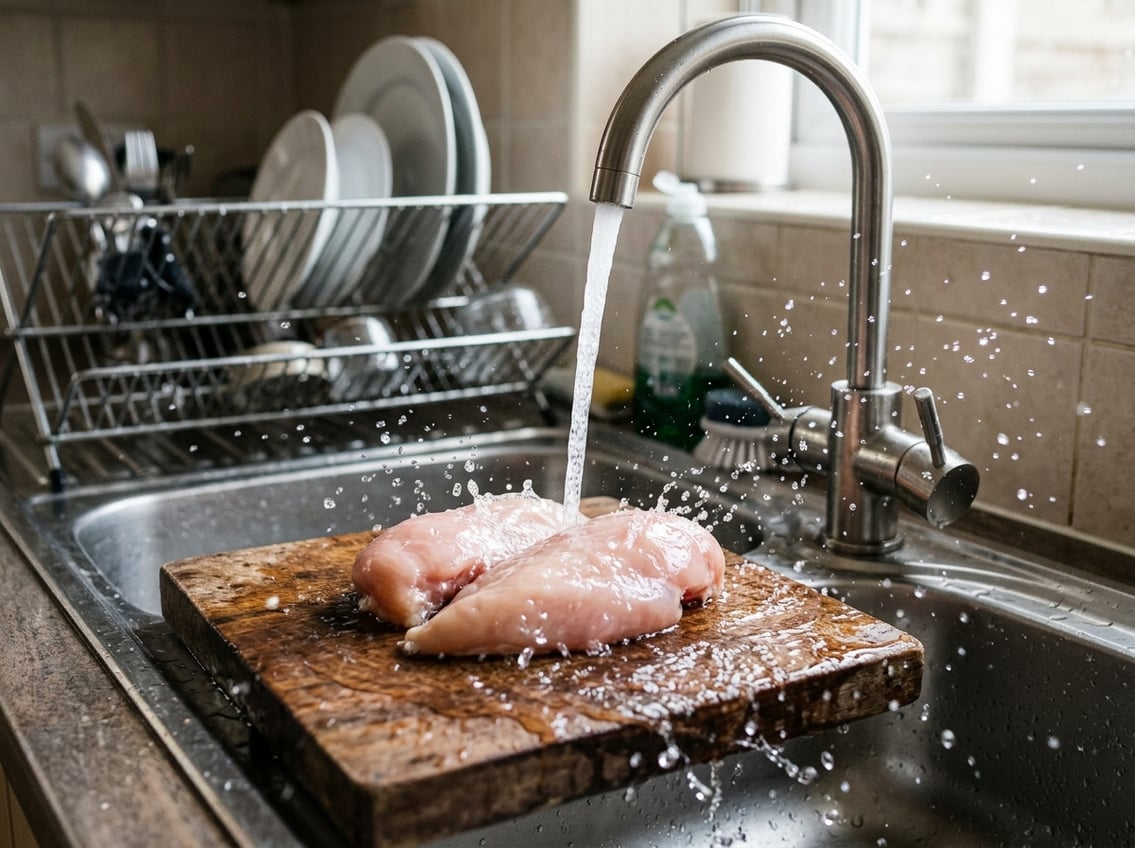
When you wash chicken, you spread germs instead of removing them. The main problem is not the water itself, it is the splashing and contact with nearby surfaces.
How Washing Chicken Spreads Germs Around the Sink
Water from rinsing can splash tiny droplets onto your sink, faucet, counter, dish rack, and even your clothes. Those droplets can carry bacteria from the raw chicken to places where you later touch food or clean dishes.
Experts advise avoiding washing chicken. Rinsing can create cross-contamination, which raises the chance of foodborne illness.
Why Salmonella and Campylobacter Are the Main Concern
Raw poultry can carry bacteria such as Salmonella and Campylobacter. These are two of the most common causes of illness linked to chicken.
Rinsing does not remove these risks in a dependable way. Washing raw chicken can spread germs in the kitchen rather than solve the problem.
Why Water Does Not Remove Foodborne Illness Risk
Water can remove visible liquid or debris, but it does not make raw chicken safe. Bacteria can remain on the surface or move to other parts of your kitchen during rinsing.
Cooking makes chicken safe. Food safety guidance focuses on temperature, clean handling, and preventing cross-contamination, not on washing raw chicken.
What to Do Instead Before Cooking
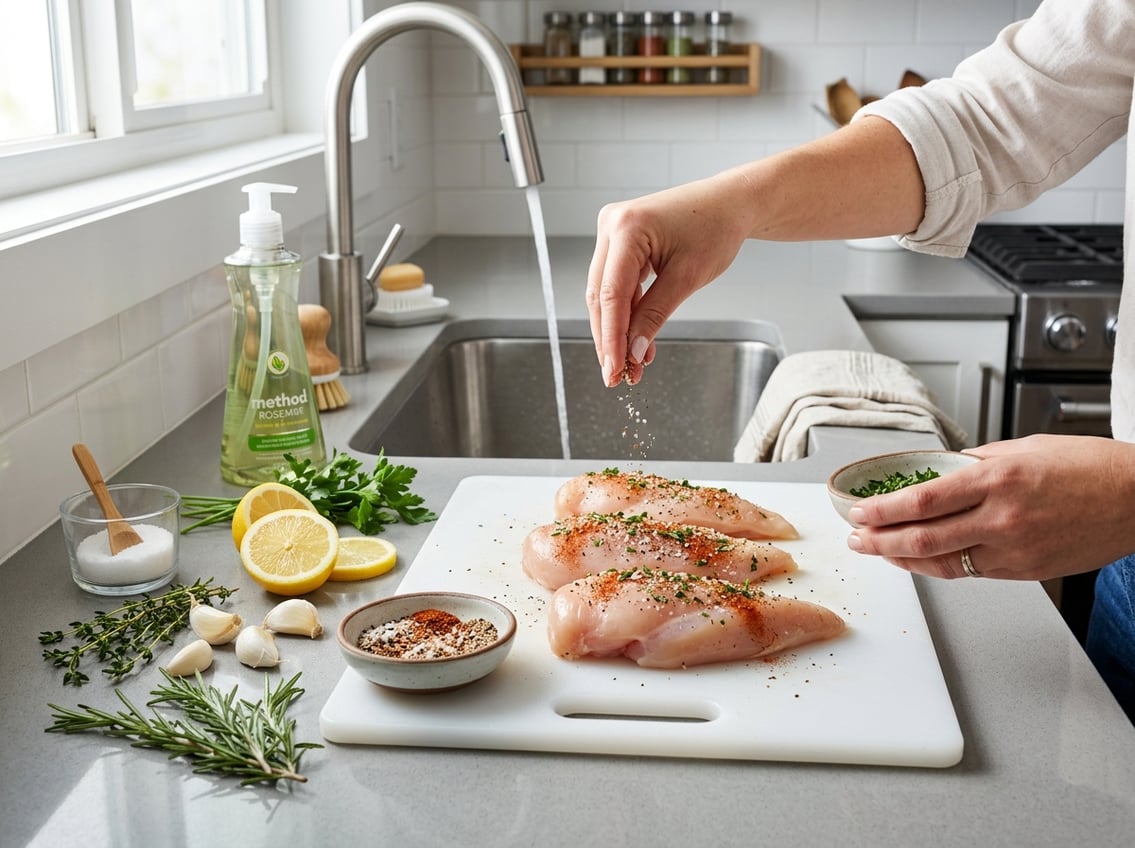
You can prepare chicken breast safely without washing it. The main goals are to keep juices contained, reduce mess, and keep your prep area clean.
Pat Chicken Dry Instead of Rinsing It
If the chicken has extra surface moisture, pat it dry with paper towels. This helps with browning and texture without sending droplets around the sink.
Throw the paper towels away right after use. Do not reuse them on other surfaces or foods.
Handle Packaging and Juices Carefully
Open the package over the sink or a tray so juices do not spread across the counter. Afterward, clean and sanitize any surface that touched the packaging or raw chicken.
Wash your hands with soap and warm water right after handling the package. If juices leak, wipe the area first, then clean and sanitize it.
When Soaking Chicken or Brining Changes the Safety Steps
If you soak chicken or brine it, use a clean container in the refrigerator. Keep the chicken fully covered and away from ready-to-eat foods.
Do not rinse the chicken after soaking unless your recipe specifically requires a drained, dry surface for cooking. In most cases, the safer step is to drain, pat dry, and move straight to cooking.
Safe Handling Steps That Matter More Than Washing
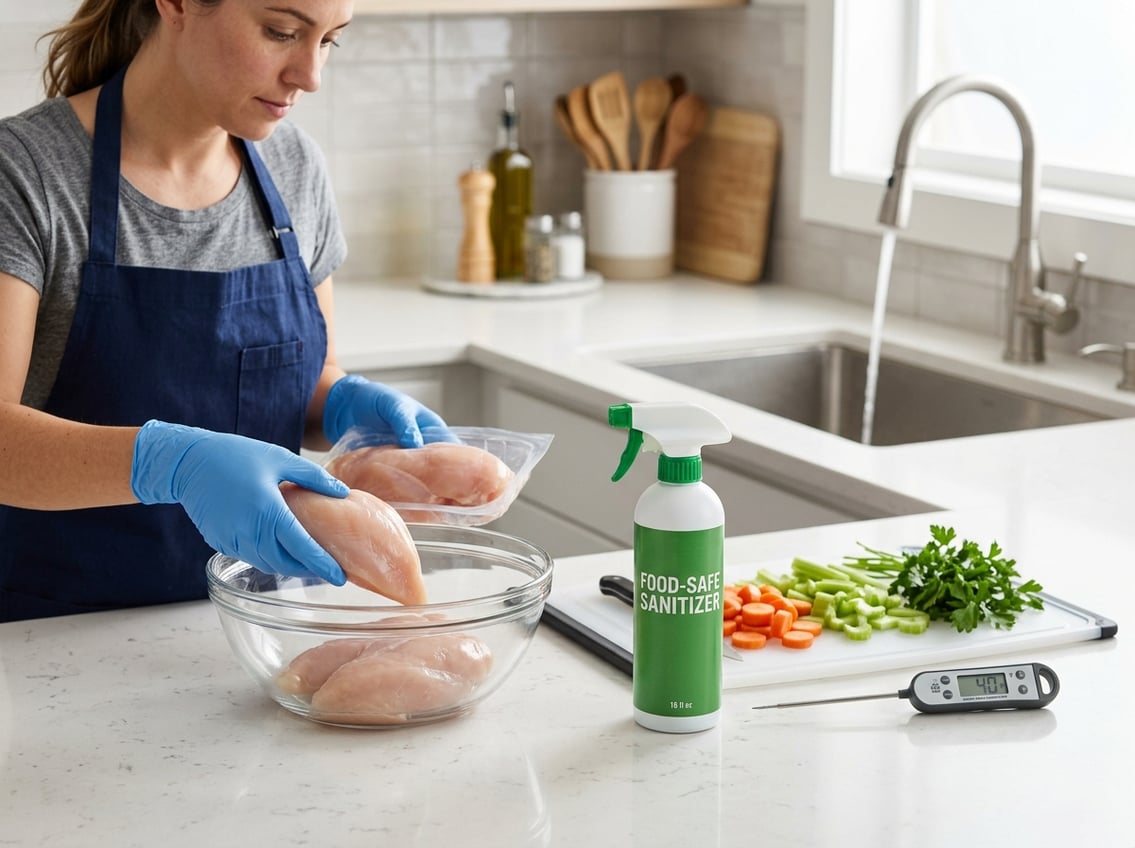
Safe handling matters more than washing poultry. If you control where raw juices go and cook to the right temperature, you lower your risk much more effectively.
Use Separate Cutting Boards for Raw Poultry
Keep raw chicken on one cutting board and fresh produce, bread, or cooked foods on another. Separate cutting boards are one of the simplest ways to reduce cross-contamination.
If you only own one board, wash and sanitize it before using it for anything else. Wooden or plastic boards both need careful cleaning after raw poultry touches them.
Clean Hands, Knives, Counters, and Sinks Thoroughly
Wash your hands before and after touching raw chicken. Clean knives, bowls, counters, and the sink with hot soapy water, then sanitize the surfaces that contacted raw poultry.
Good cleaning habits help stop bacteria from moving through your kitchen and causing foodborne illness.
Cook to 165°F With a Meat Thermometer
Check the thickest part of the chicken breast using a meat thermometer.
Chicken is safe when it reaches 165°F.
Do not guess by color alone, since chicken can look done before it is safe.
A thermometer gives you a clear reading and helps you handle poultry and raw meat safely.


