
Why Does Chicken Breast Have Fat? What Affects It
Why does chicken breast have fat when it is known as a lean protein? Chicken breast is not fat-free because some fat sits inside the meat itself, and the total amount changes with the cut, the skin, and the way you cook it.
If you want to track chicken breast nutrition accurately, pay attention to serving size, cooking method, and added ingredients.
A plain skinless chicken breast can fit well into a balanced diet. The same piece with skin, butter, bacon, or a heavy sauce can look very different on your plate and in your calorie count.
Where the Fat in Chicken Breast Comes From
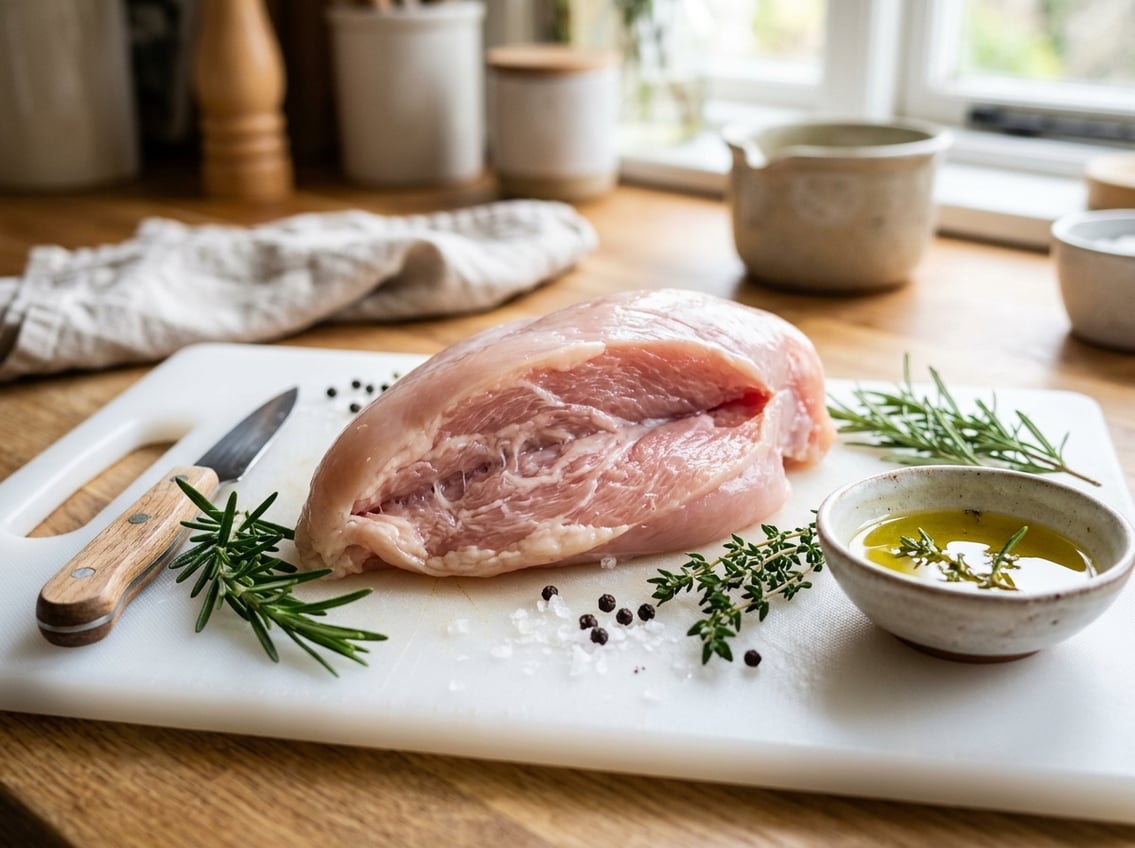
Chicken breast is usually called lean protein, yet it still contains some fat in the meat itself. A skinless chicken breast has less visible fat than many other cuts, but the fat content is not zero.
The fat you see on the outside is only part of the story. Some of the fat lives inside the muscle tissue, and that can affect both texture and chicken breast nutrition.
Natural Fat Inside the Muscle
Much of the fat in chicken breast comes from fat stored inside the muscle cells. This is often called intramuscular fat.
A nutrition explanation of skinless chicken breast fat notes that much of the fat is inside the muscle itself.
That internal fat helps explain why chicken breasts are not completely fat-free. Two pieces that look similar can still have slightly different fat content.
Chicken Skin vs Skinless Cuts
Chicken skin adds a lot more fat than the meat alone. When you leave the skin on, you increase calories, fat, and often saturated fat too.
A skinless chicken breast gives you a lean protein choice with a lower fat content. If you want the lightest option, skinless cuts are the better pick.
White Meat Compared With Dark Meat
Chicken breast is white meat, and white meat is usually leaner than dark meat. Dark meat, like thighs and drumsticks, holds more fat and usually more calories.
If your goal is lower fat in chicken, chicken breast usually stays the leanest common choice.
What the Nutrition Numbers Really Mean
Chicken breast nutrition depends a lot on whether you are looking at raw or cooked meat. It also depends on how much you eat, since a small change in portion size can change calories, protein, and fat more than many people expect.
Food labels can help, yet they only make sense when you know the serving size behind them. A “chicken breast” on a label is not always the same thing as the piece on your plate.
Raw Chicken Breast vs Cooked Chicken Breast
Raw chicken breast and cooked chicken breast do not weigh the same, because cooking removes water. The nutrition numbers change per ounce or per gram after cooking, even if the total food started the same.
Cooked chicken breast often looks richer in calories and fat per serving because the water is gone. A 2025 chicken breast nutrition breakdown shows that cooked, skinless chicken breast can provide about 165 calories and 31 grams of protein per 100 grams, with a small amount of fat.
How a 3-Ounce Serving Changes Calories and Fat
A 3-ounce serving is a common nutrition reference point, but your actual piece may be larger or smaller. Some guides put a 3-ounce skinless chicken breast at around 110 to 130 calories and about 3 grams of fat, depending on the cut and cooking method, such as one chicken nutrition estimate and another lean chicken serving example.
A few extra bites can change the numbers more than you think. If you are counting calories or watching saturated fat, weighing the portion gives you a better estimate.
Boneless Cuts, Portion Size, and Food Labels
Boneless chicken breast is easier to measure than bone-in cuts, but it can still vary a lot in size. Food labels may list values for raw meat, cooked meat, or a prepared product, so reading the serving size matters.
Check the package for details like boneless, skinless, raw, or pre-seasoned. Those words can change the calorie count, sodium level, and fat content even when the product still looks like plain chicken breast.
What Raises or Lowers the Final Fat Content
Cooking and added ingredients can change a lean chicken breast into a much richer meal. The biggest changes come from the method you use, the fat you add, and the extras mixed into the dish.
Even a low-fat cut can absorb flavorings and oils during cooking. The final calorie and fat total can rise quickly.
Cooking Methods That Keep It Lean
Grilling, baking, poaching, and air frying with little oil can keep chicken breast lighter. A grilled chicken breast usually stays lower in calories and fat than methods that cook it in oil or butter.
Simple dry heat works well when you want to keep chicken breast nutrition lean. If you season it lightly and avoid heavy basting, you keep more of the natural lean protein benefits.
How Fried Chicken, Bacon, and Added Fat Change the Meal
Fried chicken absorbs oil from the cooking process, which raises calories and fat content fast. Bacon, butter, cheese, and creamy sauces do the same.
These additions can change the meal far more than the chicken itself. A plain skinless chicken breast may be lean, while the finished plate is no longer a low-fat choice.
Marinade, Sauces, and Pre-Seasoned Products
Oily marinades add fat, while sweet sauces can raise calories. Salty seasonings can push sodium higher.
Pre-seasoned chicken breast products may also contain added fat, sugar, or sodium. Always check the food labels if you want the final meal to stay close to a lean protein option.
How to Choose Chicken Breast for Health Goals
Chicken breast fits many health goals because it is high in protein and usually low in saturated fat. The best choice depends on how you cook it, how much you eat, and what else is on the plate.
If you want a simple, useful protein source, skinless chicken breast is often one of the easiest options to work with.
Using Chicken Breast in a Heart-Healthy Diet
For a heart-healthy diet, skinless chicken breast is a solid choice because it is low in saturated fat. A recent New York Times nutrition discussion notes that chicken breast is very low in saturated fat, which is the type often linked with heart risk.
Keep the preparation simple. Pair chicken breast with vegetables, whole grains, and small amounts of healthy fat like olive oil.
How It Fits Into Weight Management
Chicken breast works well for weight management because it gives you a lot of protein for relatively few calories. Protein can also help you feel full, which may make it easier to manage portions.
The most useful version is usually skinless chicken breast cooked with little added fat. That keeps the meal filling without making the calorie count jump.
What Free-Range and Growth Hormones Claims Mean
Free-range labels describe how farmers raised the chicken. These labels do not guarantee a leaner cut or a lower calorie count.
Growth hormone claims can also be misleading. The label alone does not reveal much about actual chicken breast nutrition.
The most useful information includes whether the chicken is skinless and boneless. You should also check saturated fat, protein, calories, and the ingredients listed on the package.


