
Is It Good to Wash Chicken Breast Before Cooking? Safety Facts
You may still hear people ask, is it good to wash chicken breast before cooking, especially if they learned kitchen habits from family recipes or older cooking advice. Food safety experts say no, do not wash raw chicken breast before cooking.
Washing raw chicken breast spreads bacteria around your sink, counters, and tools. This raises the risk of cross-contamination instead of making the meat safer.
Proper cooking, not rinsing, kills harmful germs on poultry.
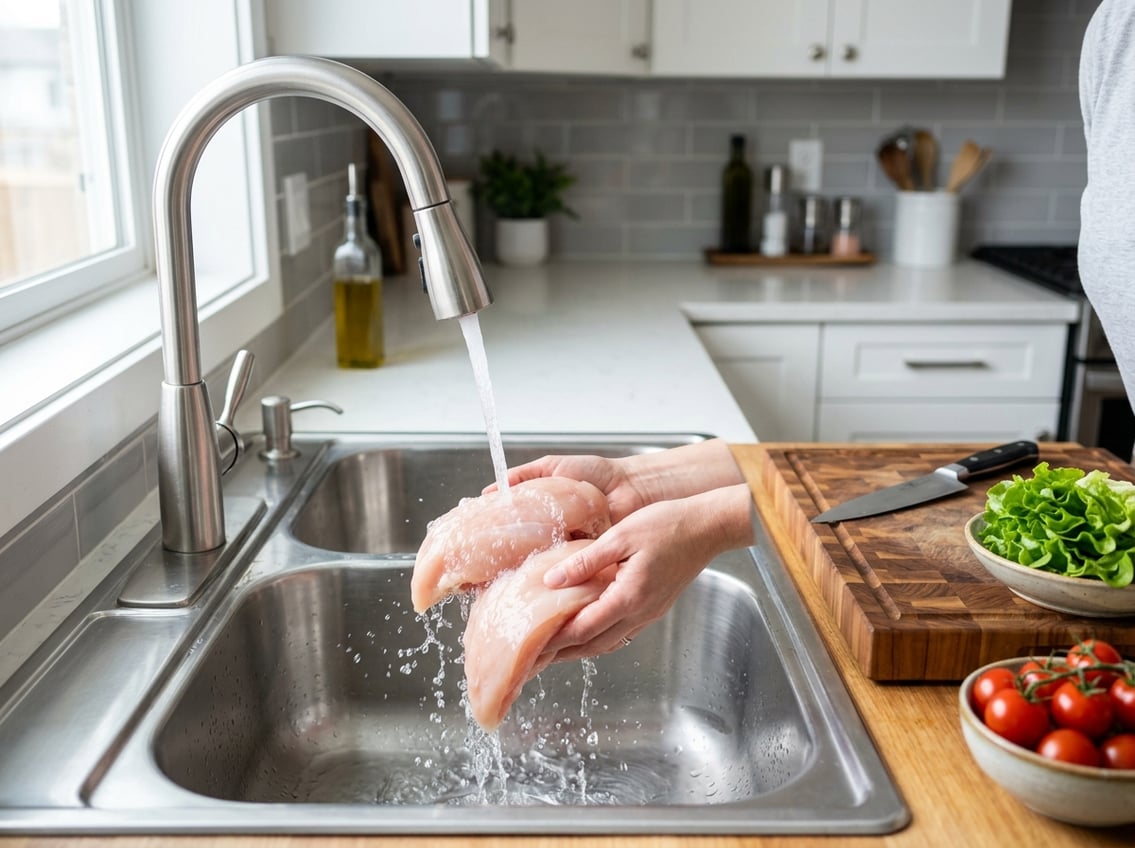
Why Washing Raw Chicken Is Not Recommended
Washing raw chicken does not clean it in a useful way. Water can splash bacteria into places you may not notice, making your kitchen harder to keep safe.
Food safety experts warn that washing or rinsing raw chicken increases the chance of contamination. The main concern is the spread of germs to nearby surfaces and foods.
How Rinsing Chicken Spreads Bacteria
When you rinse chicken under the faucet, water droplets carry bacteria onto the sink, faucet handle, counter, dish rack, or nearby produce. This is how cross-contamination happens in a home kitchen.
A single rinse can spread contaminated liquid farther than you expect. According to Martha Stewart’s food safety guidance, splashing can spread bacteria like salmonella and campylobacter to your workspace, sponge, and utensils.
Salmonella and Campylobacter Risks
Raw poultry can contain salmonella and campylobacter. These bacteria cause foodborne illness if they move from raw chicken to your hands, tools, or ready-to-eat food.
Even if the chicken looks cleaner after rinsing, harmful bacteria can remain on the meat and spread through the kitchen.
Why Washing Does Not Make Poultry Safer
Washing raw poultry does not remove bacteria in a reliable way. Cooking makes chicken safe to eat, not washing.
The USDA advises consumers to avoid washing raw poultry because it does not improve safety. The safer answer is to skip the rinse and cook chicken properly.
What to Do Instead Before Cooking
You do not need to wash chicken breast before cooking. Handle the meat carefully, keep your kitchen clean, and prep the chicken in a way that limits cross-contamination.
Small steps before cooking can help the chicken brown better in the pan or oven.
Pat Chicken Dry Instead of Rinsing
If you want better texture or browning, pat the chicken dry with paper towels. This removes surface moisture without spreading raw juices around the sink.
Dry chicken also sears more evenly, which helps with color and flavor.
Handle Packaging and Juices Carefully
Open the package over a clean area. Keep the juices away from produce, seasonings, and ready-to-eat foods.
Throw away the packaging right away, then wash your hands. If liquid from the package leaks onto the counter, clean the area with hot, soapy water.
Use Separate Tools and Prep Areas
Use a separate cutting board, knife, and plate for raw poultry. Do not place cooked food on the same surface that held raw chicken unless you have washed it first.
Keep raw meat away from other foods. One board for raw meat and another for vegetables can reduce risk in your kitchen.
Safe Handling and Cooking Basics
Safe chicken prep depends on clean hands, clean surfaces, smart storage, and enough heat. These steps protect you from salmonella and other germs.
Wash Hands and Clean Surfaces Thoroughly
Wash your hands with soap and warm water after handling raw poultry, packaging, or juices. Clean counters, sinks, knives, cutting boards, and handles with hot, soapy water after prep.
This helps avoid cross-contamination when you move on to other ingredients.
Store and Thaw Chicken the Right Way
Keep raw chicken cold in the refrigerator until you are ready to use it. Thaw chicken in the refrigerator, in cold water that you change often, or in the microwave if you plan to cook it right away.
Store raw chicken on a lower shelf so juices cannot drip onto other foods. This simple step can lower the chance of cross-contamination in your fridge.
Cooking Chicken Safely to 165°F
Check the thickest part of the chicken breast with a food thermometer. Chicken is safe to eat when it reaches 165°F.
Do not judge safety by color alone. Use the proper internal temperature to ensure chicken is safe to serve.


