
Is Chicken Breast or Thigh Better for Your Goals?
Choosing chicken breast or thigh depends on your goal. If you want fewer calories and more lean protein, chicken breast is usually the stronger pick.
If you want more flavor, juiciness, and a cut that is harder to dry out, chicken thigh often works better.
Chicken breast is a classic lean protein choice. Chicken thigh is a dark meat option with more fat and a richer taste.
Both can fit into a healthy eating plan when you match the cut to your needs.

How the Two Cuts Compare Nutritionally

Chicken breast and chicken thigh both provide useful nutrients, but they do not deliver the same macronutrients. Breast is lower in calories and fat, while thigh has more fat and usually more flavor.
The numbers also shift based on whether you choose skinless chicken breast or skinless chicken thigh. Cooking method and portion size matter too.
Calories, Protein, and Fat Content at a Glance
A 3-ounce serving of boneless, skinless chicken breast has about 140 calories and 3 grams of fat. The same serving of boneless, skinless chicken thigh has about 170 calories and 9 grams of fat, according to The Pioneer Woman.
Chicken breast is generally higher in protein per calorie, which makes it a common lean protein choice. Chicken thigh gives you more total fat, which raises calorie count but also improves taste and texture.
Micronutrients, Vitamins and Minerals, and Amino Acids
Both cuts provide important nutrients, including amino acids needed for muscle repair and everyday body function. Chicken also supplies micronutrients such as phosphorus, niacin, vitamin B12, choline, potassium, and other B vitamins.
Chicken thigh usually contains a bit more iron because dark meat has more myoglobin. Chicken breast still gives you a solid mix of vitamins and minerals, especially when you keep the skin off and pair it with other nutrient-rich foods.
White Meat vs Dark Meat and the Role of Myoglobin
Chicken breast is white meat, while chicken thigh is dark meat. The color difference comes from myoglobin, a protein that helps store oxygen in muscle tissue.
Thighs do more work than breasts, so they have more myoglobin and more fat content. That is why thighs taste richer and stay juicier during cooking.
Which Option Fits Different Health and Diet Goals

Your best choice depends on whether you care most about calories, protein, or how full your meal feels. Chicken breast and chicken thigh both work in healthy diets, yet each one serves a different purpose.
If you want a very lean protein source, breast usually fits better. If you want a more filling meal with a richer taste, thigh may be the easier choice to eat regularly.
Best Pick for Lower-Calorie Eating
If your main goal is lower calories, chicken breast is usually better. Skinless chicken breast gives you more protein for fewer calories than skinless chicken thigh.
That makes it useful for weight control, portion tracking, and meals where you want to keep fat content low. It is also easier to fit into a higher-protein day without using as much of your calorie budget.
Best Pick for Lean Protein and Muscle Support
If you want lean protein, chicken breast is the more direct match. It gives you a strong protein-to-calorie ratio, which is useful after workouts or in meals built around high protein and lower fat.
Chicken thigh still offers good protein. The main difference is that thigh gives you more calories from fat along with the protein.
Satiety, Fullness, and Meal Satisfaction
Satiety often depends on both protein and fat content. Chicken thigh may feel more satisfying to some people because of its richer texture.
A meal made with chicken thighs can also taste more complete without a large sauce or added fat. Chicken breast can still be filling, especially when you add vegetables, fiber, and a balanced side dish.
If you prefer a lighter meal, breast is practical. If you want more staying power from one plate, thigh may work better.
Taste, Texture, and Cooking Performance
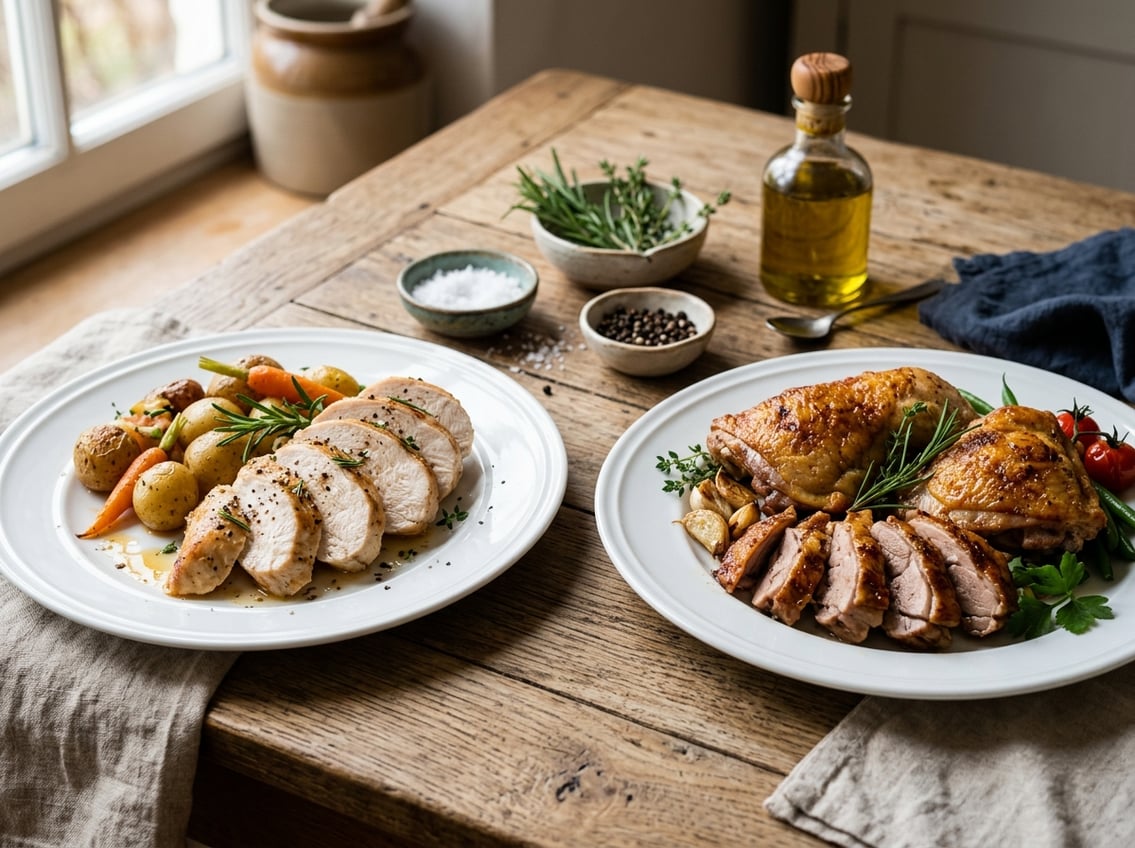
Flavor and texture are where the gap between these cuts becomes obvious. Chicken breast is mild and lean, while chicken thigh has more marbling and a deeper taste.
Your cooking methods also matter. Some cuts are easier to grill, roast, or sauté without losing moisture, while others need careful heat control.
Why Thighs Have More Flavor and Juiciness
Chicken thighs usually taste richer because they have more fat and more dark meat character. That extra fat helps carry flavor and keeps the meat tender.
A recent comparison notes that chicken thighs are more forgiving and harder to overcook. That is a major reason they stay juicy in everyday cooking.
Why Breasts Can Dry Out and How to Prevent It
Chicken breast is lean, so it can dry out more quickly if you cook it too long. This is especially true with high heat and thin cuts.
You can reduce drying by using a marinade, cooking to the right internal temperature, and letting the meat rest before slicing. Gentle methods like poaching, quick sauté, or careful grilling also help preserve moisture.
Best Cooking Methods for Each Cut
Chicken breast works well for grilling, sauté, poaching, and fast oven cooking when you want a mild base for sauces or salads. It is also a good choice when you need shredded chicken for meal prep.
Chicken thighs shine in grilling, roasting, slow cooker meals, and braised dishes. A roasted chicken thigh often gives you better browning and a more forgiving texture.
Skin-on chicken can add extra crispness if your plan allows it.
Cost, Convenience, and What to Check Before Buying

Price and convenience can matter as much as nutrition. In many U.S. stores, chicken thighs cost less per pound than chicken breasts, which can make them a better everyday value.
Prepared chicken also varies a lot in sodium, additives, and added ingredients. A quick label check can save you from extra salt or unwanted fillers.
Price Differences and Everyday Value
Chicken breast is often more expensive than chicken thigh, partly because many shoppers pay extra for lean protein and the lower fat content. Several price comparisons note that breast commonly costs more per pound than thigh.
If you cook chicken often, thighs can stretch your grocery budget further. That can matter when you are feeding a family or planning multiple meals for the week.
Skinless vs Skin-On and Their Nutrition Impact
Skinless chicken breast and skinless chicken thigh are the easiest options if you want to keep calories and fat in check. Skin-on chicken adds more fat and calories, though it can also improve flavor and texture.
If you are tracking macros closely, check whether the package is skinless chicken or skin-on chicken before you buy. The difference can change the nutrition more than people expect.
Watch for Sodium, Additives, and Gluten in Prepared Chicken
Pre-seasoned chicken breasts and chicken thighs offer convenience, but they often contain extra sodium, marinades, or additives.
Some prepared products include gluten in seasoning blends or sauces.
Check the ingredient list if you have a sodium goal, food allergy, or gluten concern.
When you season plain chicken yourself, you control the calories, protein, and flavor.


