
When Chicken Breast Is Chewy: Causes and Fixes
When chicken breast turns out chewy, the cause is usually simple and fixable. Overcooking, undercooking, uneven heat, or a naturally tough chicken breast can all lead to this texture.
You can get better results by checking doneness with a thermometer and adjusting your cooking method. Adding moisture after cooking can also help.
Once you know what chewy chicken breast means, you can make tender chicken more often.
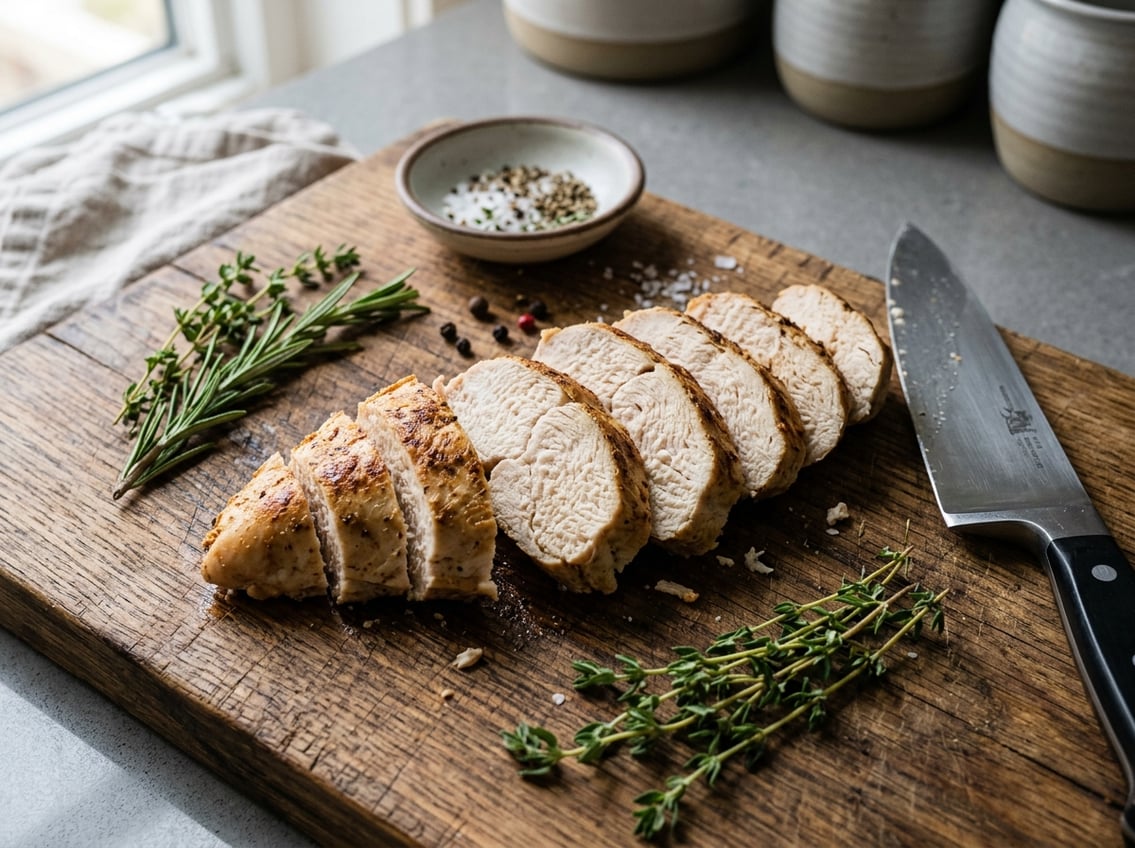
Chewy chicken breast texture is different from safe, juicy chicken. Even when the breast is fully cooked, it can still feel dry, firm, or rubbery if the heat was too high or the meat stayed on the burner too long.
What Chewy Texture Usually Means
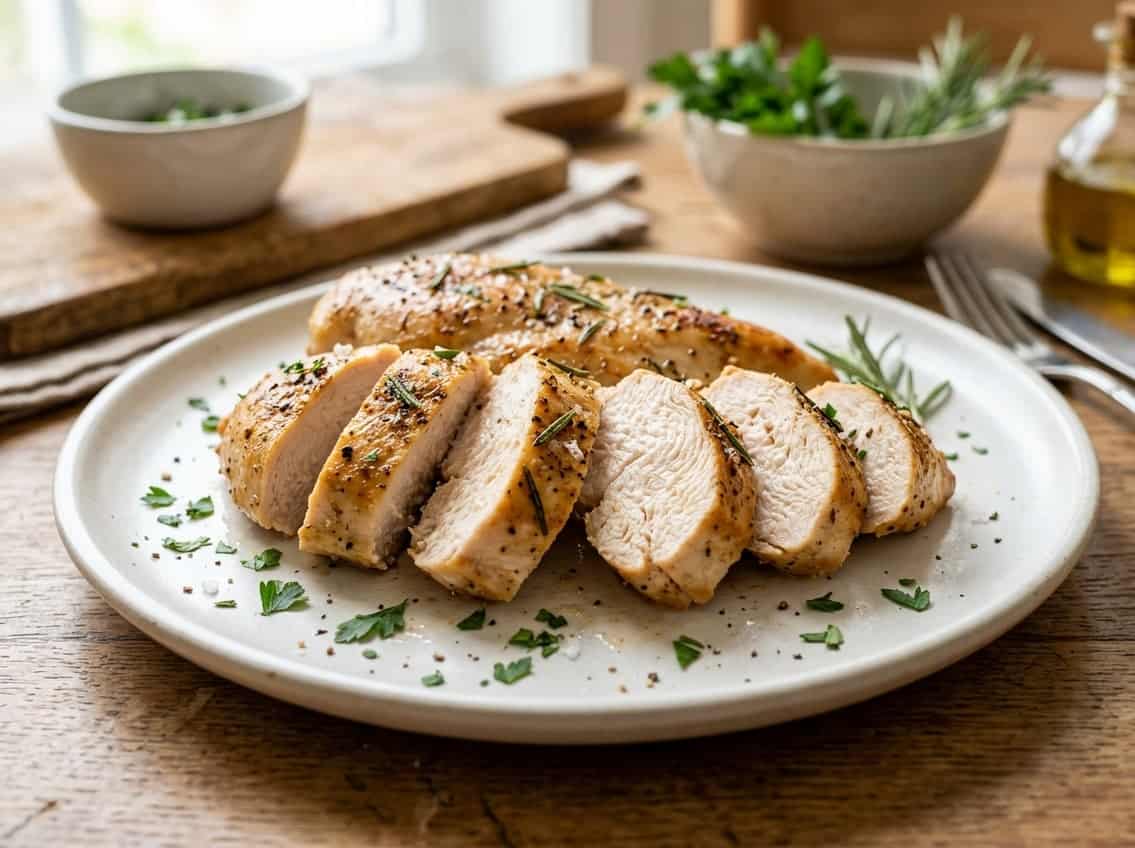
A chewy bite usually points to overcooking, undercooking, or a quality issue in the meat. Chicken breast is very lean, so it loses moisture quickly when heat is not controlled.
That is why you can end up with tender chicken one night and tough chicken the next, even with a similar recipe.
The texture tells you a lot about what happened during cooking.
How to Tell Overcooked From Undercooked Chicken
Overcooked chicken feels dry, tight, and stringy. The fibers squeeze out moisture, making the meat firm and hard to chew.
Undercooked chicken can feel rubbery or dense, especially in the center. If the outside looks done while the middle still feels slippery or too soft, the heat likely did not reach the center evenly.
A recent explanation of chewy chicken breast points out that both overcooking and undercooking can cause tough texture for different reasons.
That is why appearance alone is not enough.
Safe Internal Temperature and Food Safety
Use a meat thermometer instead of guessing. Chicken breast should reach an internal temperature of 165°F for both safety and texture.
If you pull it too early, you risk undercooked chicken. If you leave it in much longer than needed, you increase the chance of dry, overcooked chicken breast.
Check the thickest part for the most accurate reading.
When Woody Breast Is the Real Problem
Sometimes the issue comes from the meat itself. Woody breast is a muscle condition that can make the meat feel hard or rigid even before cooking, as explained by this source.
You may notice an unusually firm, dense texture when the breast is raw. Cooking can improve flavor, but it may not fully solve that tough bite.
In that case, slicing thin, shredding, or using sauce helps more than changing the heat.
How to Fix Tough Chicken on the Spot
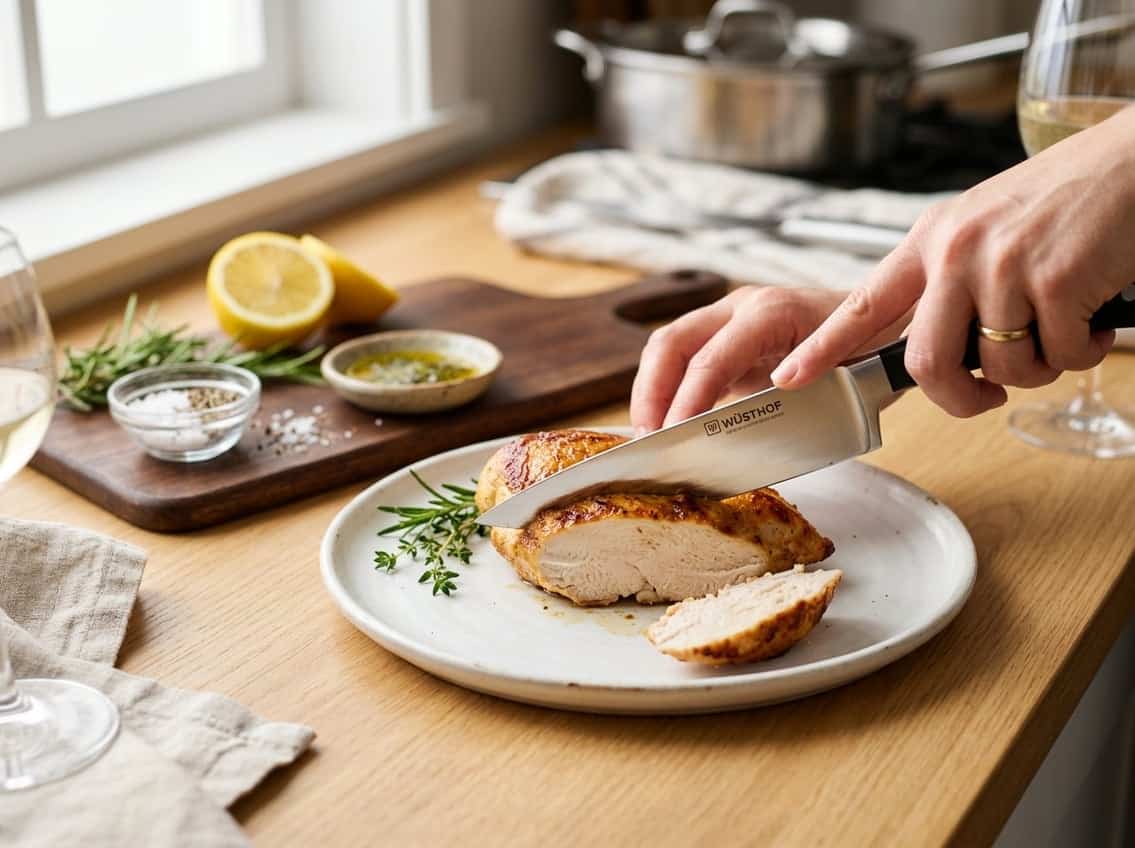
If you want to fix chewy chicken, focus on adding moisture and changing the serving style. You often cannot reverse the texture completely, but you can make it easier to eat.
Add moisture, cut the chicken smaller, or use it in a dish where texture matters less.
Add Moisture With Sauce or Gentle Reheating
A sauce can help a lot. Creamy sauces, like garlic sauce, coat the meat and help it feel less dry.
For leftovers, reheat gently in a covered pan with a little broth or sauce. High heat will make chewy chicken breast worse.
Slice or Shred for Better Texture
Thin slices are easier to chew than thick chunks. Cutting across the grain shortens the muscle fibers and improves the bite.
Shredding works well when the breast is already firm. It blends into sauces, wraps, and salads, so the texture draws less attention.
Best Ways to Repurpose It in Other Dishes
Leftover chewy chicken breast works well in dishes with extra moisture. Chicken salad is a good choice because mayo, yogurt, or dressing softens the texture.
You can also use it in soups, tacos, casseroles, pasta, or rice bowls. Any dish with sauce or broth gives the meat a better chance to feel tender.
Cooking Techniques That Keep It Tender
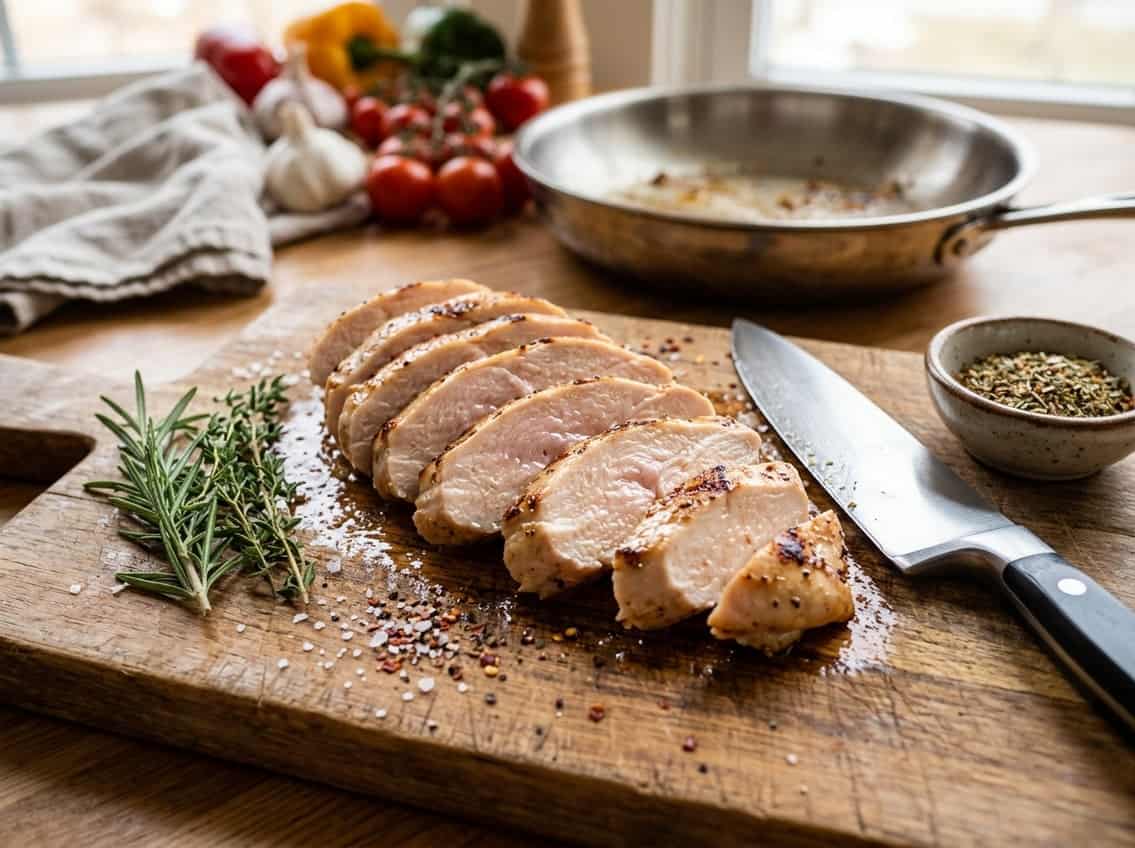
To avoid chewy chicken breast, control heat, shape, and moisture before cooking. The cooking method matters as much as the seasoning.
A few simple changes can help your chicken breast stay tender and juicy.
Choose the Right Cooking Method for Breast Meat
Gentler methods usually give you better texture. Poaching, steaming, and careful roasting help the meat cook more evenly and retain moisture.
Grilling and pan-frying can still work if you watch the heat closely. A hot pan or grill can dry out the outside before the inside is done.
Pound Thick Pieces for Even Cooking
Uneven thickness often causes one part of the breast to be dry while another part is underdone. Use a meat mallet under plastic wrap to flatten thick ends so the whole piece cooks at the same rate.
That step also shortens cooking time. Less time on heat usually means a better chance to keep the meat juicy.
Marinate or Brine Before Cooking
Marinating adds flavor and surface moisture. You can use a mix of olive oil, lemon juice, vinegar, herbs and spices, or buttermilk to improve the final bite.
Brining adds salt and helps the meat hold more moisture during cooking. This kind of prep can make a noticeable difference with lean breast meat.


