
Which Piece Is Chicken Breast? Location, Cuts, and Uses
You may wonder which piece is chicken breast when you look at a whole bird or a package of poultry at the store. The breast is the front, meaty part of the chicken and is the largest source of white meat on the bird.
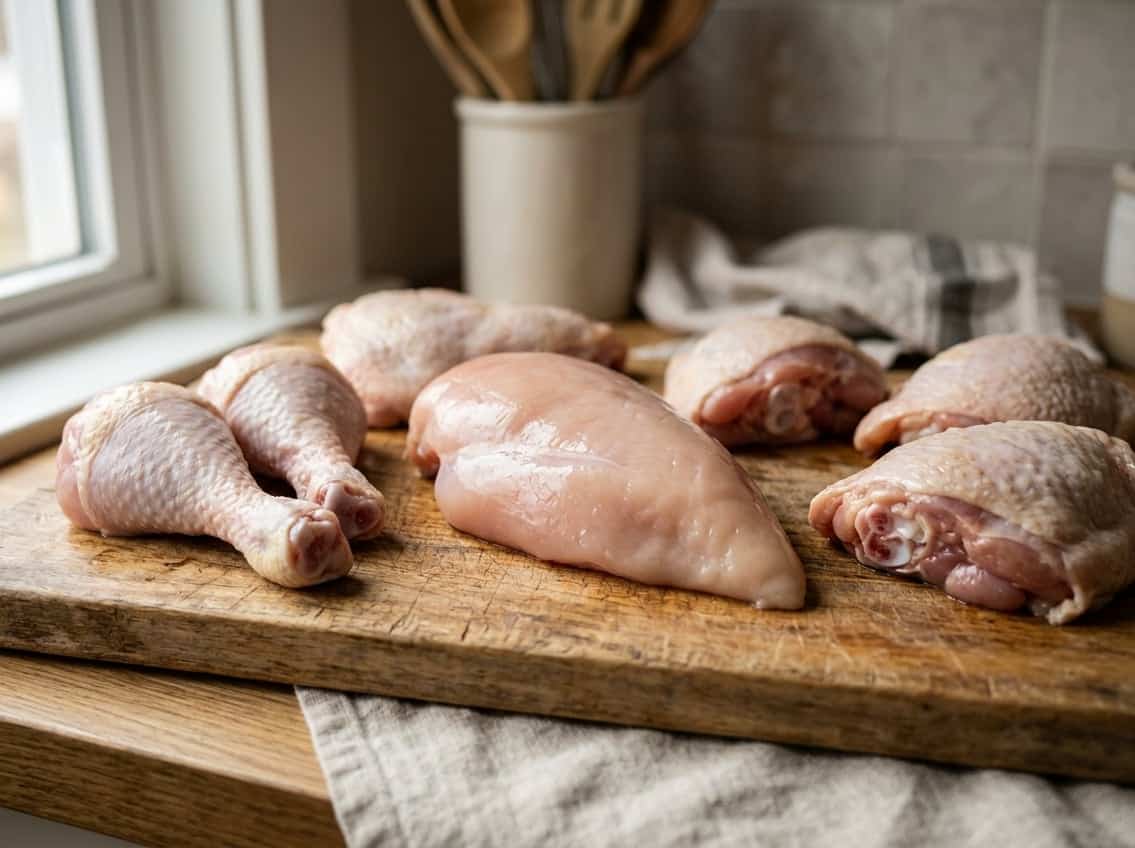
The chicken breast is the broad, front section of the bird above the legs and wings, centered around the breastbone.
When you know basic chicken anatomy, you can spot it quickly on a whole chicken and read store labels with less guesswork.
Not every package labeled “breast” means the same thing. Some cuts are whole, some are split, and some still have ribs or skin attached.
Where the Breast Sits on the Bird
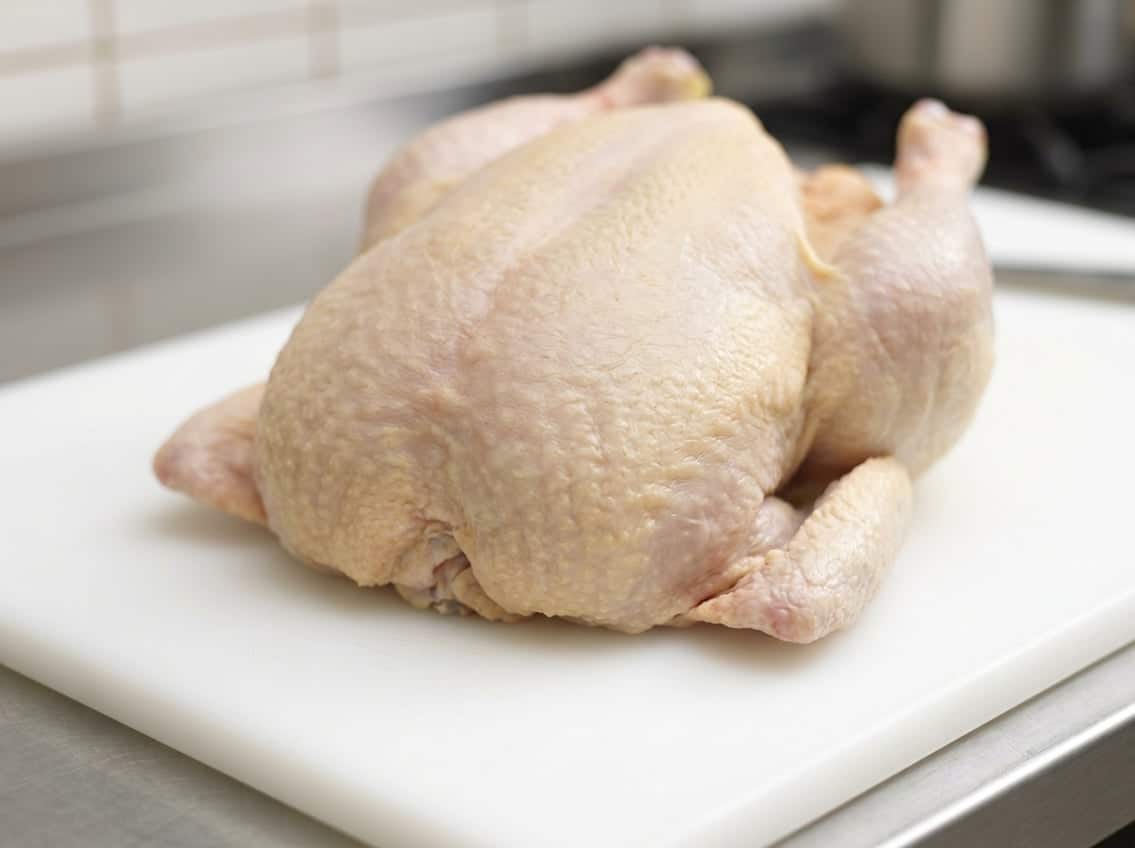
The breast is the front chest area of the bird, where the pectoral muscles sit. On a whole chicken, it is the largest smooth section of meat.
How to Spot It on a Whole Chicken
On a whole chicken, the breast sits on the underside or front-facing side, depending on the bird’s position. It forms two rounded halves separated by the center breastbone.
If the skin is on, the breast usually looks broader and fuller than the thighs. You can also find it by looking for the large white-meat area above the legs.
The Breastbone, Keel Bone, and Rib Cage
The breastbone, or keel bone, runs down the center of the chest. It divides the breast into left and right sides and shapes the meat.
The National 4-H Poultry Parts Identification guide defines a whole breast as the intact breast separated from the rest of the bird at the junction of the ribs. A breast with ribs includes the rib cage, while a split breast is cut into two halves parallel to the breastbone.
Pectoral Muscles and the Tenderloin
The chicken breast consists mainly of the pectoralis major and pectoralis minor muscles. The larger outer muscle is the main breast meat, while the smaller inner muscle is the tenderloin.
The tenderloin, or chicken tenderloin, lies against the keel bone and is a long, narrow strip of meat. Stores often sell it separately as chicken tenders or chicken tenderloin, and it comes from the underside of the breast.
How Breast Differs From Other Chicken Cuts
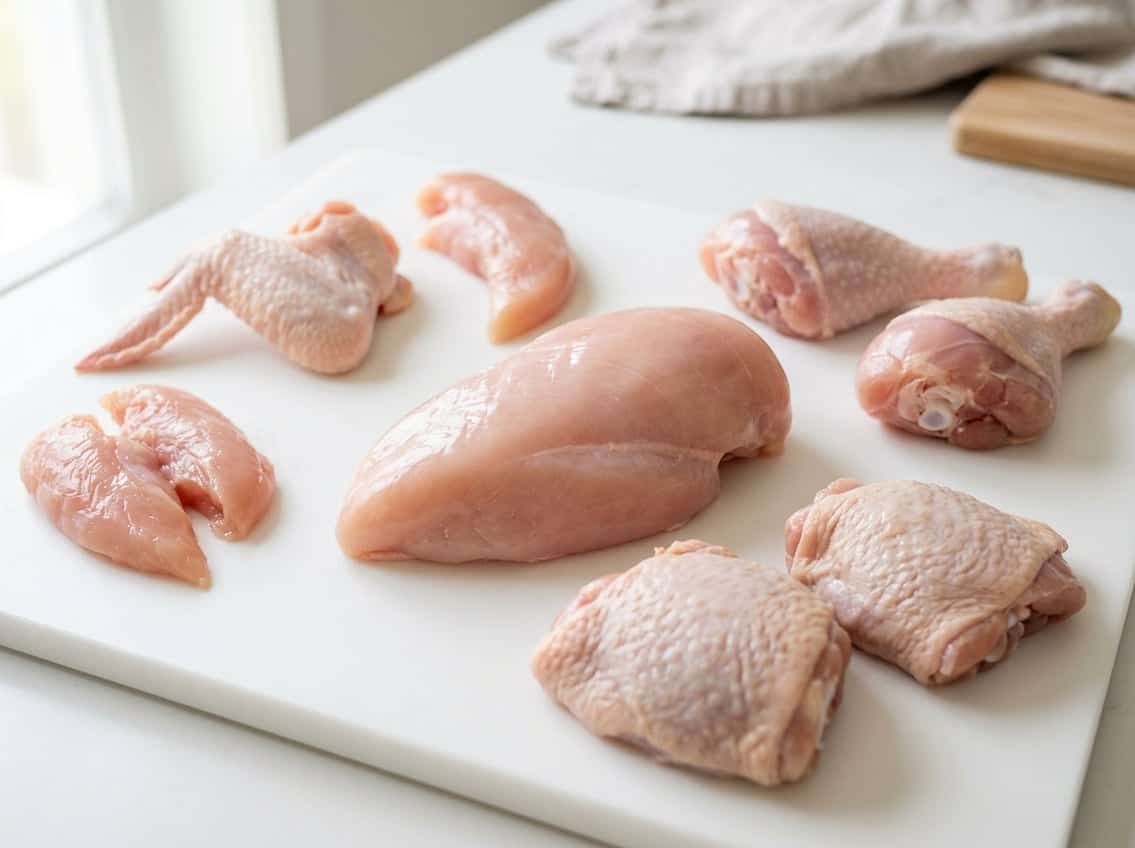
Chicken breast is a lean white meat cut with a mild taste and firm texture. Other cuts, such as thigh, drumstick, and wings, have more fat, stronger flavor, and different cooking needs.
Breast vs Thigh and Drumstick
The thigh comes from the upper leg, while the drumstick is the lower leg. Both are darker meat than breast and usually stay juicier during longer cooking.
A thigh contains more connective tissue, so it handles braising, roasting, and slow cooking well. A chicken drumstick gives you a smaller bone-in cut that is common for roasting and frying.
A whole leg combines the thigh and drumstick. A leg quarter adds part of the back, making it a larger portion than a single breast piece.
Breast vs Wings and Wing Sections
Chicken wings are a separate cut from the breast and come from the front shoulder area. A whole wing can be broken into wing drumette, wingette or wing flat, and wing tip.
These parts are smaller, fattier, and better suited to high-heat cooking. Breast is larger and leaner, so you need to pay more attention to avoid drying it out.
White Meat and Dark Meat at a Glance
Breast is the best-known white meat cut. Thighs, drumsticks, and leg quarters are dark meat because they contain more myoglobin and usually more fat.
White meat cooks faster and tastes milder. Dark meat stays more forgiving if you cook it a little longer.
Common Store Labels and What You’re Actually Buying
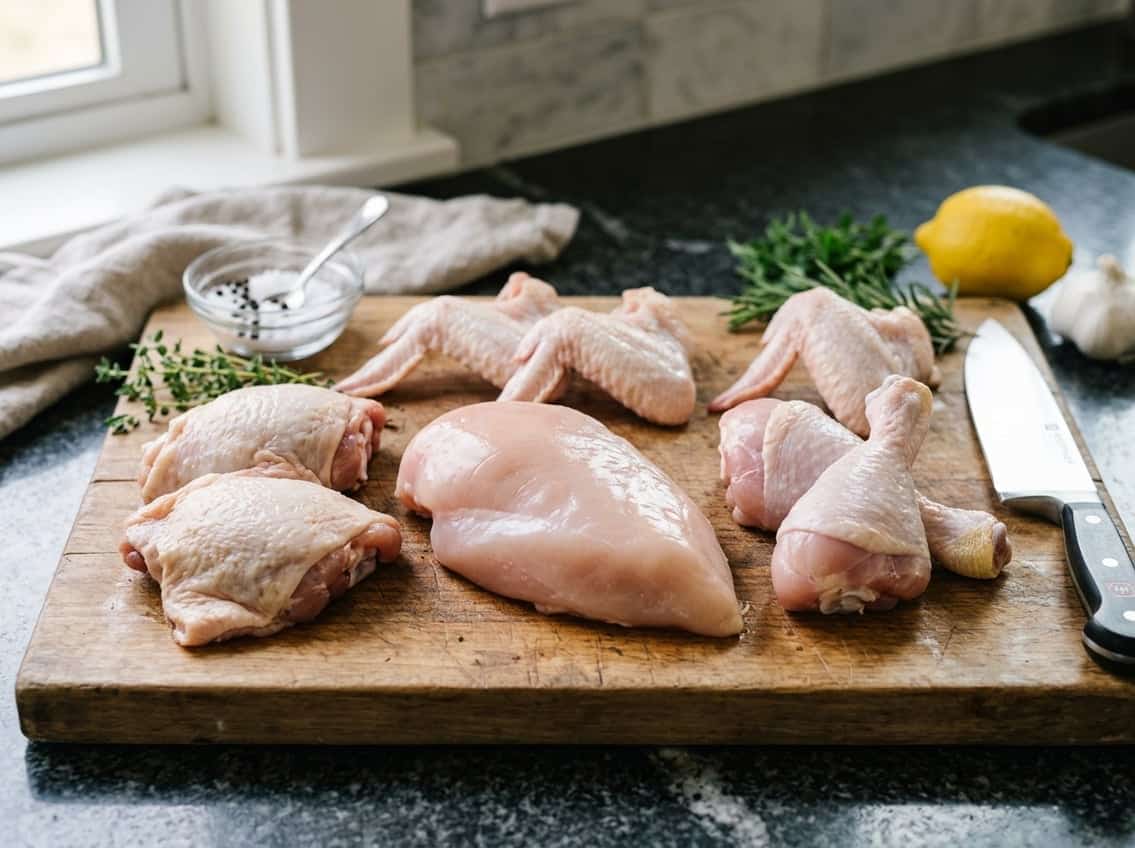
Stores use several labels for breast meat, and each one can mean a different cut. Reading the label closely helps you know whether you are buying boneless meat, bone-in meat, or a split piece.
Boneless, Skinless, and Bone-In Terms
A boneless breast means the butcher has removed the bones. A skinless chicken breast means the skin is removed, while skin-on packages keep it attached.
A package labeled boneless, skinless chicken breast is the common grocery-store version for quick cooking and meal prep. A split breast is a whole breast cut in half, and it may still have ribs attached.
Retail Cuts You May See at the Counter
You may also see whole breast, breast quarter, breast with ribs, or breast fillet. A breast quarter includes half the breast with the wing and back attached, while a breast with ribs keeps the rib cage with the meat.
The National 4-H poultry guide lists these retail-style poultry parts and shows how they differ in shape and bone structure. At a meat display case, those details tell you whether you are buying a full portion or a trimmed version.
When to Ask a Butcher for Help
A butcher can help if the label is unclear or if you want a specific cut for a recipe. Ask whether the package is a whole breast, a split breast, or a boneless breast.
If you need chicken tenders, ask for the tenderloin or chicken tender. That saves time and prevents you from buying a cut that needs extra trimming.
Best Uses for Breast and the Rest of the Bird
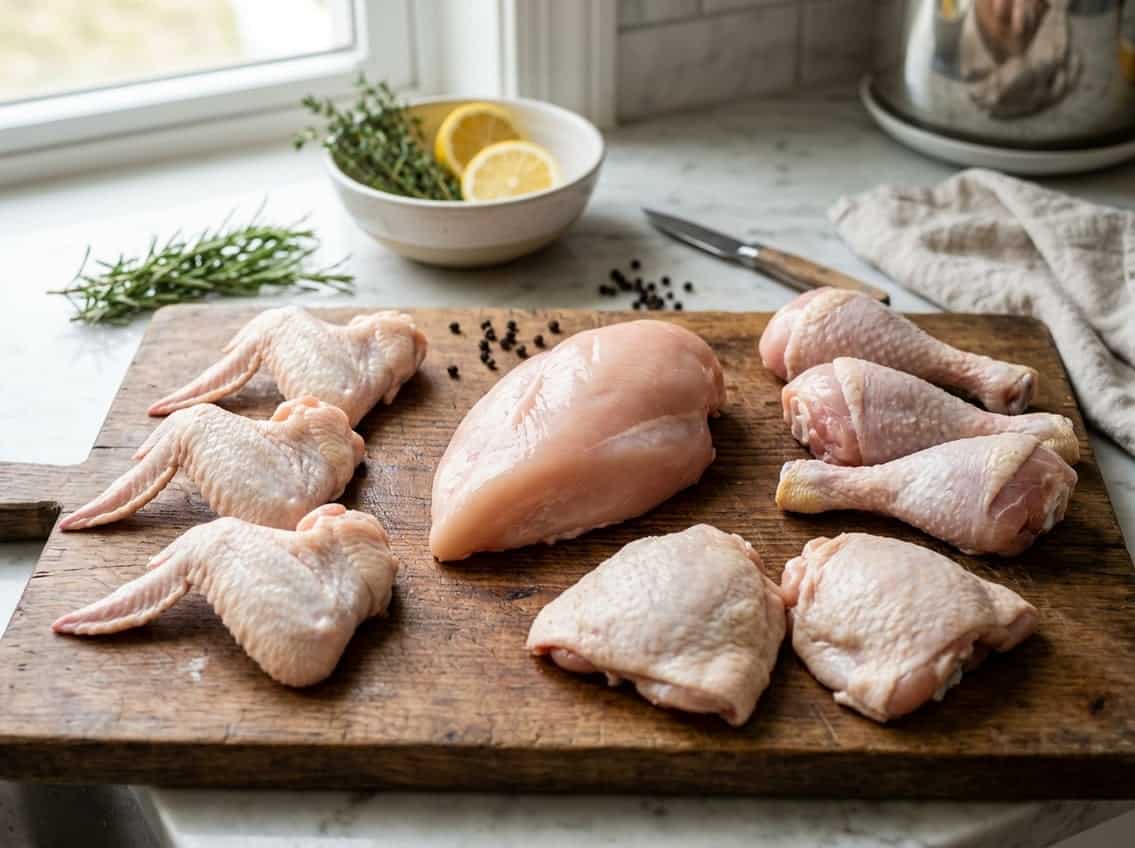
Chicken breast works well when you want a lean, mild piece that cooks quickly. Many people choose it for grilling, slicing for salads, or using in simple weeknight meals.
When Breast Is the Best Choice
Breast is useful when you want high protein with little fat. Many people pick it for its nutritional benefits, especially when they want a lighter main dish.
It works well for pan-searing, baking, poaching, and quick grilling. Keep the heat controlled, since breast can dry out faster than dark meat.
Best Cuts for Roasting, Frying, and Wings
If you want variety for roasting, choose a whole chicken, since you get breast, thighs, drumsticks, and wings in one bird. Broilers are the common market birds for this purpose.
For frying and game-day food, chicken wings are the usual pick. Buffalo wings, baked chicken wings, and other wing recipes use the drumette, wingette, and wing tip for easy eating and strong flavor.
Using Backs, Necks, Feet, and Giblets for Stock
A chicken back, chicken neck, chicken feet, and giblets add depth to broth.
The giblets often include the gizzard and chicken liver. You can use them in stock or gravy.
These parts are not the same as breast. They serve a different purpose in the kitchen.
Simmering these parts slowly helps create chicken stock with more body and flavor.


