
Where to Slice Chicken Breast for Even, Tender Cuts
Where you slice chicken breast depends on your dish, but the goal stays the same. You want even pieces that cook at the same rate.
If you cut chicken breast the right way, you can turn one piece into cutlets, strips, cubes, or thin slices with little waste.
Slice chicken breast against the grain, starting from the thicker side, for more control and even cooking. Use a sharp knife and a steady cutting board. Pay attention to the shape of the breast to make the job easier.
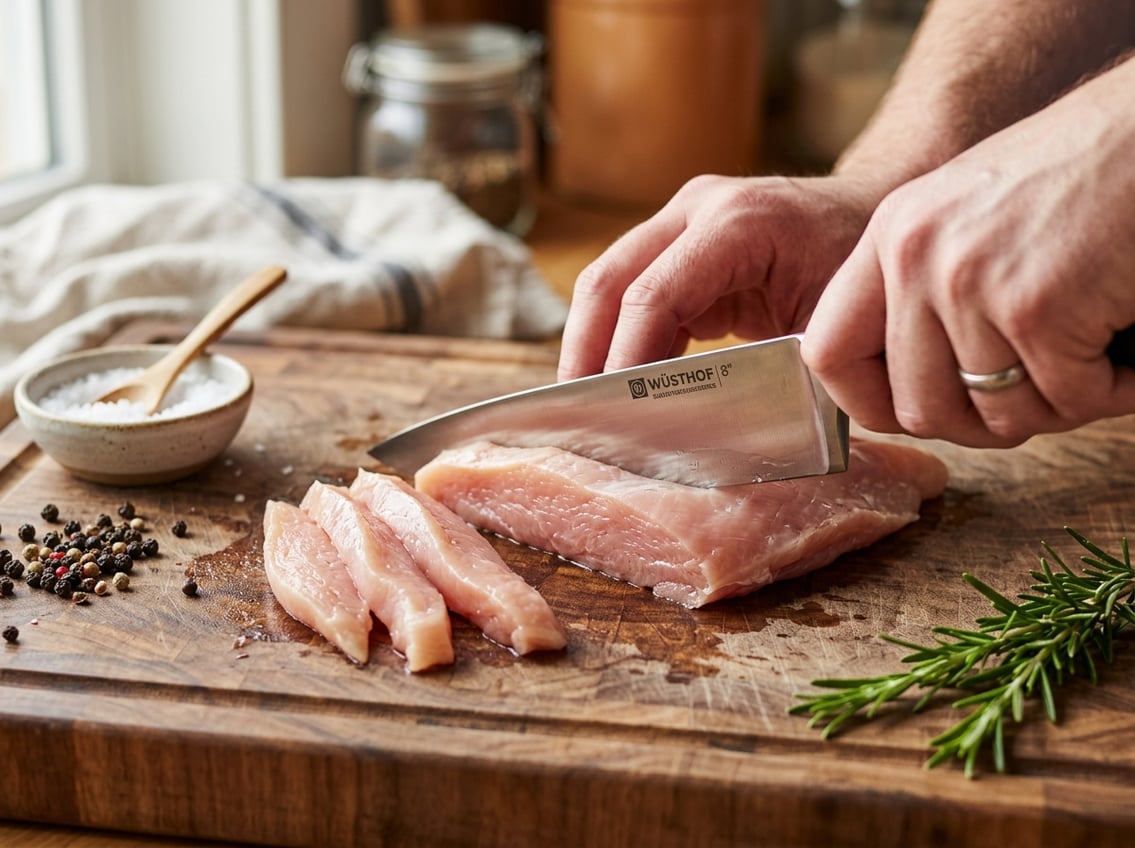
Cutting a chicken breast properly helps you match the cut to your recipe. Thin slices work well for quick sautés. Cutlets are useful for breaded dishes, and cubes fit skewers and soups.
Where to Start the First Slice
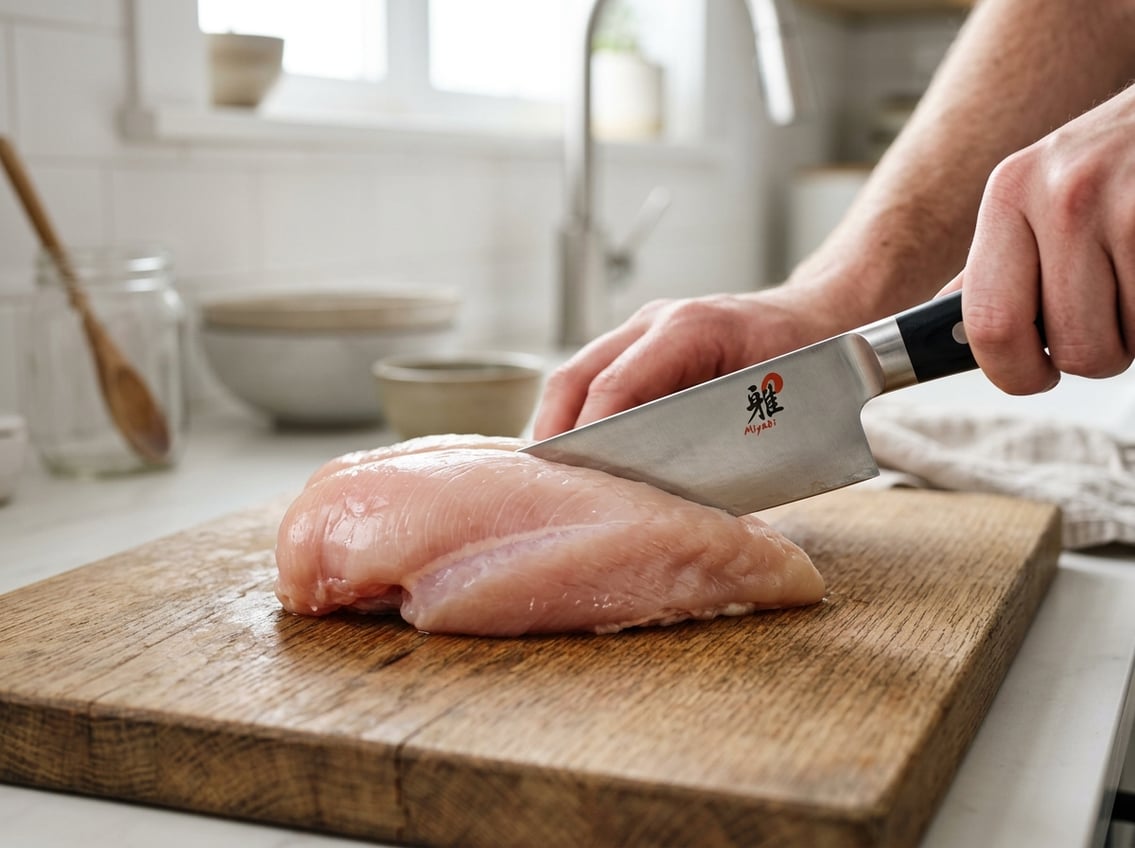
The first slice sets the shape of the rest. Boneless breasts usually have a thick end and a thin end. Start where the meat is thickest and use smooth, even strokes on a stable cutting board.
Find the Grain Before You Cut
Look closely at the surface of the chicken breast. You will see faint lines in the meat, which show the grain.
When you cut against the grain, you shorten the muscle fibers. This helps the chicken feel more tender when cooked.
Slice From the Thick End for Better Control
Start at the thick end for more room to work. This helps the knife move through the breast at a steady angle.
It works well whether you cut chicken breasts for strips, cutlets, or smaller pieces.
When to Cut Across vs. Horizontally
Cut across the grain for most strips, cubes, and bite-size pieces. Slice horizontally to split one breast into thinner cutlets or filets, especially for dishes that need fast cooking and even thickness.
Match the Cut to the Dish
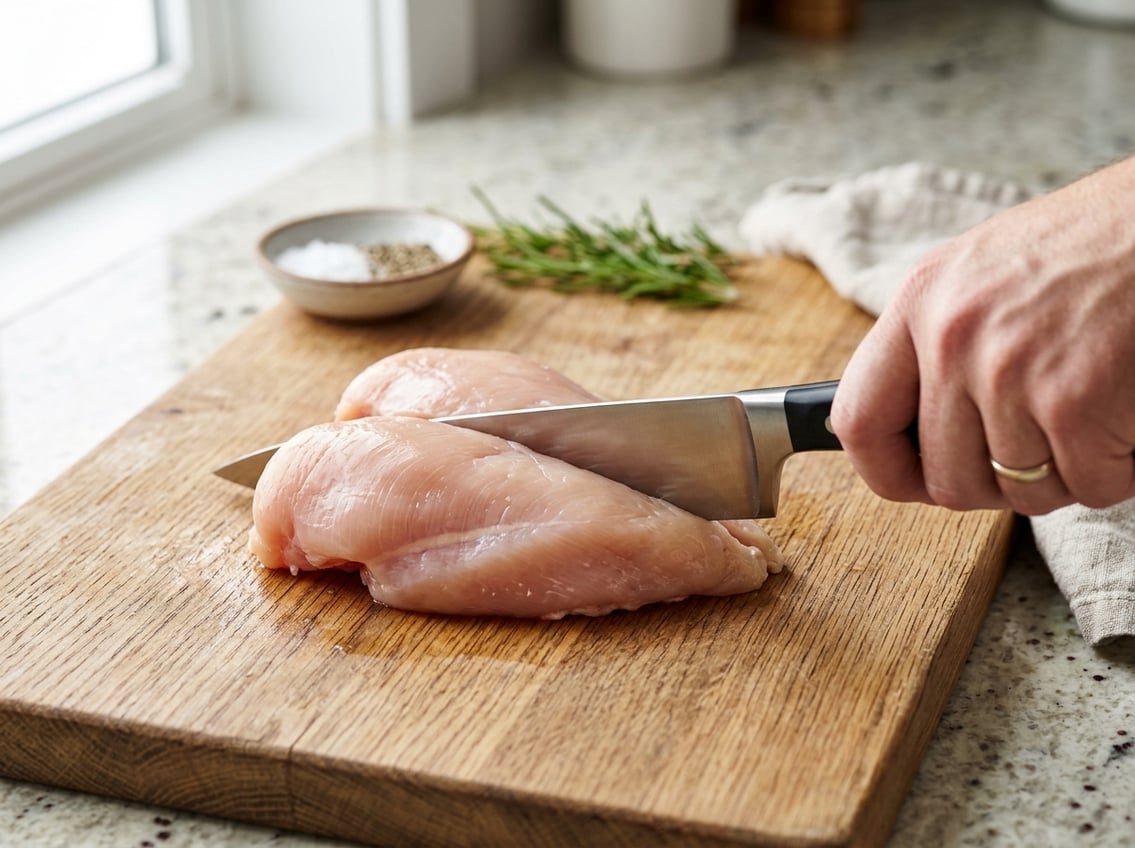
Different recipes call for different shapes. Choosing the right cut saves time later.
Thin cutlets work best for fast-cooking dishes. Strips, cubes, and diced chicken fit recipes that need quick, even cooking.
Thin Pieces for Cutlets and Filets
Cutlets and filets are ideal for chicken piccata and chicken parmesan. They cook quickly and stay flat in the pan.
They also brown more evenly, which helps when you want a crisp coating or a delicate sauce.
Strips for Chicken Tenders and Quick Sautés
Cut chicken breast into strips that are even in width for chicken tenders or strips. These work well for stir-fries, salads, and fast skillet meals.
Cubes for Skewers, Stir-Fries, and Soups
First make strips, then turn them and cut across into small pieces to make cubes. Cubes are useful for kabobs, soups, and dishes like chicken marsala.
Keep the pieces similar in size for better results.
Step-by-Step Cutting Methods
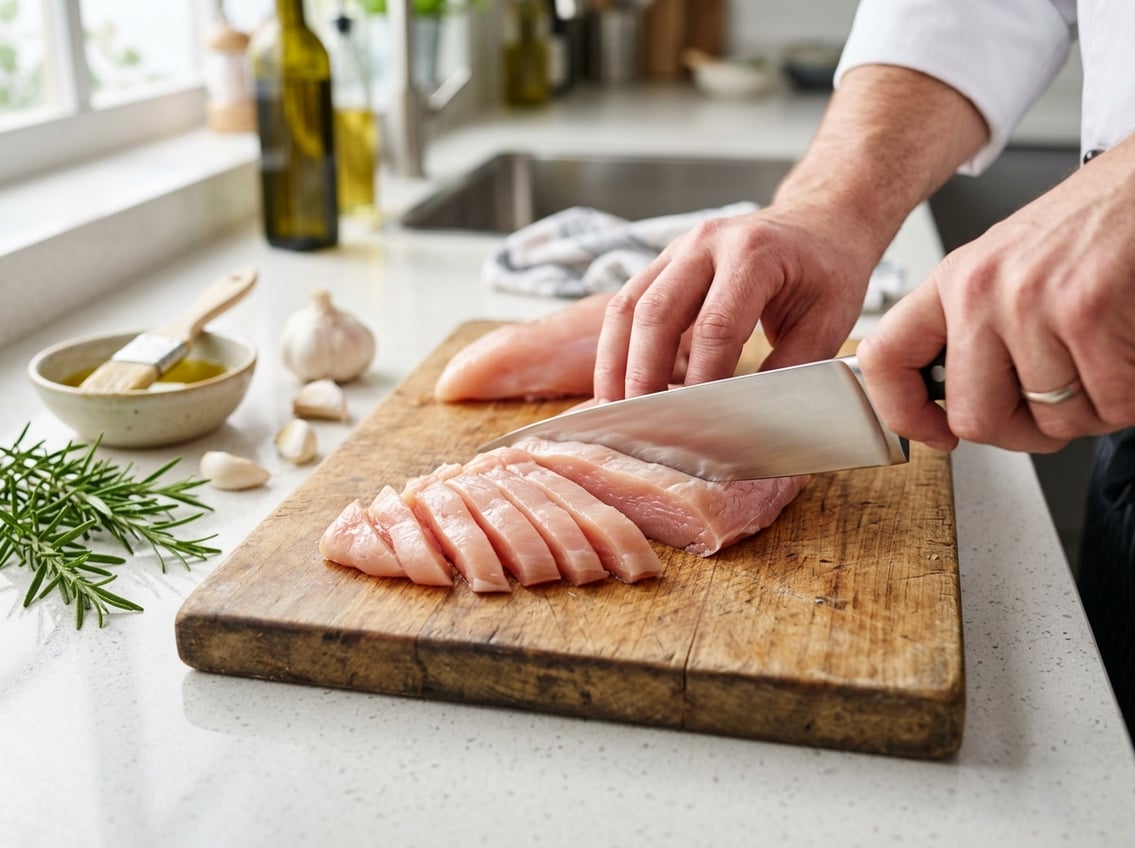
Use one method at a time for the cleanest results. Each cut has a simple pattern, and with practice, cutting chicken breast becomes easier and faster.
How to Slice Uniform Strips
Place the breast flat on the board. Hold it steady with your non-knife hand.
Slice it into long, even pieces from the thick end toward the thinner end. Keep the knife movement smooth.
How to Make Even Cubes
Cut the breast into strips first. Then turn the strips and slice across them into square pieces.
This method works well for kabobs, soups, or fast skillet dishes.
How to Split a Breast Into Cutlets
Set the breast on the board. Place your knife horizontally through the middle of the thickest part.
Slice carefully through the center to make two thinner cutlets or filets. This method is practical for breaded or pan-seared meals.
Prep, Safety, and Consistency Tips
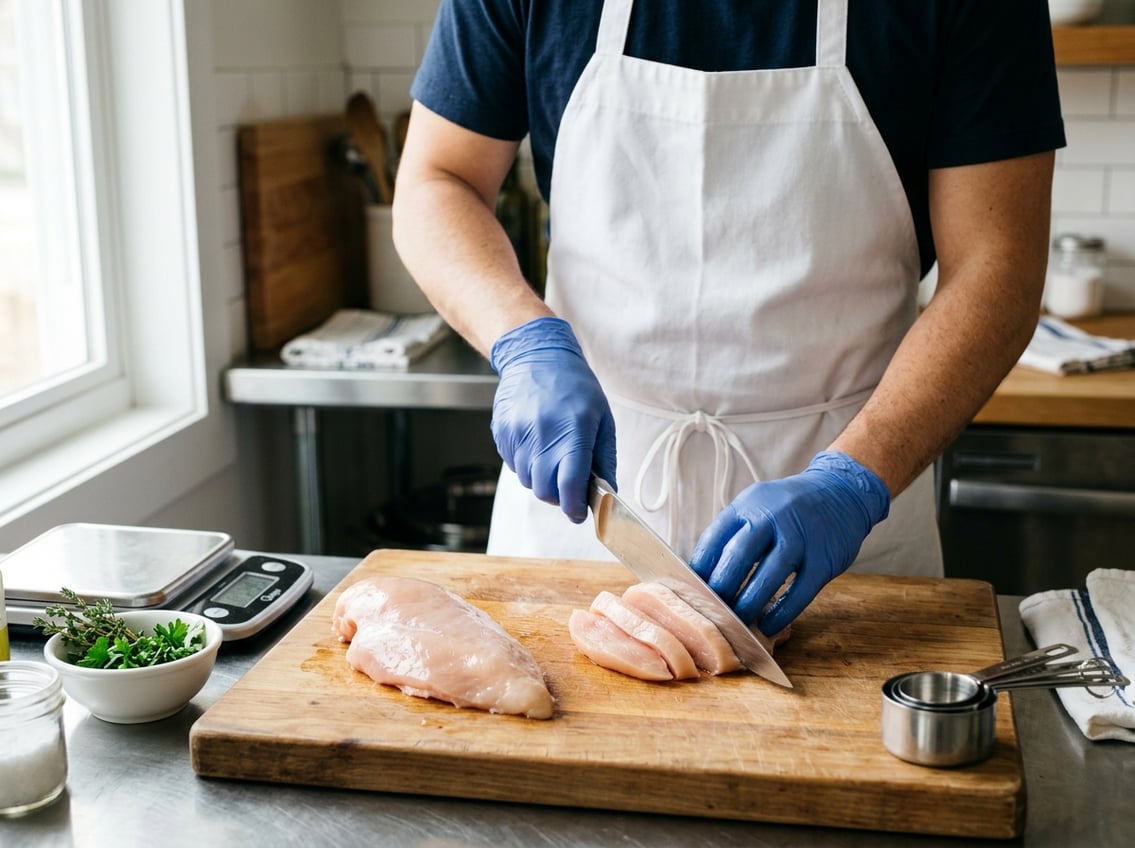
A few small habits make cutting chicken breast safer and more accurate. Clean tools, a steady board, and firm meat help you slice with less slipping and more control.
Why Slightly Chilled Chicken Slices Cleaner
Chilled chicken firms up a little, making it easier to cut. If you chill it briefly first, it helps when you slice chicken into strips, cubes, or cutlets.
As noted by The Feathered Nester, partially chilled chicken is easier to handle and slice cleanly.
Knife and Board Setup That Improves Accuracy
Use a sharp knife and a stable cutting board so the blade can move with less force. A plastic cutting board is easy to clean and works well for raw poultry, as long as it stays still while you cut chicken.
How to Keep Pieces Even for Better Cooking
Cut pieces to be close in size, especially when preparing chicken breasts for sauteing, grilling, or baking.
Keeping the thickness even helps the meat cook at the same rate. Trim small uneven ends if needed so the pieces match better before putting them in the pan.


